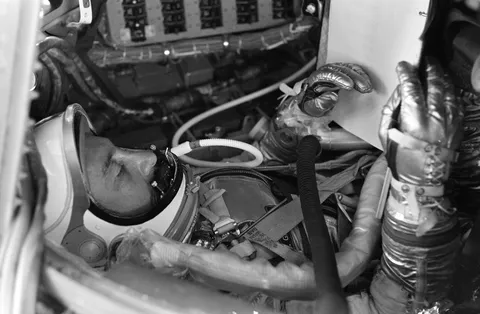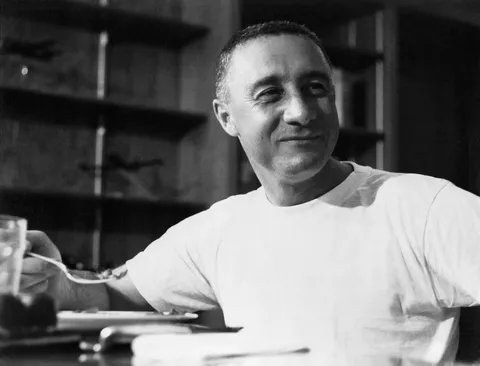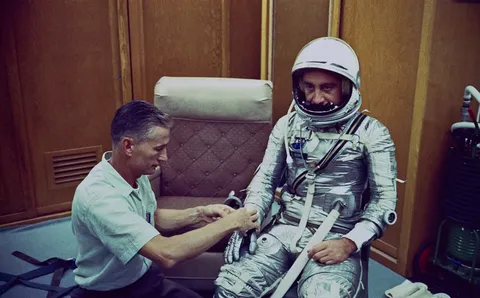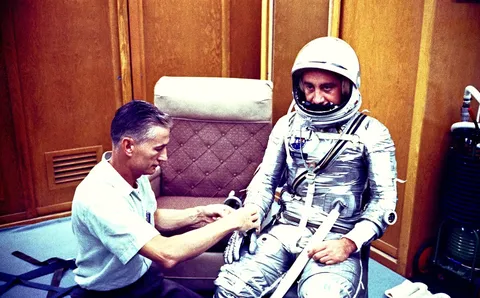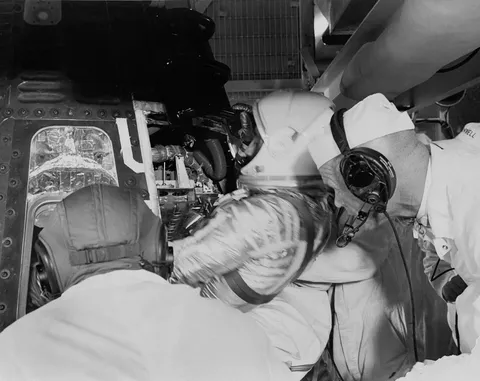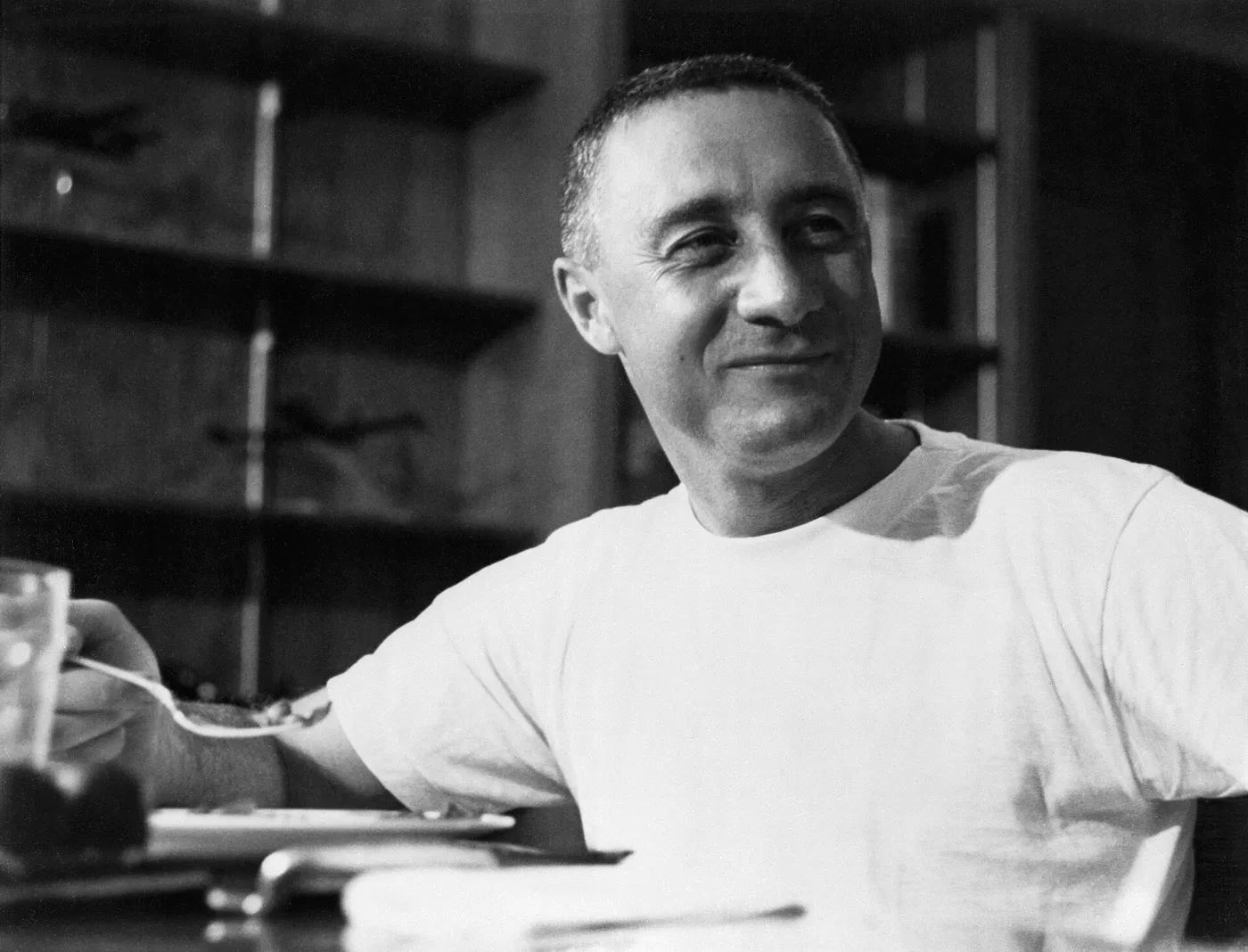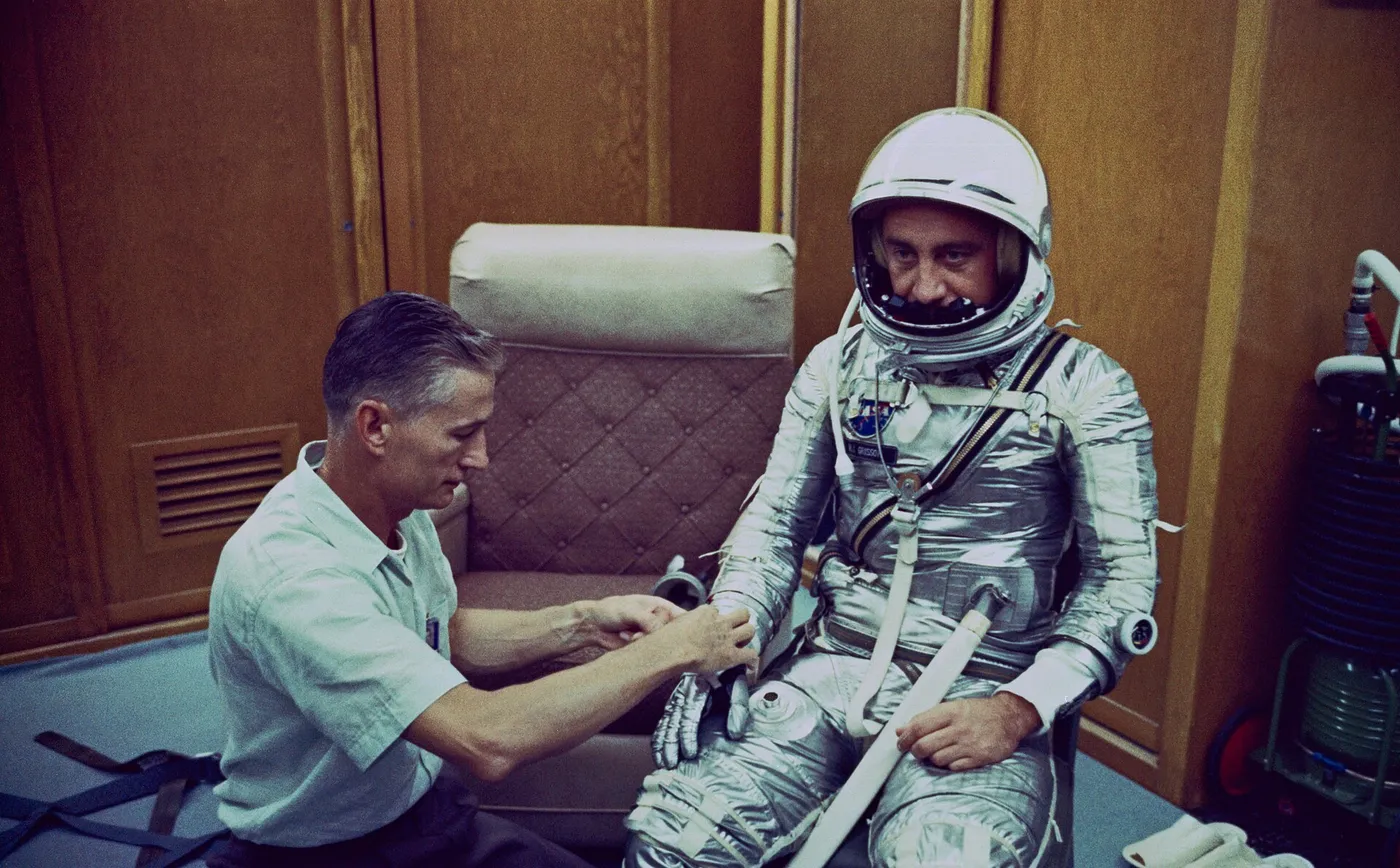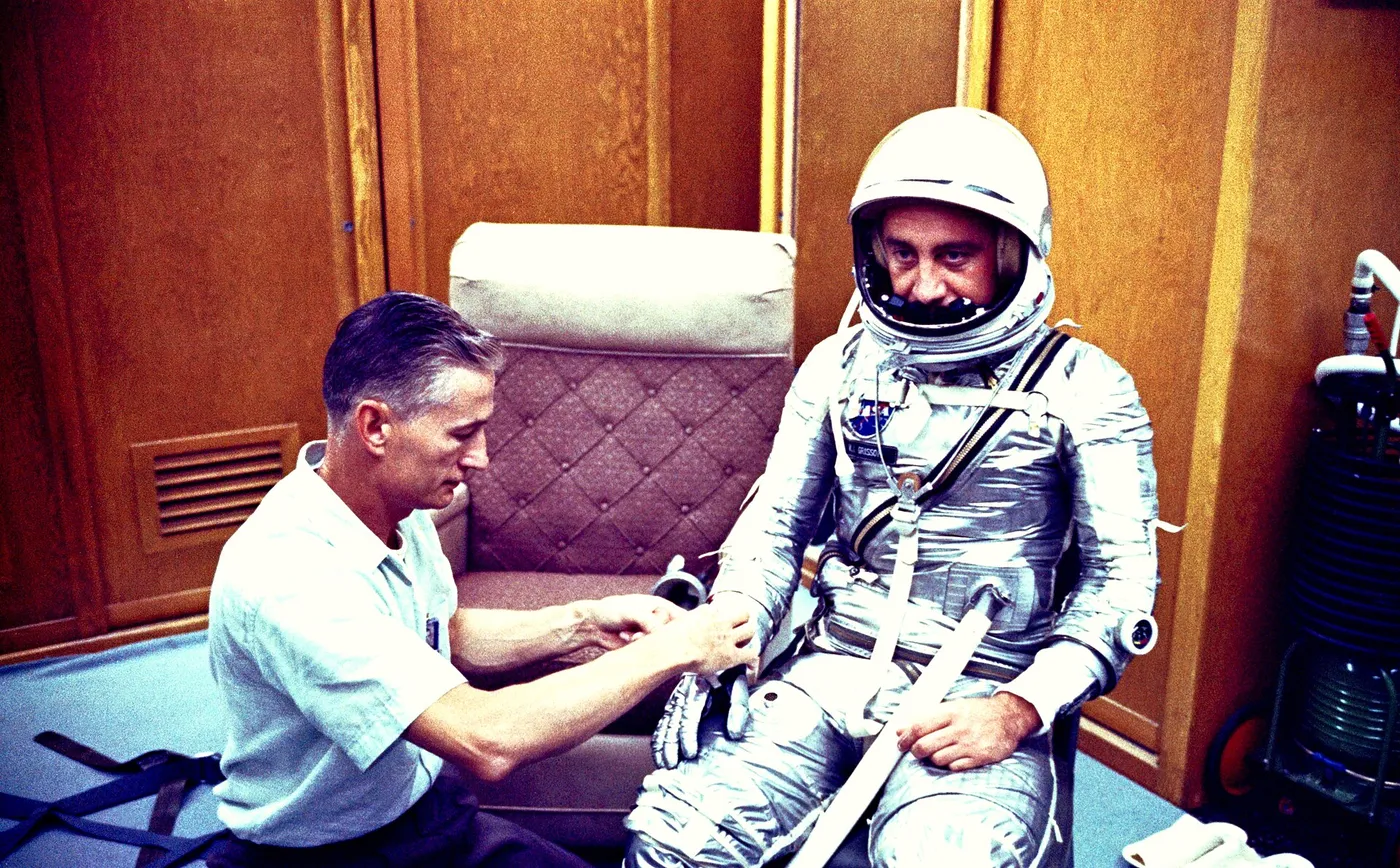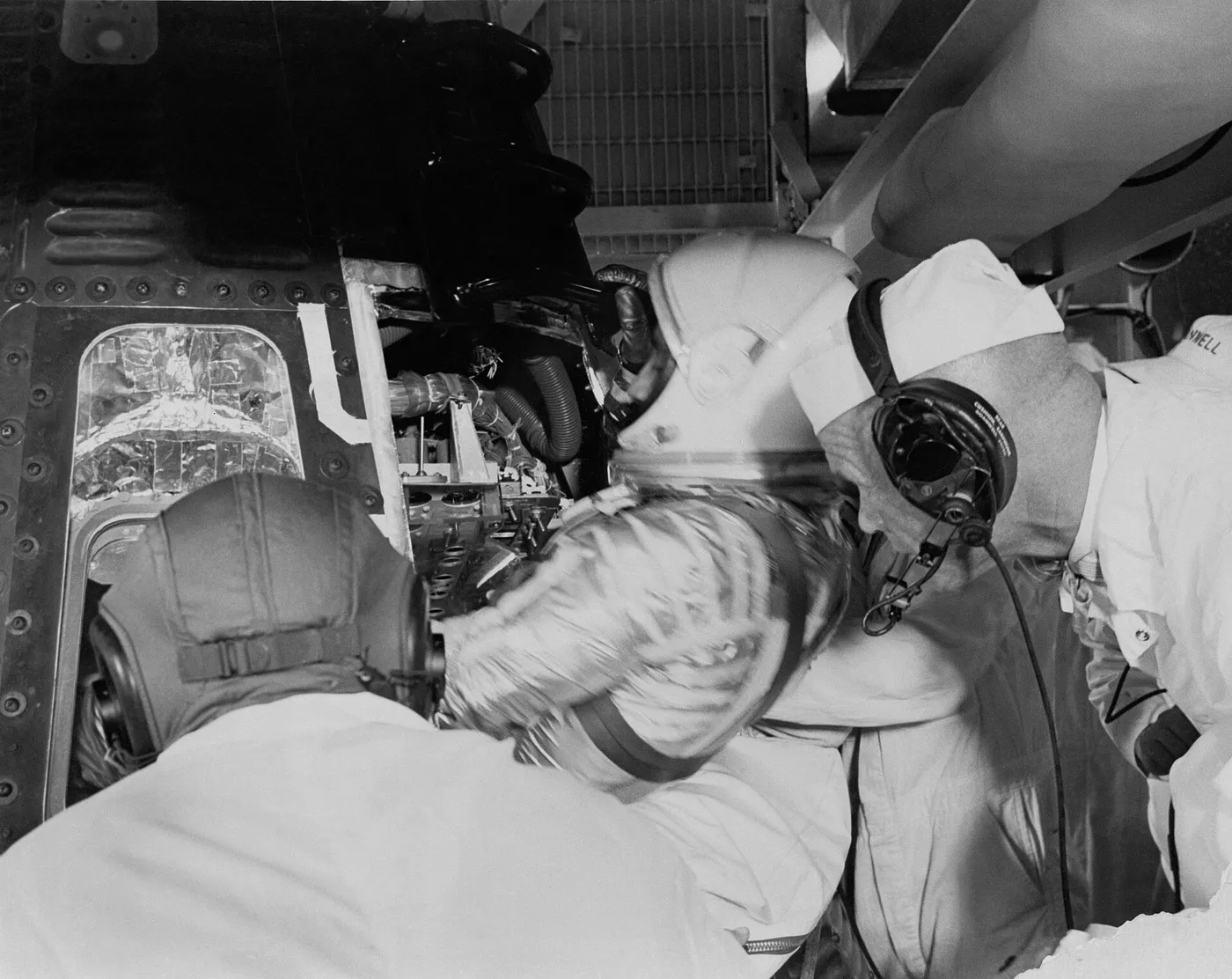
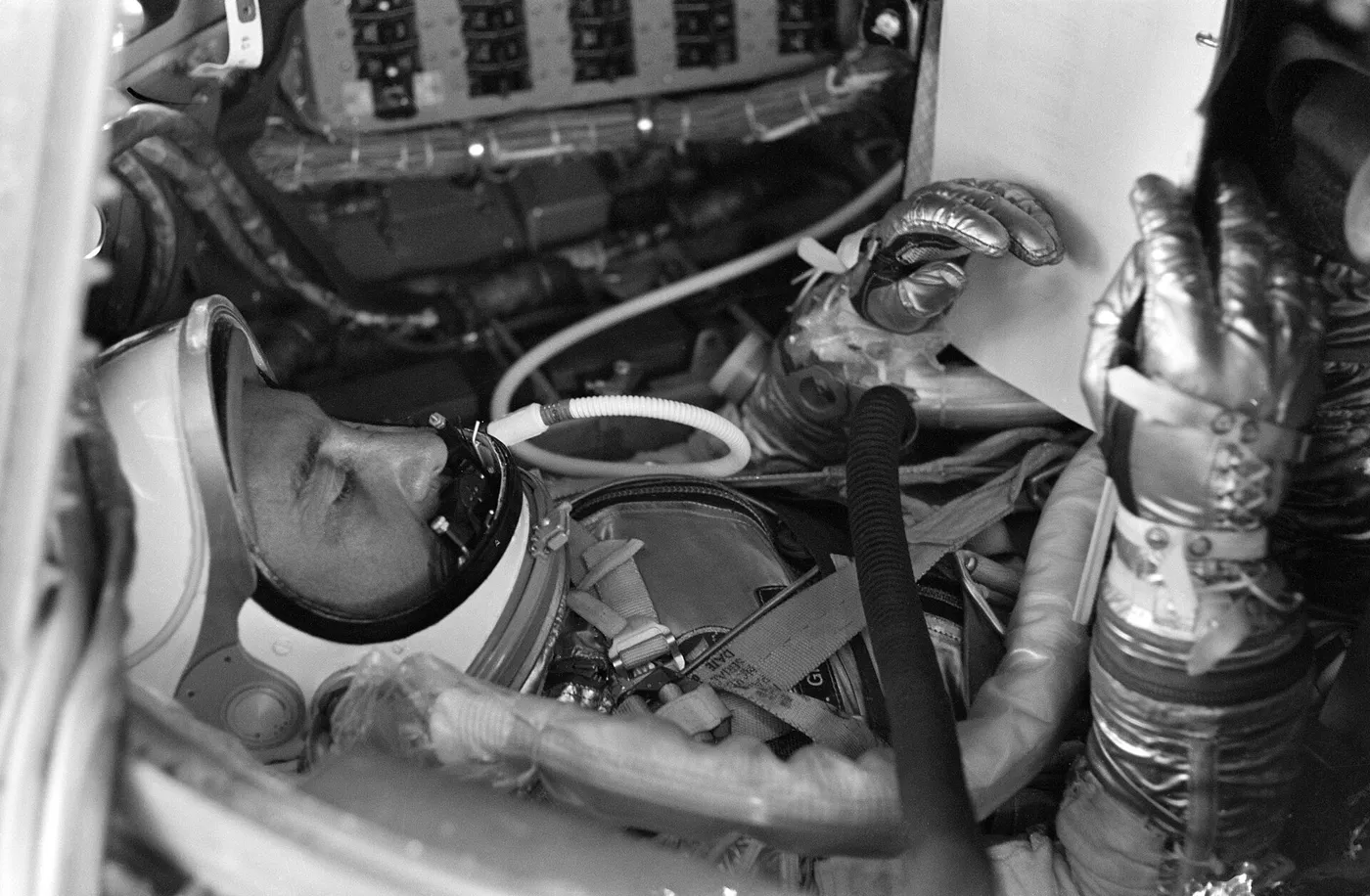
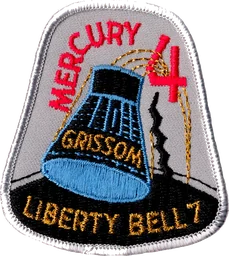
Gus Grissom's suborbital hop on 21 July 1961 mirrored Shepard's almost exactly — the same Redstone, the same fifteen-minute arc, the same few minutes of weightlessness — and it was meant to be a quiet confirmation that the first flight had been no fluke. Grissom named his bell-shaped capsule Liberty Bell 7 after the Philadelphia icon and, with a wink, had a crack painted on its side. His Mercury was subtly improved over Shepard's: a large trapezoidal window in place of two small portholes, and a hatch held shut by explosive bolts so a crew could blow it open quickly in an emergency.
That hatch nearly killed him. Bobbing in the Atlantic after a clean flight, waiting on the recovery helicopter, Grissom felt the hatch suddenly blow with no hand on the plunger. Seawater poured in, the capsule began to sink, and Grissom — his spacesuit slowly flooding through an open valve — scrambled out and swam for his life while the overloaded helicopter fought to lift the waterlogged craft. In the end the pilots had to cut Liberty Bell 7 loose, and it sank to the seabed as a nearly drowned Grissom was finally hauled to safety.
“the lost capsule haunted Grissom, who insisted to the end that the hatch had fired on its own.”
The mission met its objective, a second successful crewed flight, but the lost capsule haunted Grissom, who insisted to the end that the hatch had fired on its own. The question was never fully settled. Liberty Bell 7 lay under nearly three miles of ocean until 1999, when it was located and raised — its story still unresolved.
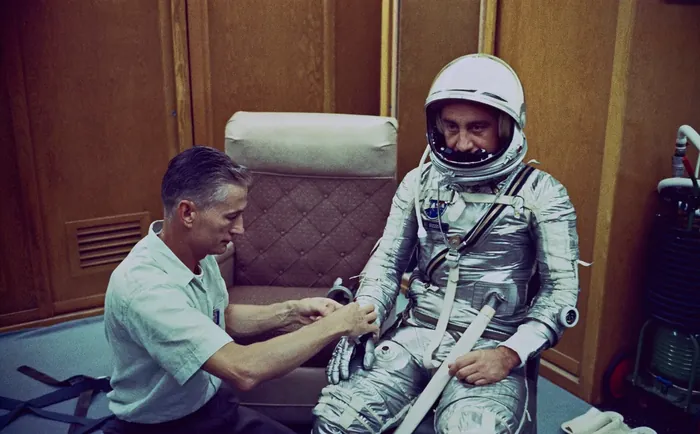
The engineers who studied the hatch could never coax it into firing on its own, and Grissom's account was quietly doubted in some quarters — an unfair shadow over an otherwise faultless flight. A measure of vindication came a year later, when Wally Schirra deliberately blew his own hatch after splashdown and came away with a bruise from the recoil of the plunger; Grissom's hand had borne no such mark, evidence that he truly had not touched it.
Grissom flew on regardless. In 1965 he commanded the first crewed Gemini — wryly christening the capsule Molly Brown, after the “unsinkable” heroine, in a nod to his soggy Mercury — and became the first American to journey into space twice. His luck ran out on the ground: in January 1967 he died alongside Ed White and Roger Chaffee when fire swept their Apollo 1 capsule during a launch-pad rehearsal, a tragedy that forced a hard reckoning before the United States could reach the Moon.