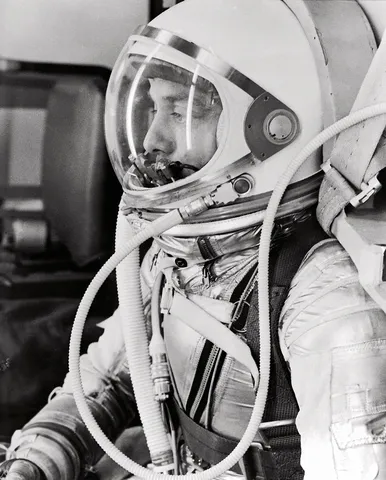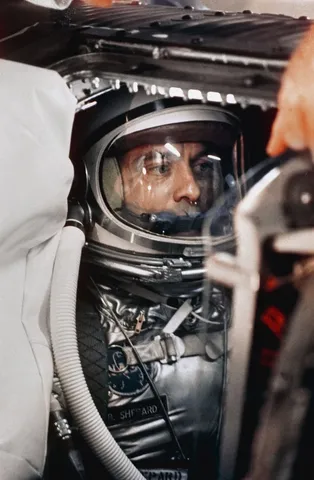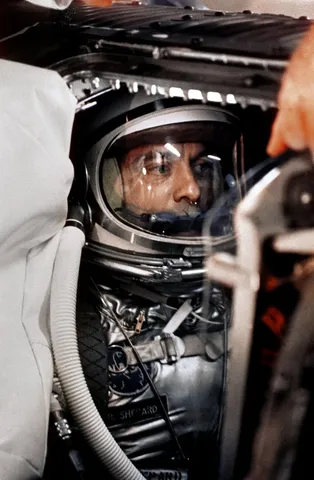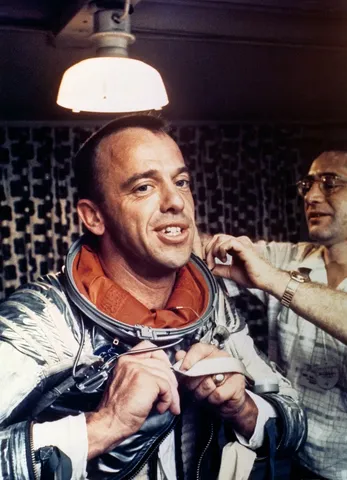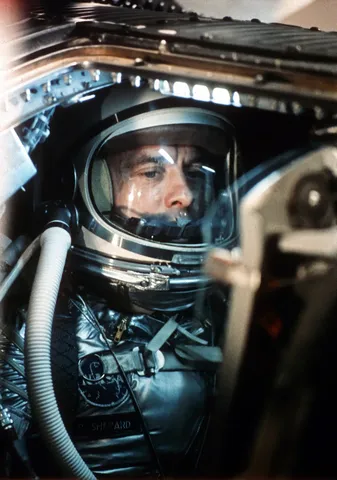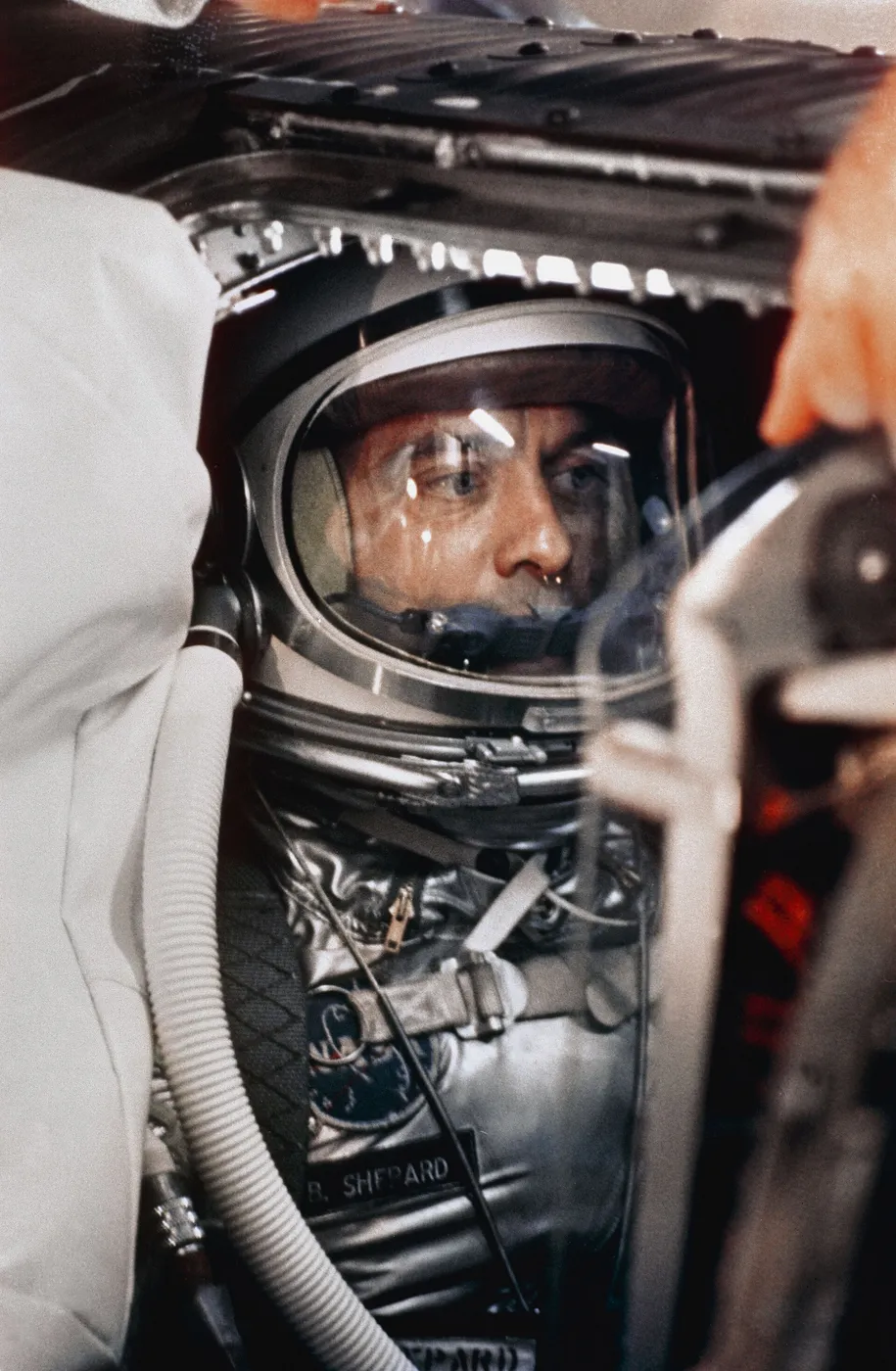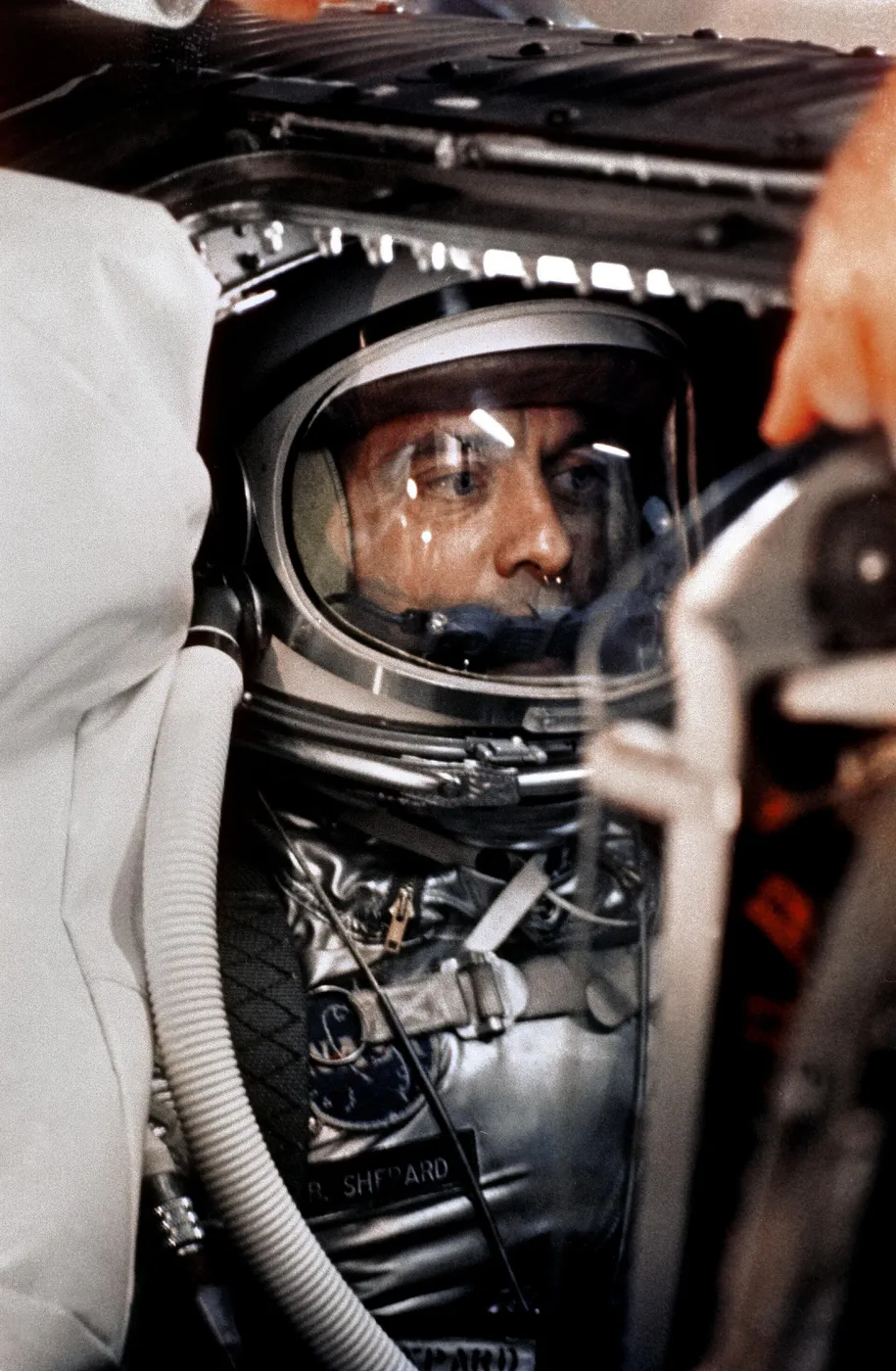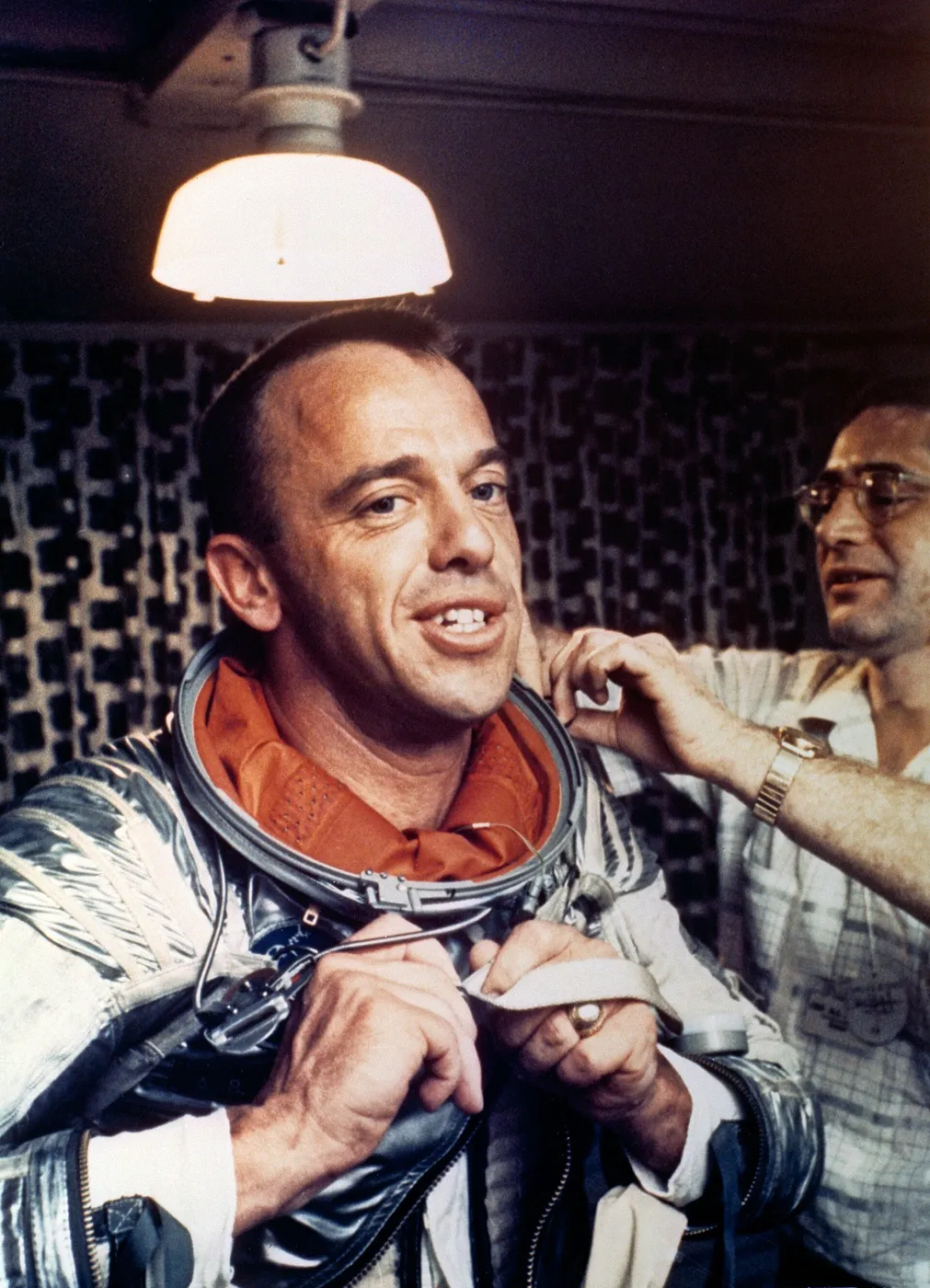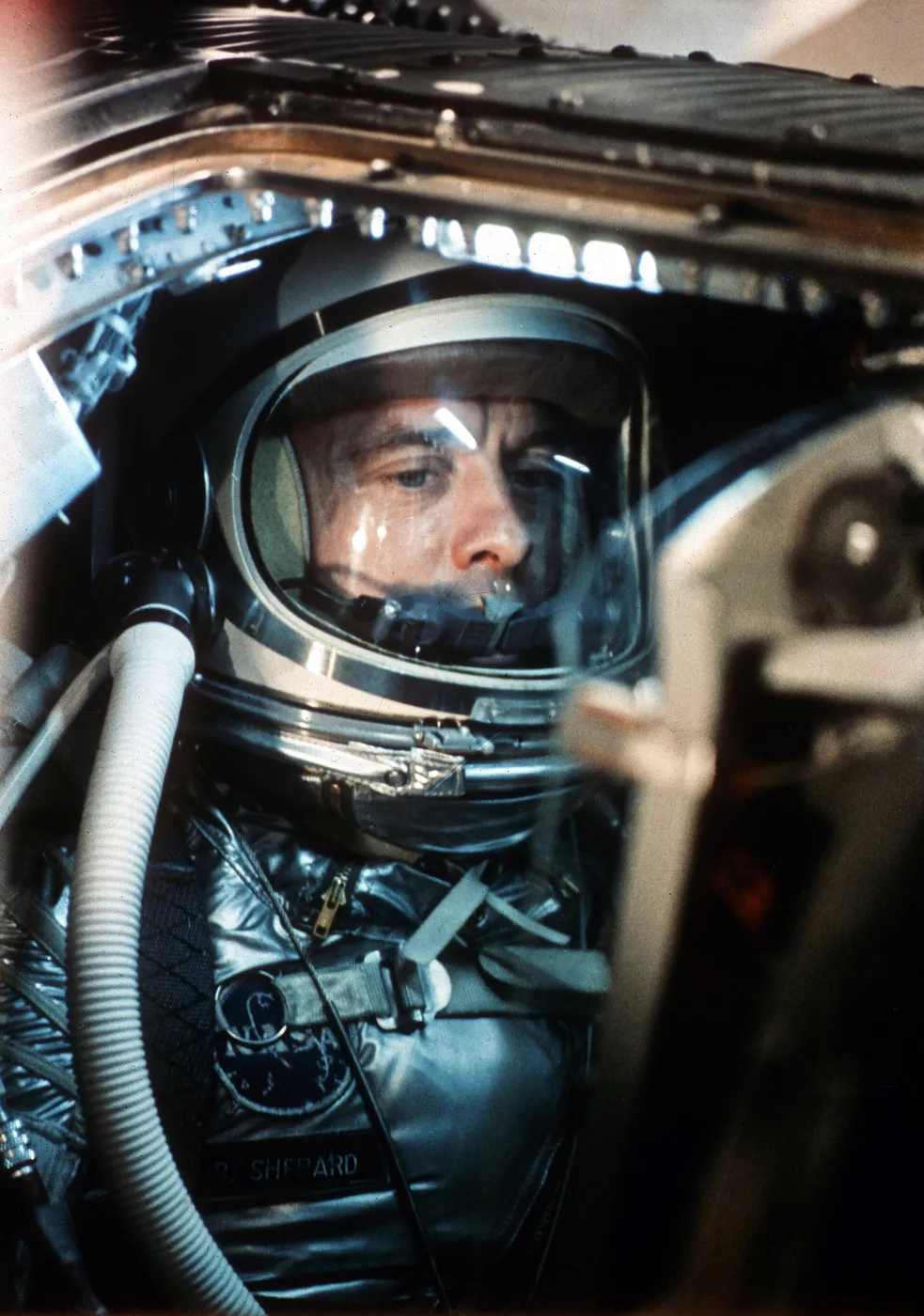
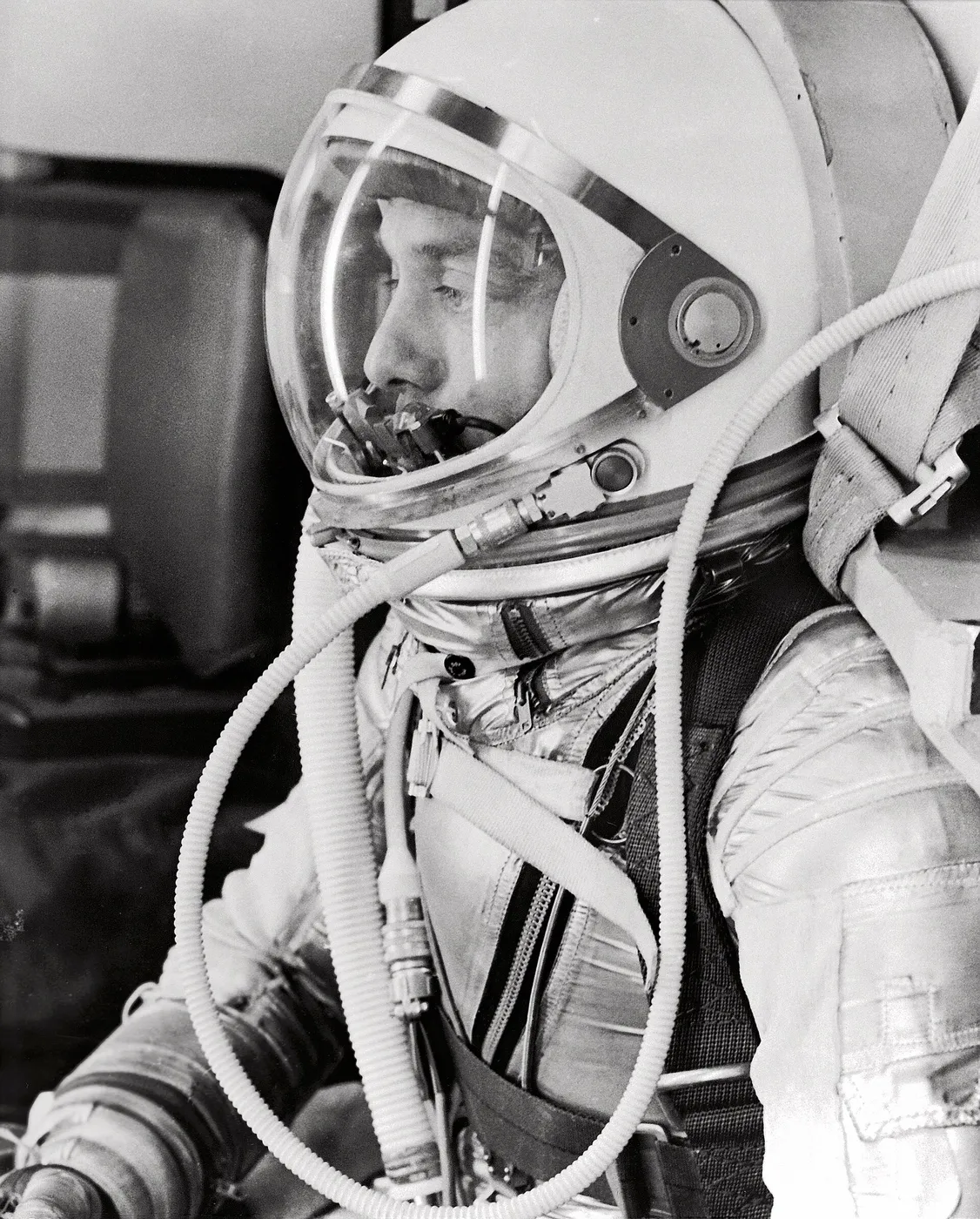
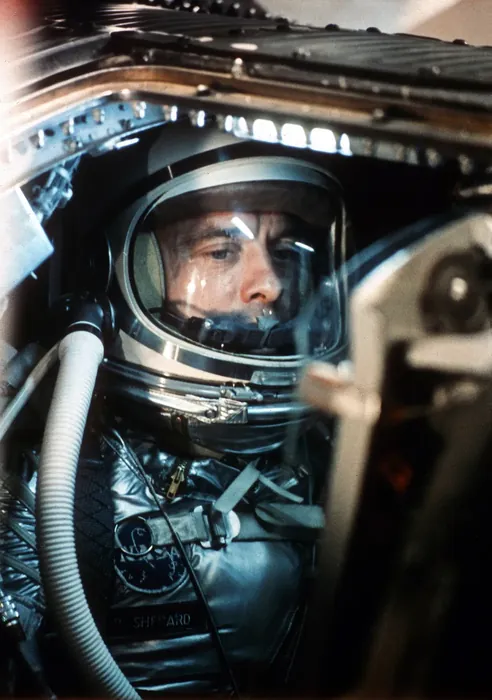
When Alan Shepard rode a Redstone rocket off a Florida pad on 5 May 1961, the United States was playing catch-up. Yuri Gagarin had orbited the Earth just three weeks earlier, and Shepard's flight — a fifteen-minute arc that barely reached space before falling straight back down — could not match that. But it was carried live to a nation grown weary of Soviet firsts, and it made Shepard the first American in space.
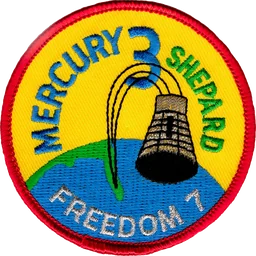
The flight was brief and intensely physical. Hours of delays had left him strapped atop the rocket until, frustrated with the fussing engineers, he famously urged them to stop worrying about his problems and "light this candle." Freedom 7 threw him more than a hundred and eighty kilometres up, gave him five minutes of weightlessness and a glimpse of the planet's curve, and dropped him into the Atlantic to be plucked out by helicopter. Unlike Gagarin's automated capsule, Shepard flew part of his by hand, steering the craft's attitude himself — a deliberate demonstration that the astronaut was a pilot, not merely a passenger.
“Why don't you fix your little problem and light this candle?”
Alan Shepard, waiting on the pad
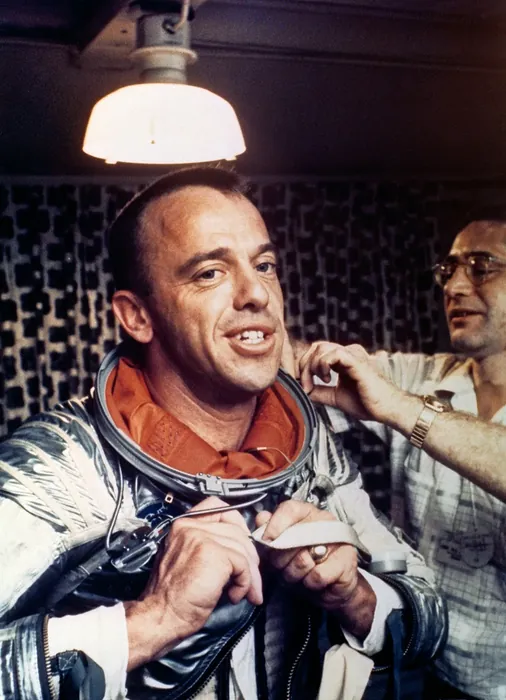
The objective was as much political as technical: to put an American in space and prove that both the hardware and the man could do the job. It worked, and the effect was electric. Within three weeks an emboldened President Kennedy stood before Congress and committed the nation to landing a man on the Moon before the decade was out.
Behind the fifteen minutes lay years of preparation. Shepard was one of the Mercury Seven, the test pilots unveiled to the public in 1959, and he had beaten out his rivals — John Glenn among them — for the first seat. The flight itself nearly foundered on the ground: hold after hold kept him pinned in the cramped capsule so long that, with no plumbing built into the suit, he was finally given leave to relieve himself where he lay. It was that mounting exasperation, as much as courage, behind his growled request that the engineers stop worrying about his problems and light the candle.
Shepard's own story did not end in the Atlantic. An inner-ear disorder soon grounded him, and he spent years flying a desk as the astronauts' chief before a delicate operation restored him to flight status. In 1971 he returned in triumph as commander of Apollo 14, walking on the Moon at forty-seven — and, in a flash of pure showmanship, smuggling a golf club head aboard to swat two balls across the lunar dust, one of which, he joked, sailed “miles and miles and miles.”