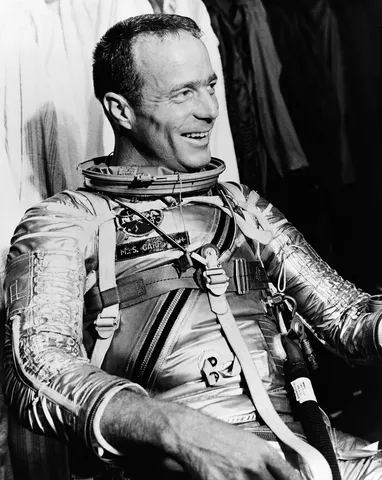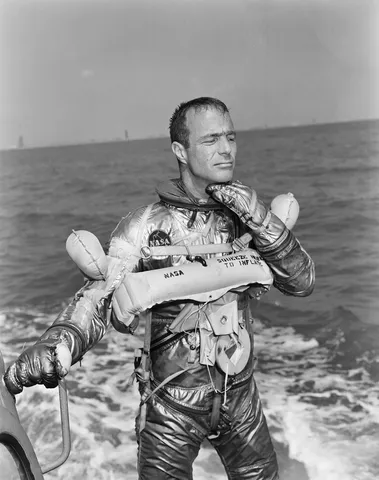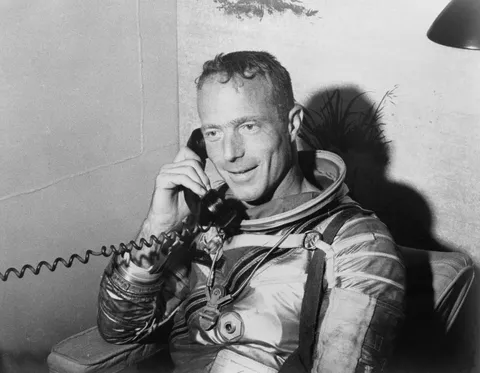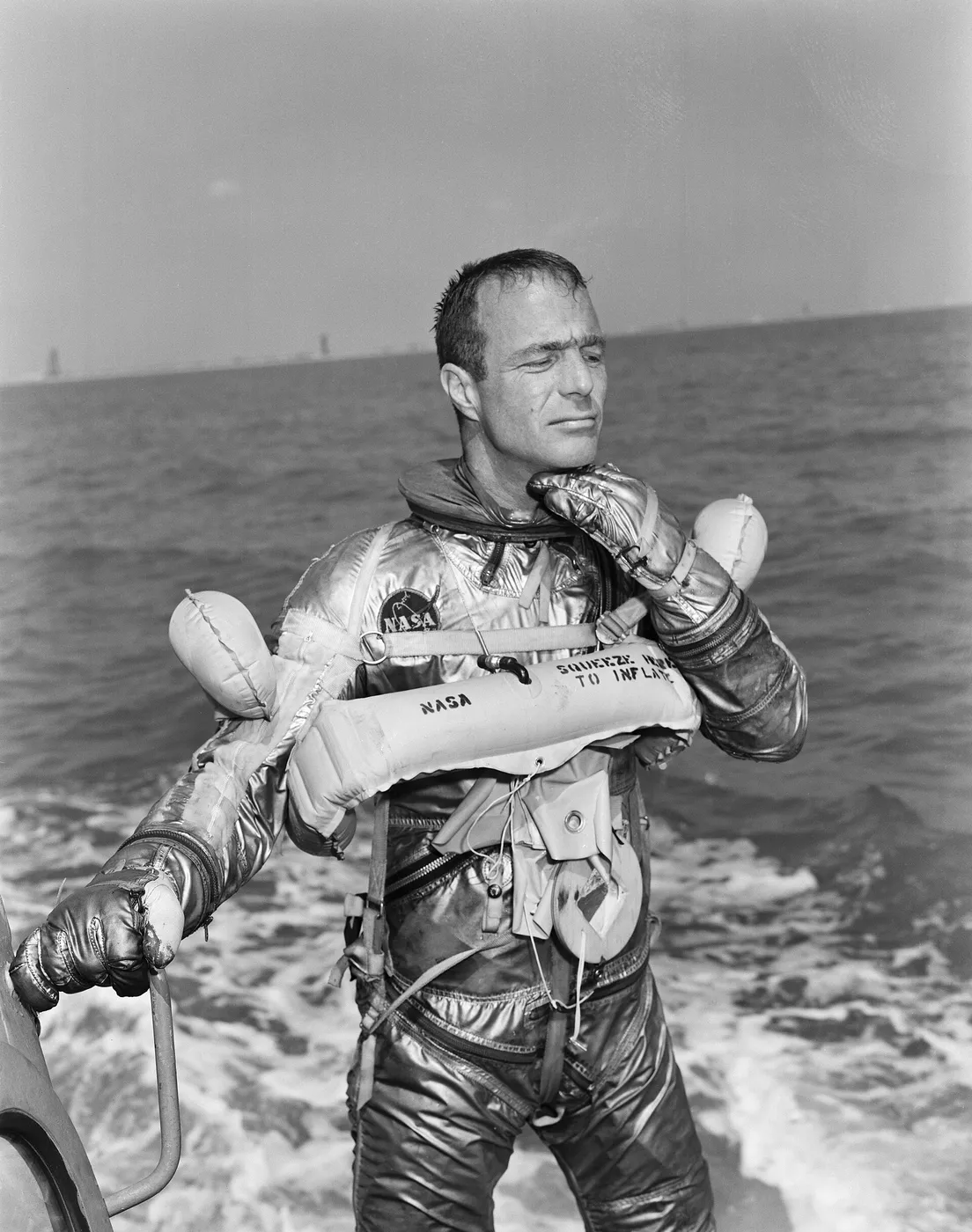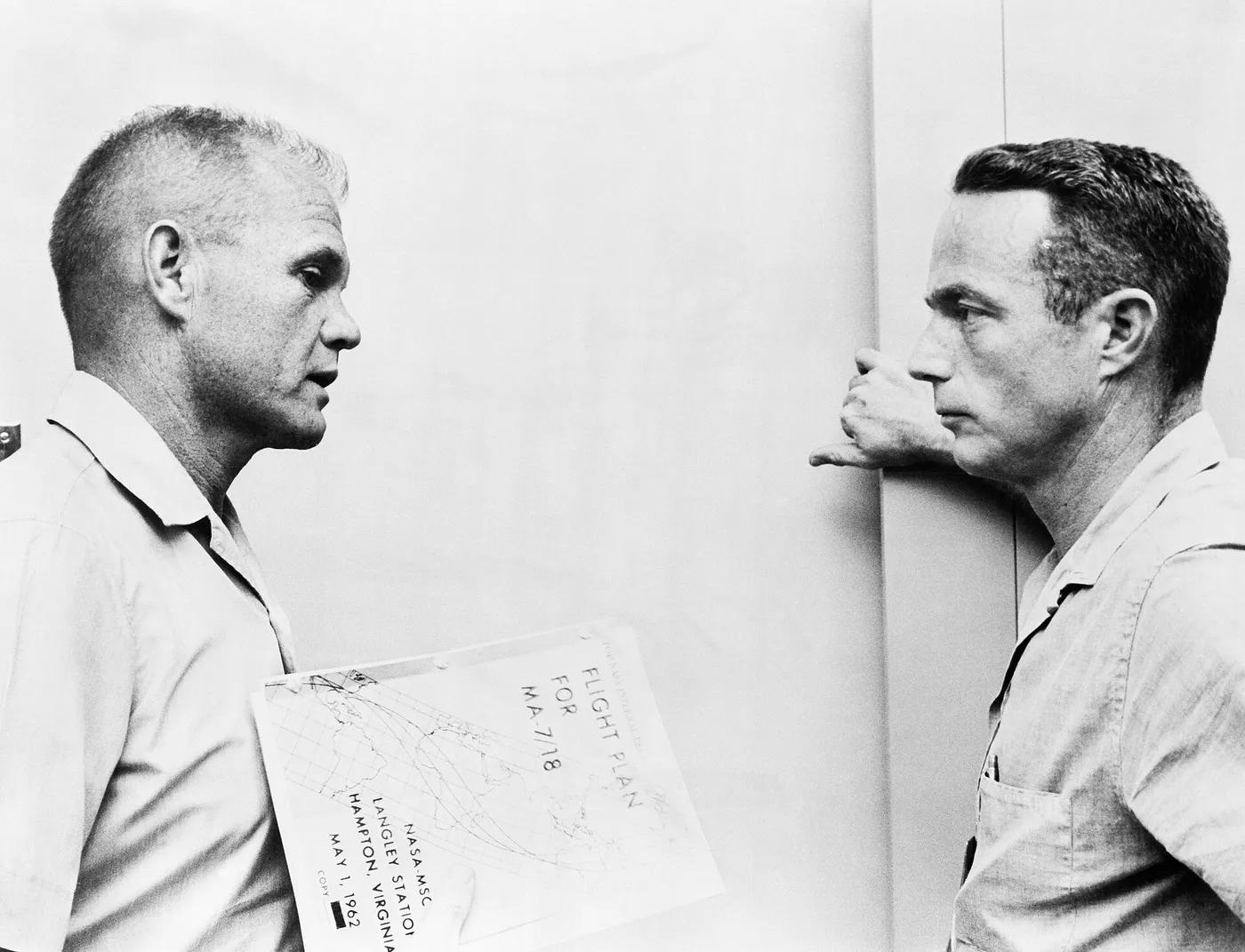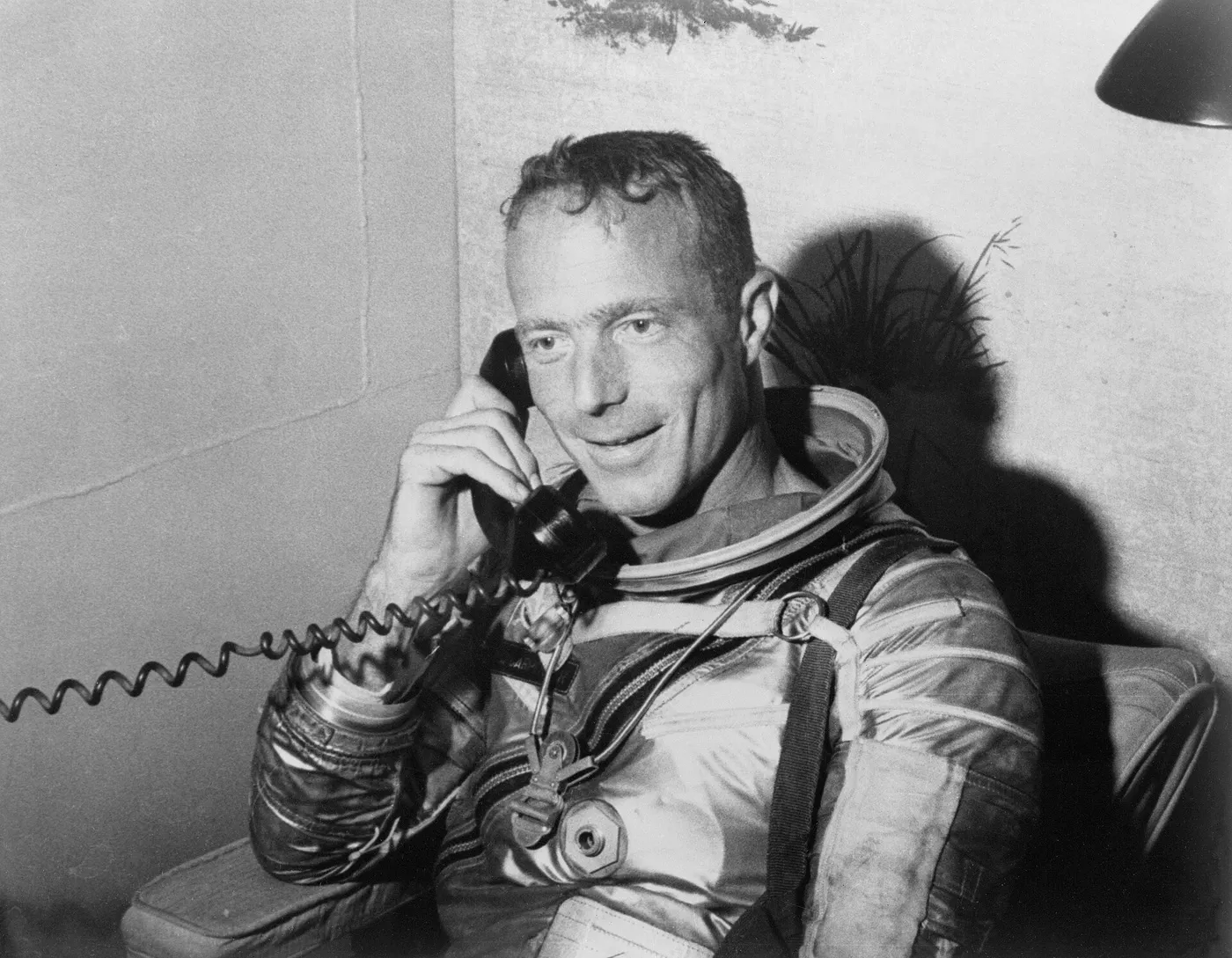
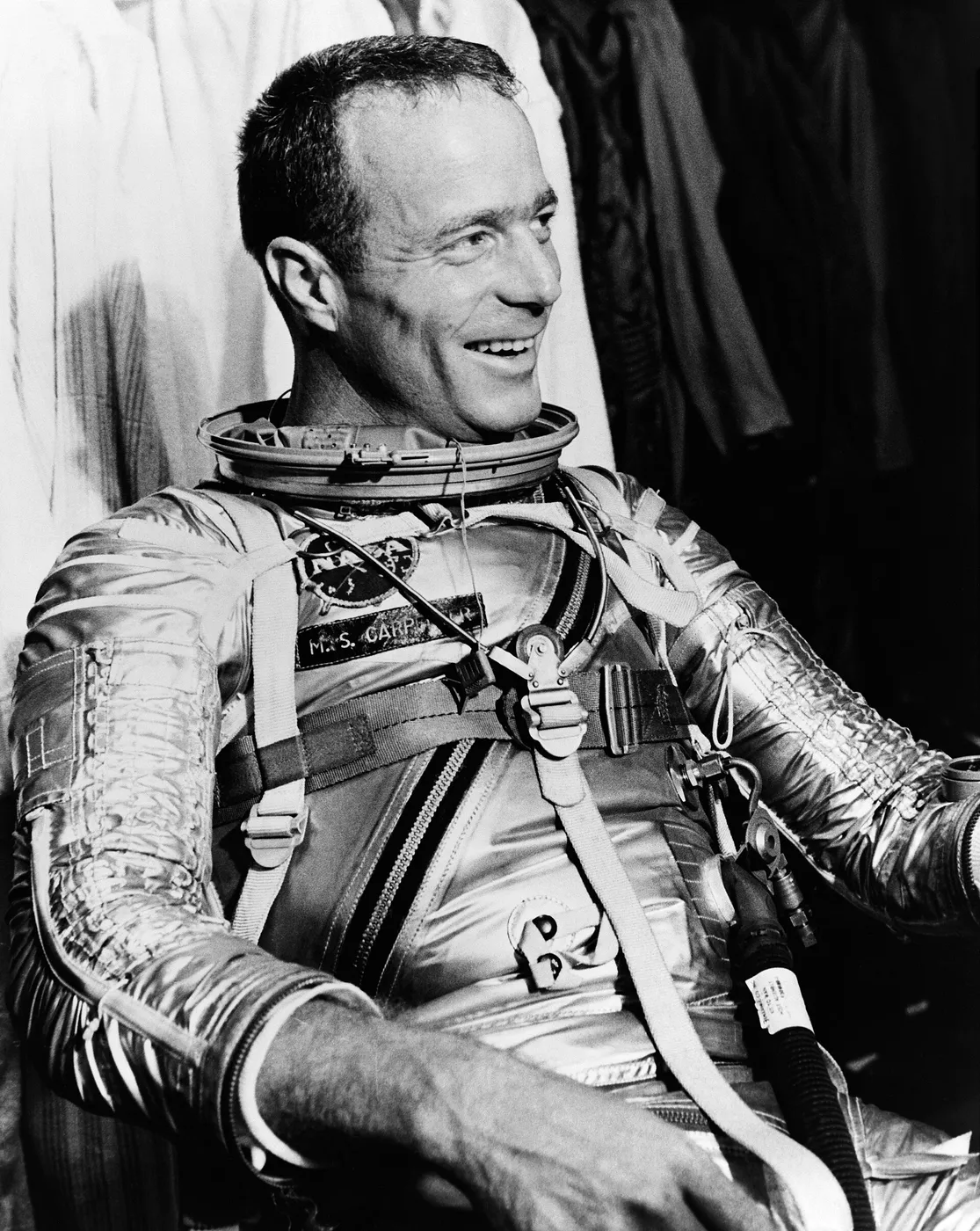
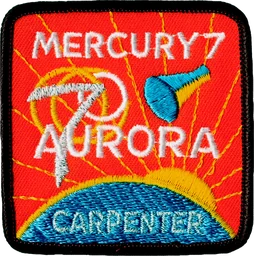
Scott Carpenter's flight on 24 May 1962 was meant to repeat Glenn's three orbits, but with a scientific bent — Earth photography, atmospheric studies, and observations of the weightless environment. He named his capsule Aurora 7 for the dawn of a new age of exploration and planned to photograph the aurora from orbit. The artist Cece Bibby, who had lettered Glenn's Friendship 7 insignia, hand-painted the name onto Aurora 7 as well.
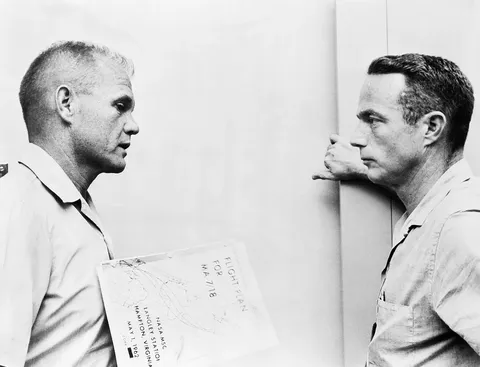
The science came at a price. Absorbed in his experiments and wrestling with a balky attitude-control system, Carpenter burned through his manoeuvring fuel far faster than planned and fell behind on the tightly choreographed checklist for coming home. When he fired his retro-rockets to drop out of orbit, they lit a few seconds late and with the capsule pointed slightly wrong — small errors that compounded into a large one. Aurora 7 sailed some four hundred kilometres beyond its intended splashdown point.
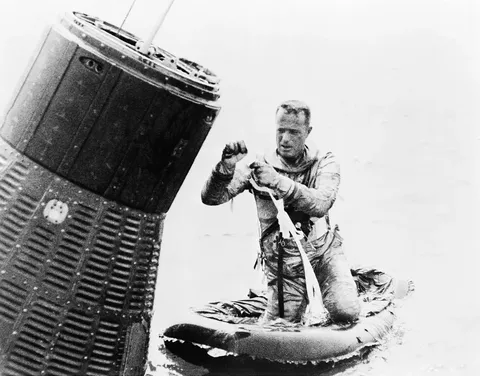
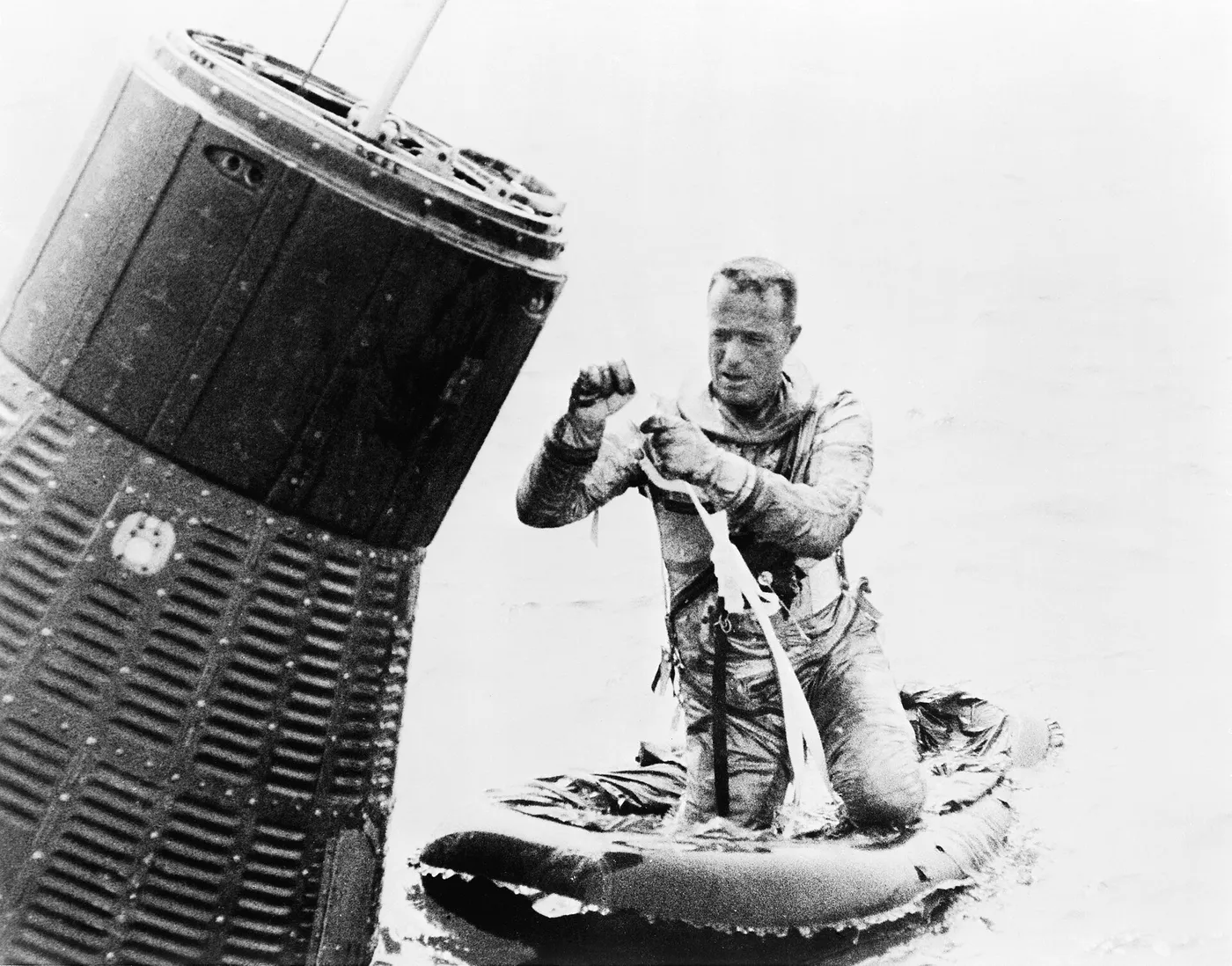
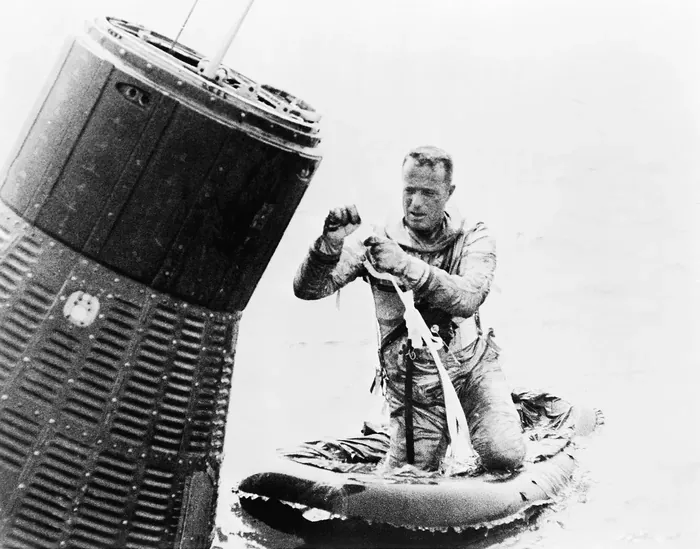
For roughly forty minutes the world did not know where Carpenter was, and the silence bred fear that the third American to orbit had been lost. Then a search plane spotted him bobbing calmly in his life raft beside the floating capsule, waiting to be collected. He was safe, and the flight had gathered real science — but the overshoot cost him dearly. Carpenter never flew in space again, and Aurora 7 remained his only mission.
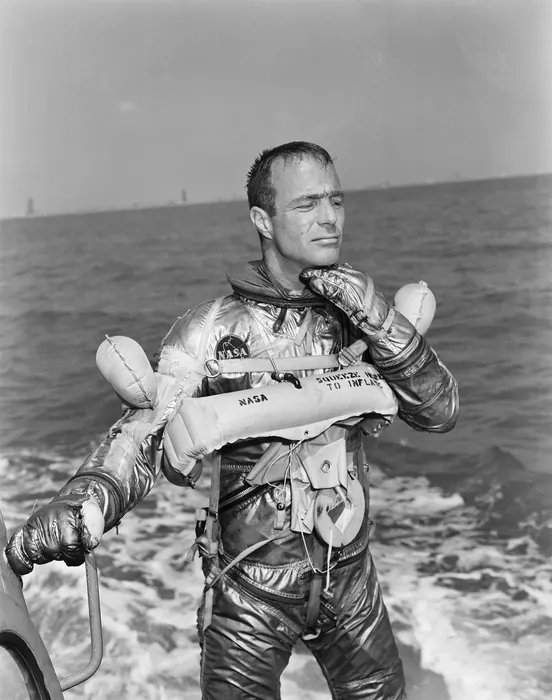
Ironically, Carpenter's distraction yielded one of Mercury's tidiest discoveries. Glenn had reported swarms of luminous “fireflies” drifting past his window, and no one could say what they were; Carpenter, rapping the inside wall of his capsule, watched a shower of the glowing specks shake loose and realised they were nothing more than flakes of frost and ice sloughing off the spacecraft and catching the sunlight. A genuine mystery of the previous flight was solved almost by accident.
Grounded from spaceflight, Carpenter simply changed oceans. He took leave from NASA to join the Navy's SEALAB programme, living for weeks on the sea floor off California as an “aquanaut” and helping to pioneer saturation diving — the only one of the Mercury astronauts to explore inner space as well as outer, and the only person to be both astronaut and aquanaut.