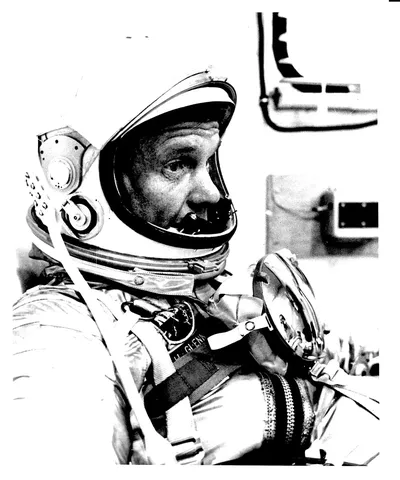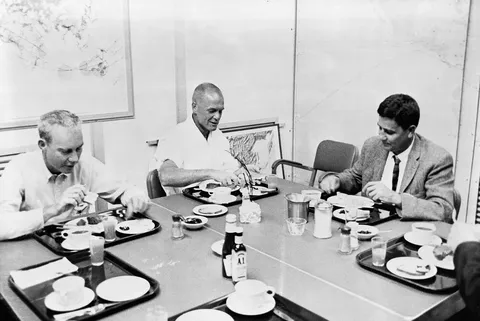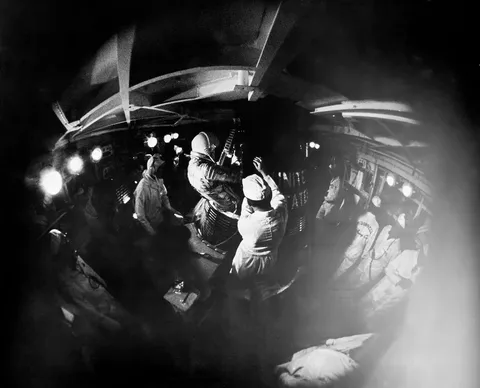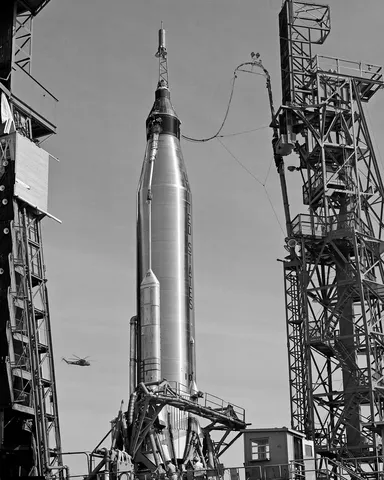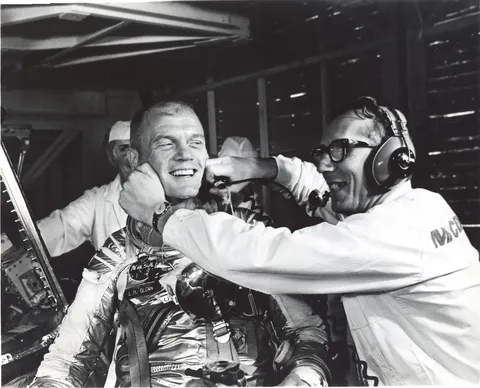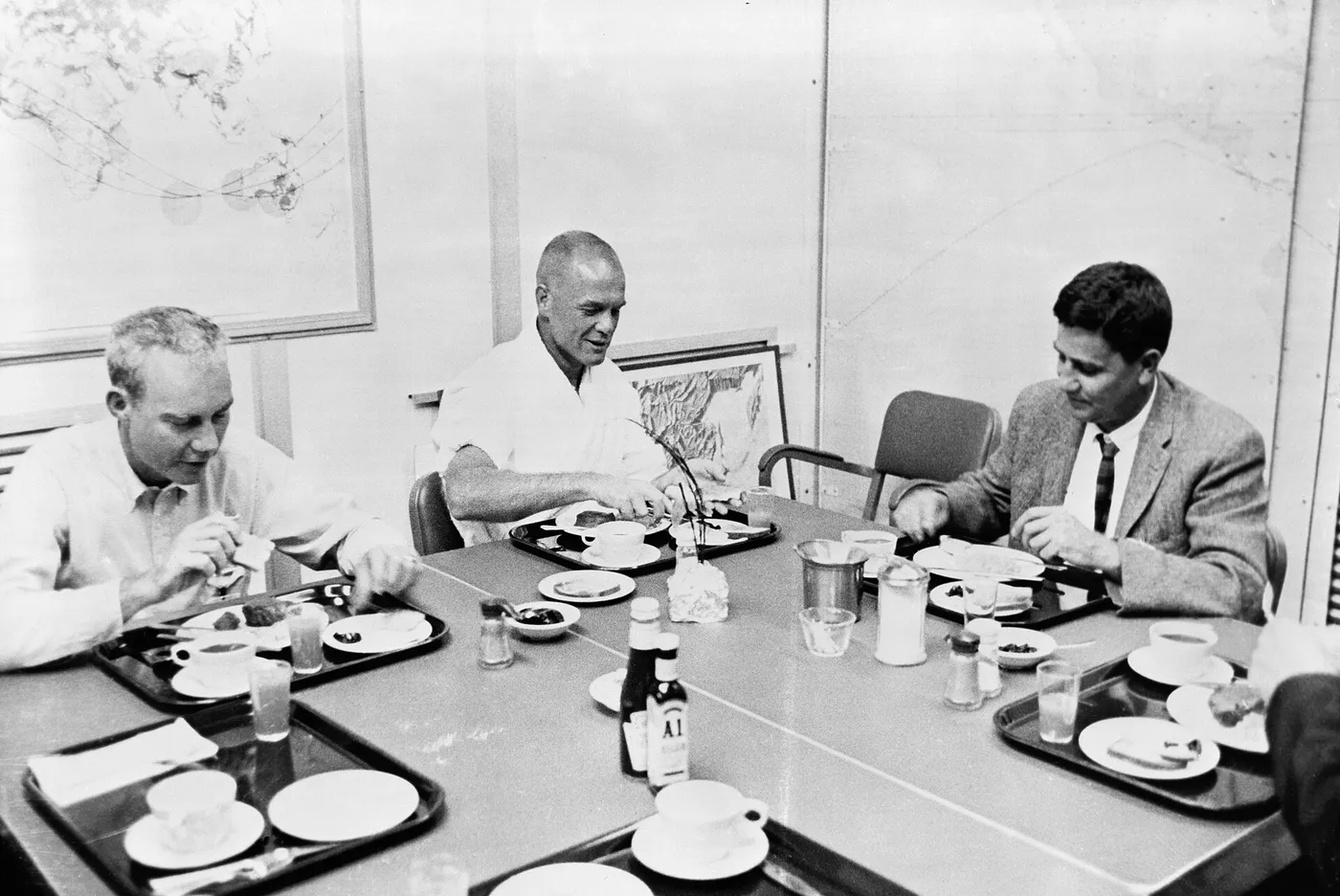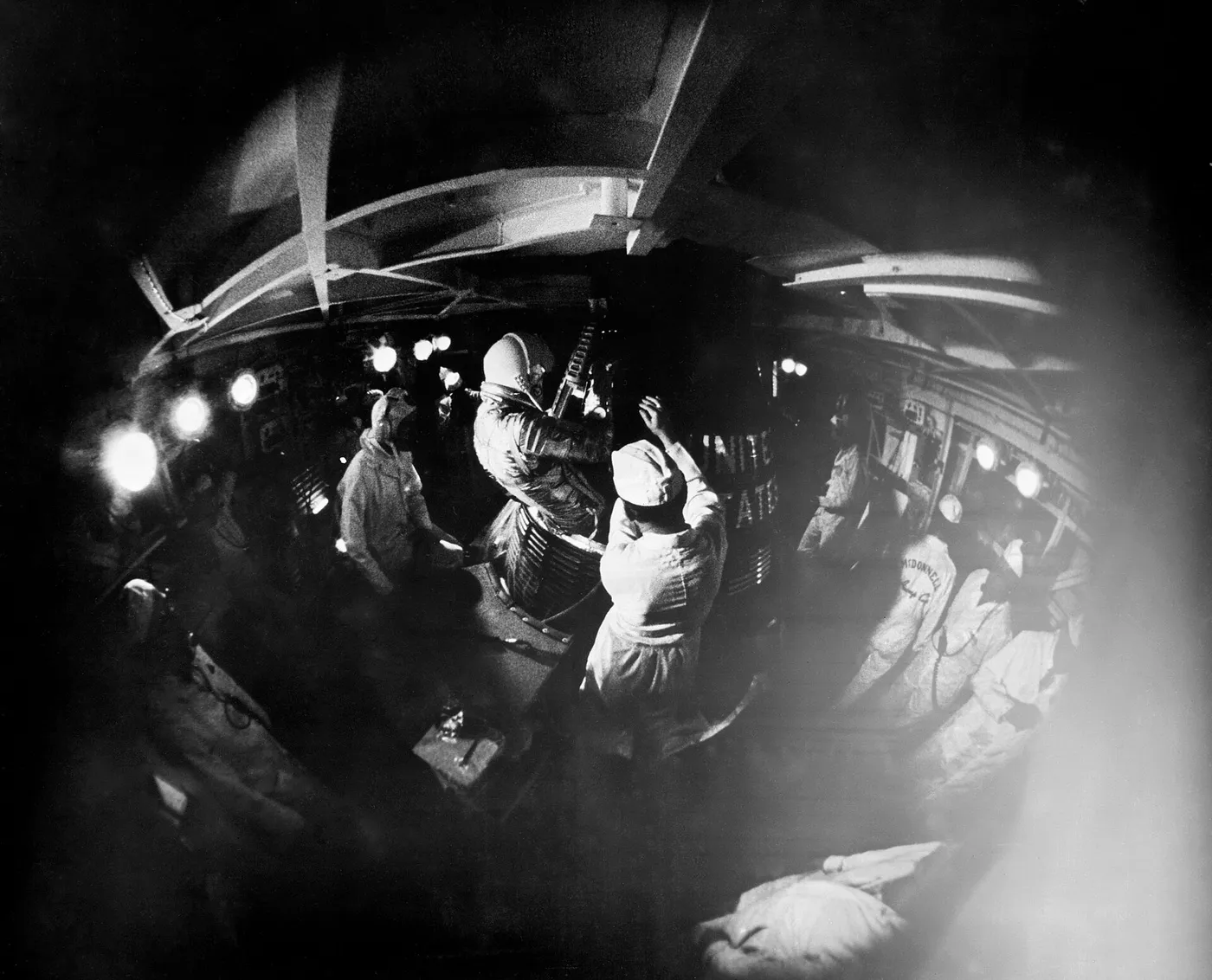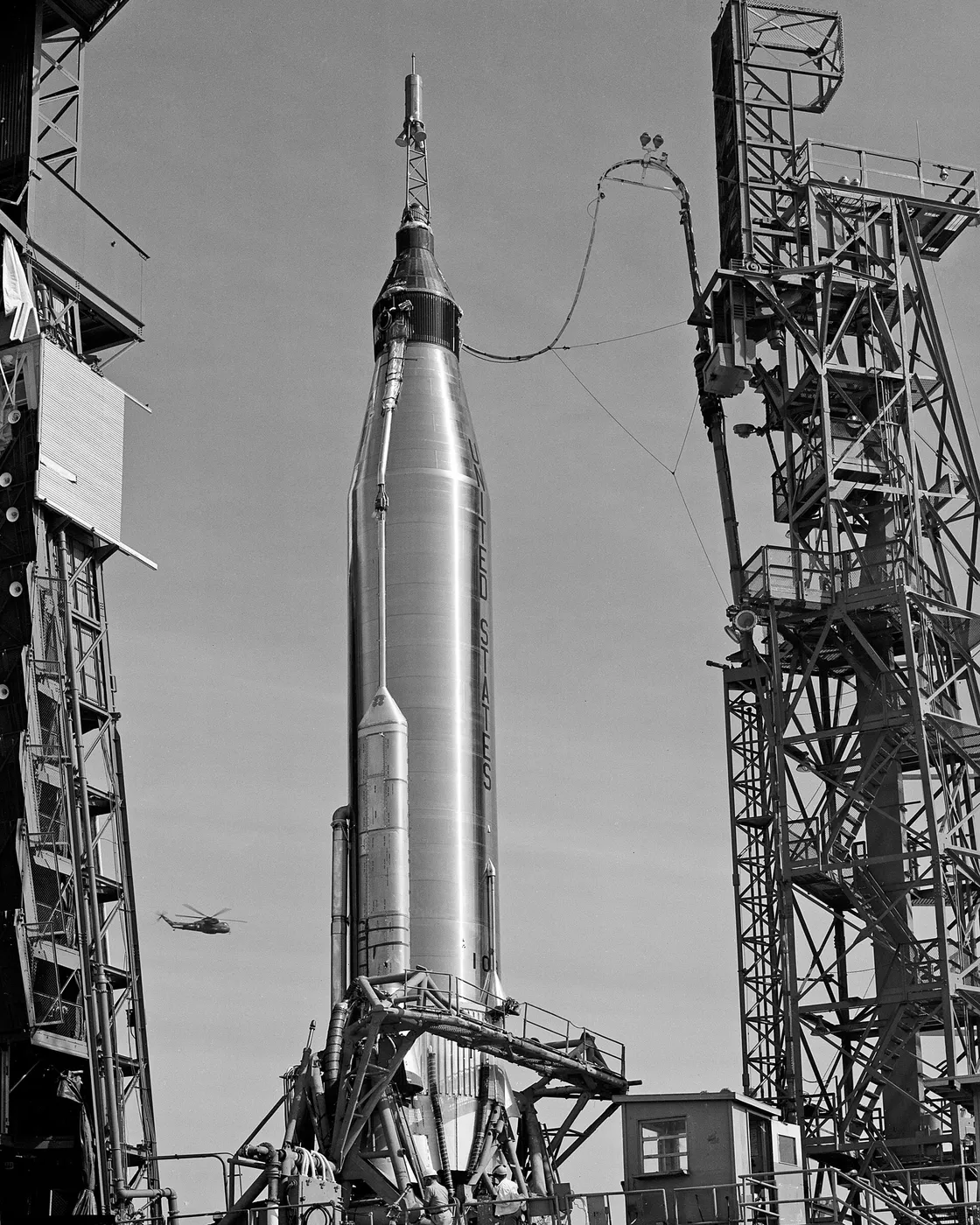
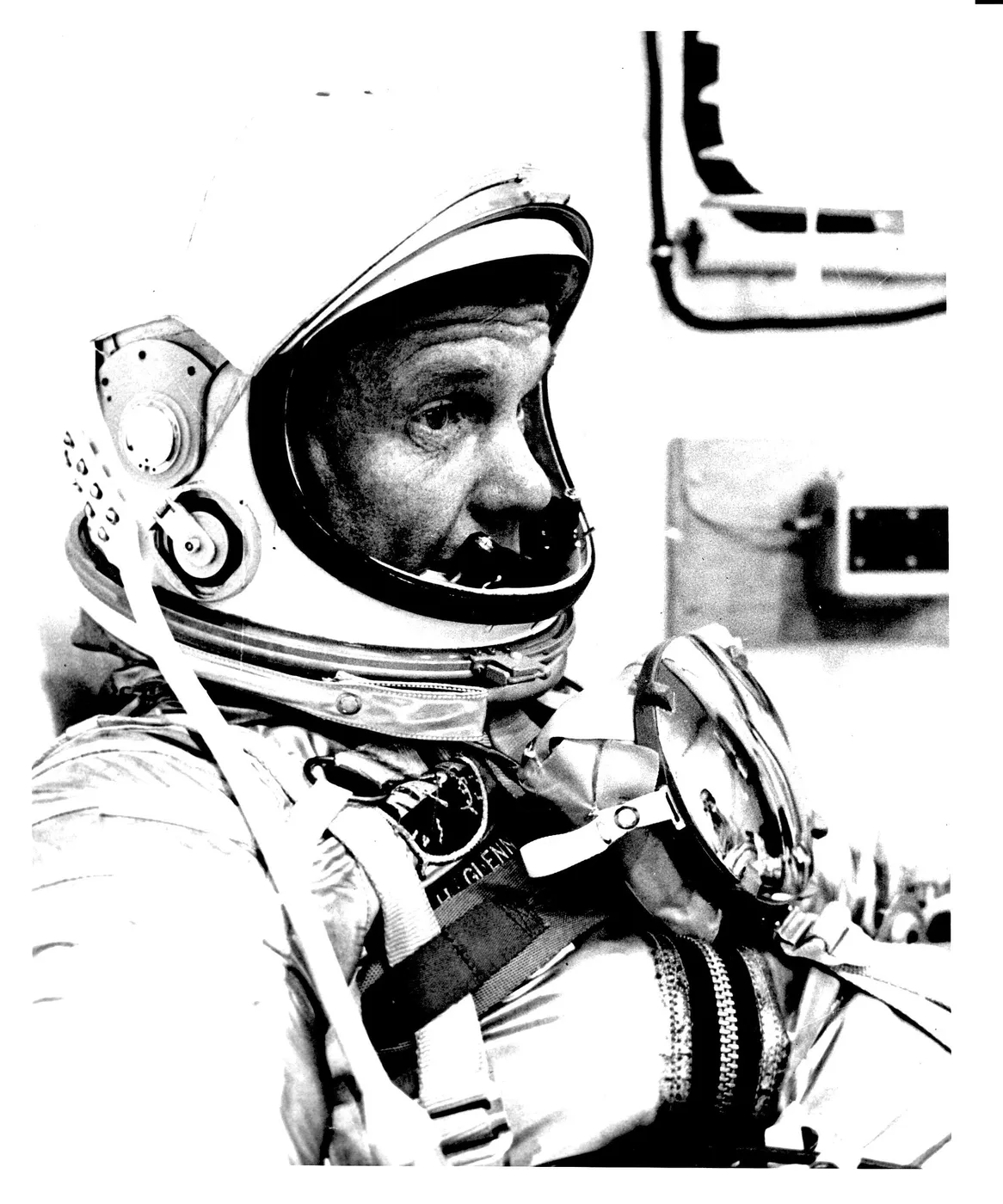
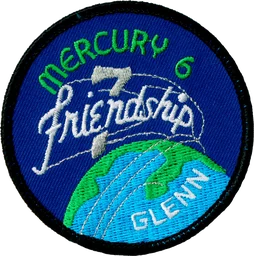
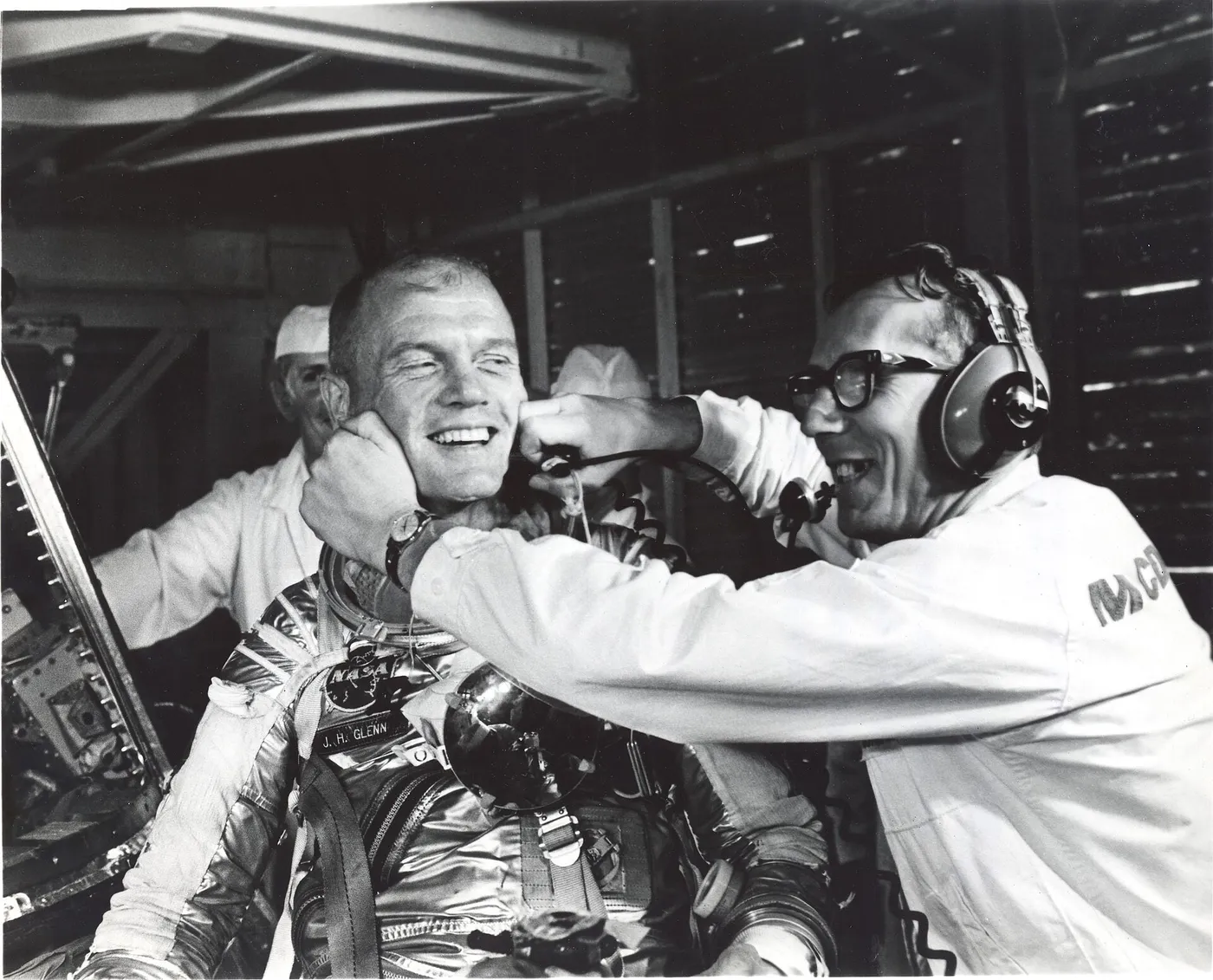
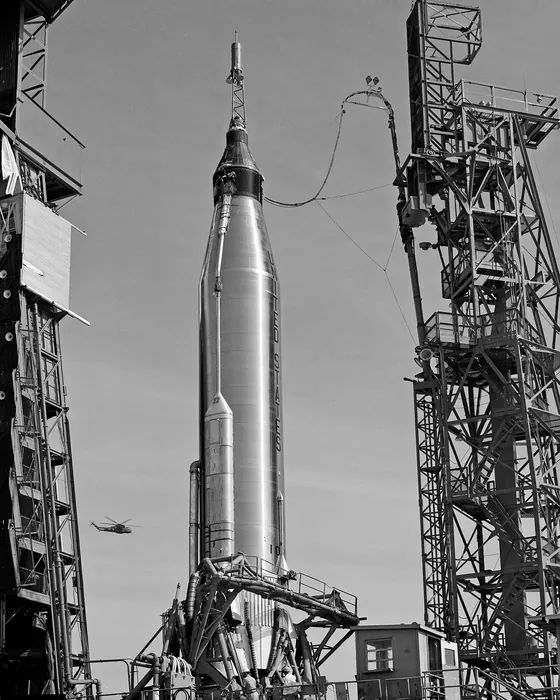
By February 1962 the United States had lofted two men on brief up-and-down hops, but the Soviets had already orbited the Earth twice. On 20 February an Atlas rocket — far more powerful, and far less trusted, than the Redstone — carried John Glenn into orbit aboard Friendship 7, making him the first American to circle the planet. Fellow astronaut Scott Carpenter's send-off from the ground, "Godspeed, John Glenn," passed straight into legend.
Glenn rounded the Earth three times in just under five hours, taking manual control when a thruster fault threatened his attitude — again proving the astronaut could fly the machine. Then came the scare. A sensor warned that his heat shield, the one thing between him and incineration on the way down, might be loose. With no way to check, controllers made an anxious call: rather than jettison the spent retro-rocket pack as usual, they had Glenn keep it strapped over the shield to hold it in place. He rode through re-entry watching flaming chunks streak past his window, unsure whether they were the discarded pack or his own shield breaking apart. The sensor, it turned out, was faulty; the shield had been sound all along.
“Godspeed, John Glenn.”
Scott Carpenter, from the blockhouse
Friendship 7 splashed safely into the Atlantic and Glenn came home a national hero, honoured with a ticker-tape parade and an address to Congress, his flight having answered the Soviet challenge and restored American nerve. The story had a remarkable coda: thirty-six years later, at the age of seventy-seven, Glenn would fly again aboard the Space Shuttle, becoming the oldest person ever to reach space.
Between those two flights lay a whole public life. Eased away from the astronaut corps after his orbits, Glenn left NASA, prospered in business, and in 1974 won a Senate seat from Ohio that he would hold for a quarter-century, even mounting a run for the presidency. Through it all he remained the clean-cut embodiment of the early space age: the first American to orbit, and among the last of the Original Seven to leave public life.
His 1998 return aboard the shuttle Discovery was no mere victory lap. At seventy-seven he served as a genuine test subject, his ageing body monitored to probe the parallels between spaceflight and growing old. Friendship 7 itself had long since become a relic — after the mission it was sent around the world on a goodwill tour its handlers dubbed its “fourth orbit,” and it now hangs in the Smithsonian's National Air and Space Museum, a small scorched cone that once carried a nation's hopes.