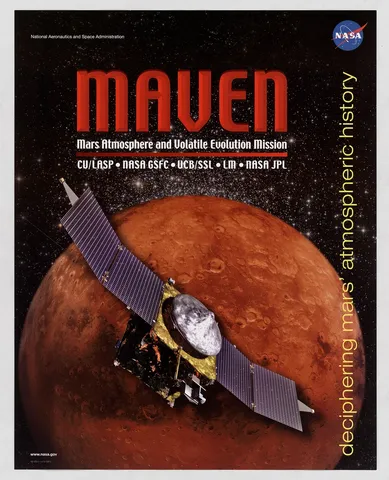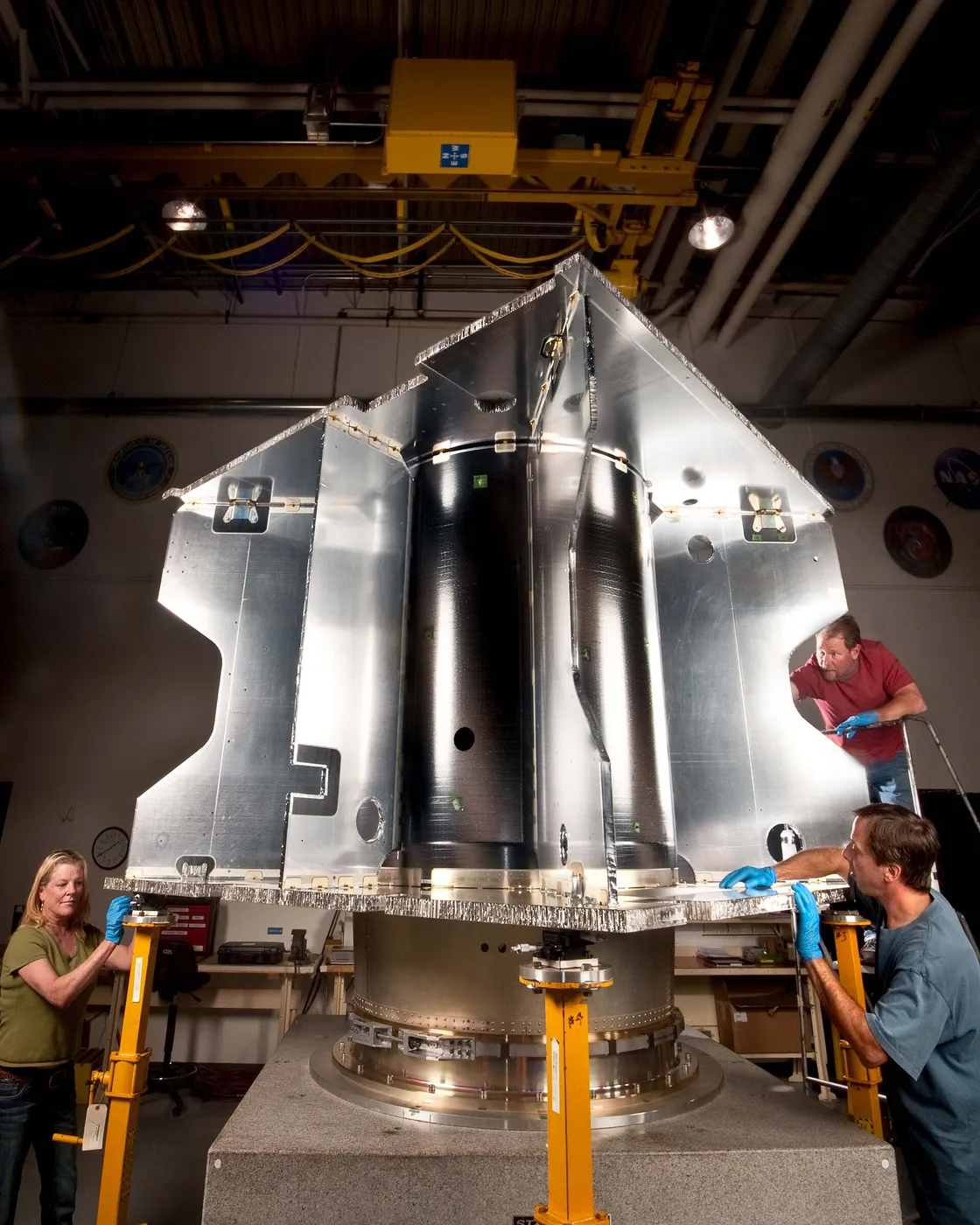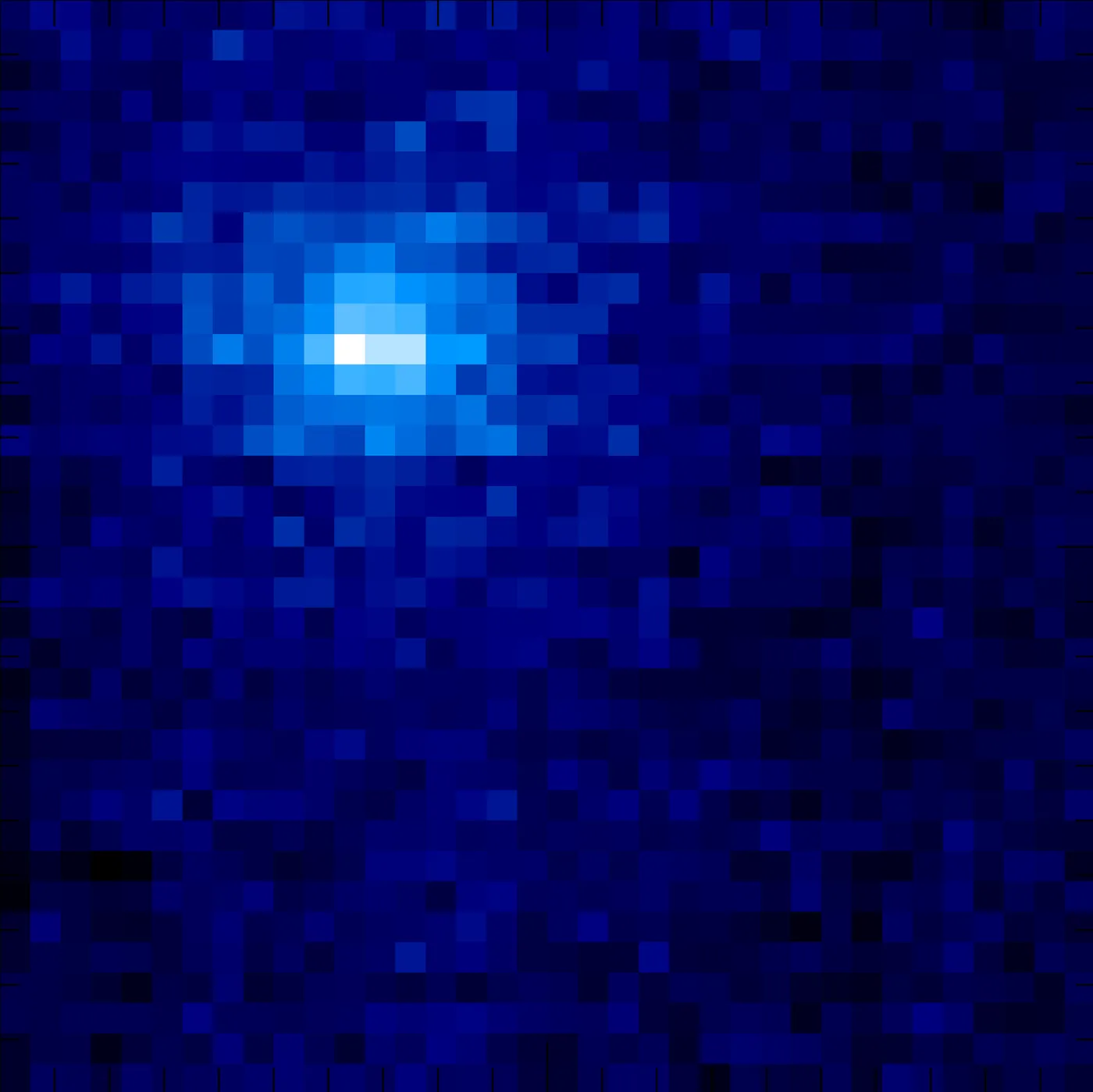
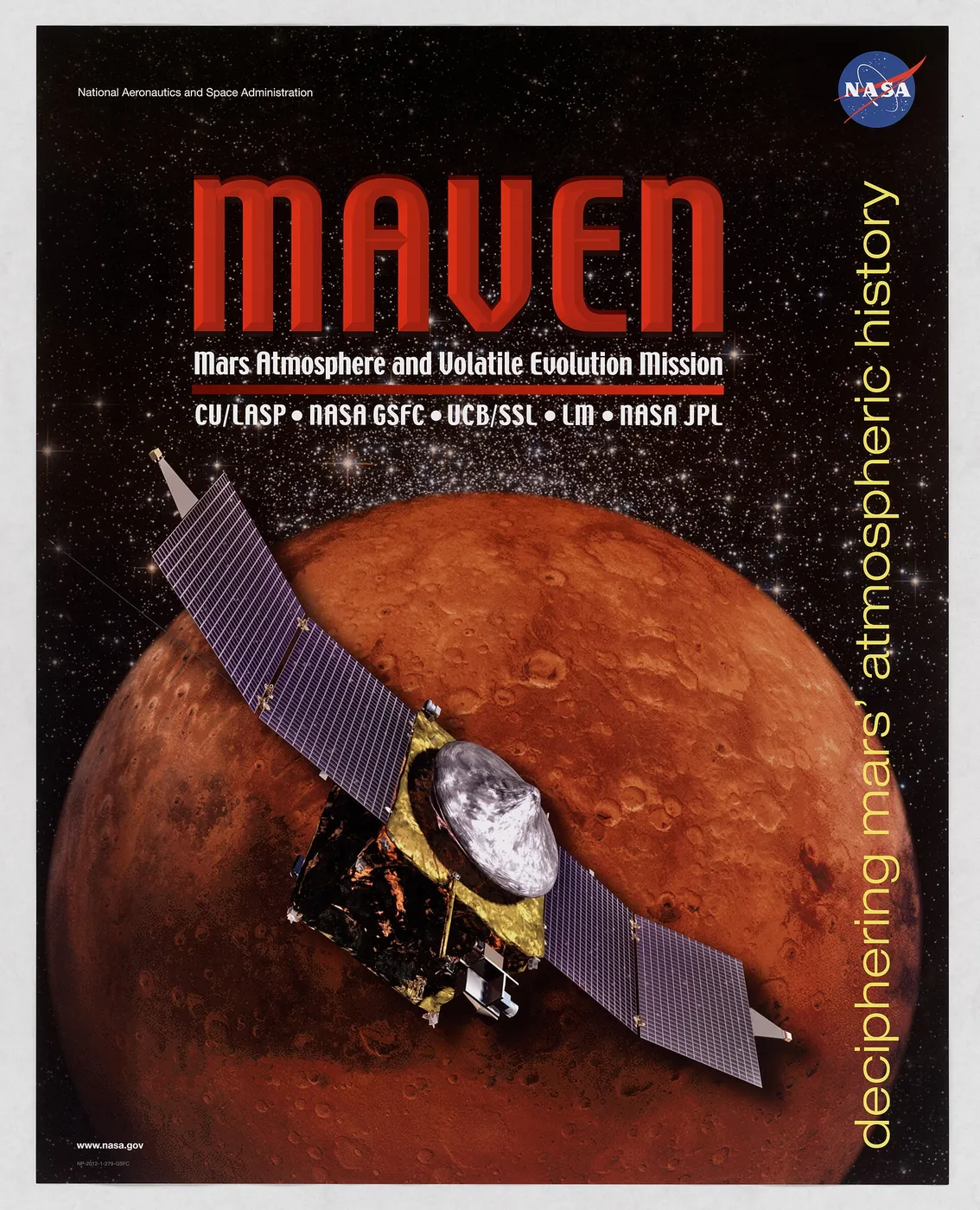

Mars has lost its atmosphere, and MAVEN was sent to watch it happening. The planet was once warm and wet enough for rivers and lakes; today its air is less than one per cent as dense as Earth's. Something removed it, and the leading suspect was the solar wind, stripping gas away from a world with no global magnetic field to deflect it.
The spacecraft flies a deliberately elongated orbit that dips into the upper atmosphere and out into the solar wind, sampling both the escaping gas and the conditions driving it away. It measured the escape directly — of the order of a hundred grams per second under ordinary conditions, rising sharply during solar storms.
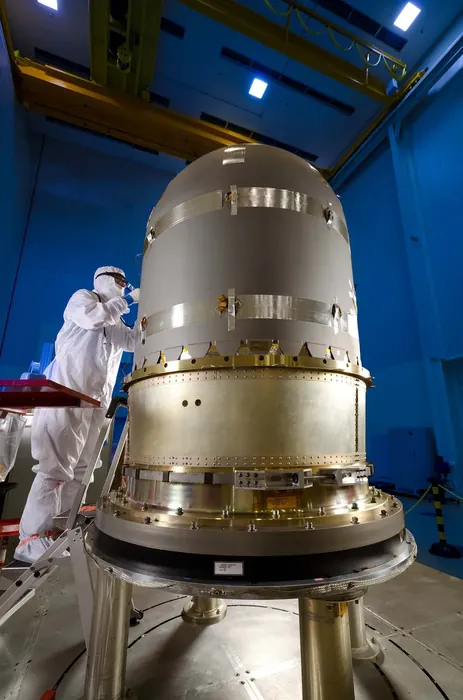
Extrapolated over four billion years, and accounting for the far more violent young Sun, that rate is sufficient. MAVEN's central conclusion is that Mars lost the bulk of its atmosphere to space rather than locking it into rocks, and that the loss of its magnetic field early in its history was the event that doomed its climate.

The mission also caught fortunate events, including a close cometary passage in 2014 that deposited metal ions in the Martian ionosphere and produced a meteor shower, and several solar storms whose effects on atmospheric escape could be measured directly.
It has become, like Odyssey and MRO before it, part of the permanent communications infrastructure at Mars, relaying data for the surface rovers. Its findings also bear directly on exoplanet science: whether a planet keeps its air depends on its magnetic field and its star's temper, which is now a standard consideration in assessing habitability elsewhere.