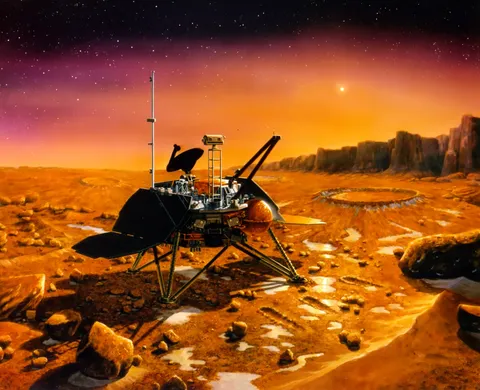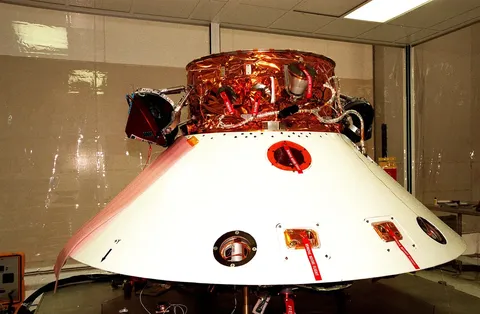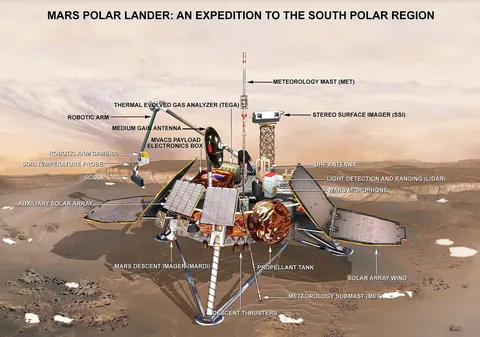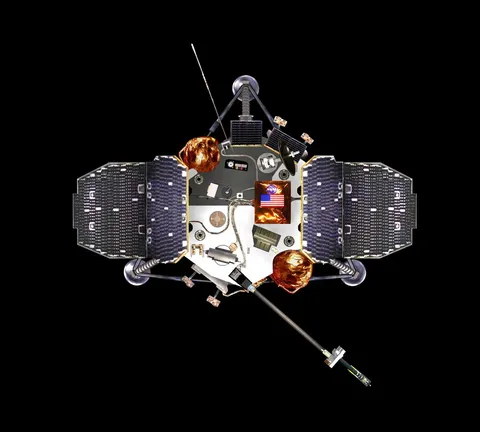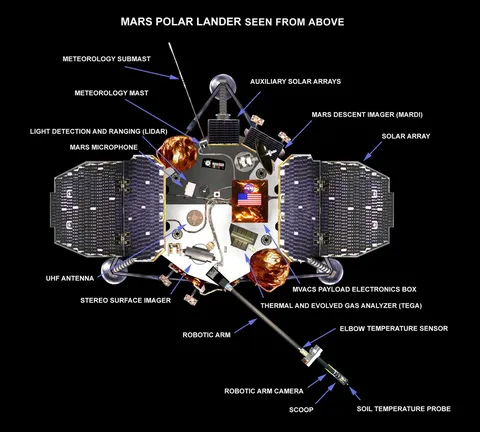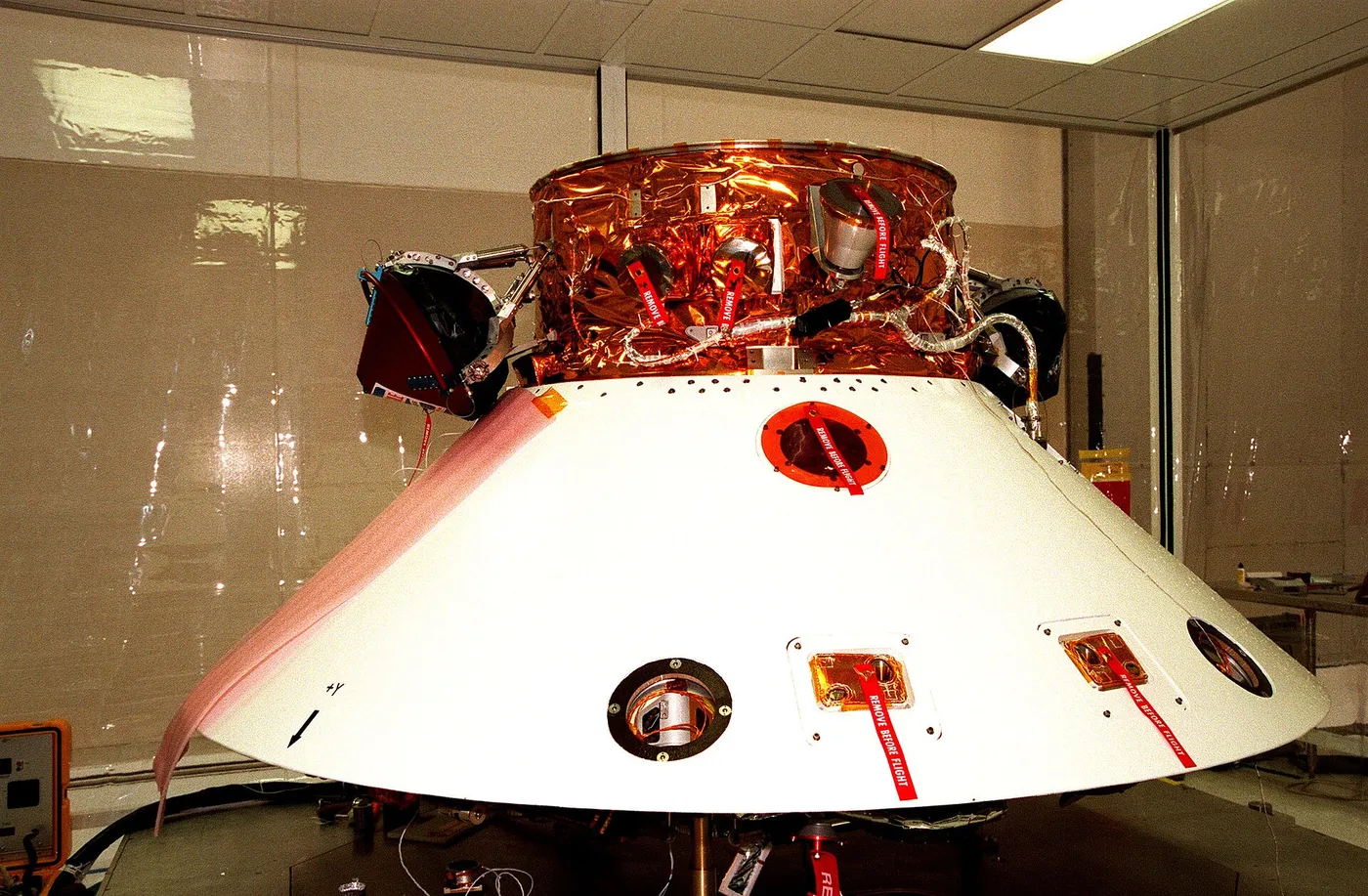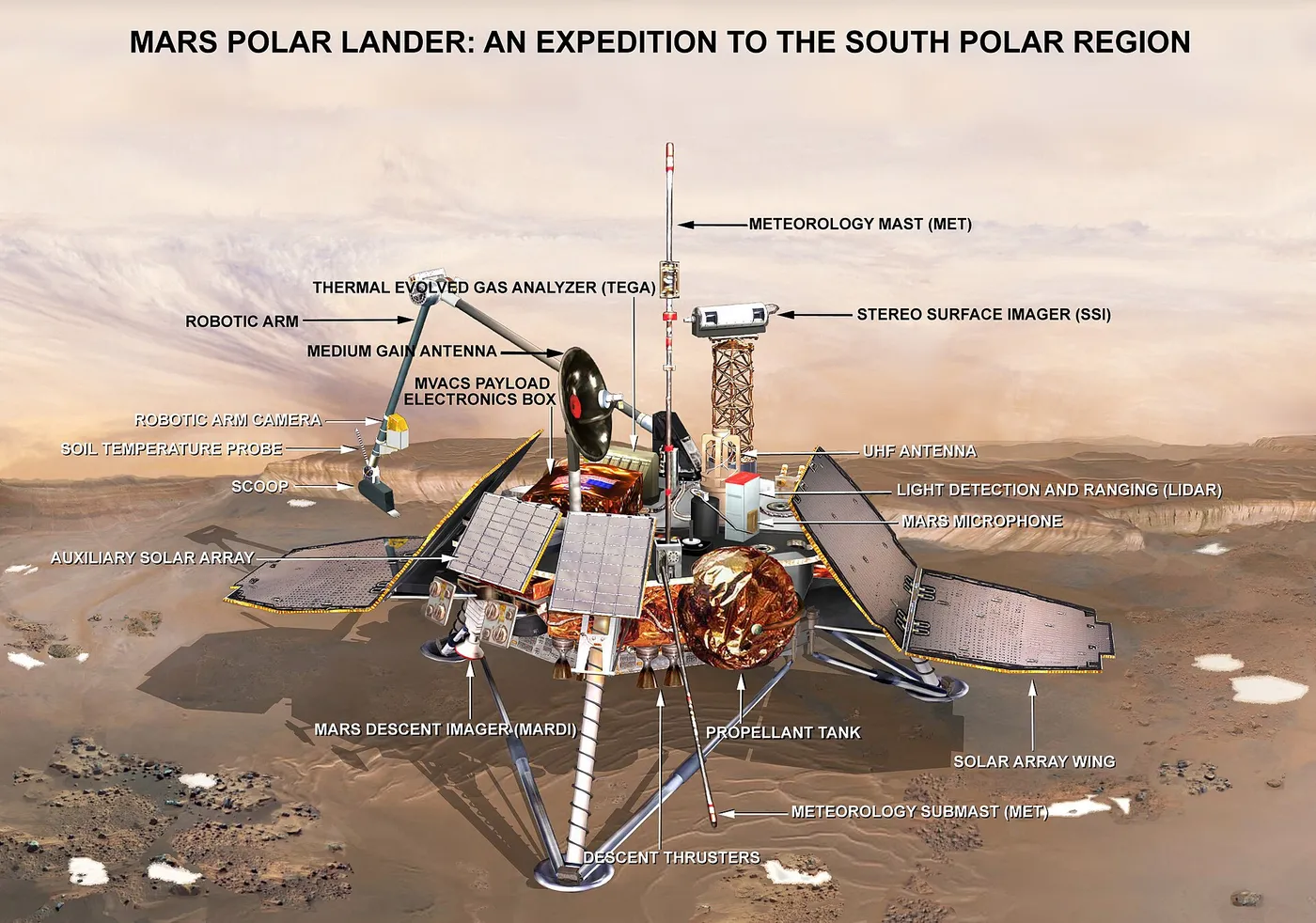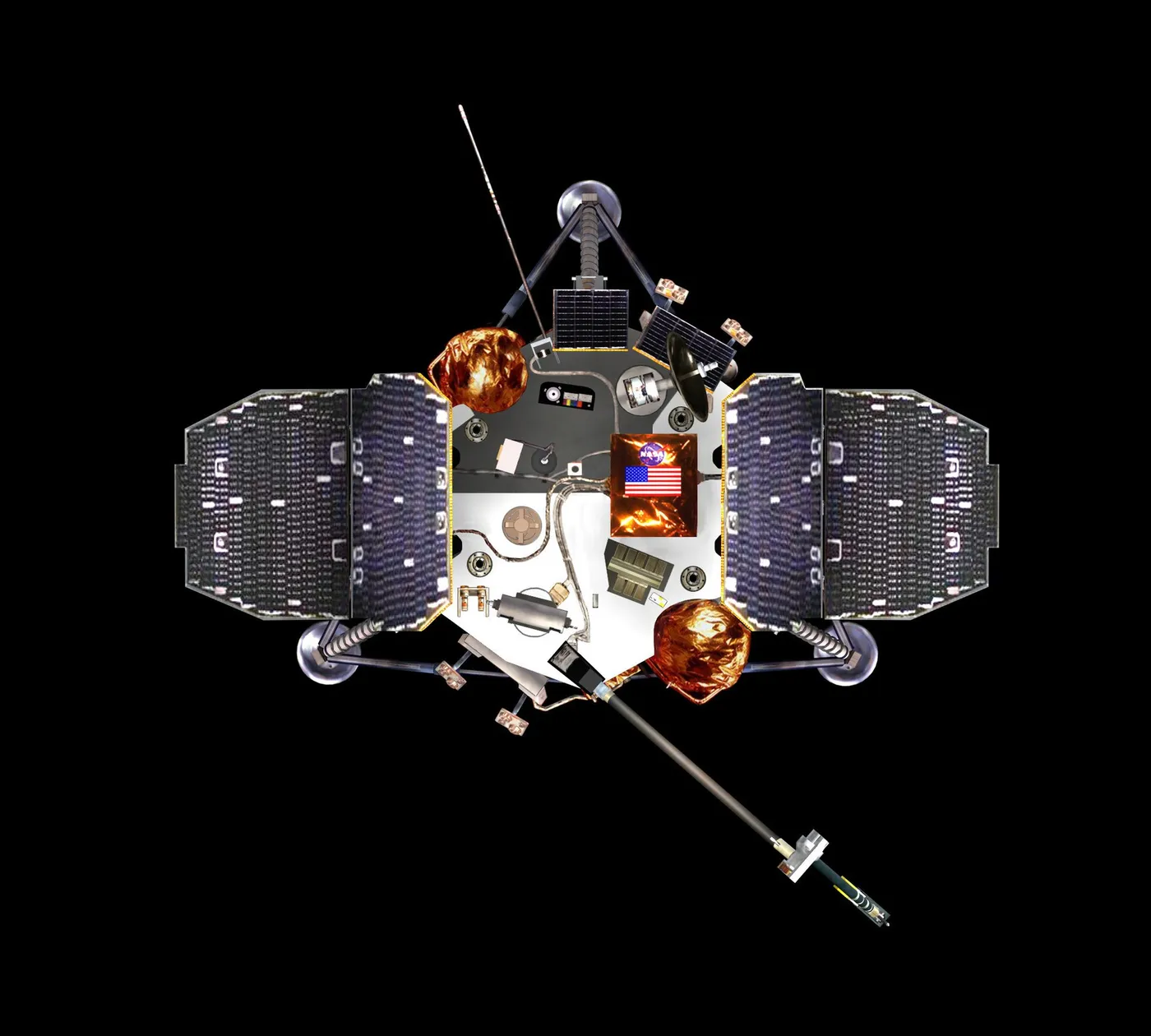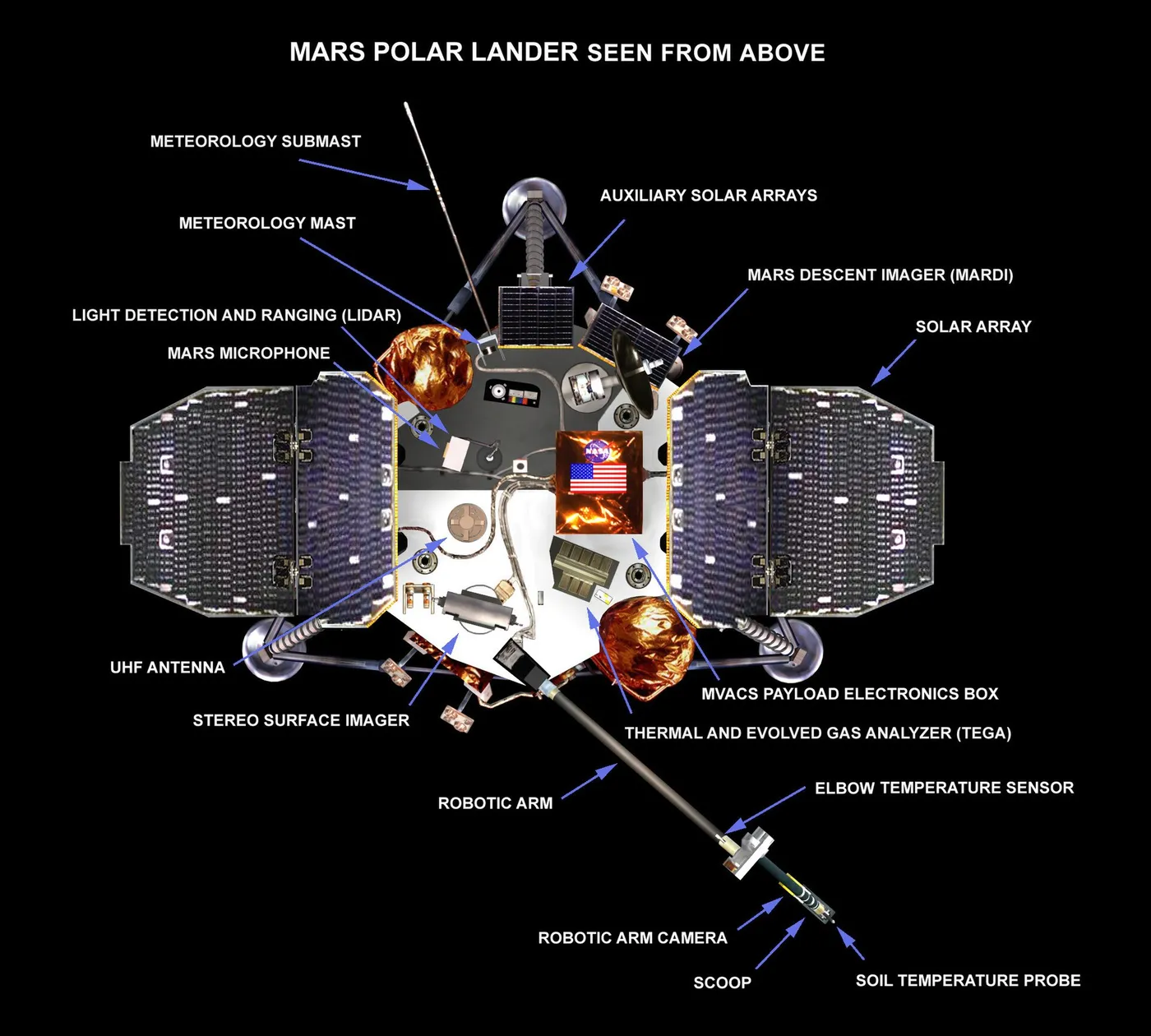
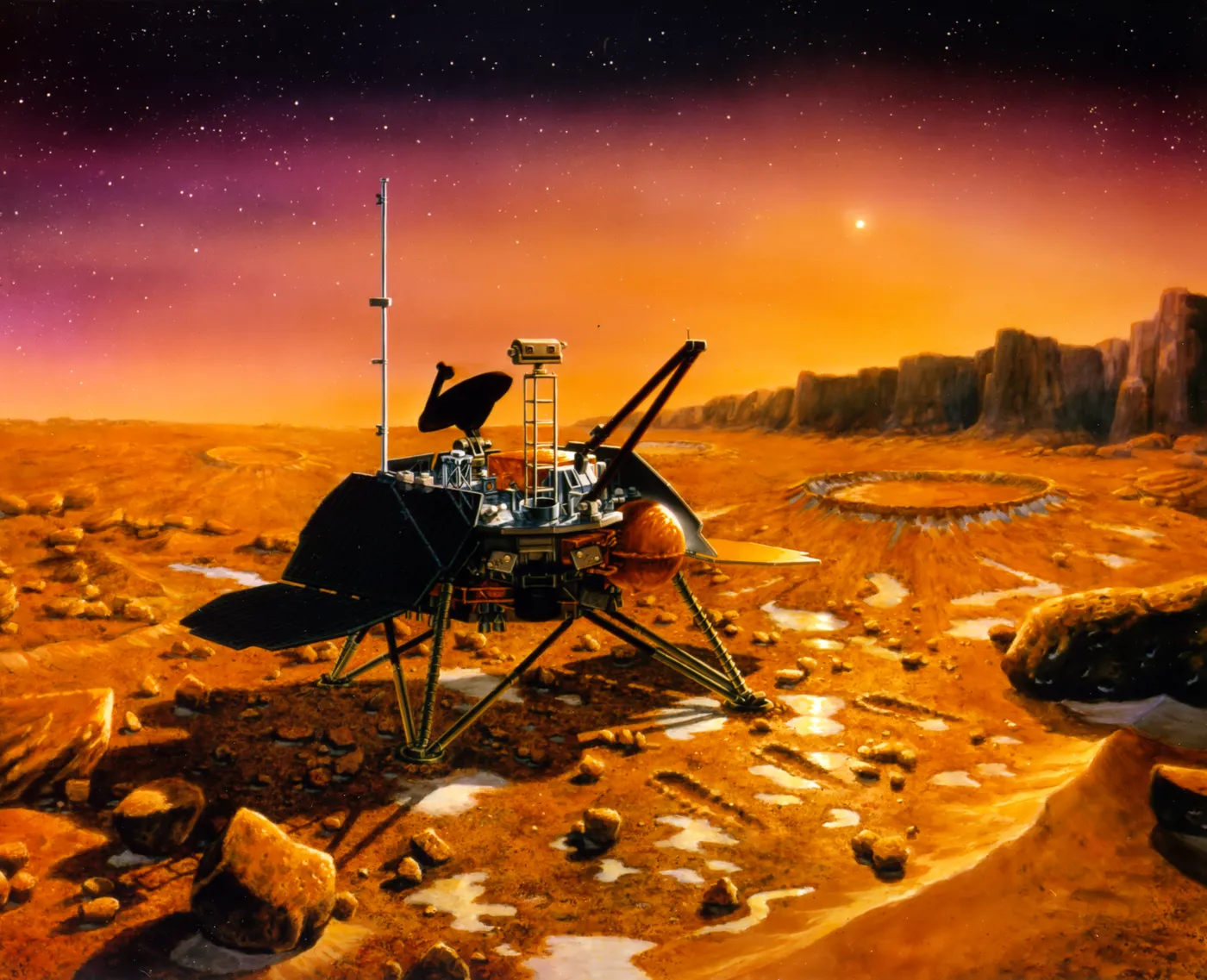

Mars Polar Lander was aimed at the edge of the south polar layered deposits, terrain that records the planet's climate history in bands of dust and ice much as terrestrial ice cores do. It carried a robotic arm, a camera, a weather station and a laboratory to bake soil samples and sniff for water vapour.
It also carried two small probes called Deep Space 2, designed to separate during descent and slam into the surface at some 200 metres per second, burying themselves to sample subsurface ice. Neither was ever heard from either.
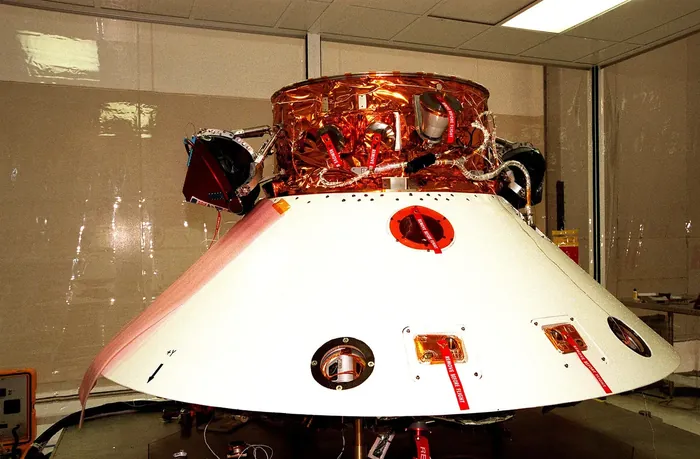
Contact with the lander was lost on 3 December 1999 during the descent, and no signal was received afterwards. Because the mission had no telemetry link during entry — a cost-saving decision — there was no data at all about what had gone wrong, and the investigation had to reason from ground testing alone.
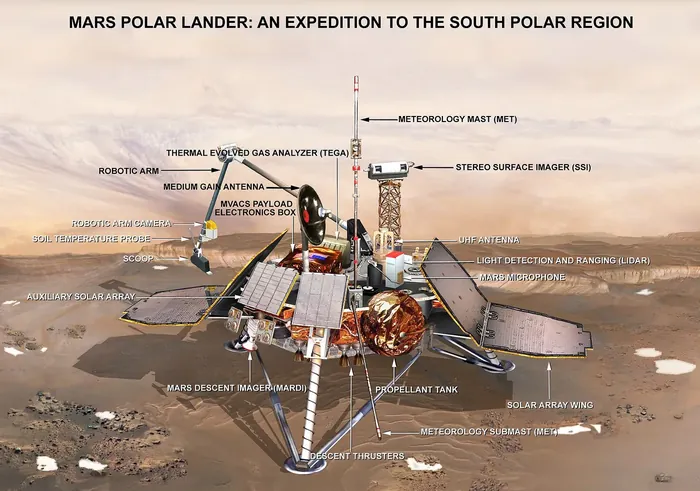
The most probable explanation is grimly simple. Sensors in the landing legs generate a spurious signal when the legs deploy, and the software should have ignored readings during that phase. It did not; the computer most likely recorded a false touchdown at around 40 metres altitude and shut off the descent engines, dropping the lander onto Mars from the height of a twelve-storey building.
The fault had been identified in testing and the test that would have revealed it in the integrated system was not run properly. Coming three months after the Climate Orbiter, the loss ended an era: Mars exploration was restructured around a long-term programme with proper margins, and the next lander to reach the surface, Phoenix, flew a rebuilt version of this very spacecraft's design nine years later.