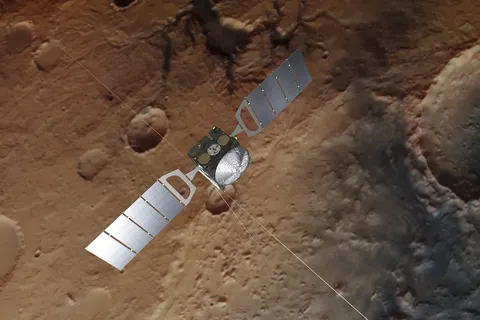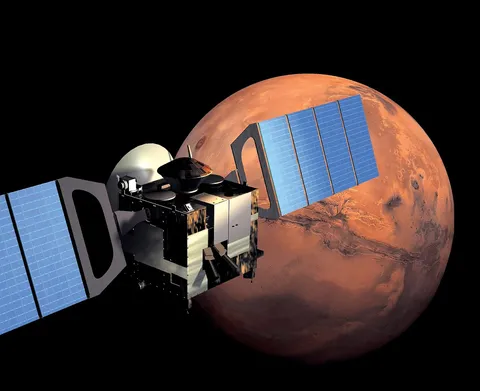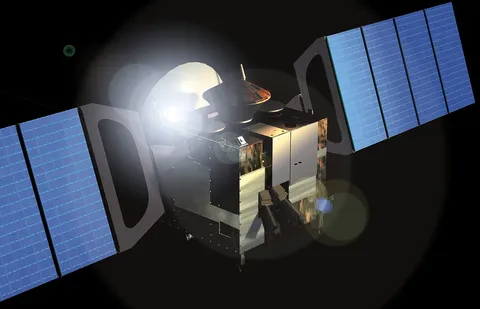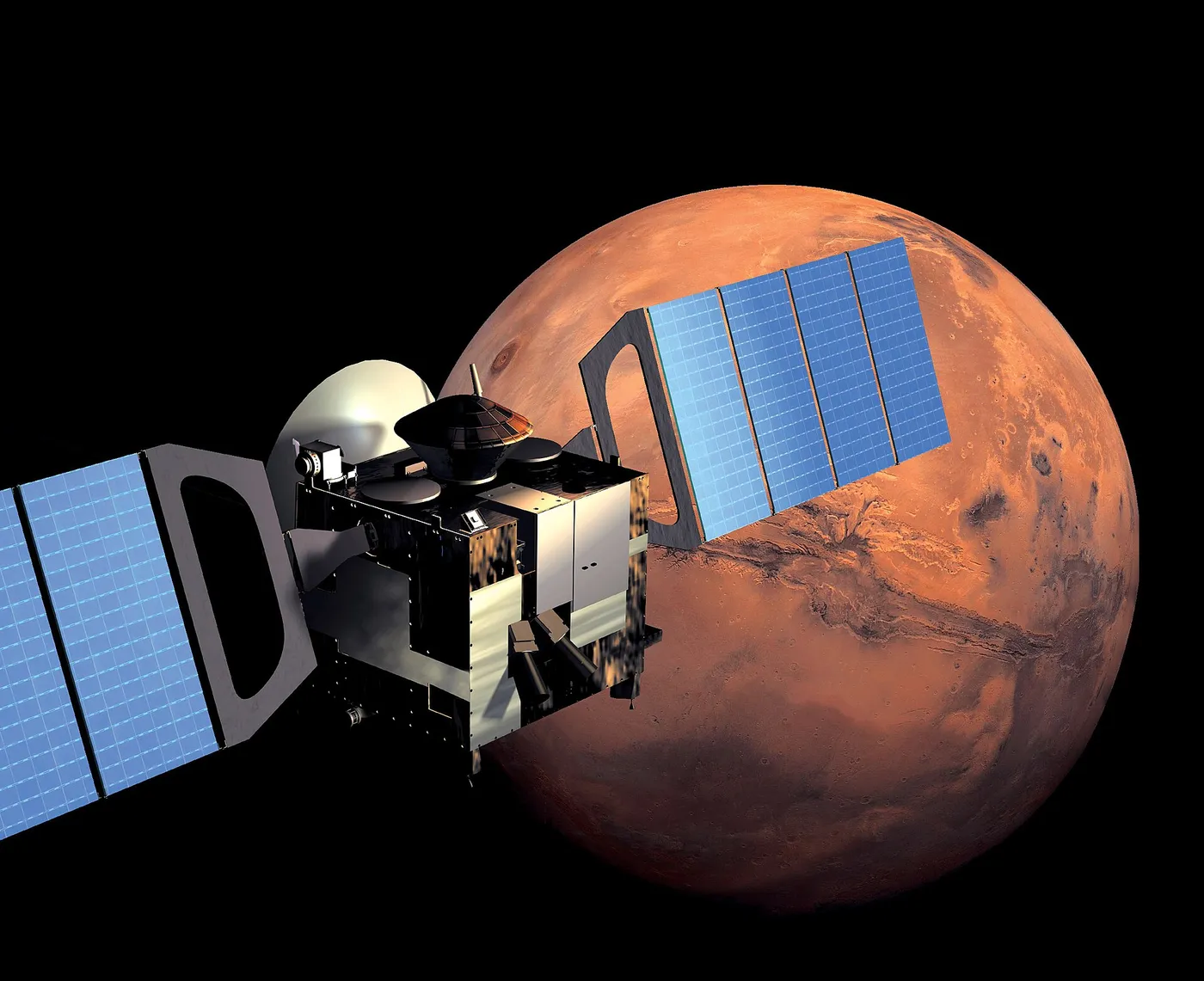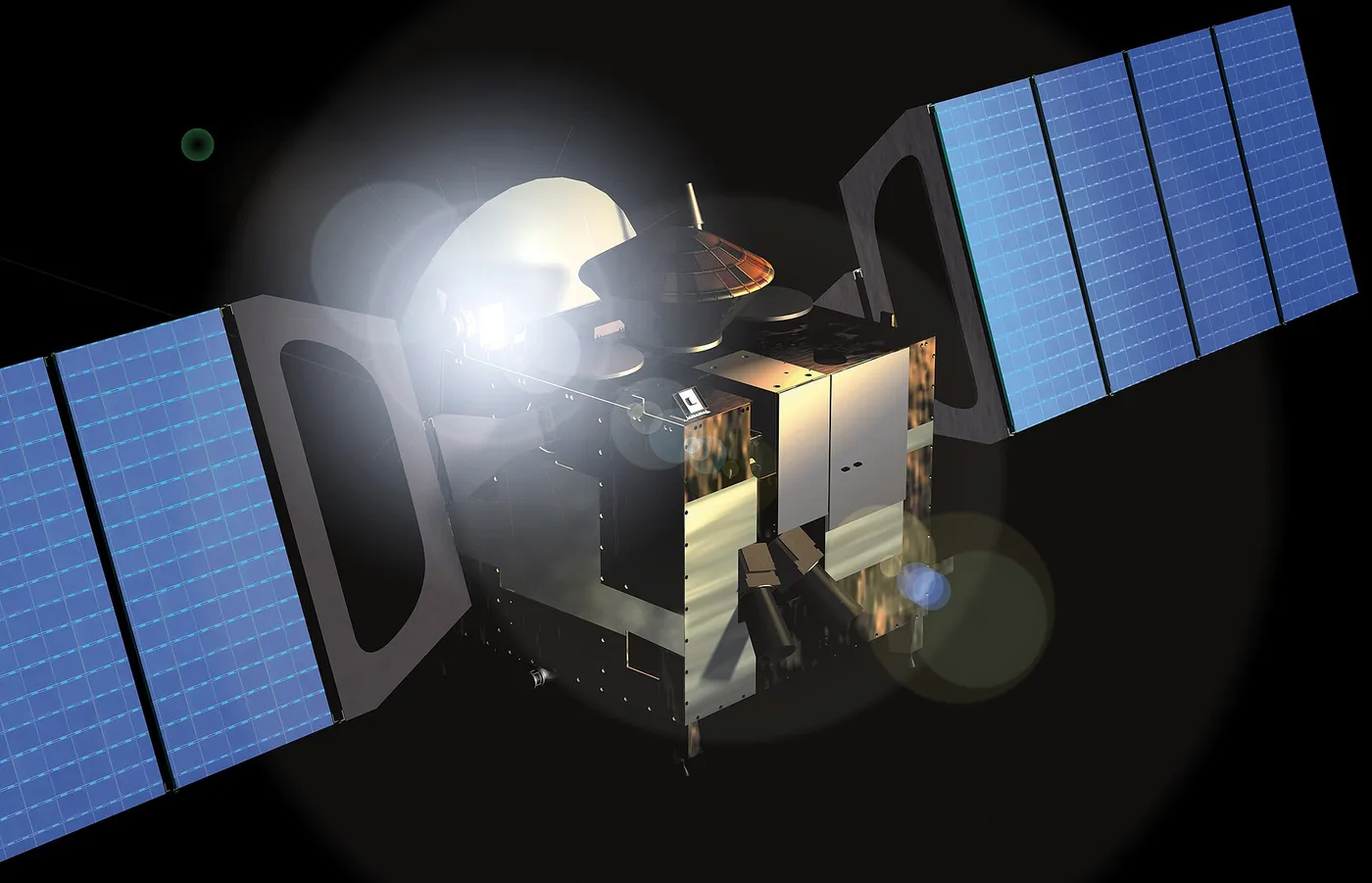
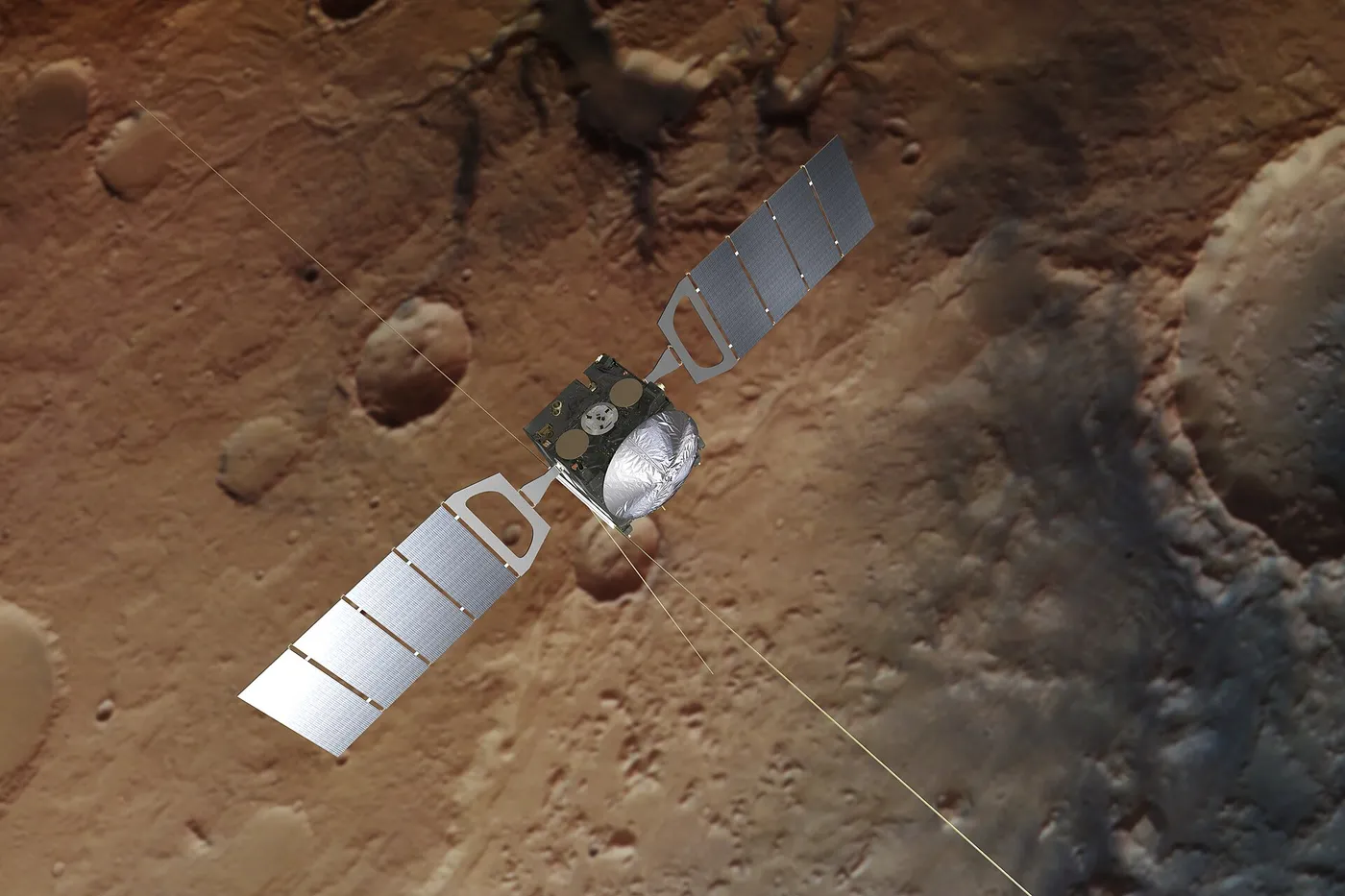

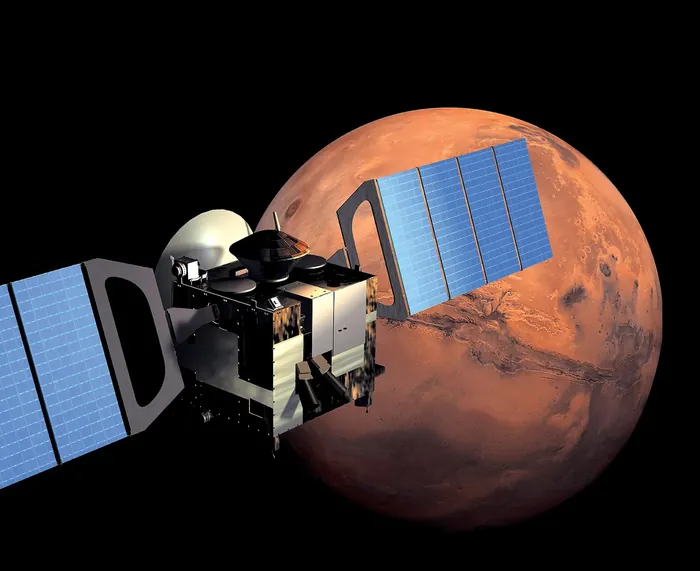
Mars Express was Europe's first mission to another planet, built quickly and cheaply by reusing the design of the Rosetta spacecraft then under construction. It arrived in December 2003 and has been working ever since, making it one of the longest-lived spacecraft at Mars.
It carried a British lander called Beagle 2, a shallow disc that folded open like a pocket watch, championed by the geologist Colin Pillinger with a flair for publicity that included a call sign composed by Blur and a calibration target painted by Damien Hirst. It separated on schedule and was never heard from again.
Its fate stayed a mystery for twelve years, until images from a NASA orbiter located it in 2015 — intact, on the surface, having landed successfully. Two of its four solar panels had failed to unfold, and since the radio antenna sat beneath them, it could neither transmit nor be commanded. It had arrived alive and simply could not say so. Pillinger had died the previous year.
The orbiter's own results have been substantial. Its radar sounder found layered ice deposits kilometres thick at both poles, mapped subsurface structure across the planet, and in 2018 produced a bright reflection beneath the southern ice cap that the team interpreted as a lake of liquid brine — a claim vigorously contested and still unresolved.
It also detected methane in the atmosphere, a gas that should not persist and therefore implies an active source, biological or geological. Later measurements from other spacecraft have disagreed about whether the methane is there at all, which has made it one of the most stubborn arguments in Mars science.