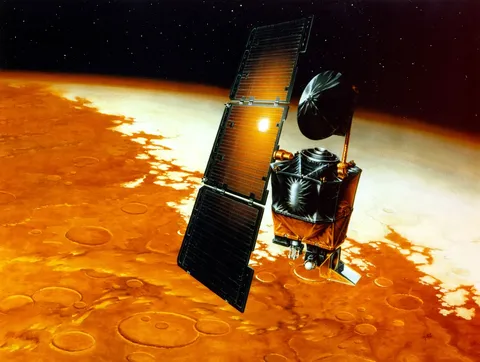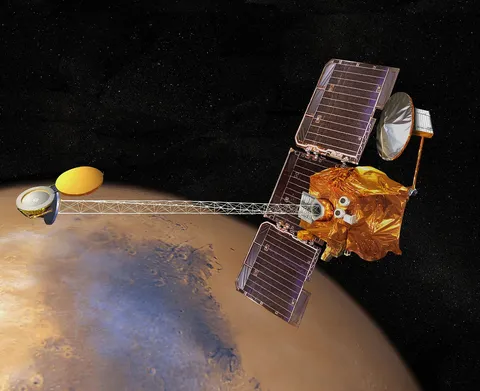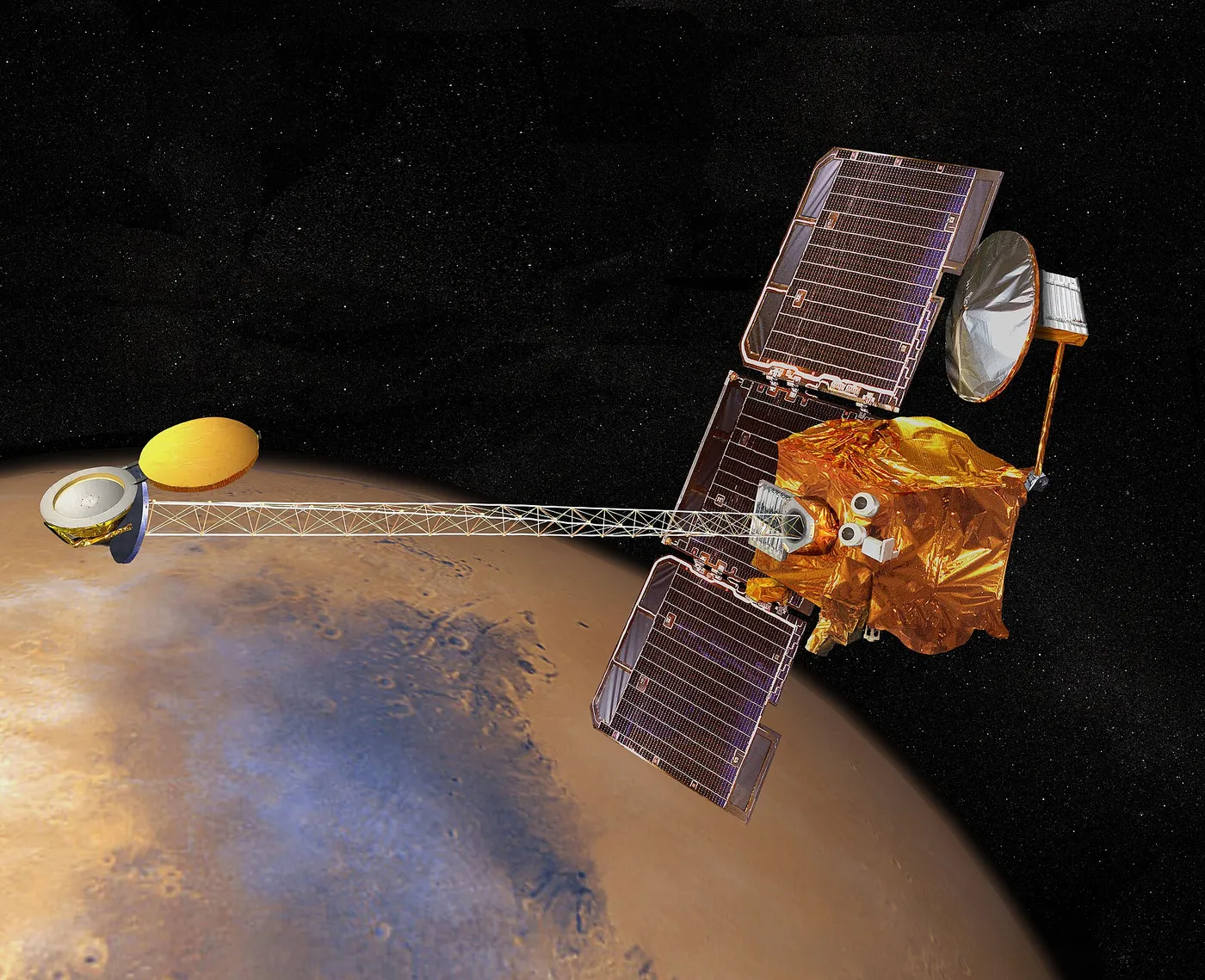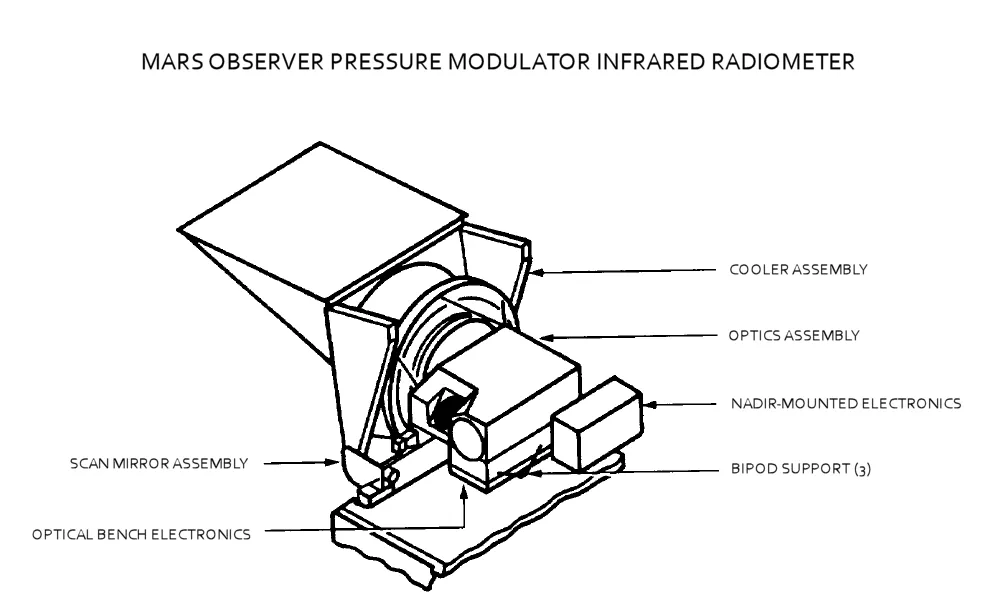
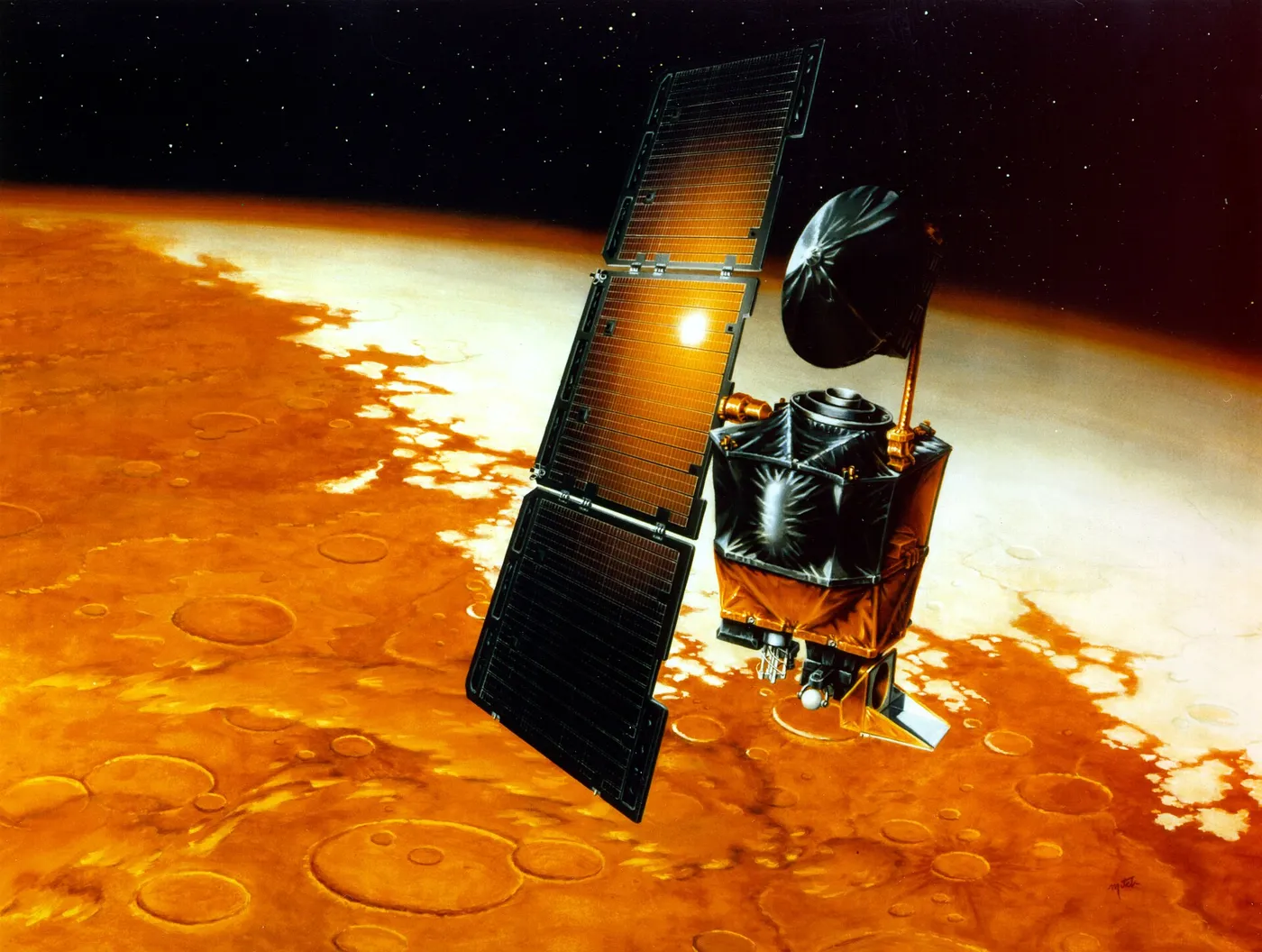

Mars Climate Orbiter was destroyed by a unit conversion. The spacecraft's trajectory was refined during cruise using data on small thruster firings used to unload the momentum wheels; the software at the contractor reported the impulse in pound-seconds, and the navigation software at JPL read the numbers as newton-seconds — a factor of about 4.45.
The error accumulated silently over nine months. Navigators noticed discrepancies and raised them repeatedly, but the concerns were passed through informal channels, never formally logged as an anomaly, and never resolved. The mission had been staffed lean, in the spirit of the era, and there was no one whose job it was to insist.
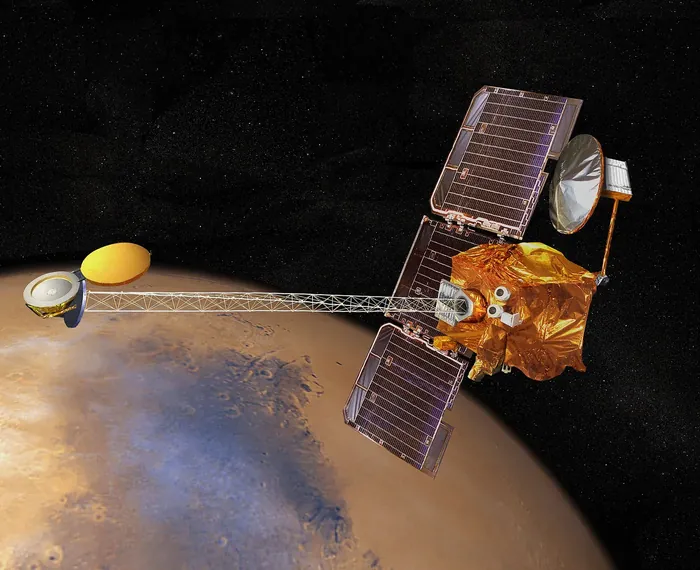
On 23 September 1999 the spacecraft entered orbit insertion some 170 kilometres lower than intended — roughly 57 kilometres above the surface, well inside the atmosphere. It either burned up or was torn apart and skipped back into solar orbit. Contact was never regained.
The loss cost about $328 million and, worse, arrived alongside the failure of Mars Polar Lander three months later. Two flagship failures in one year effectively ended the faster, better, cheaper doctrine, and the review boards concluded that the cost-cutting had removed exactly the cross-checking and independent verification that would have caught a simple arithmetic mismatch.
It has become the standard textbook example of an interface failure — not a mistake by any individual engineer, but a mismatch between two organisations that each did their own work correctly and never agreed on the units. NASA now mandates metric units throughout, and the story is taught in engineering courses worldwide.