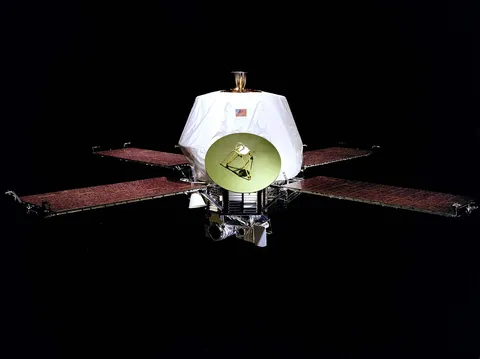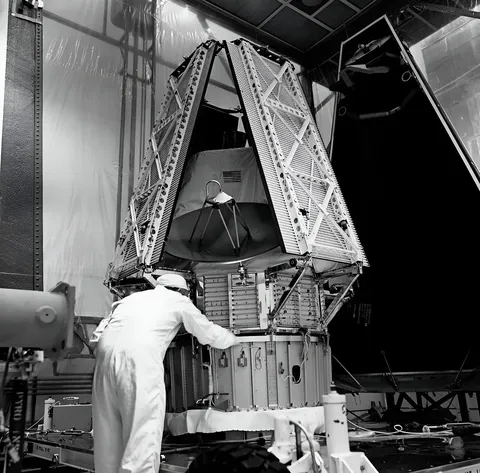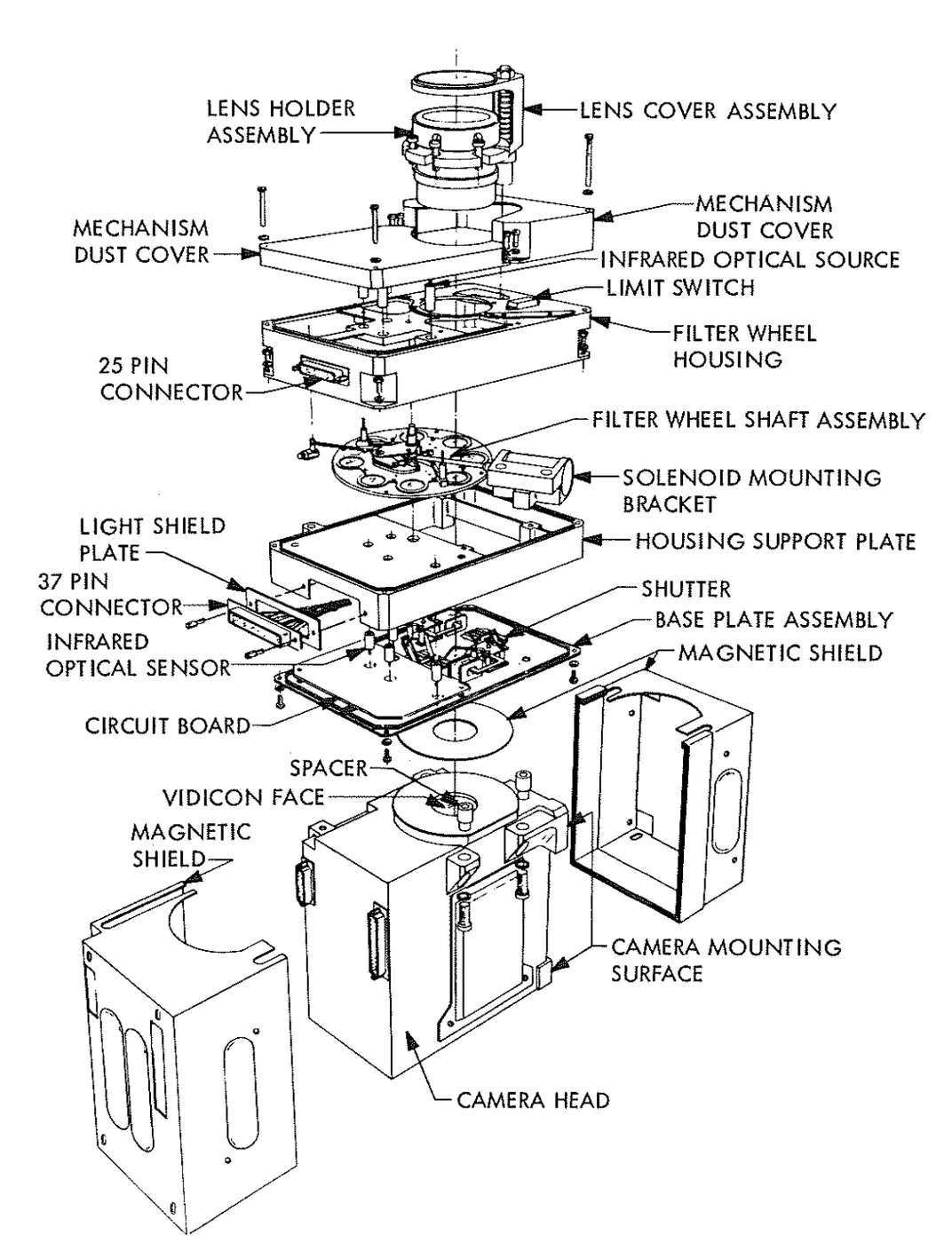
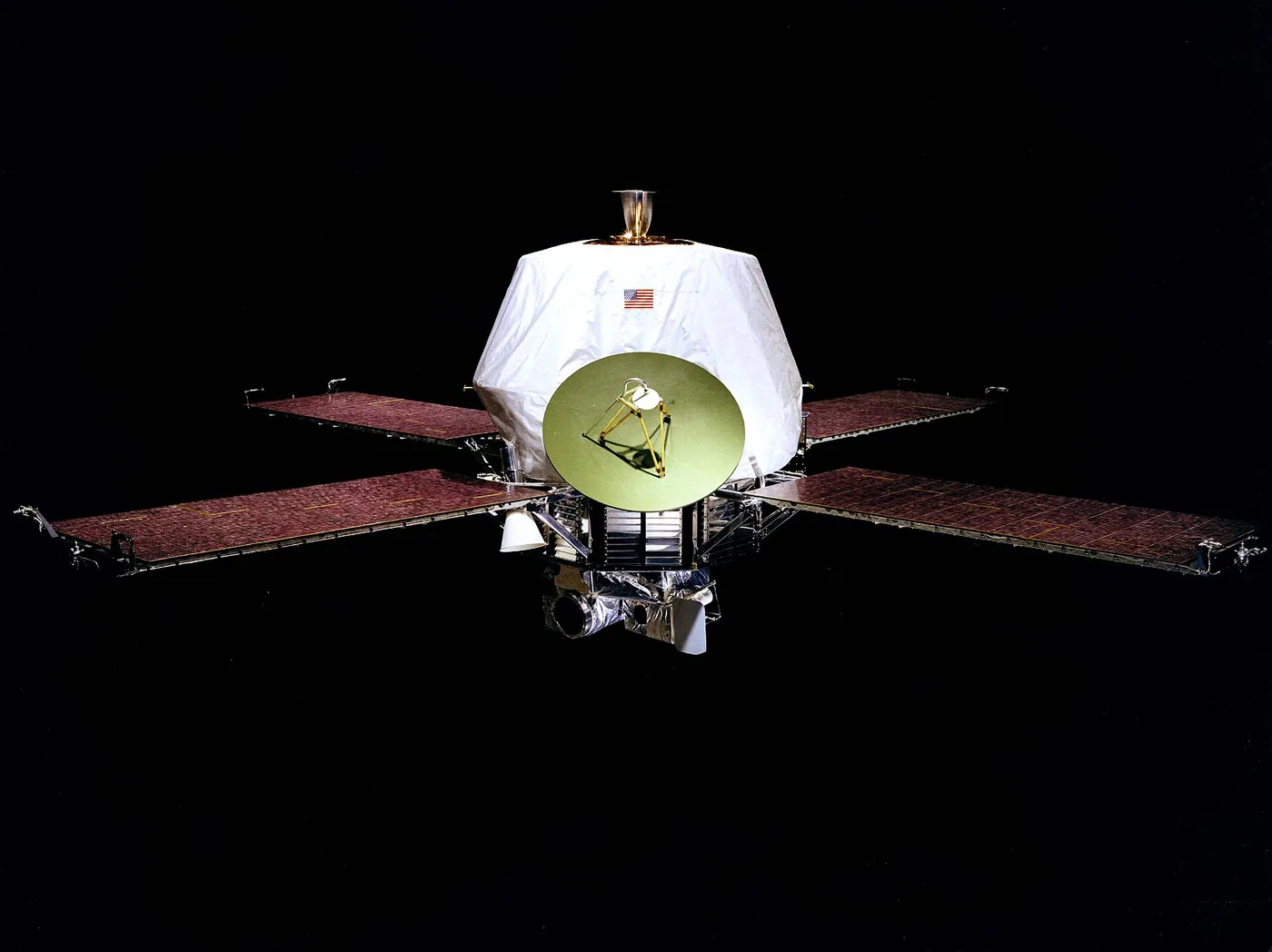

Mariner 9 arrived at Mars on 14 November 1971 and became the first spacecraft to orbit another planet, beating two Soviet probes to the achievement by a matter of weeks. What it found on arrival was a planet that had disappeared: a global dust storm, the largest ever recorded, had swallowed the entire surface.
The controllers did something the mission plan had not anticipated — they waited. For weeks the spacecraft circled a featureless orange ball, taking calibration images and conserving film, while its Soviet counterparts, running fixed pre-programmed sequences, dutifully photographed the top of the dust and returned nothing of value. It was an early and decisive argument for reprogrammable spacecraft.
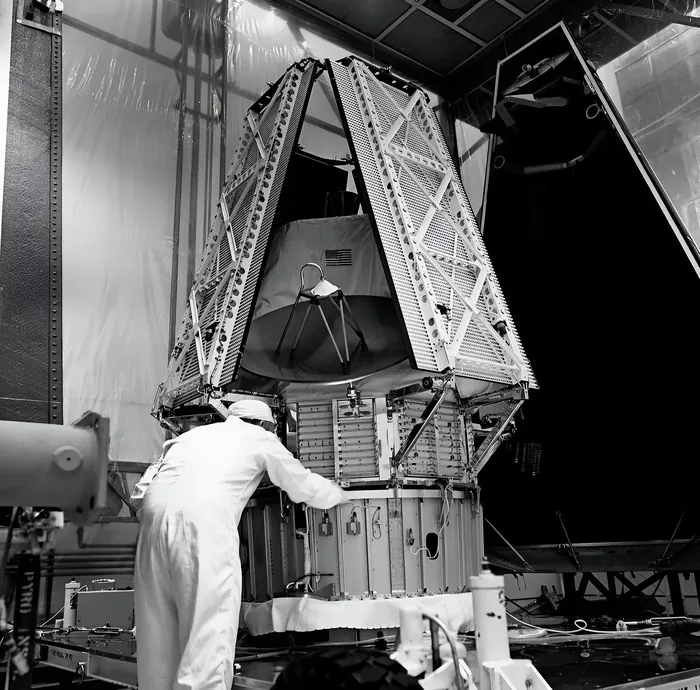
As the dust settled, four dark spots emerged first, poking above the storm. They turned out to be the summits of enormous volcanoes, the largest of them — Olympus Mons — standing some 22 kilometres high, nearly three times Everest and the tallest known mountain in the solar system.
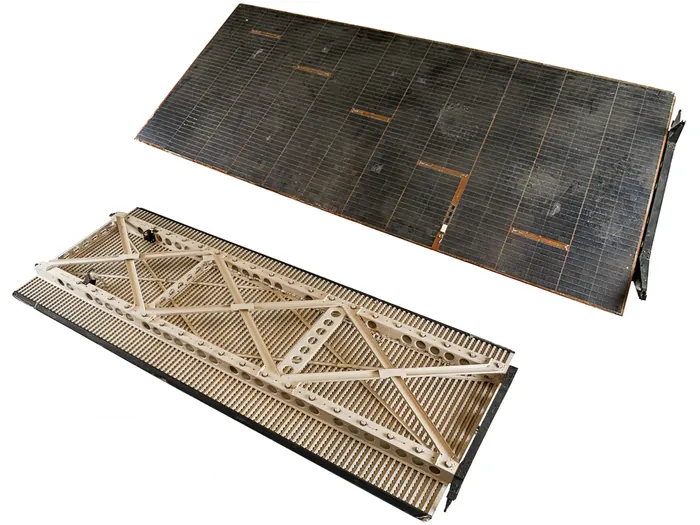
The mission went on to map about 85 per cent of the surface and transformed Mars from the dead cratered world of Mariner 4 into somewhere geologically alive. It found a canyon system 4,000 kilometres long — named Valles Marineris in the spacecraft's honour — and, most consequentially, sinuous channels and outflow features that looked unmistakably as though they had been carved by running water.
That single observation reoriented planetary science. If water had once flowed on Mars, then the climate had changed catastrophically, and the question of life shifted from the present to the deep past. Every mission since — Viking, the rovers, the orbiters hunting for ancient lakebeds — has been chasing the implications of what Mariner 9 saw once the dust cleared.