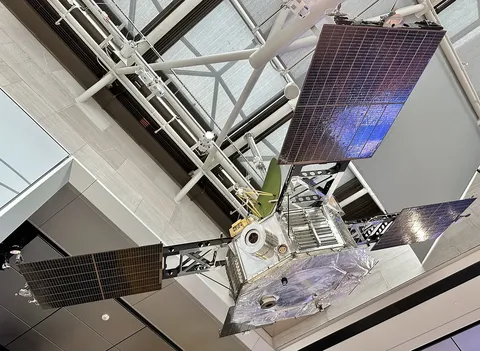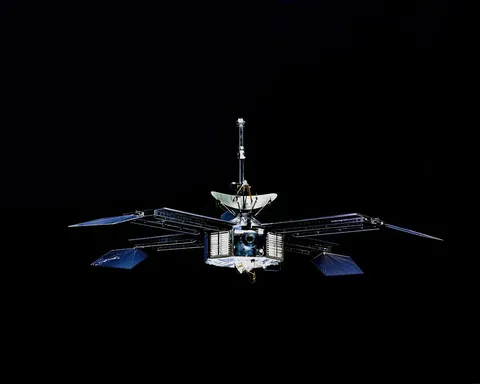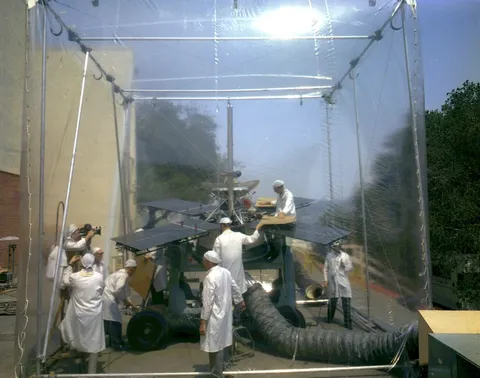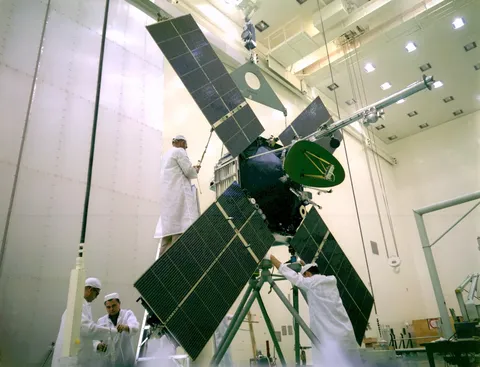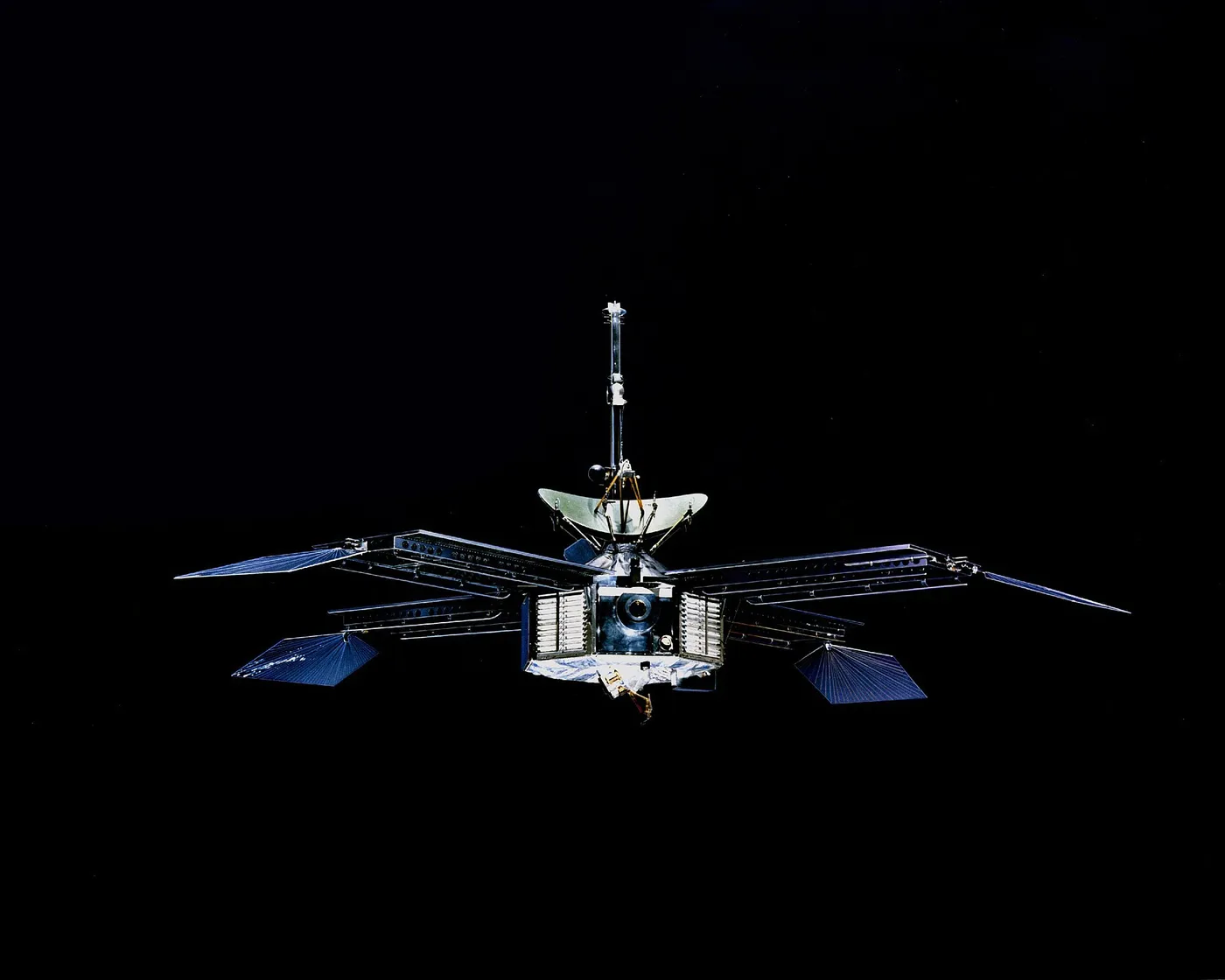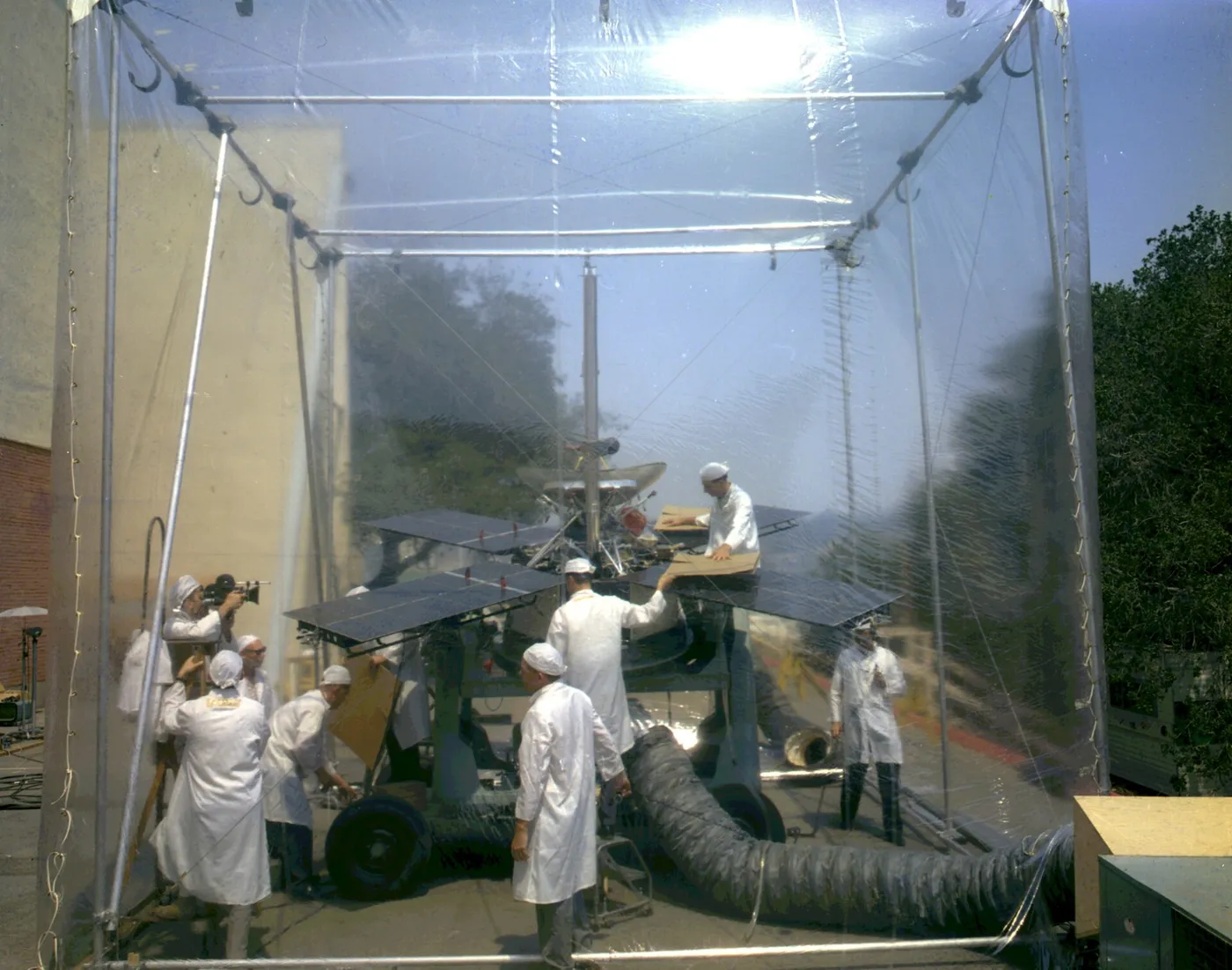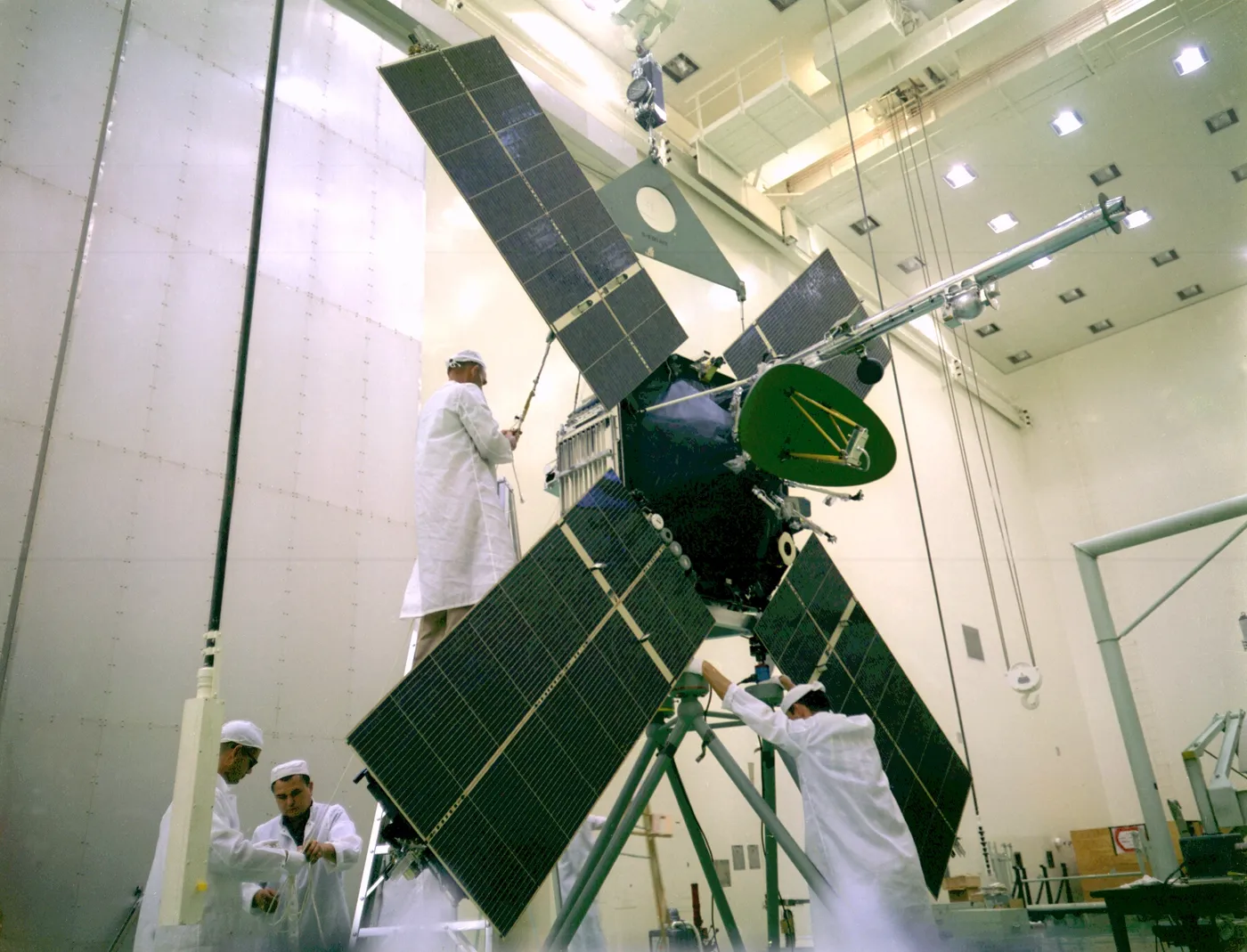
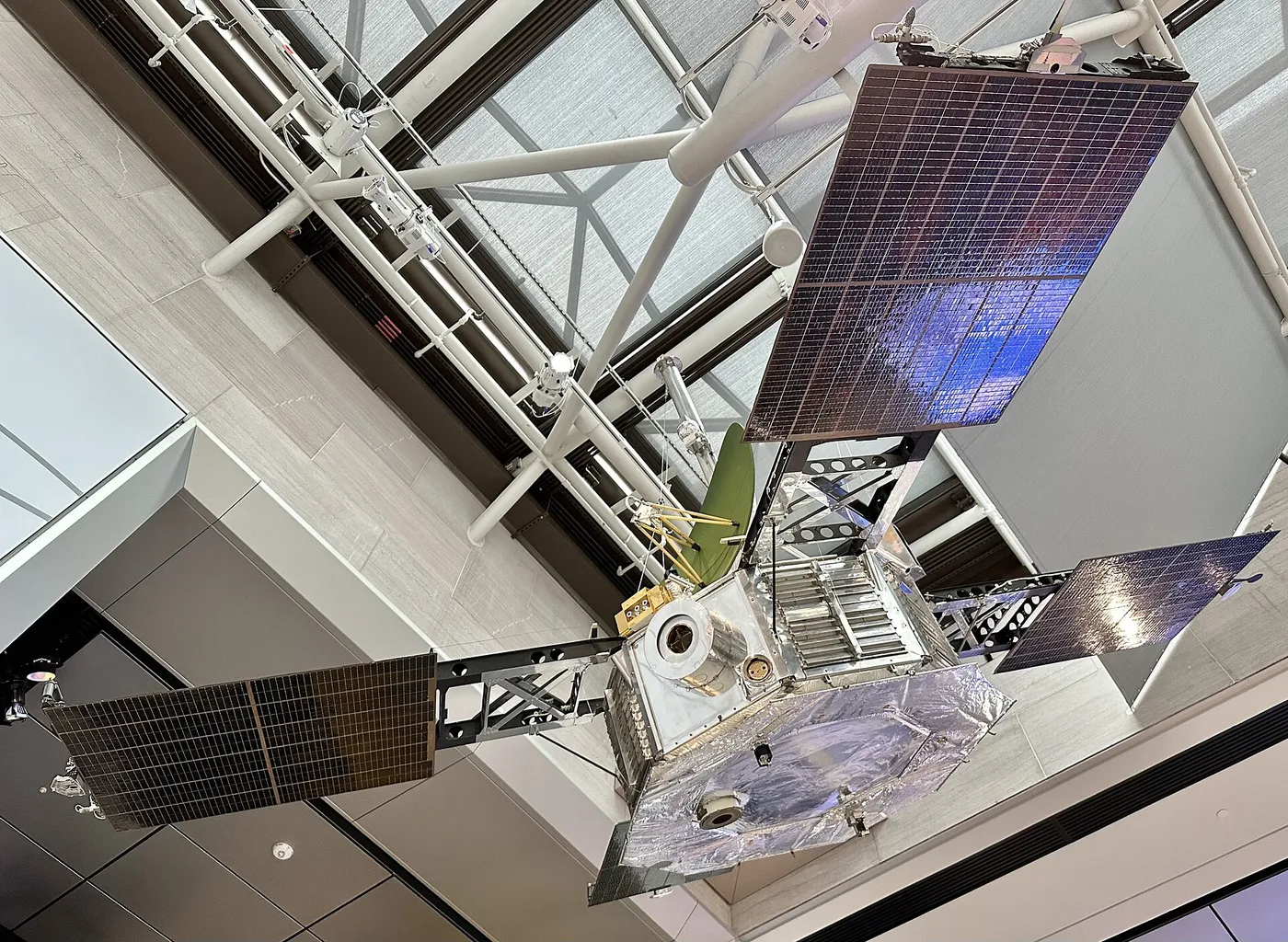

For centuries Mars had been the planet where something might live. Percival Lowell had mapped canals; astronomers had watched seasonal darkening they took for vegetation; and as late as 1964 serious scientists expected a thin but breathable-ish atmosphere and possibly lichen. Mariner 4 was built to find out.
It flew past on 14 July 1965 at about 9,850 kilometres and took 21 photographs, storing them on a four-track tape recorder because the radio link could not carry pictures in real time. Transmitting them took four days at a rate of about eight and a half bits per second. While the team waited for the computer to render the first frame, impatient engineers at JPL printed the raw numbers on ticker tape, pinned them to a wall and coloured them in by hand with pastels from an art shop — producing the first image of Mars ever made from close range as a piece of paint-by-numbers, now framed at the laboratory.
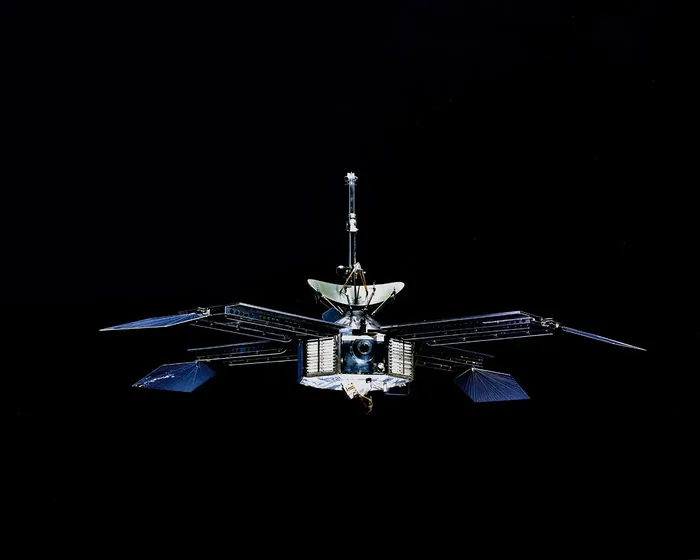
The pictures showed craters. Not canals, not vegetation, not cities — an ancient, battered, Moon-like surface, and a radio occultation experiment measuring atmospheric pressure at less than one per cent of Earth's. The exobiology community was devastated, and public enthusiasm for Mars collapsed for a decade.
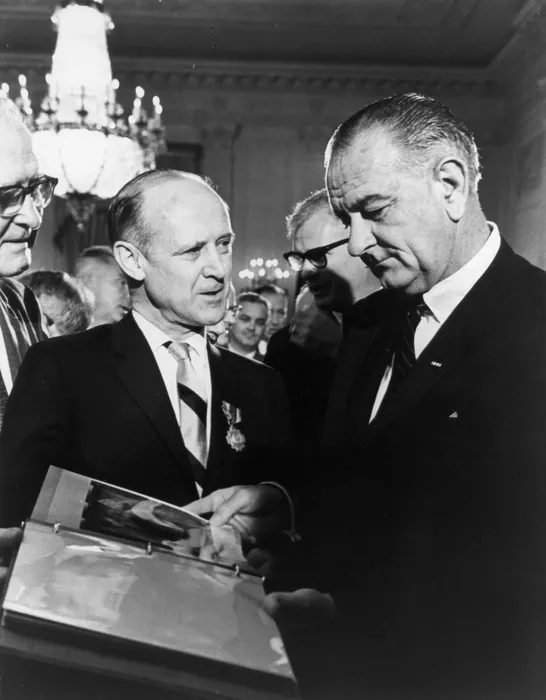
The result was, in fact, an artefact of where the camera happened to look. Mariner 4 imaged about one per cent of the surface, and by bad luck it was one of the oldest and least interesting per cent. Mariner 9 would later reveal volcanoes, canyons and dry riverbeds on the same planet, and the Mars of modern science — cold, dry, and once wet — began there rather than here.
The spacecraft went on to survive a dust-particle bombardment in 1967, returned data for three years, and demonstrated the deep-space communication techniques every later mission used. Its 21 grainy frames remain among the most consequential photographs ever taken, precisely because of what they ruled out.