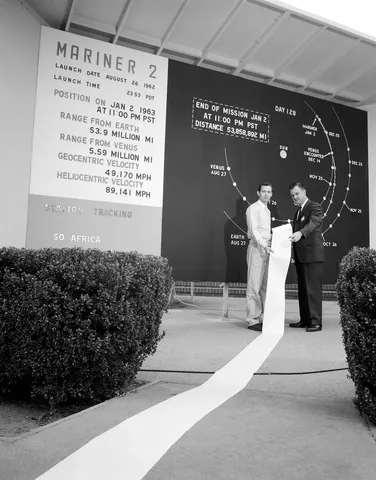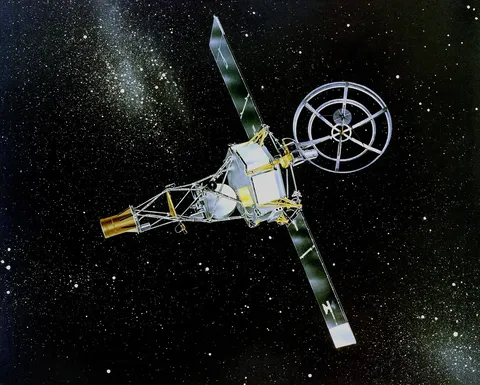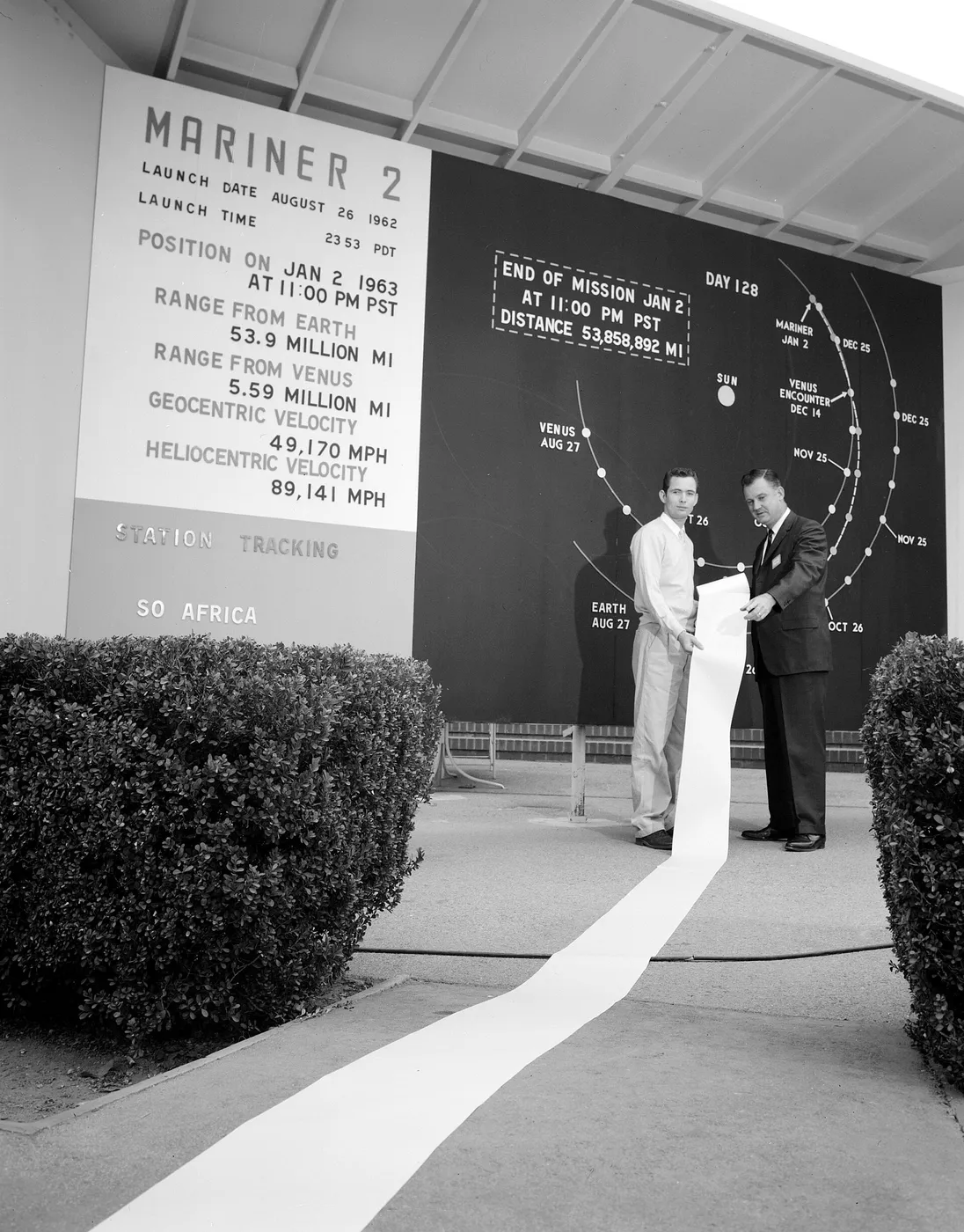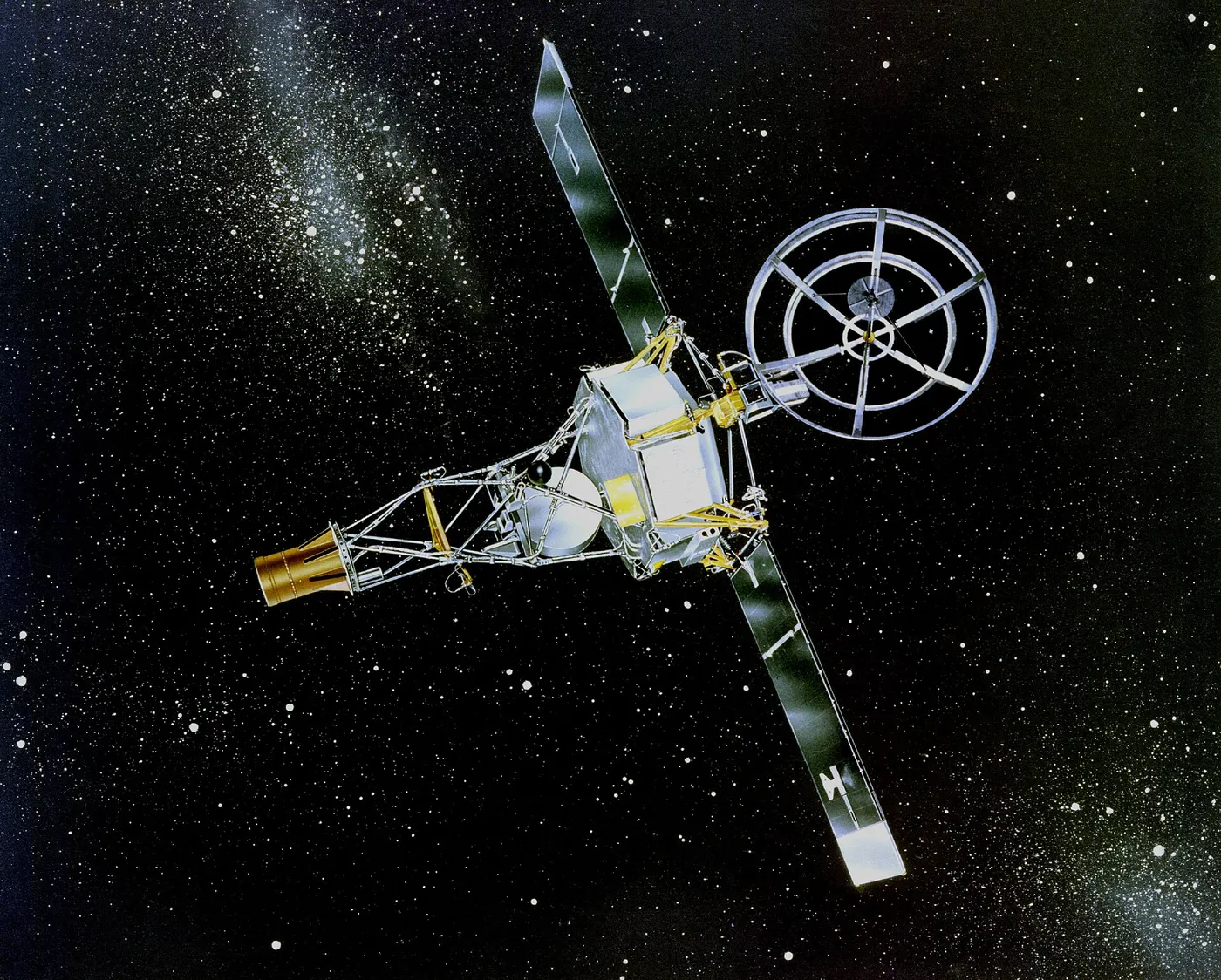


The first spacecraft to reach another planet very nearly did not launch at all. Its twin, Mariner 1, had been destroyed by range safety five weeks earlier when a guidance program went wrong — a fault later traced to a missing overbar in a hand-copied equation, which the press cheerfully reported as the most expensive hyphen in history. Mariner 2 was assembled from spares and flown on the next available window.
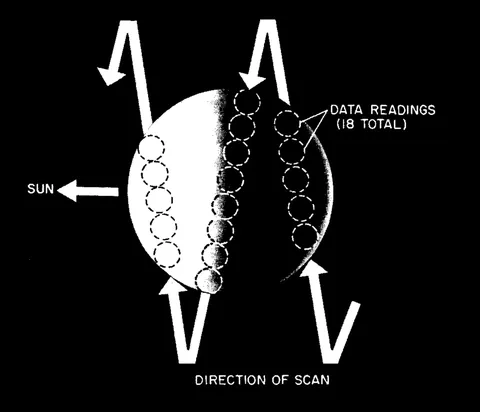
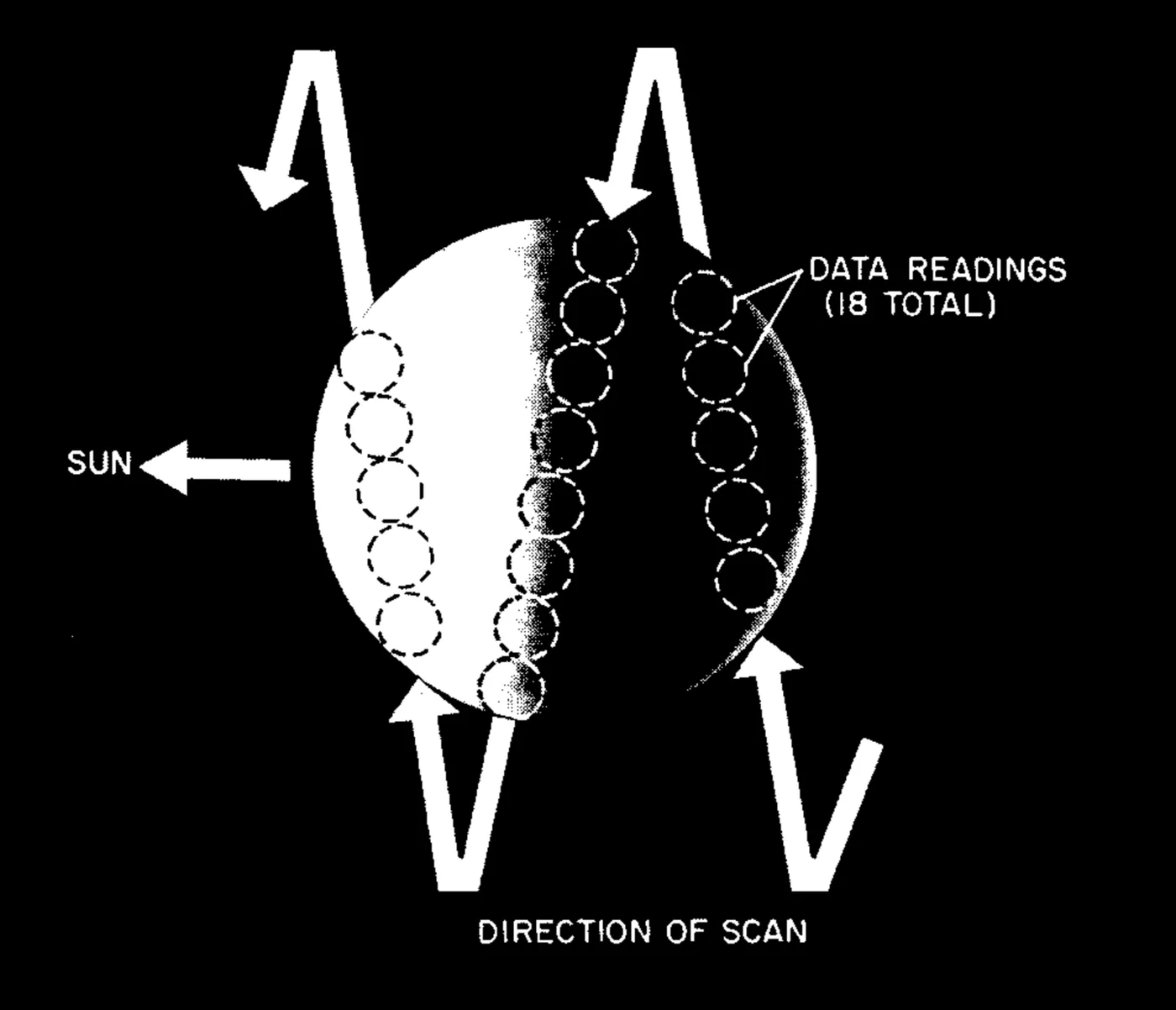
It reached Venus on 14 December 1962 and passed within about 35,000 kilometres, scanning the planet with two radiometers for 42 minutes. There were no cameras — the spacecraft weighed barely 200 kilograms and every gram was contested — so its findings came as numbers rather than pictures.
Those numbers ended a long romance. Venus, sister planet and perennial candidate for jungles and oceans beneath its clouds, turned out to have a surface temperature around 460 degrees Celsius, hot enough to melt lead, with no detectable magnetic field and no break in the cloud deck. The runaway greenhouse effect that produced it has been a reference point in climate science ever since.
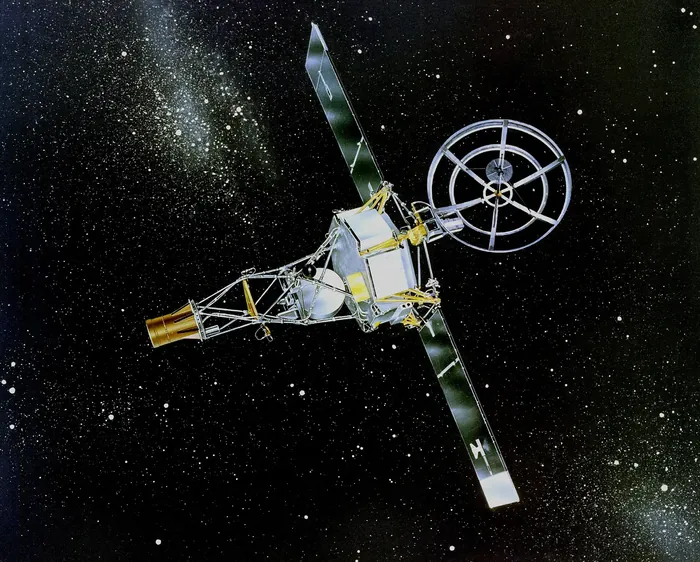
The cruise was almost as valuable as the encounter. Instruments running continuously between the planets measured the solar wind directly and at length for the first time, confirming that the Sun sheds a steady outward stream of charged particles rather than occasional gusts — a result that founded the discipline now called space weather.
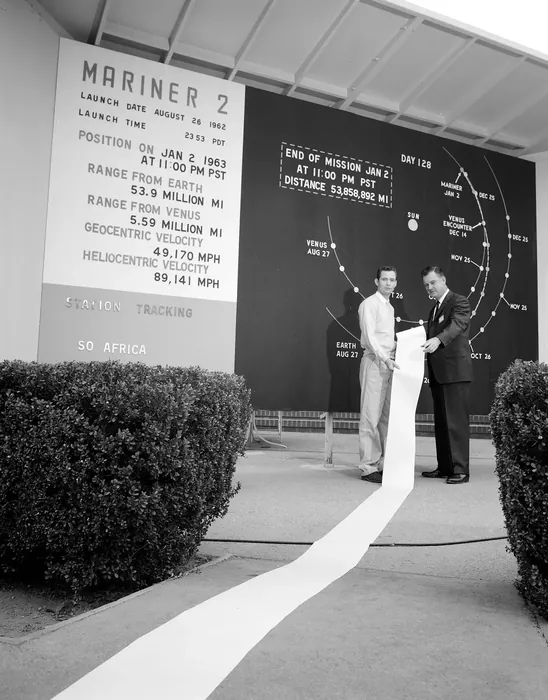
The spacecraft overheated badly on the way, lost a solar panel, and was running hot enough that engineers doubted it would survive the encounter at all. It transmitted for another three weeks after the flyby, fell silent on 3 January 1963, and remains in orbit around the Sun — the first human artefact to become a permanent resident of interplanetary space.