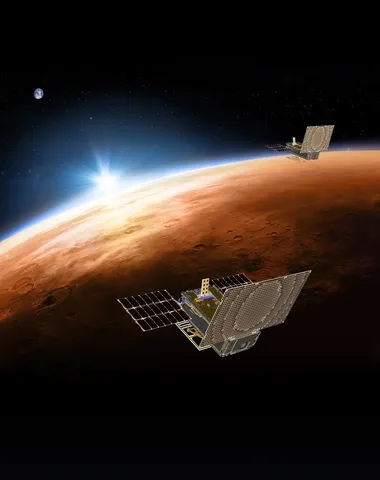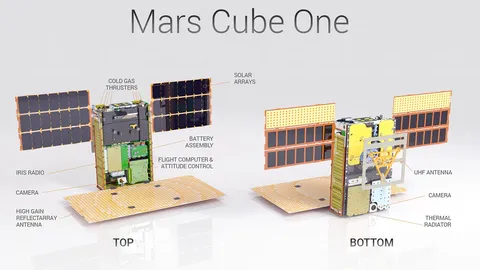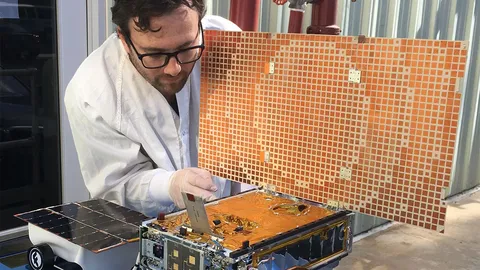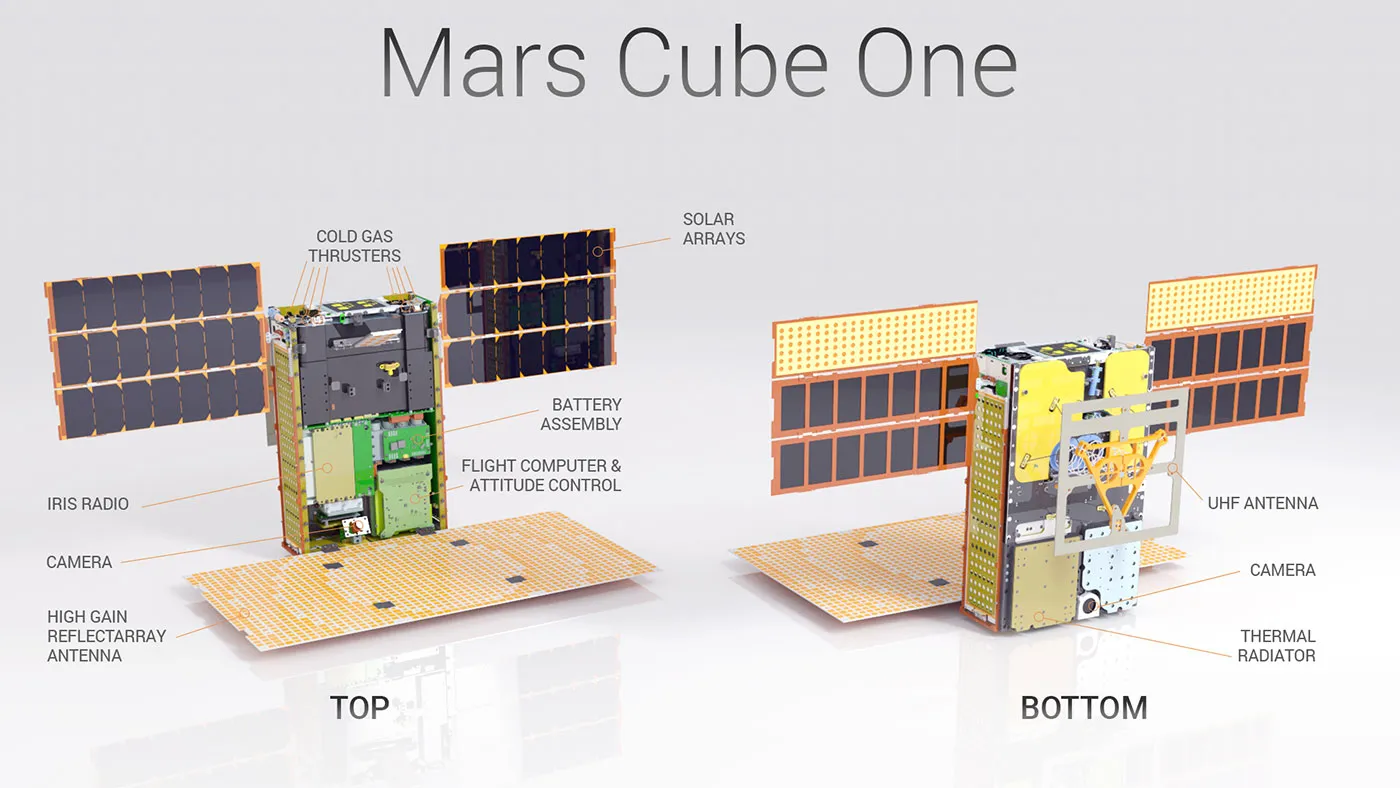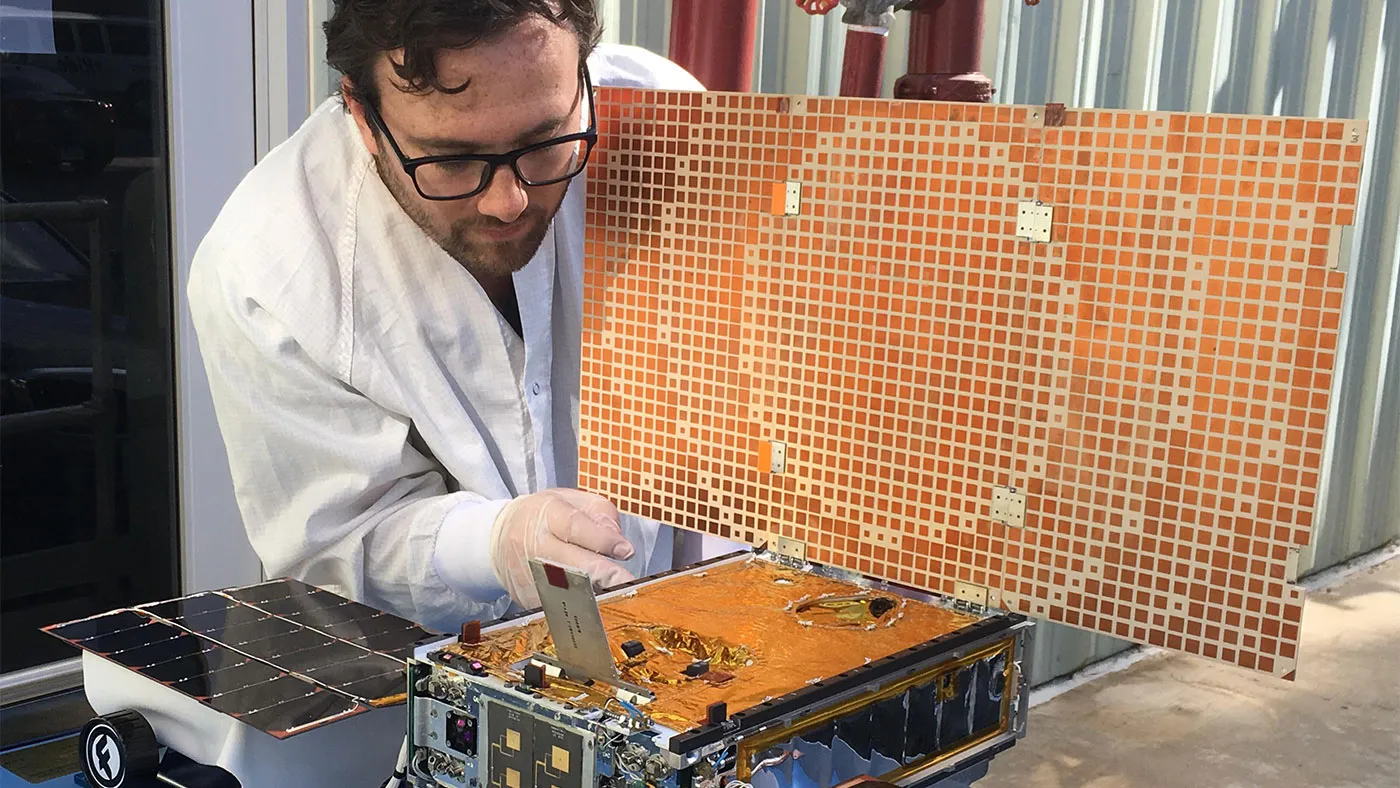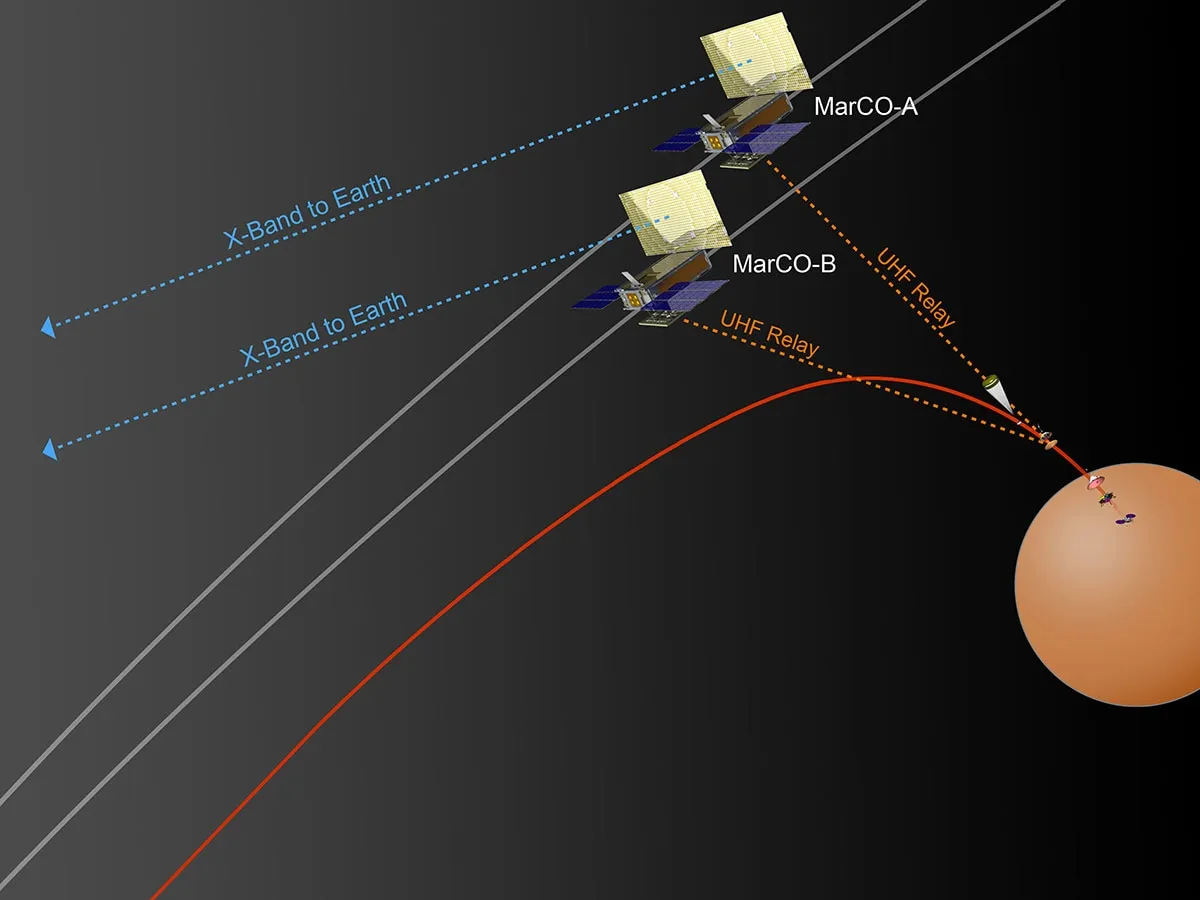
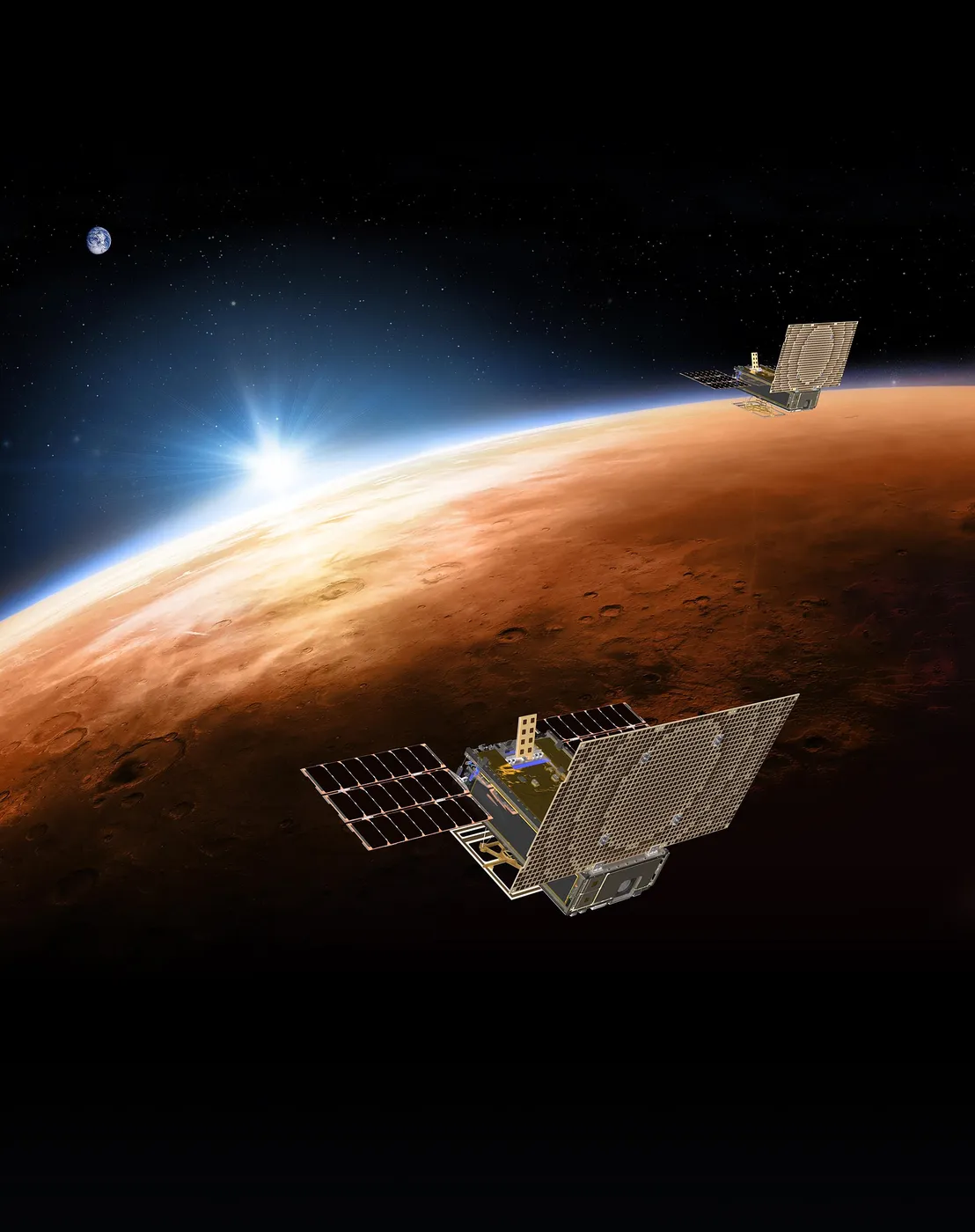

MarCO were two briefcase-sized spacecraft that proved CubeSats could leave Earth orbit. Built from largely commercial components for a small fraction of a conventional mission, they were launched alongside InSight and flew independently to Mars — the first time anything of the sort had operated in deep space.
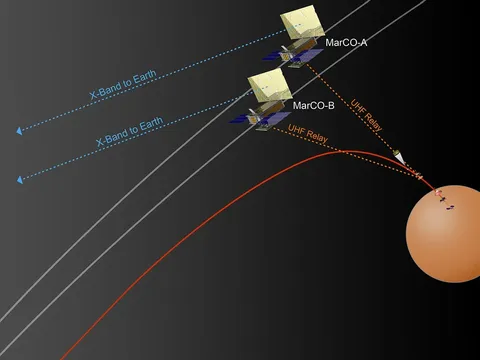
Their job was to listen. When InSight entered the Martian atmosphere, the geometry meant no orbiter would be in position to relay its telemetry live, and the world would have had to wait hours to learn whether it had survived. The CubeSats flew past at the right moment and forwarded the signal in near real time.
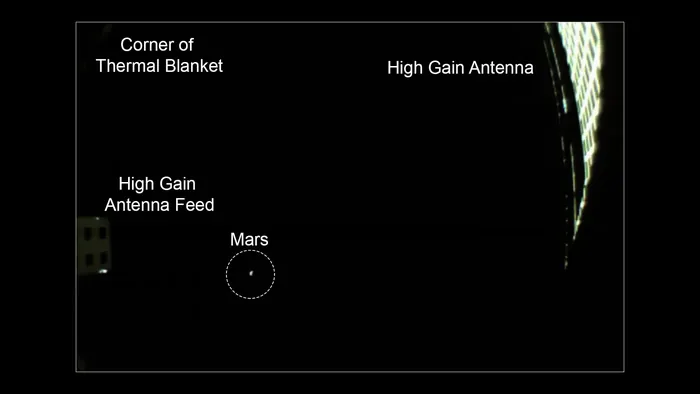
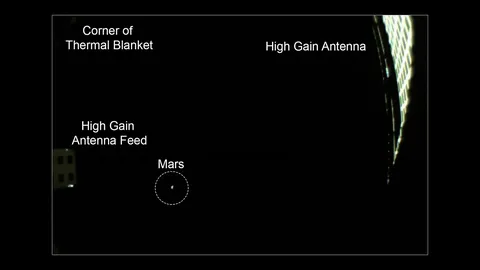
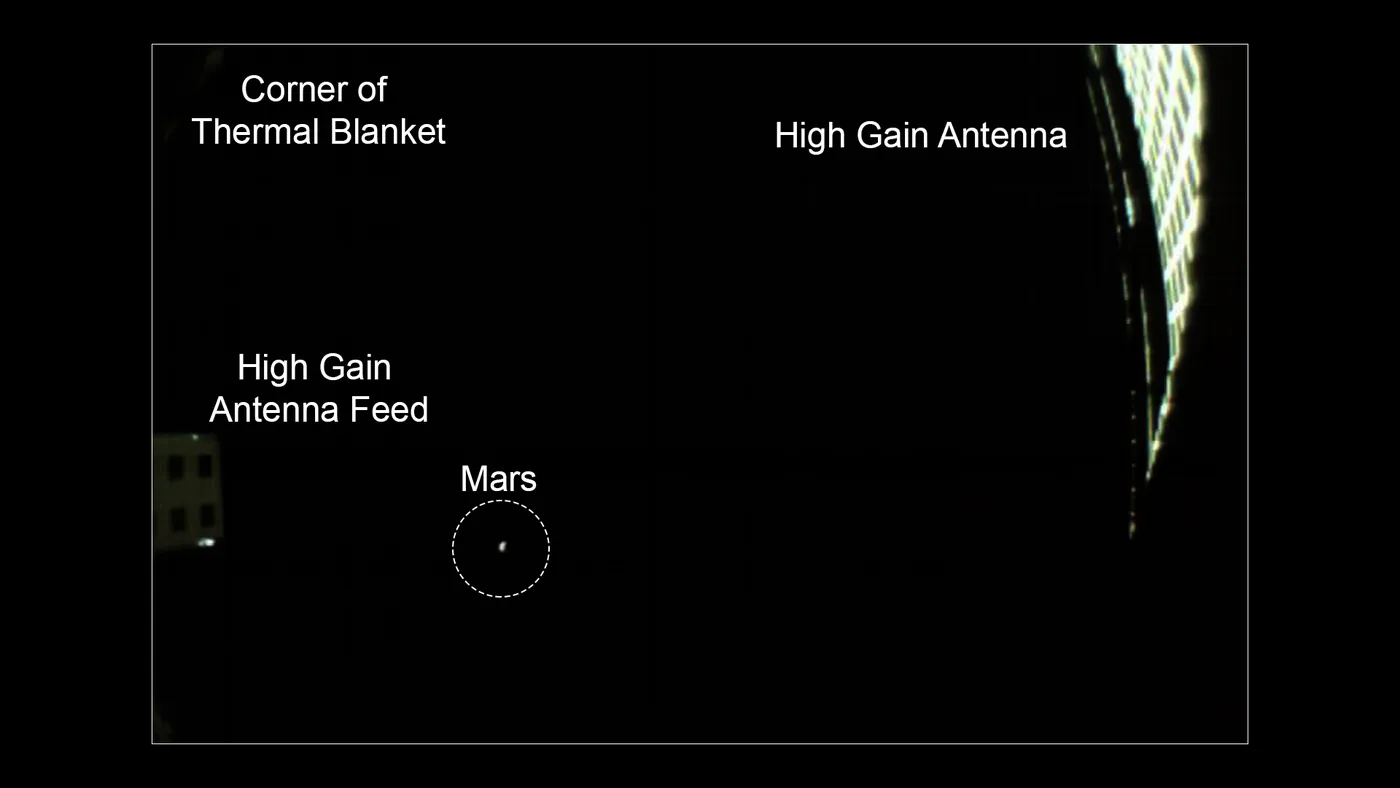
It worked. Engineers in Pasadena followed the entire descent as it happened, and the first image from the surface arrived within minutes, relayed by a spacecraft that cost around $18 million for the pair. Their own cameras also returned a farewell photograph of a crescent Mars receding behind them.
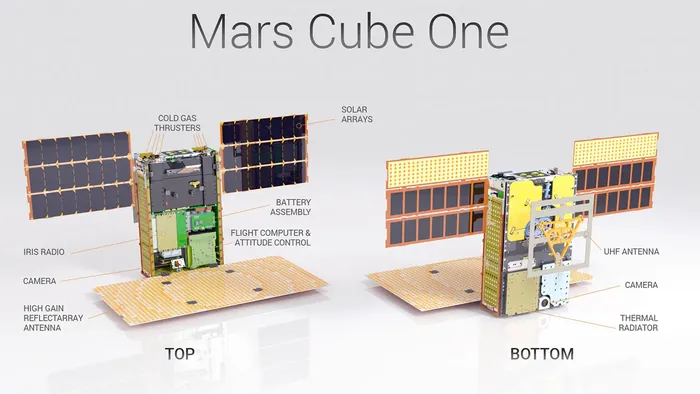
The two were unofficially named WALL-E and EVA, after the animated film, because their attitude control used compressed gas from the same family of propellant used in fire extinguishers — the mechanism by which the fictional robot manoeuvres through space.
Both fell silent shortly after the flyby, as expected, and are now in orbit around the Sun. Their significance is entirely about precedent: interplanetary missions no longer necessarily require large budgets and custom hardware, and small spacecraft have since been proposed and flown as escorts on numerous deep space missions.