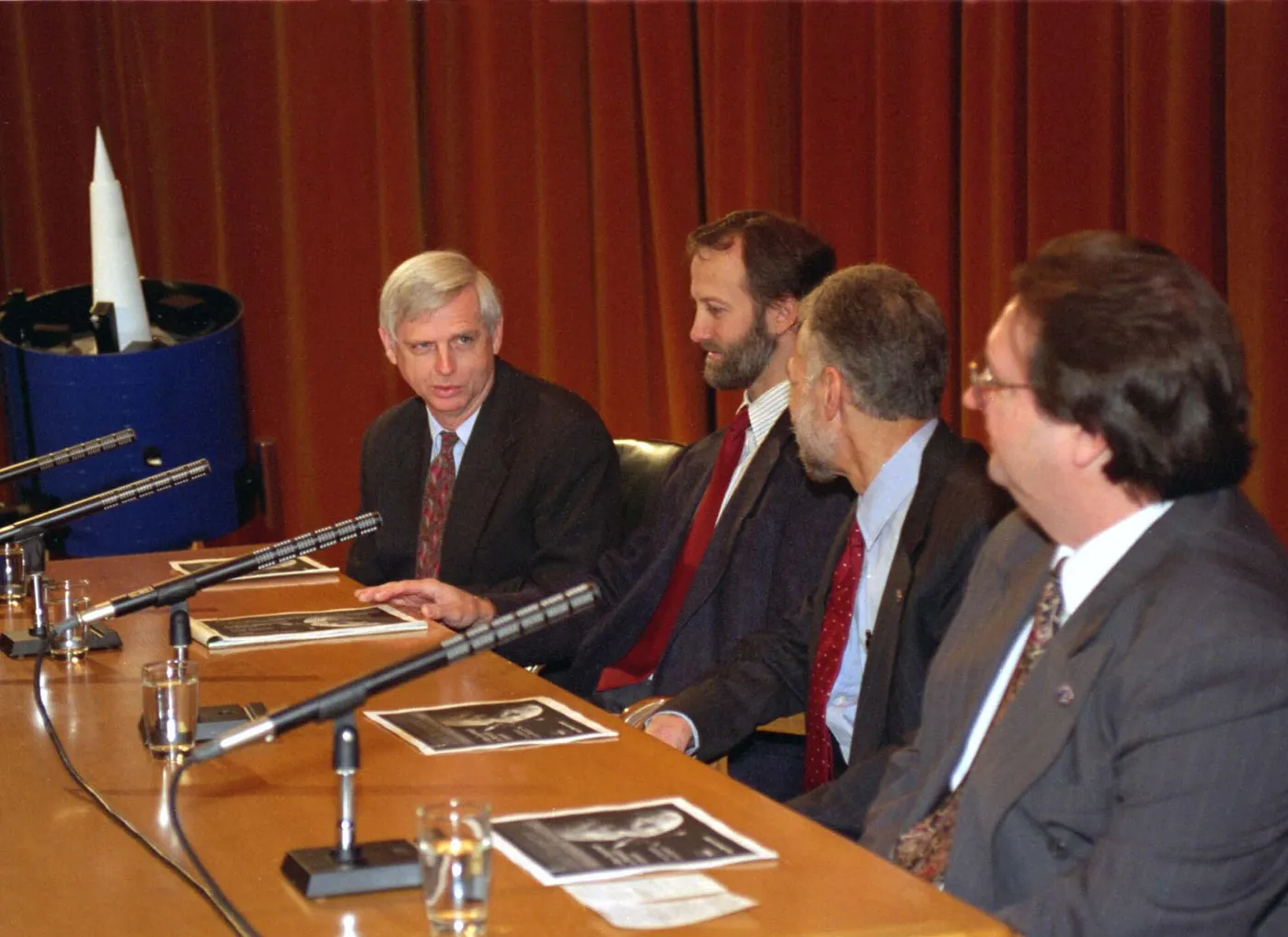

Lunar Prospector was small, cheap and pointed at one question: is there water at the lunar poles? Some craters near the poles have floors that have not seen sunlight in billions of years, and temperatures there fall low enough that ice delivered by comets could survive indefinitely.
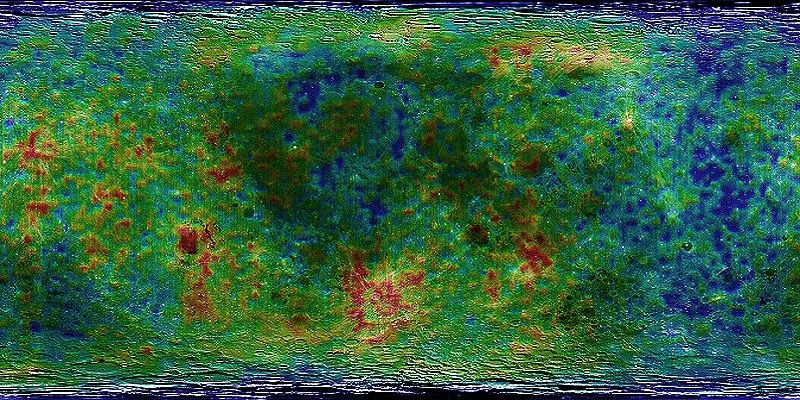
Its neutron spectrometer found the signature of hydrogen concentrated at both poles, at levels consistent with several billion tonnes of water ice mixed into the regolith. Hydrogen is not proof of water — it could be implanted by the solar wind — but the polar concentration was exactly what the ice hypothesis predicted.
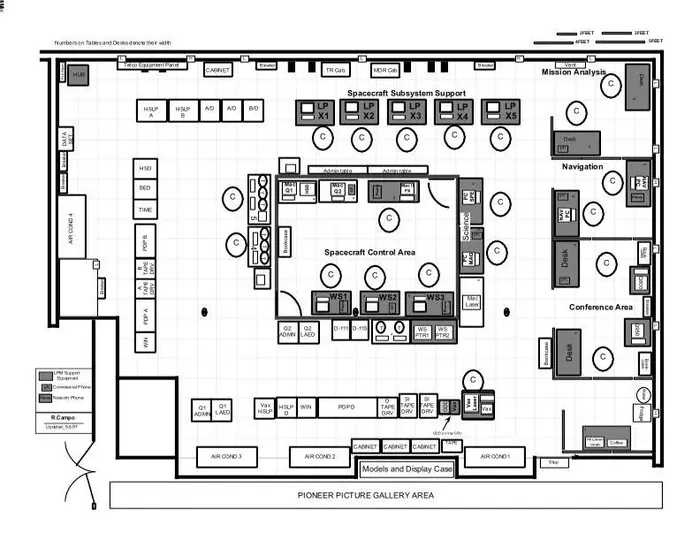
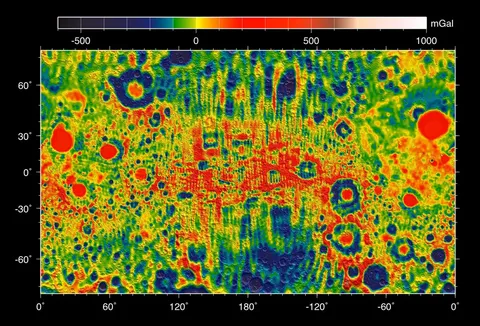
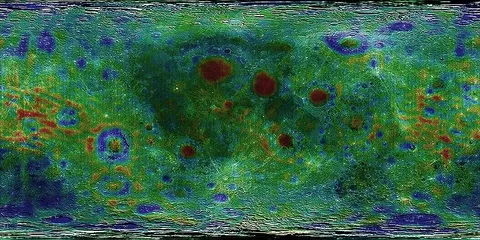
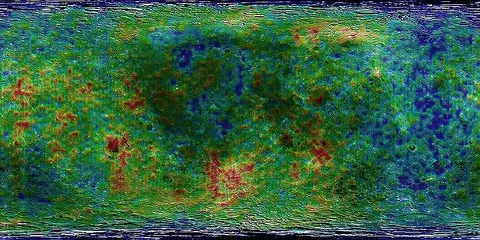
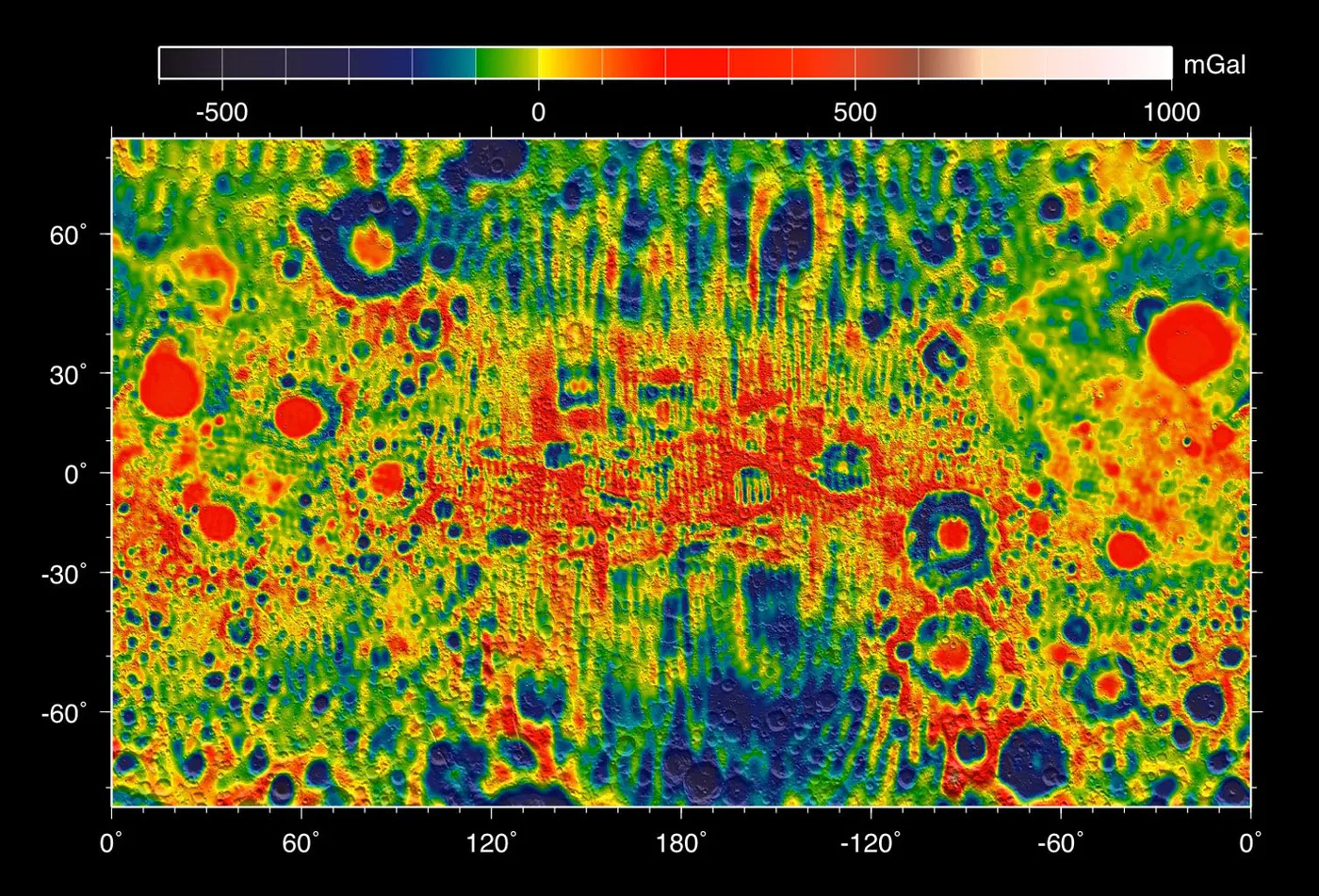
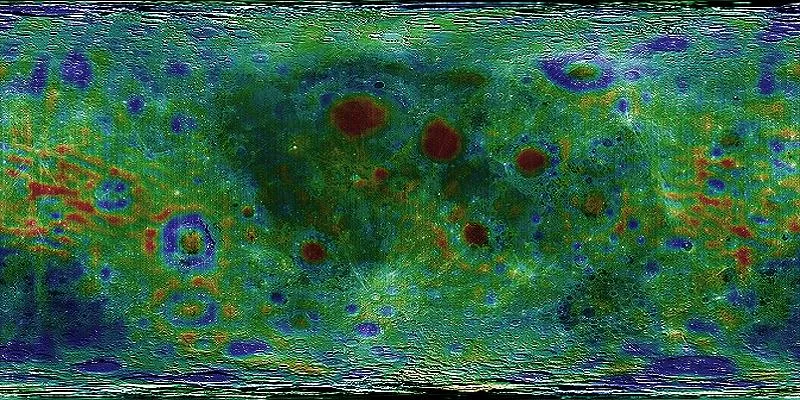
The mission also mapped the Moon's gravity field, refined the mascon measurements, and found evidence of a small iron core, all in nineteen months for well under a hundred million dollars — a demonstration that small missions could do real science.
At the end, the team tried an experiment. In July 1999 the spacecraft was deliberately crashed into a permanently shadowed crater near the south pole, in the hope that telescopes on Earth would detect a plume of water vapour thrown up by the impact. Nothing was seen, which settled nothing — the impact may have missed ice, or been too small, or the plume may simply have been undetectable.
It carried one unusual passenger. A polycarbonate capsule containing a portion of the ashes of Eugene Shoemaker, wrapped in brass foil inscribed with a passage from Romeo and Juliet, was aboard when it struck. He had wanted to be an astronaut and had been disqualified on medical grounds, and he remains the only human being whose remains rest on another world.