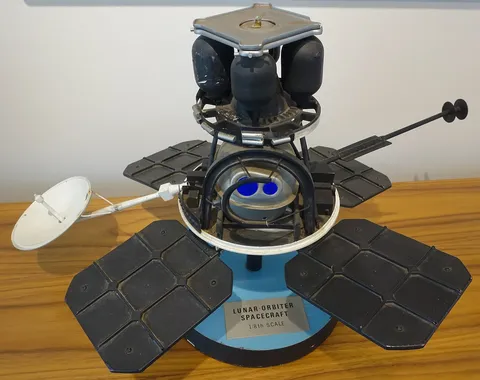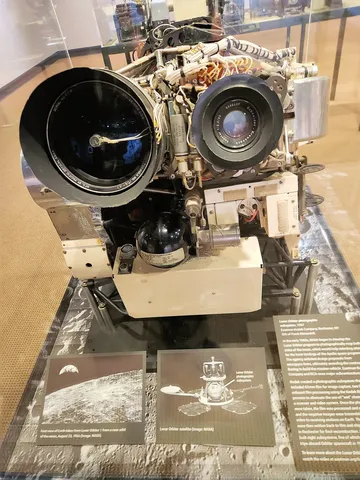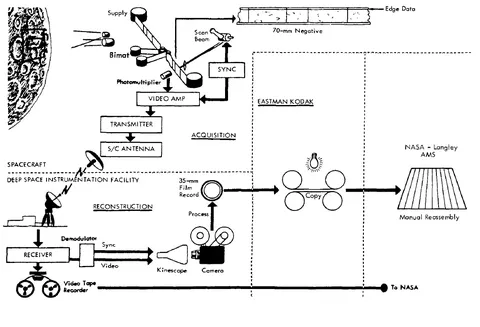
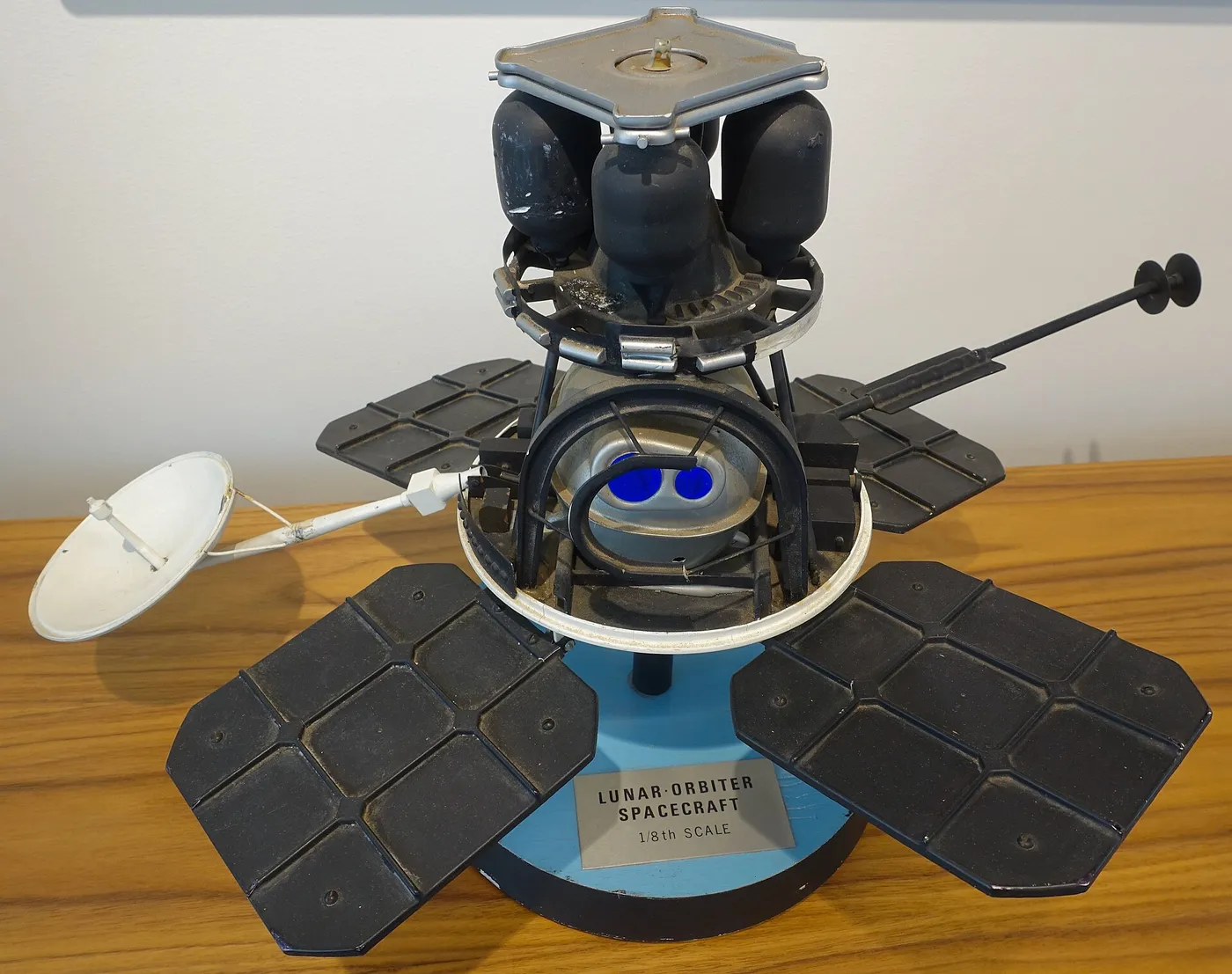

The last of the series finished the job in every direction. Flying a polar orbit in August 1967, it photographed the far side at moderate resolution and completed global coverage, while also taking high-resolution frames of 36 sites of scientific interest — the first systematic imaging of the Moon as a world rather than as a set of landing options.
Its far-side imagery covered the roughly one-fifth of that hemisphere the earlier missions had missed, bringing total coverage of the Moon to essentially 100 per cent. Nothing comparable existed for any other body in the solar system, including large parts of Earth's own ocean floor.
It also photographed the Earth again, this time as a nearly full disc — a small blue-white sphere alone in black — in an image taken in August 1967 that circulated widely and belongs in the same lineage as the Apollo photographs that followed.
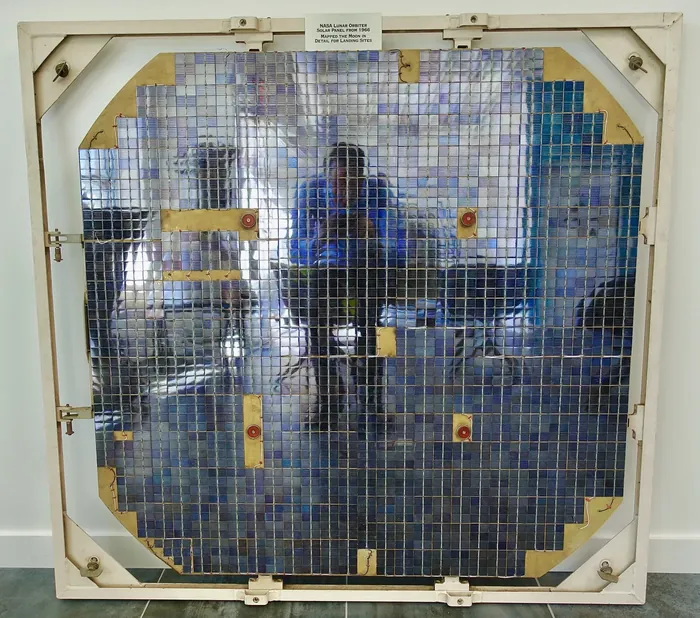
The five orbiters between them returned some 3,000 frames, mapped 99 per cent of the surface, identified twenty candidate Apollo sites, mapped the mascons that perturb lunar orbits, and measured the micrometeoroid and radiation environment — all for around $200 million and with no outright failures.
Like its predecessors it was deliberately crashed, in January 1968. Its photographs remained the best available until the Lunar Reconnaissance Orbiter arrived forty-one years later, and the recovered original tapes are still used for comparison, since features imaged in 1967 and 2009 reveal what has changed in between.