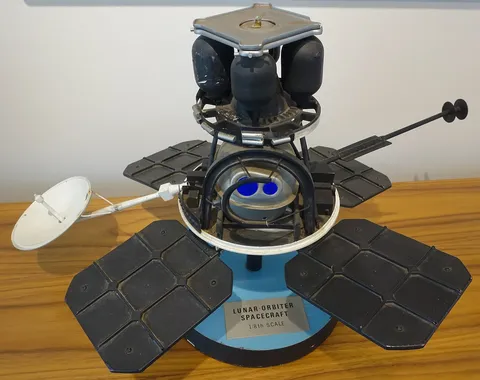
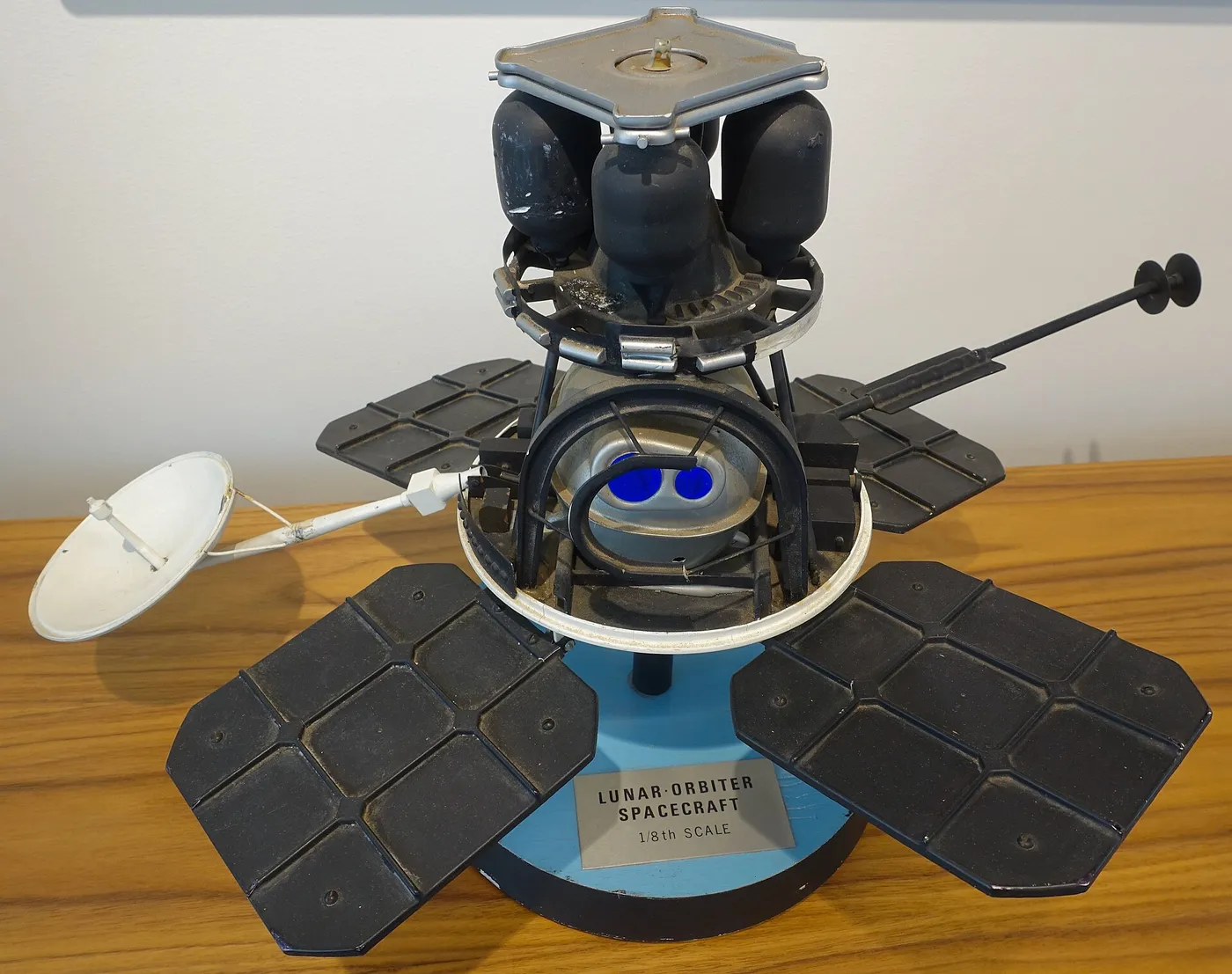

The second Lunar Orbiter photographed thirteen potential Apollo landing sites from a low, near-equatorial orbit in November and December 1966, returning imagery detailed enough to identify boulders and small craters that could destroy a lander.
It also took what was, for a long time, the most admired photograph of the space age. An oblique view of Copernicus crater, shot from about 45 kilometres above the surface, showed the crater's terraced walls and central peaks rising against a black sky — a landscape rather than a map. The press called it the picture of the century.
That image was not really an accident of aesthetics; it was a deliberate choice by the mission team to angle the camera and demonstrate what the system could do. The public response was strong enough that later missions were routinely given a few frames for what would now be called outreach.
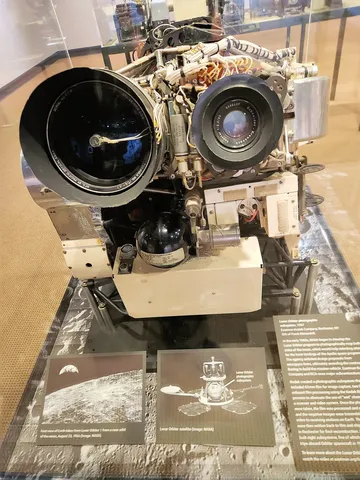
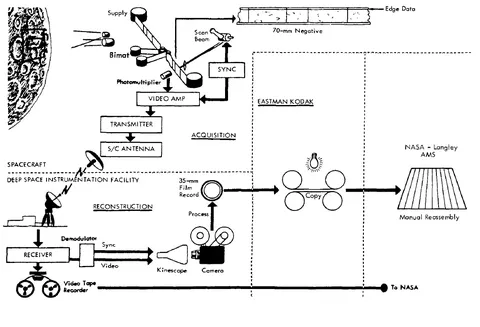
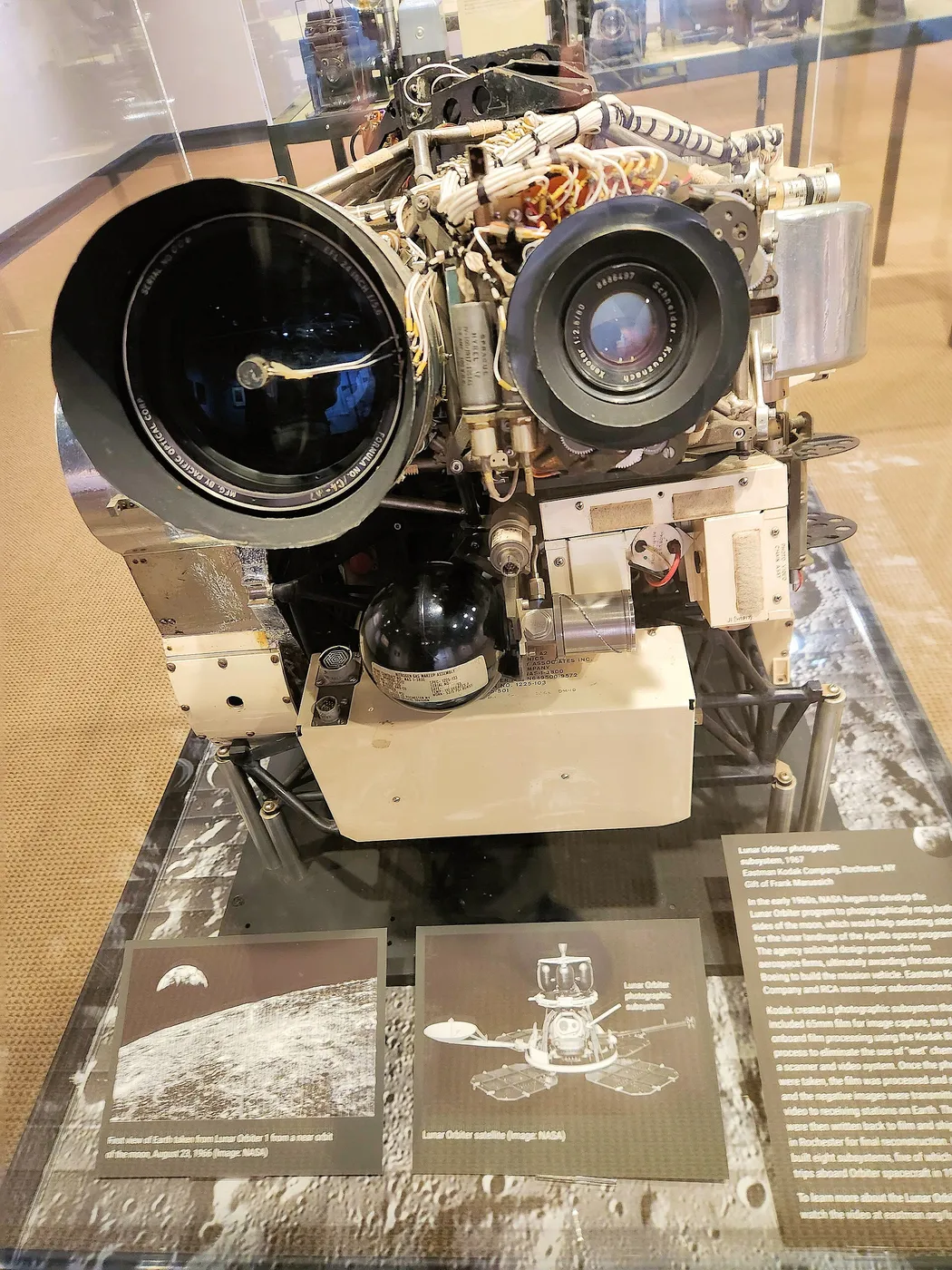
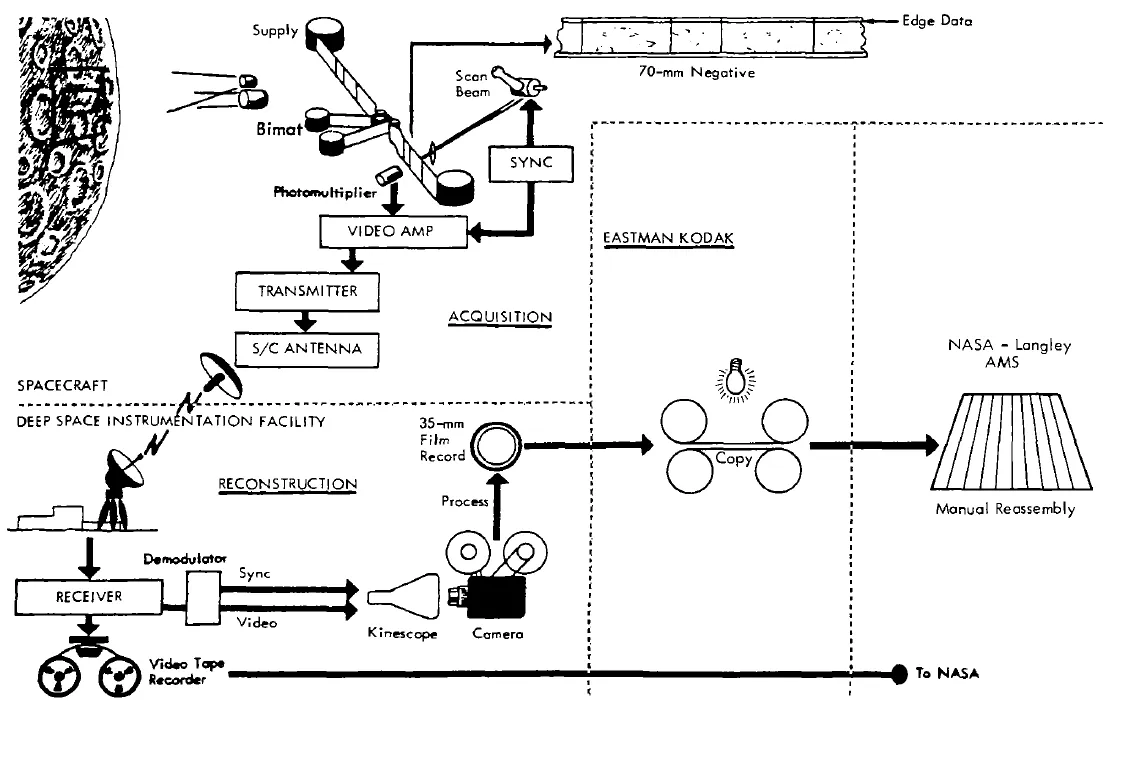
The spacecraft carried the same extraordinary apparatus as the rest of the series: film exposed in orbit, developed on board with a chemical web, scanned by a light beam and transmitted as analogue signal. It returned over 800 frames, each of which took the better part of an hour to send.
Its tracking data also refined the map of lunar gravity anomalies that had emerged from the first mission, information without which Apollo navigation would have carried significant and unexplained errors. It was deliberately crashed into the far side in October 1967.