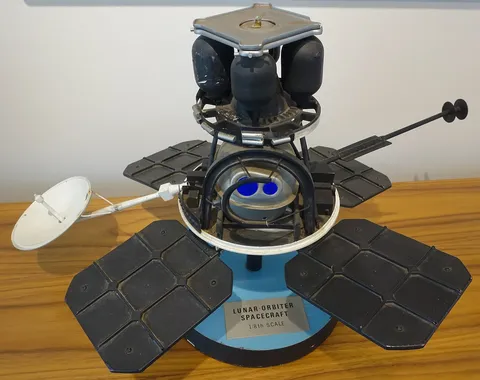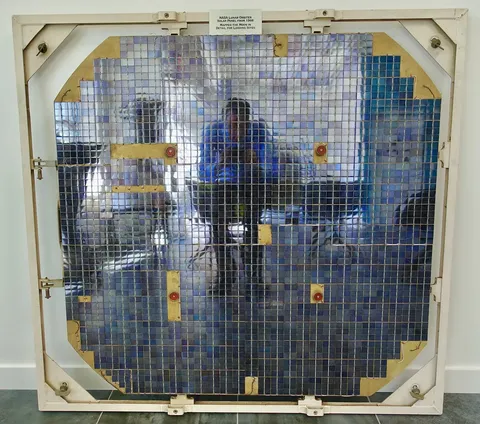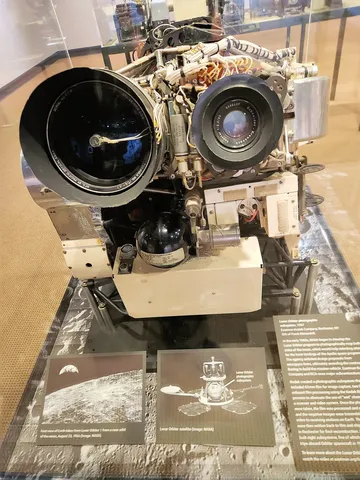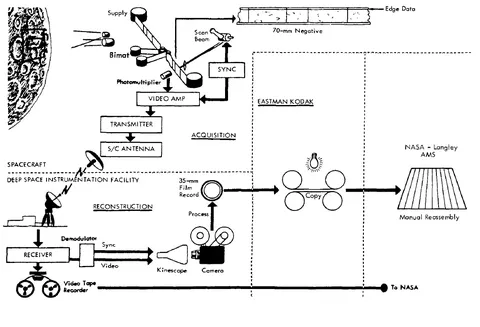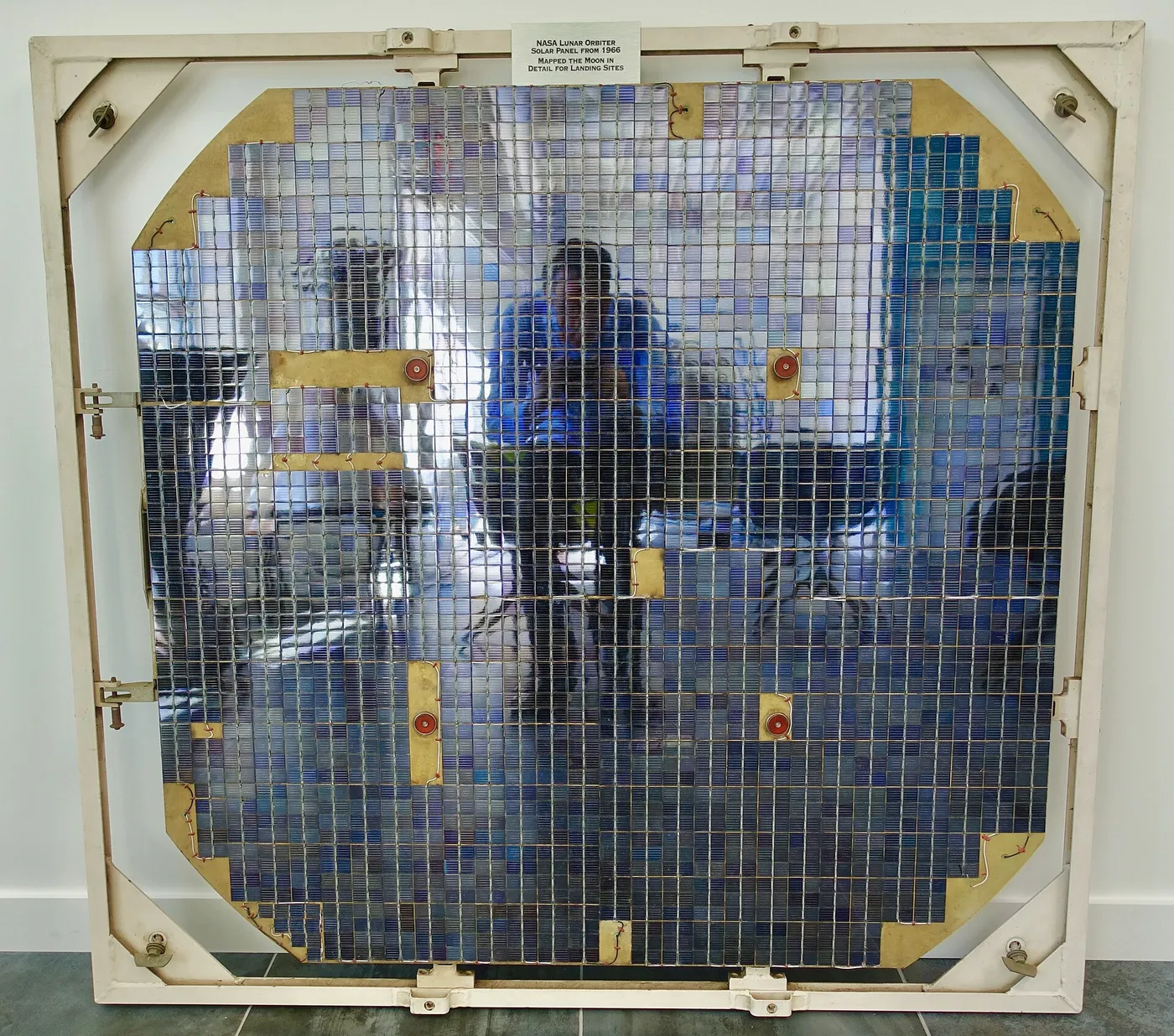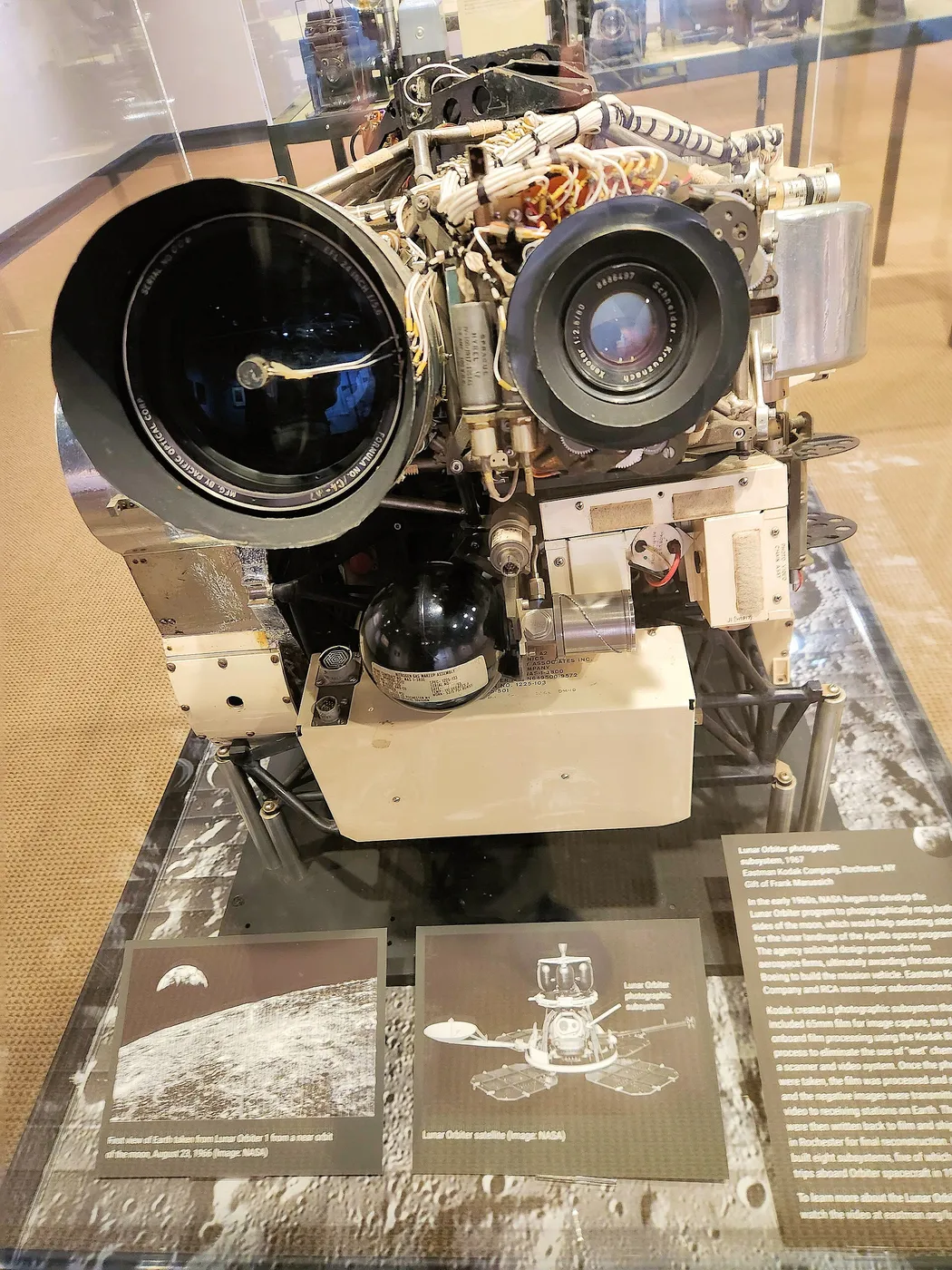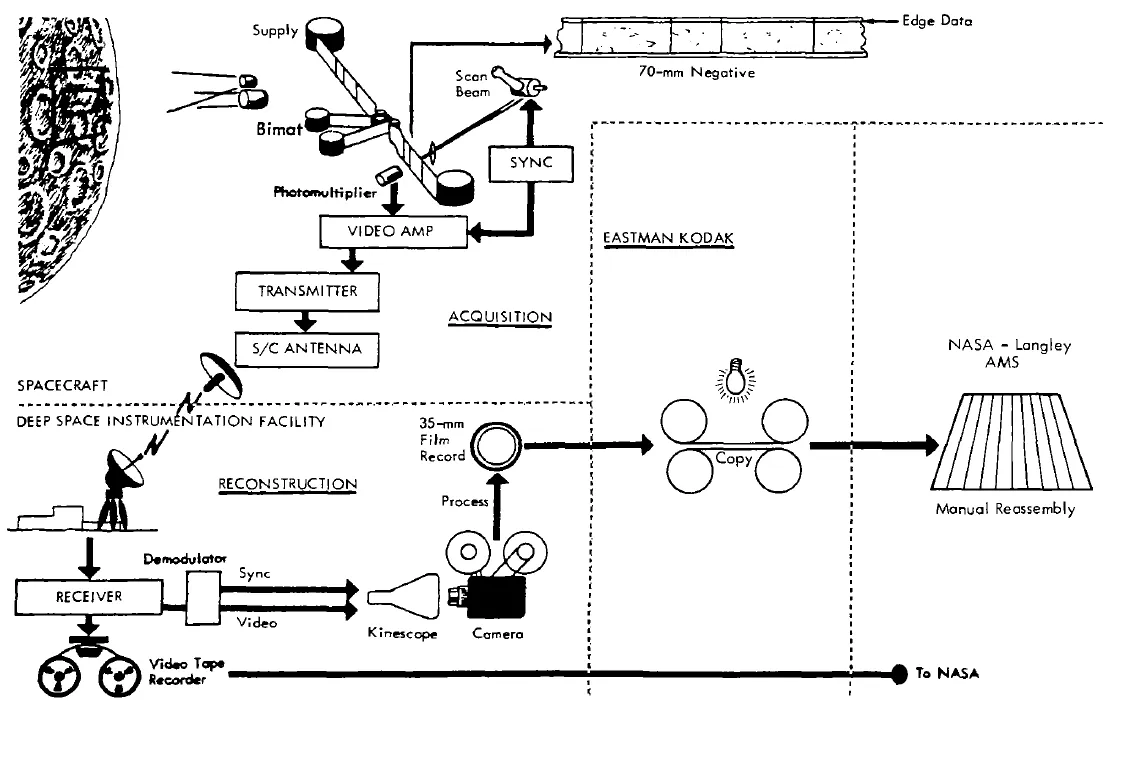
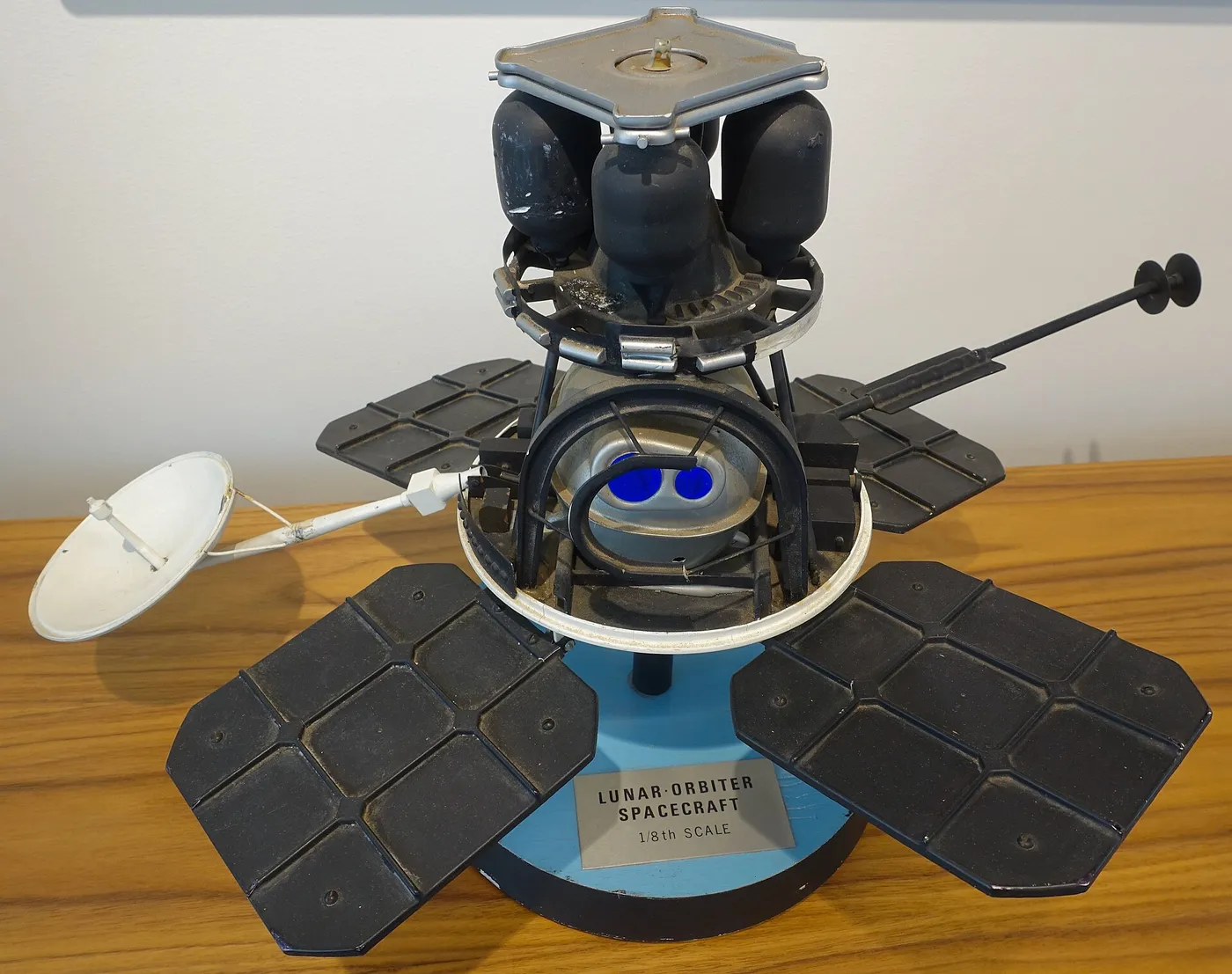

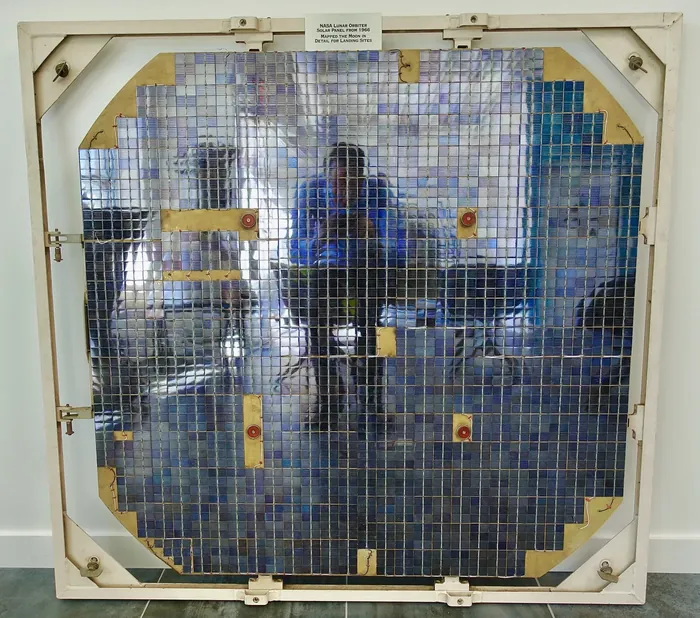
The Lunar Orbiters were flying photographic laboratories. In an era before practical digital imaging, each carried 70-millimetre film, a developing unit that processed it in orbit using a chemical-soaked web, and a scanner that read the negatives with a light beam and radioed the brightness values home line by line. The whole apparatus had been adapted from a classified reconnaissance satellite design.
Lunar Orbiter 1 arrived in August 1966 with the job of finding somewhere for Apollo to land. Over its mission it photographed some two million square kilometres, resolving objects a metre across in places, and the five orbiters together mapped 99 per cent of the Moon and reduced the candidate landing sites from a wish list to a short one.

On 23 August it did something not in the flight plan. Engineers reoriented the spacecraft to point its camera past the lunar limb, and it captured the first photograph of the Earth taken from the vicinity of the Moon — a grainy crescent rising over a rumpled grey horizon, two and a half years before the Apollo 8 crew took the version everyone remembers.
The mission also revealed the mascons — concentrations of dense material beneath the lunar maria that tug at orbiting spacecraft and perturb their paths. Discovering them was essential; an Apollo command module navigating without accounting for them would have drifted significantly off its predicted position.
Each orbiter was deliberately crashed into the Moon at the end of its life to prevent its radio interfering with later missions. The original data tapes were nearly lost, stored for decades in a warehouse until a volunteer project in an abandoned McDonald's at Ames recovered them with refurbished 1960s tape drives, producing images far better than anything seen at the time.