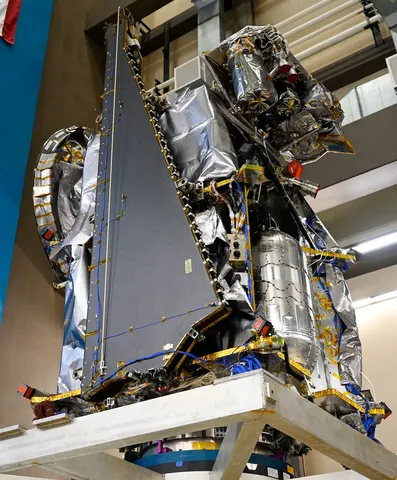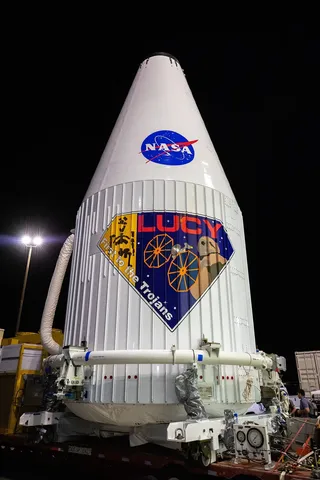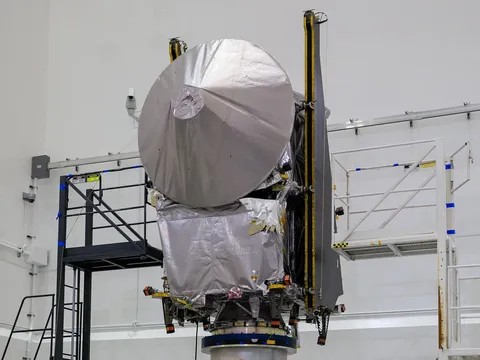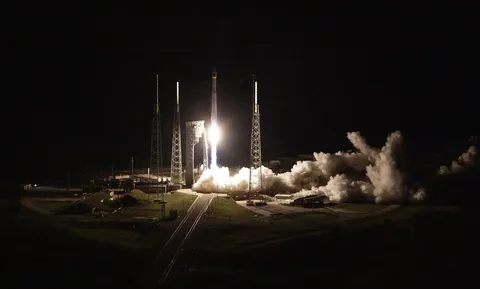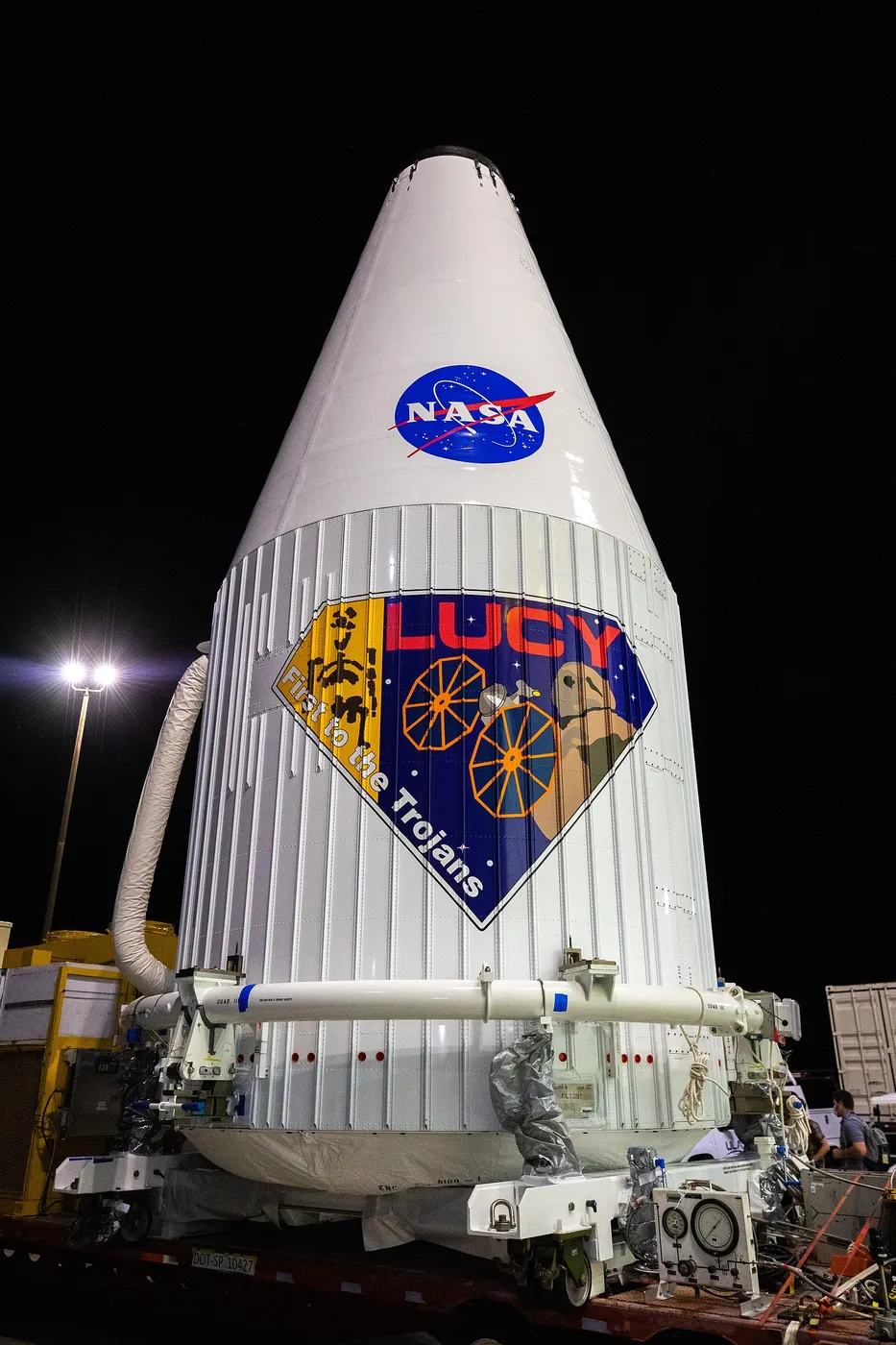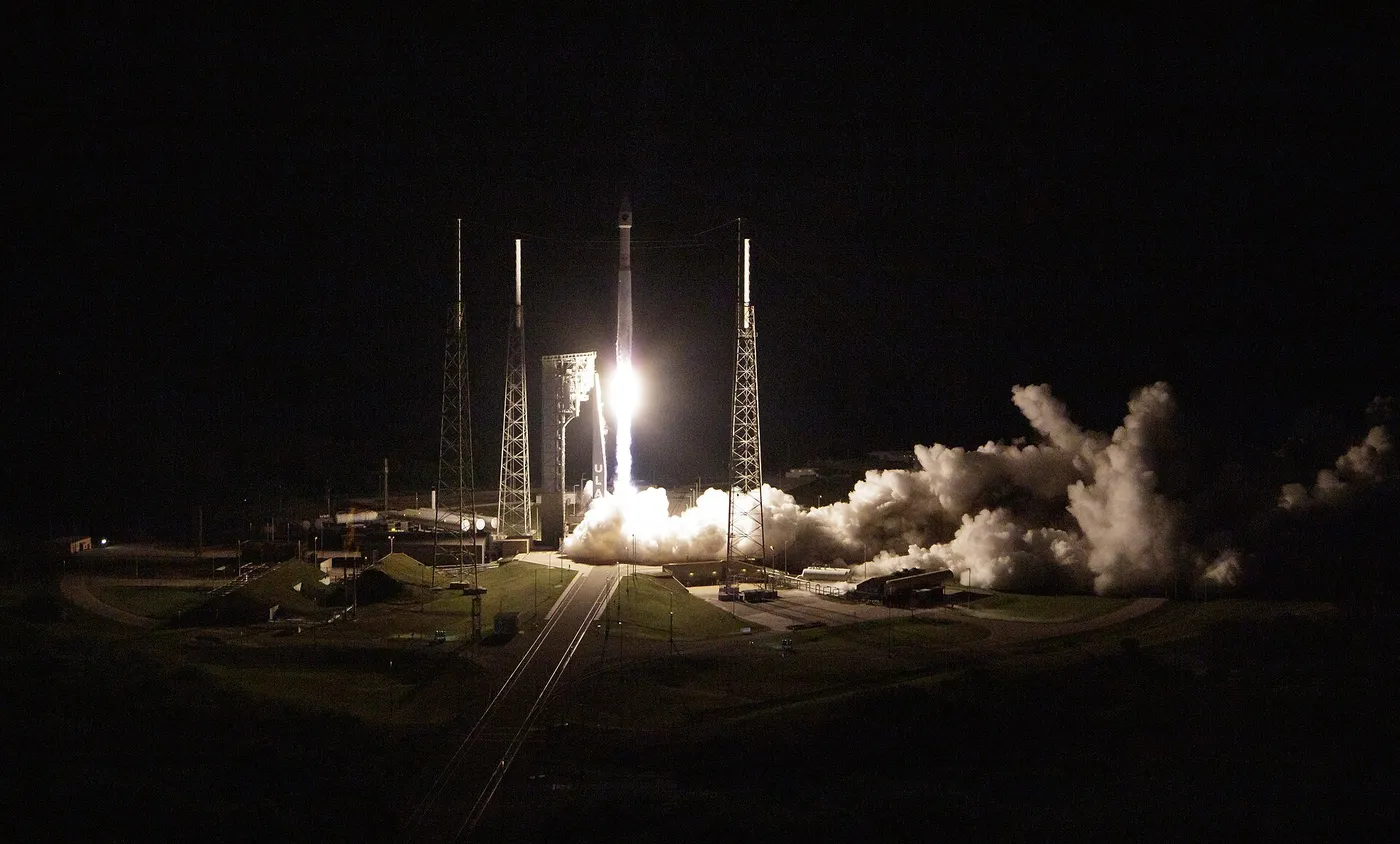
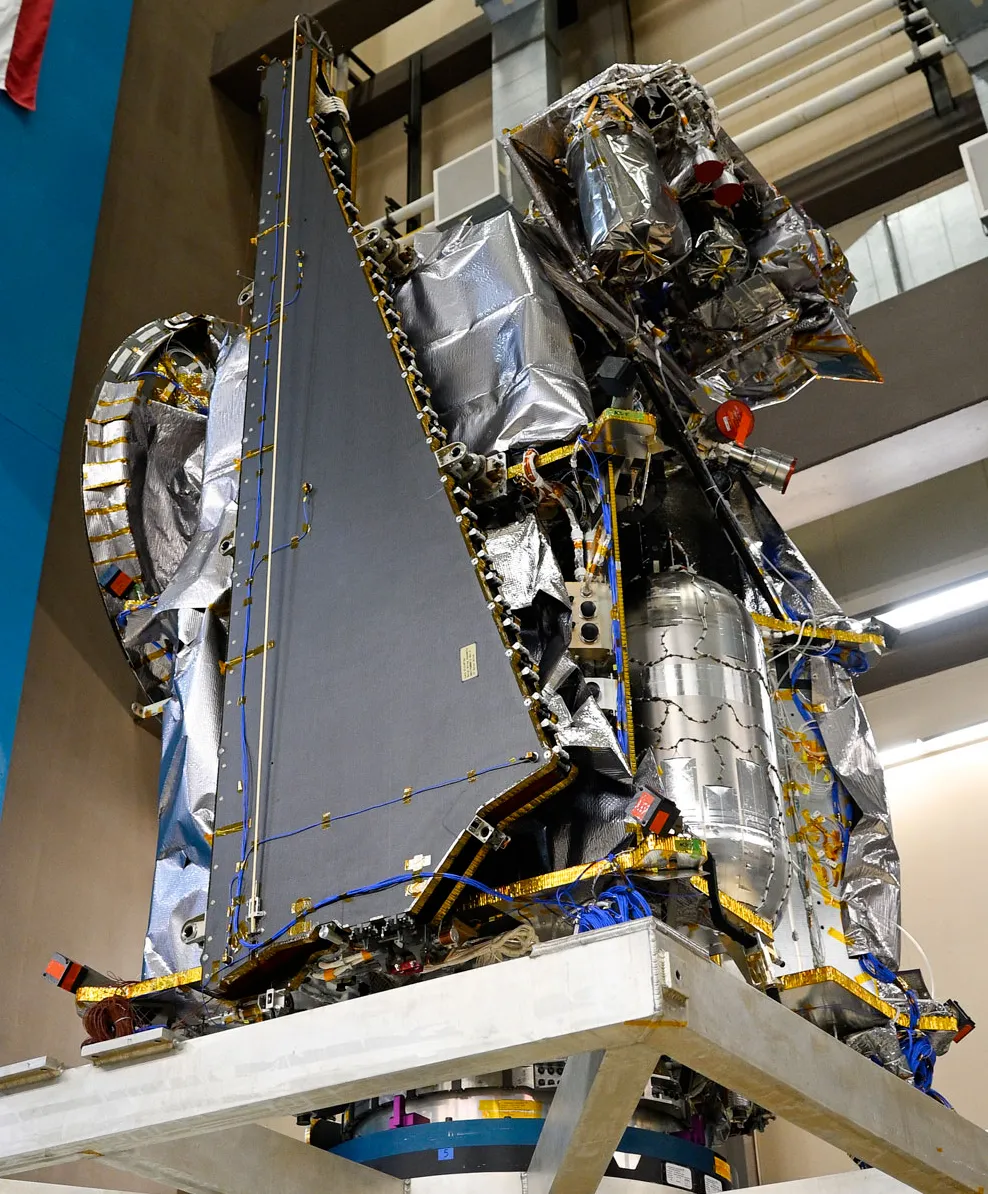

Lucy will visit more asteroids than any spacecraft in history — a dozen or so across twelve years, using a trajectory of such elaborate geometry that it returns to Earth three times for gravity assists and shuttles between two entirely separate swarms of asteroids.
Those swarms are the Jupiter Trojans, two great clouds of bodies trapped in gravitationally stable points ahead of and behind Jupiter in its orbit. They have been there, most likely, since the planets formed, and they are thought to be captured remnants of the outer solar system — fossils of the material from which the giant planets grew.
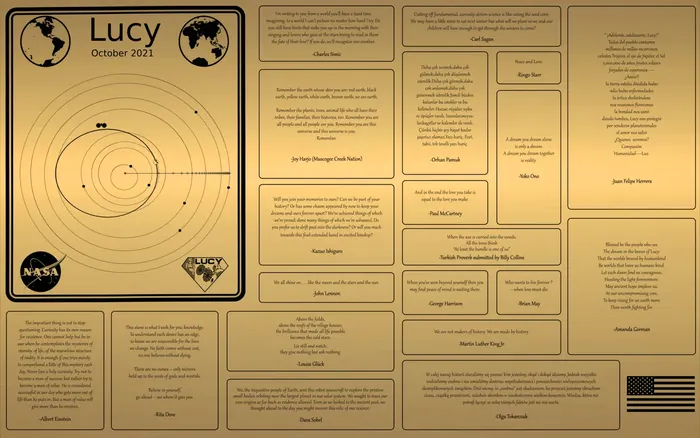
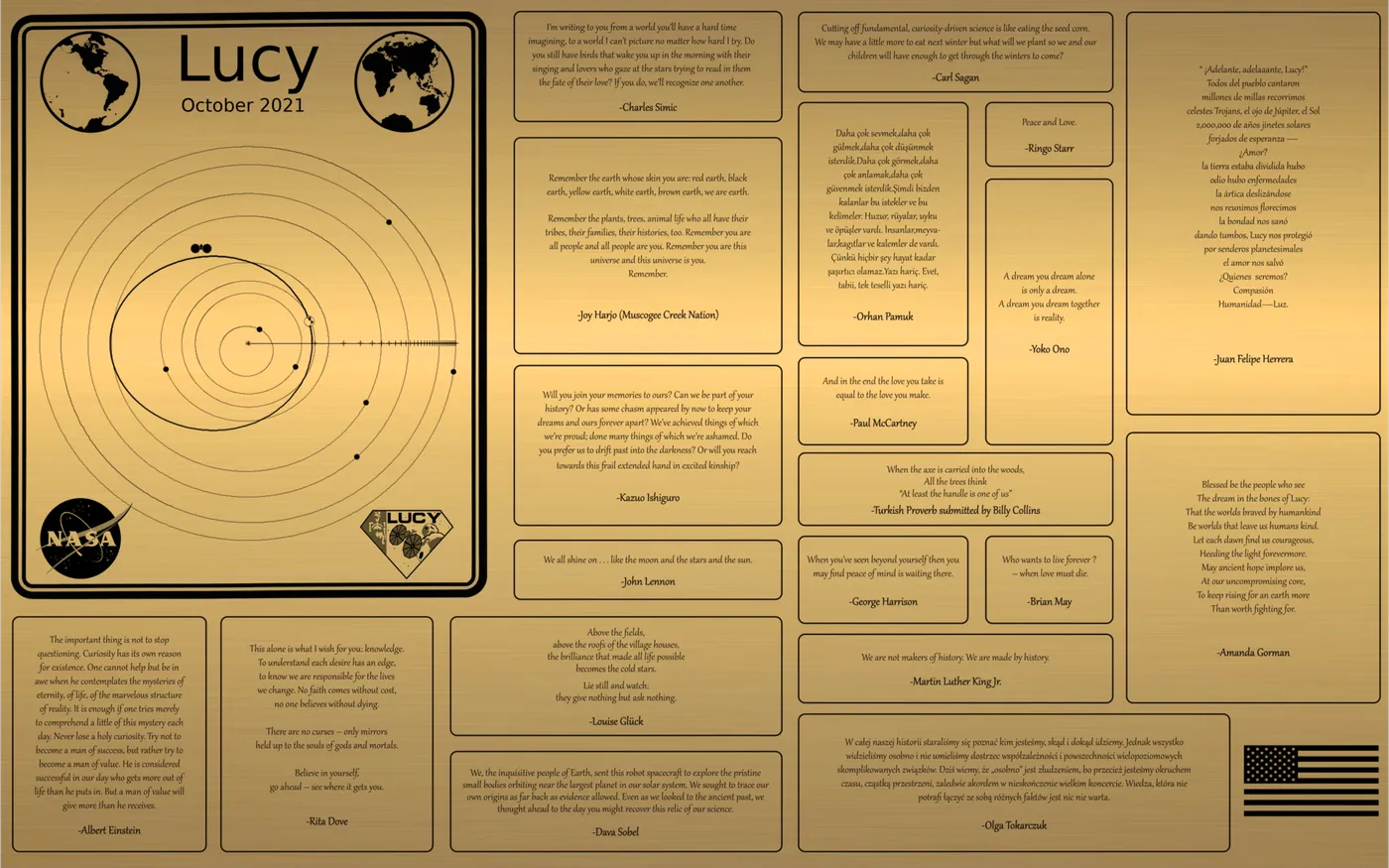
Hence the name. The mission is called after the Lucy fossil, the Australopithecus skeleton found in Ethiopia in 1974 that reshaped understanding of human origins — which was itself named after the Beatles song playing in the excavation camp. The spacecraft carries a plaque with quotations for whoever might find it in a million years.
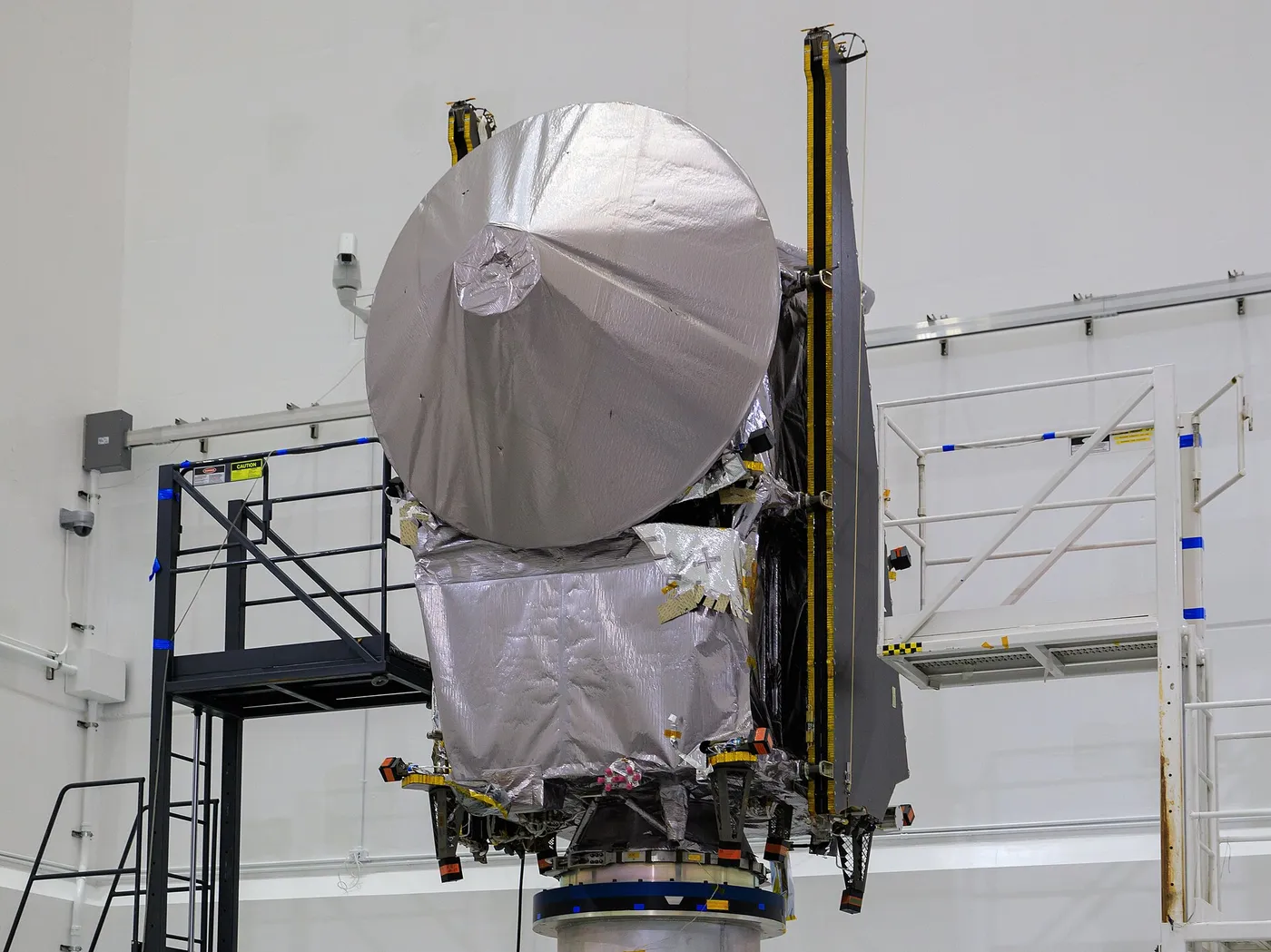
It has already had trouble and already produced a surprise. One of its two large circular solar arrays failed to latch fully open after launch, and a long campaign of careful motor pulses has partially seated it — the array is stable and produces nearly full power, but it is not locked. Engineers have accepted it and re-planned the mission around the structure's reduced stiffness.
At its first target in 2023, the small main-belt asteroid Dinkinesh — added to the itinerary as an engineering rehearsal — Lucy discovered a moon, and then discovered that the moon was itself a contact binary, two objects touching. A test flyby of an object thought to be dull produced a configuration nobody had ever seen.