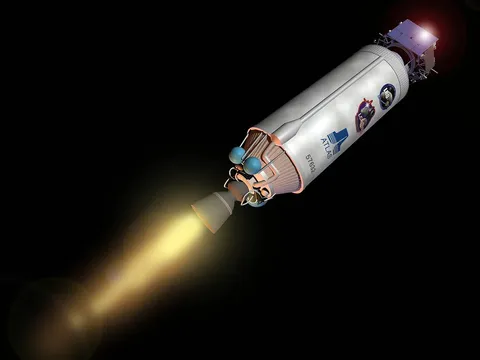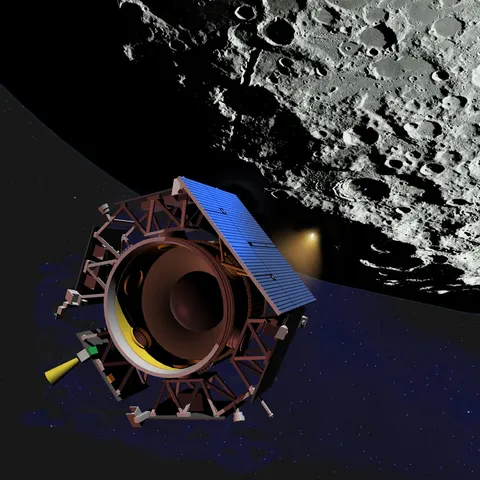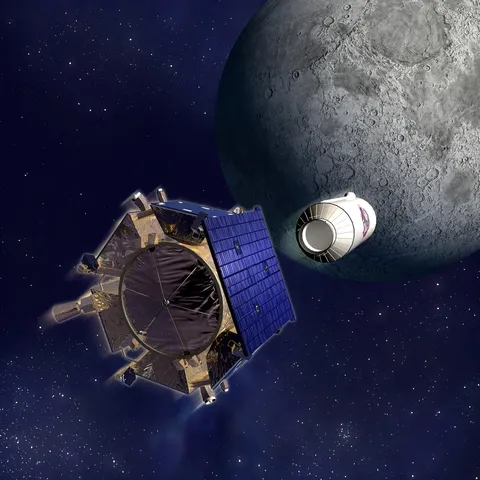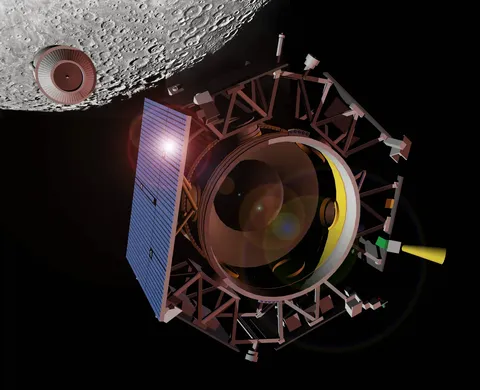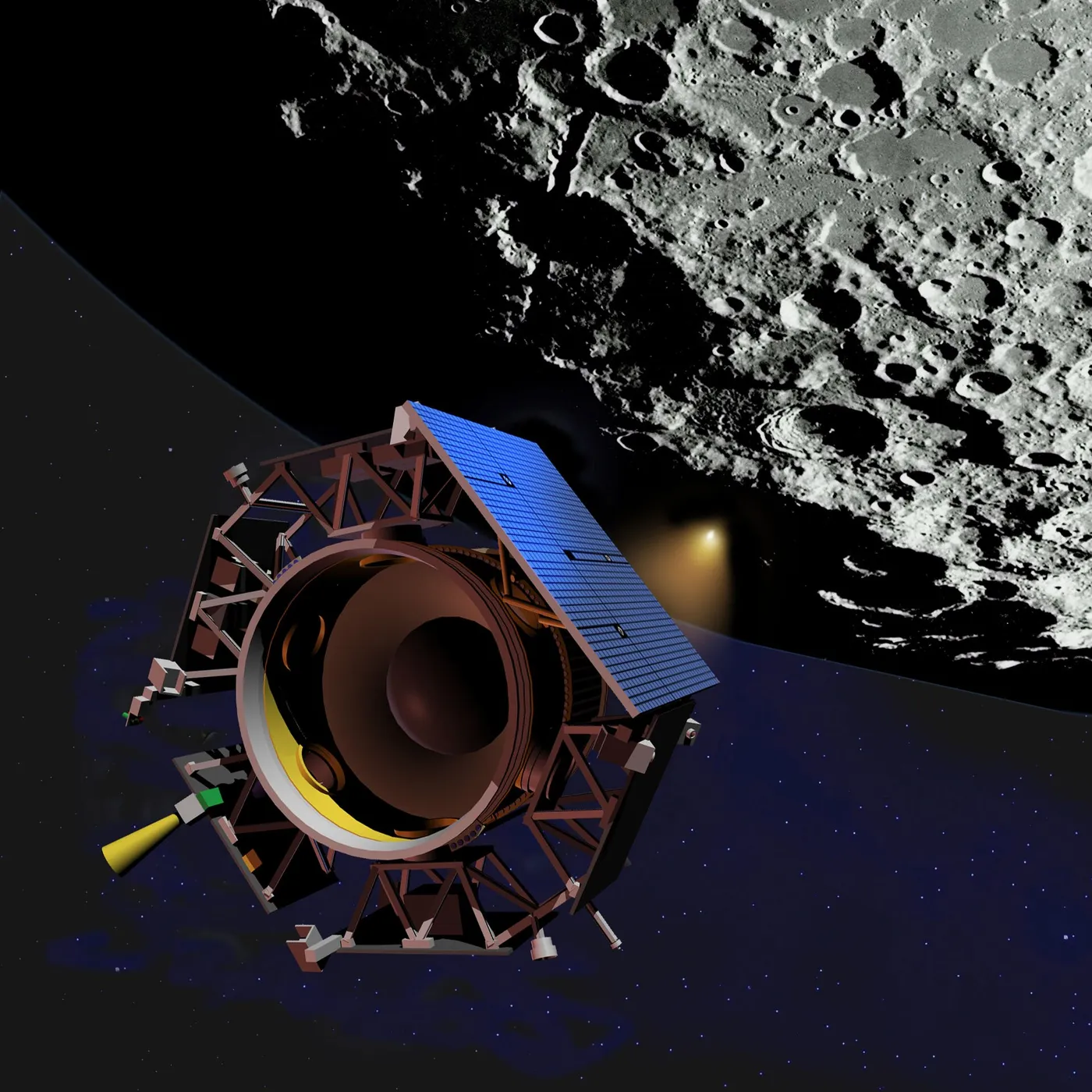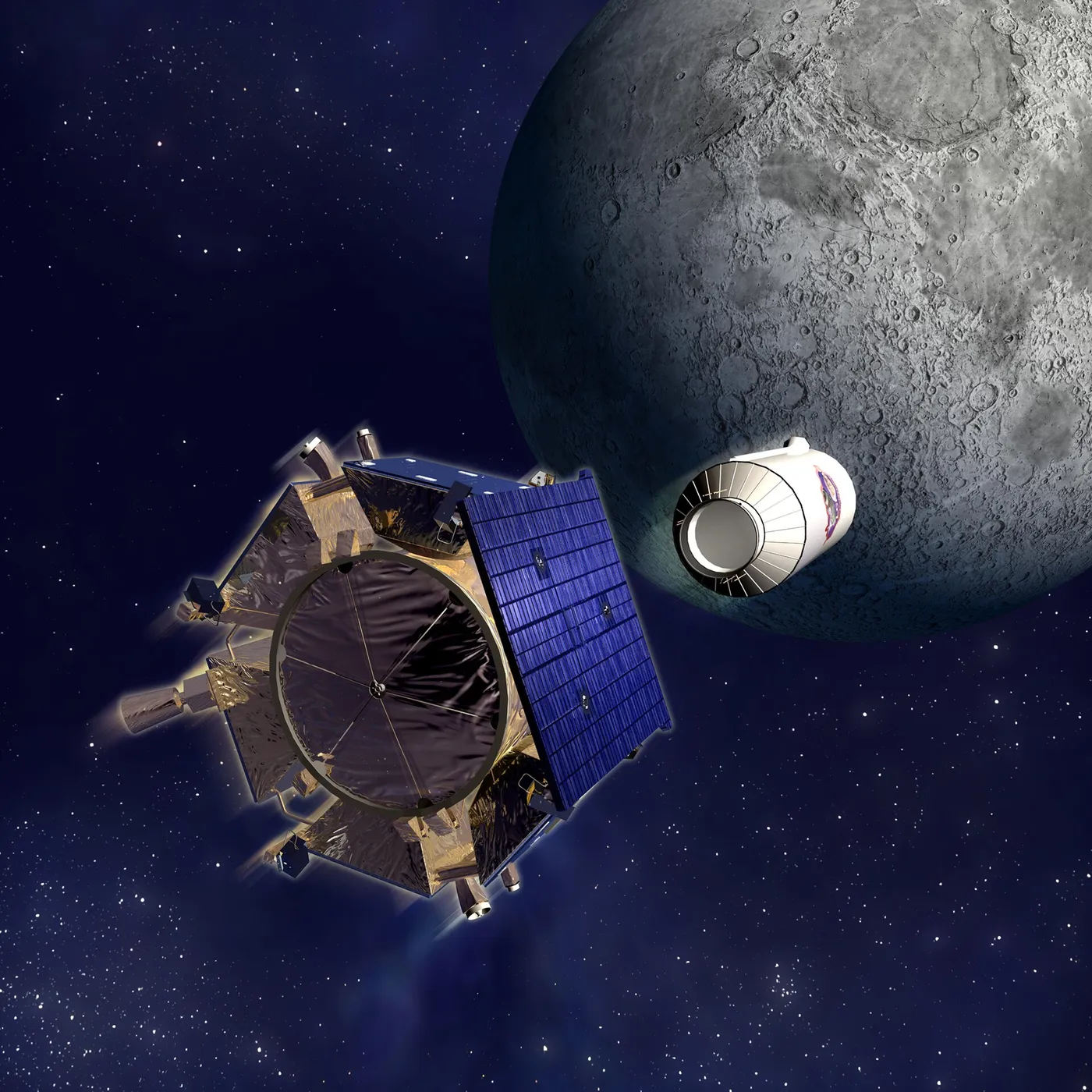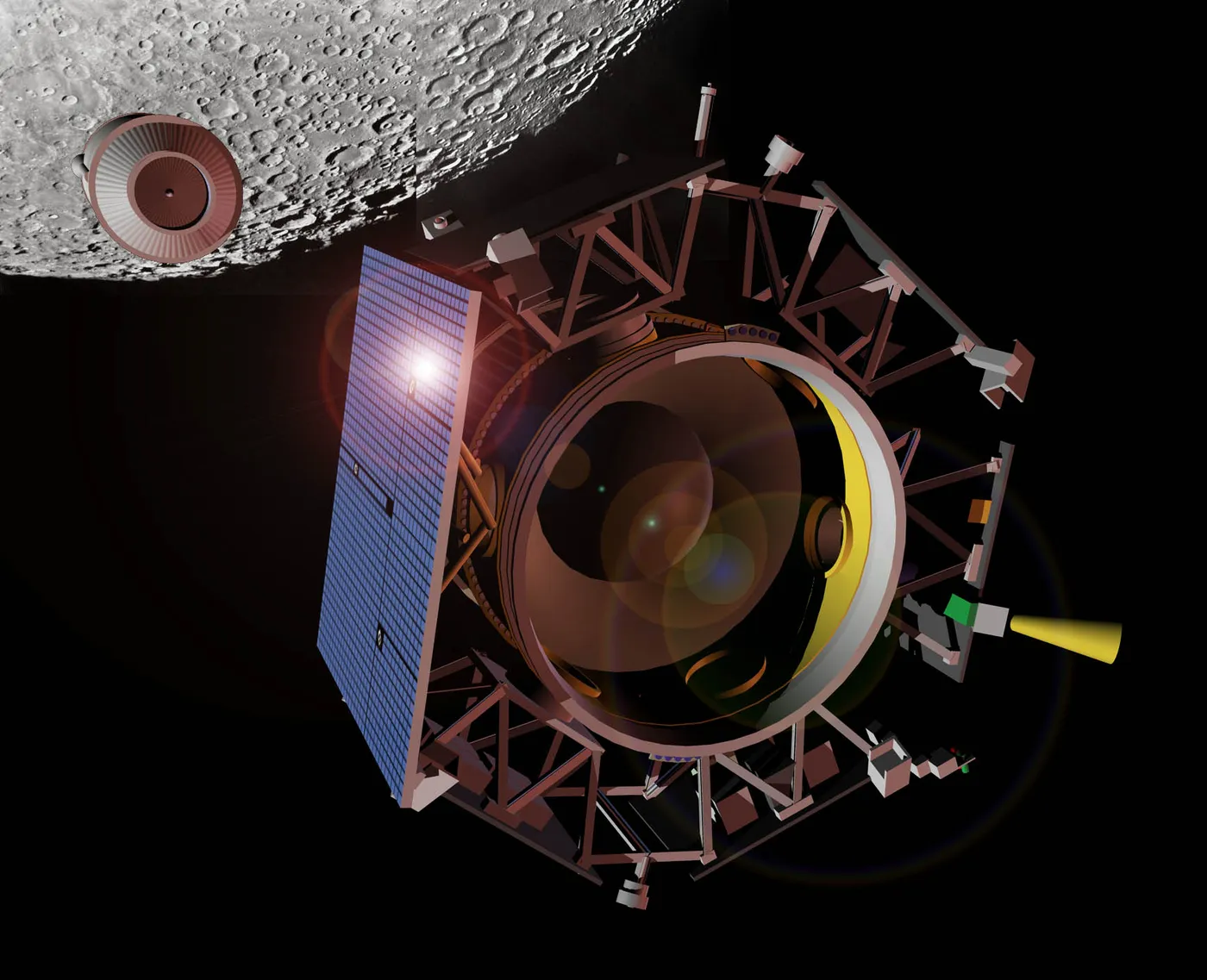
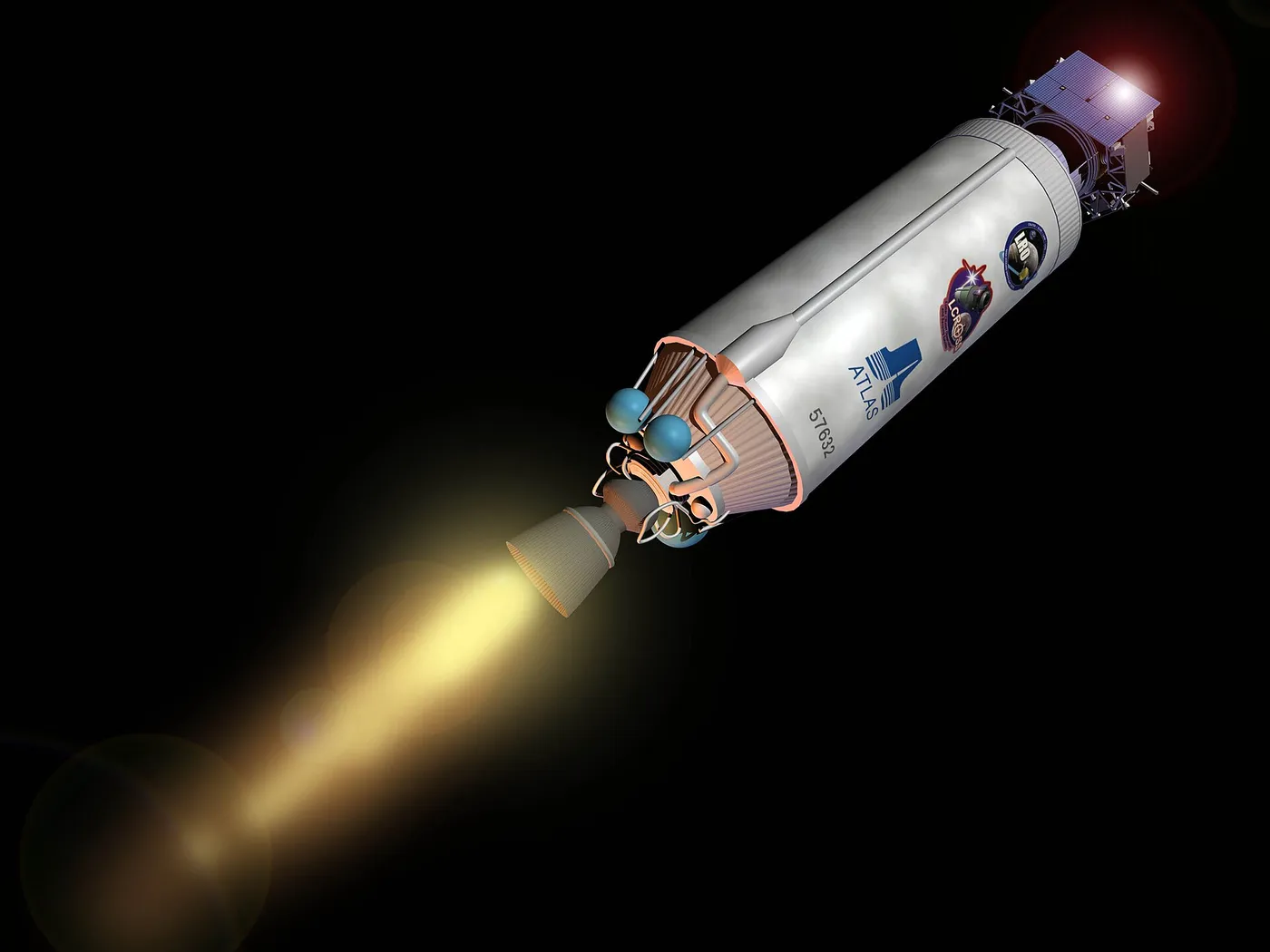

LCROSS was a cheap experiment attached to a bigger mission. It rode to the Moon with the Lunar Reconnaissance Orbiter and stayed attached to the spent Centaur upper stage, steering the two-tonne empty rocket body into a permanently shadowed crater to see what was thrown up.
The target was Cabeus, near the south pole, chosen because its floor has not seen sunlight in perhaps two billion years. The Centaur struck in October 2009 at some 9,000 kilometres per hour, and the small shepherding spacecraft flew through the resulting plume four minutes later, sampling it with spectrometers before crashing itself.
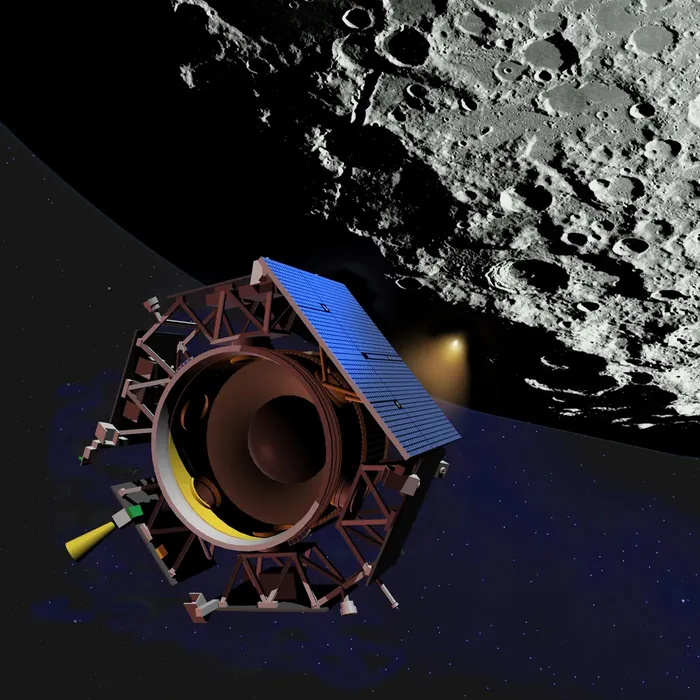
Publicly the event was a flop. NASA had encouraged amateur astronomers to watch for the plume, and the predicted bright flash was not visible from Earth; broadcast coverage showed an anticlimactic grey nothing, and the immediate press coverage was disappointed.
The data were anything but. The plume contained water — roughly 5.6 per cent by mass of the material excavated, far more than most estimates — along with hydrogen sulphide, ammonia, methane, carbon monoxide and mercury. It was direct, unambiguous confirmation of substantial water ice at the lunar poles, from a mission that cost a small fraction of a dedicated lander.
That single measurement underpins much of current lunar planning. Water at the poles means propellant, breathable oxygen and drinking water that do not have to be lifted out of Earth's gravity, and the Artemis programme's focus on the south pole traces directly to what LCROSS found in a cloud of debris it made itself.