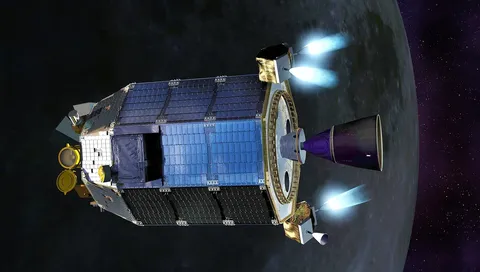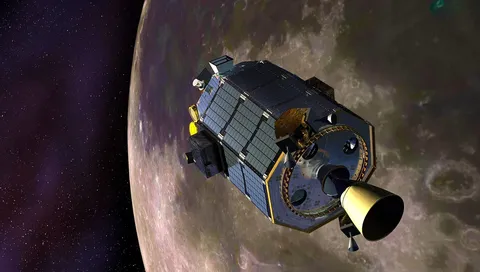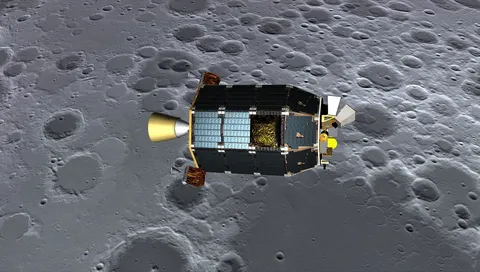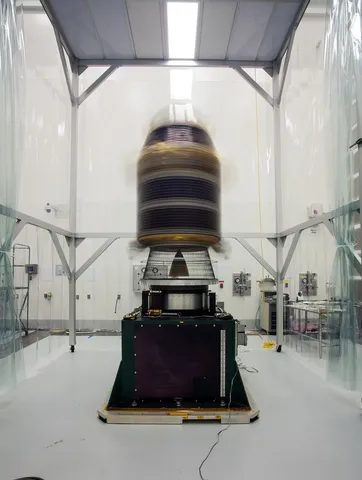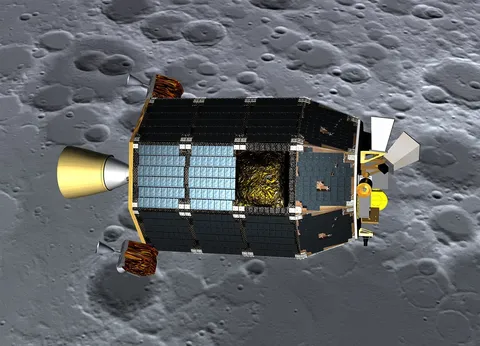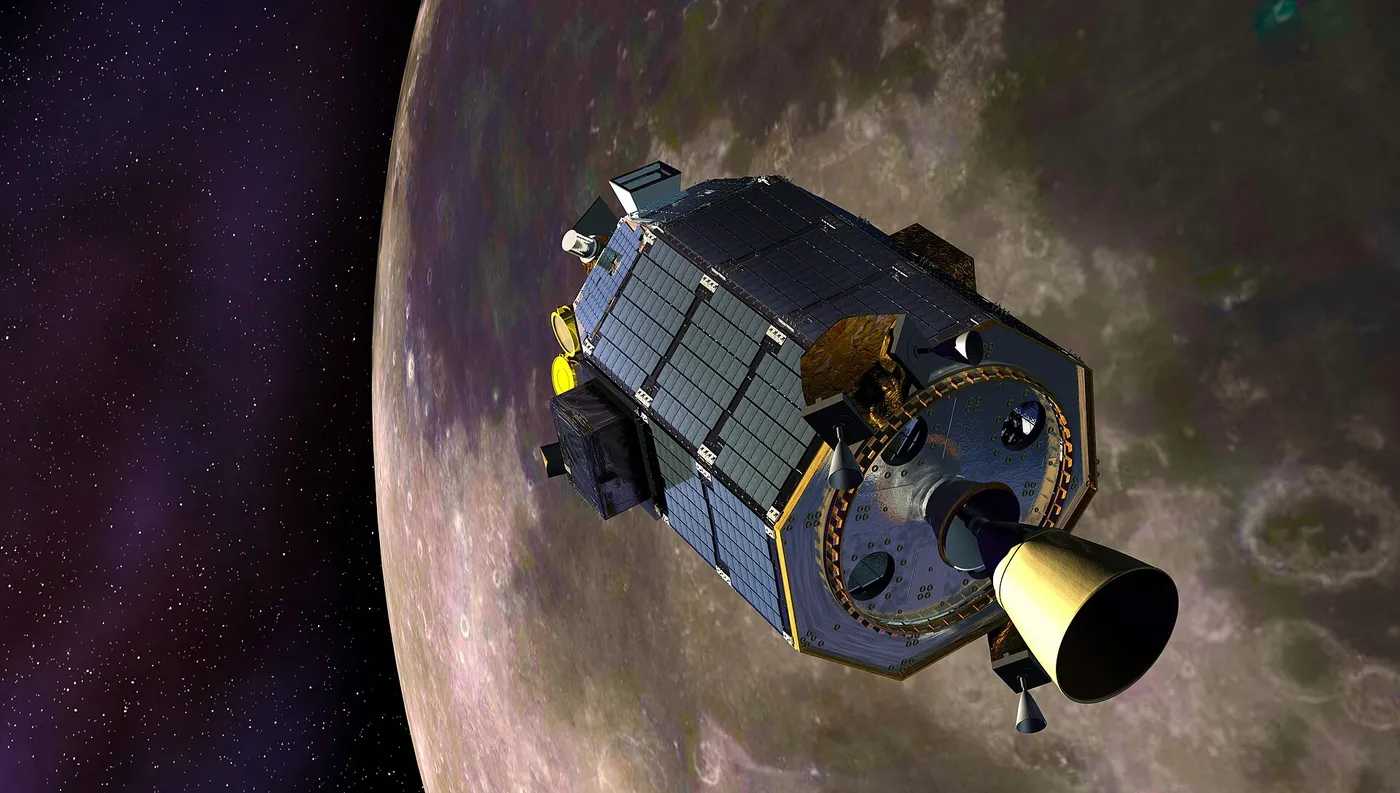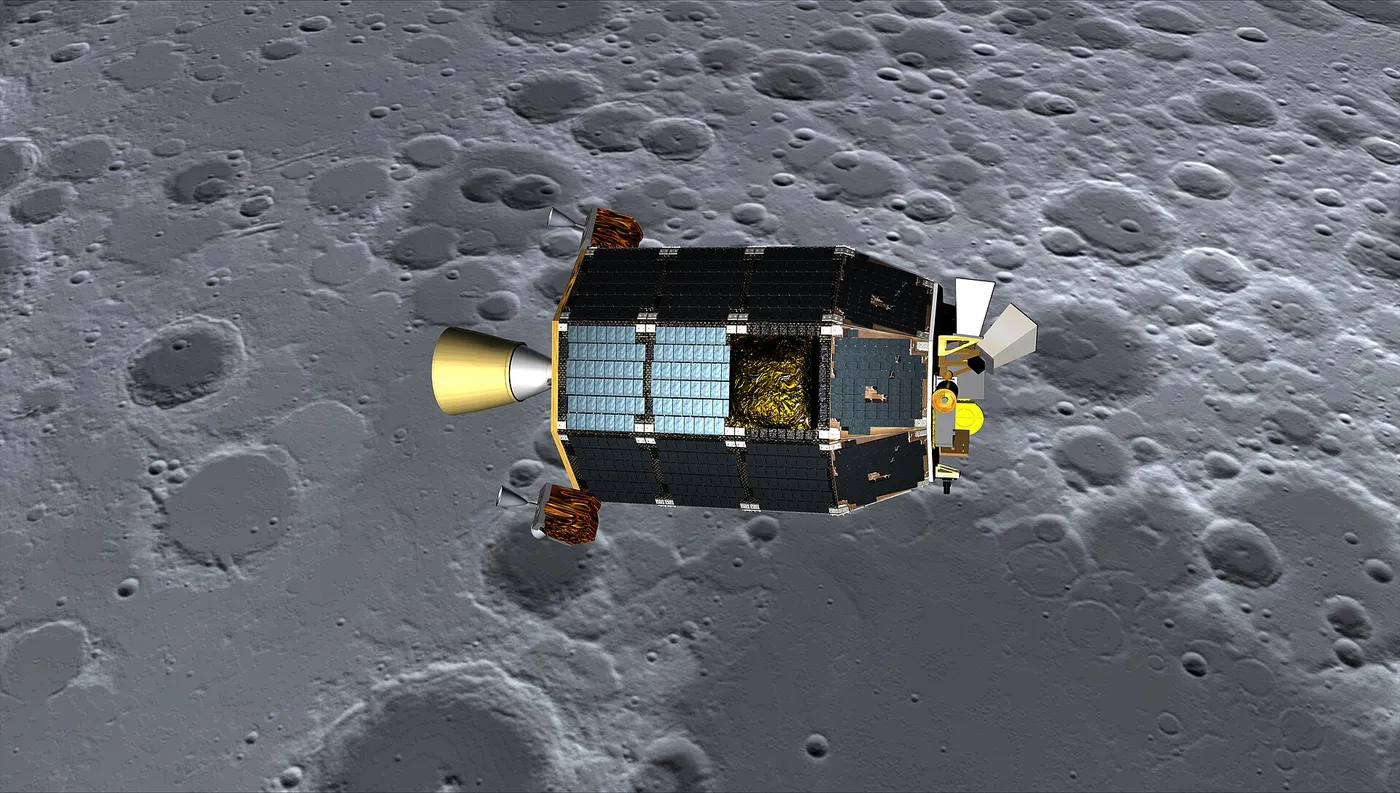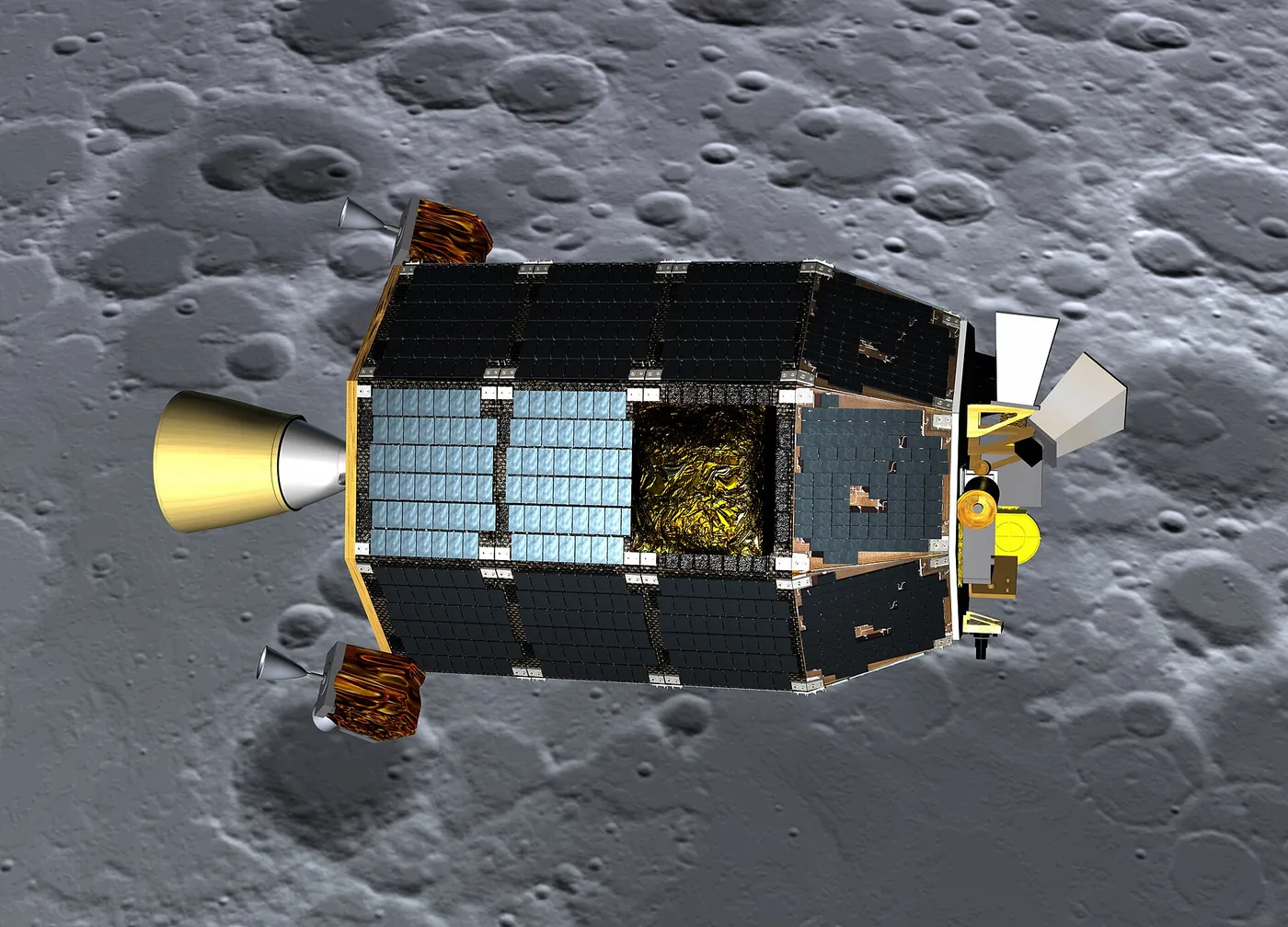
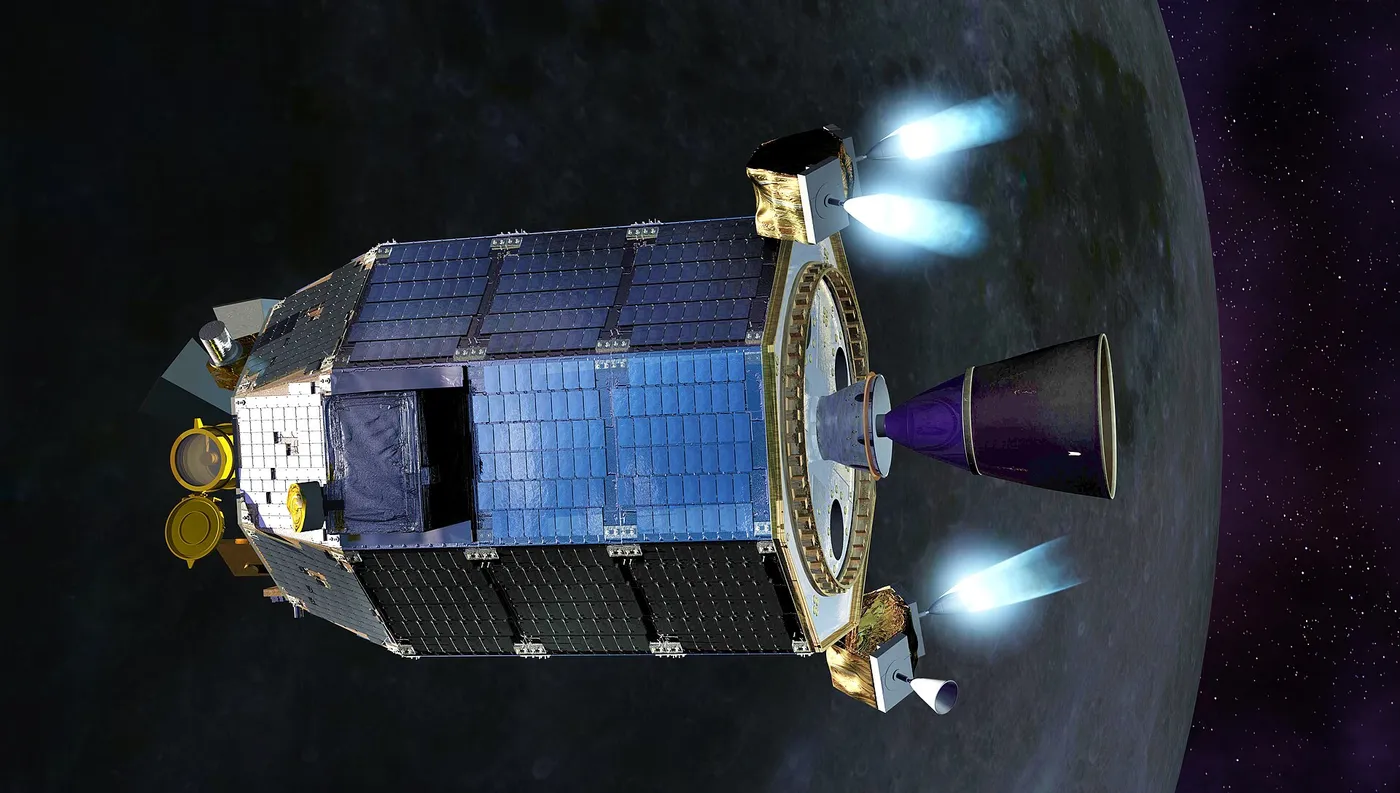

The Moon has an atmosphere, in the sense that a few hundred thousand atoms occupy each cubic centimetre above the surface — a vacuum by any laboratory standard, but a genuine if impossibly thin envelope called an exosphere. LADEE was sent to measure it before human activity changed it, on the reasoning that the pristine version would not survive a return to the Moon.
It also chased a fifty-year-old puzzle. Apollo astronauts had sketched a curious glow along the lunar horizon before sunrise, and one explanation was electrostatically levitated dust rising above the surface. LADEE looked hard for that dust and largely failed to find it, which was a genuine result — it constrained the phenomenon far more tightly than the anecdotes had.
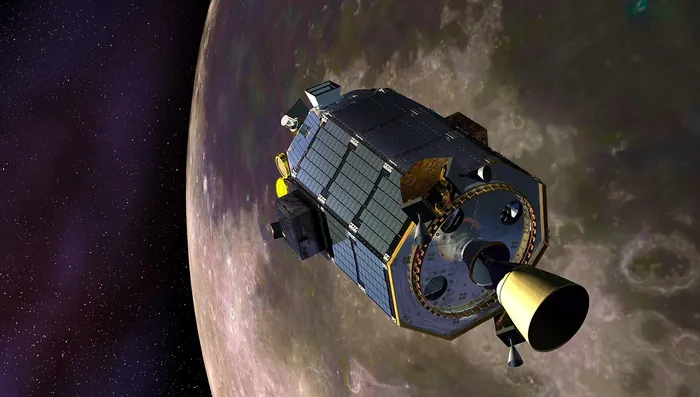
Its most consequential payload was a communications experiment. A laser terminal transmitted data from lunar distance at 622 megabits per second, roughly six times the best radio rate ever achieved from the Moon, using a fraction of the mass and power. Optical communication has since become the assumed technology for future deep-space missions.
The launch was itself memorable. It flew on a Minotaur V from Wallops Island in Virginia at night, and because that is an unusual location for a lunar launch it was visible along much of the eastern seaboard of the United States — an audience of millions who had not been expecting to see anything.
The mission was deliberately ended in April 2014 with an impact on the far side, timed to occur where it could not disturb the Apollo landing sites. It had operated for about seven months, of which the science phase was a hundred days — a small, sharply focused mission of the kind the planetary programme flies too rarely.