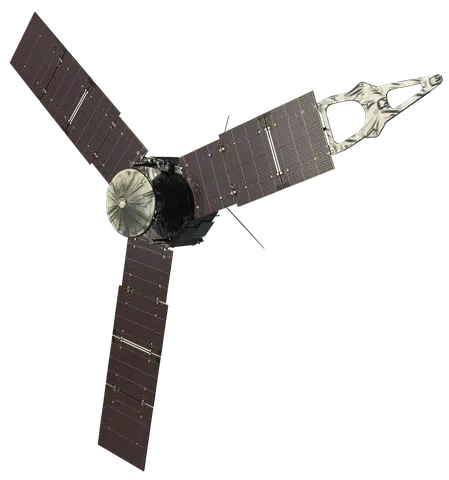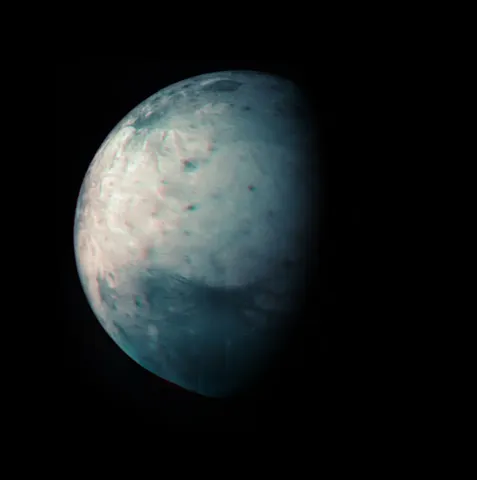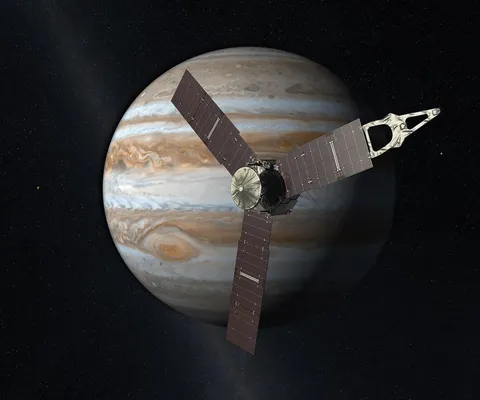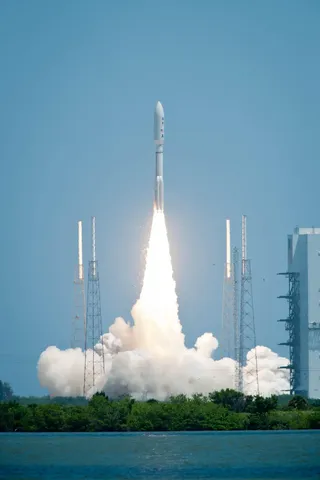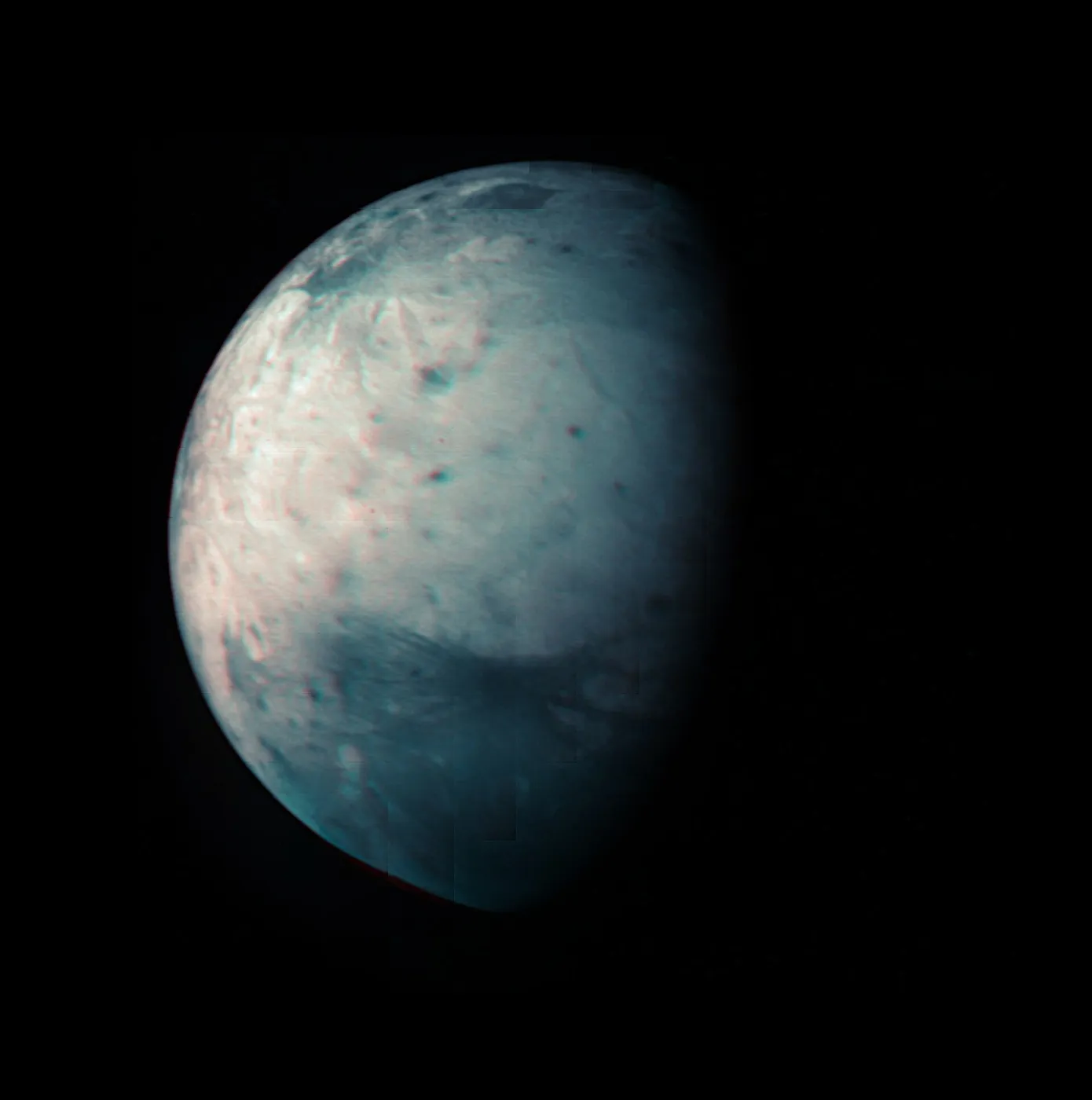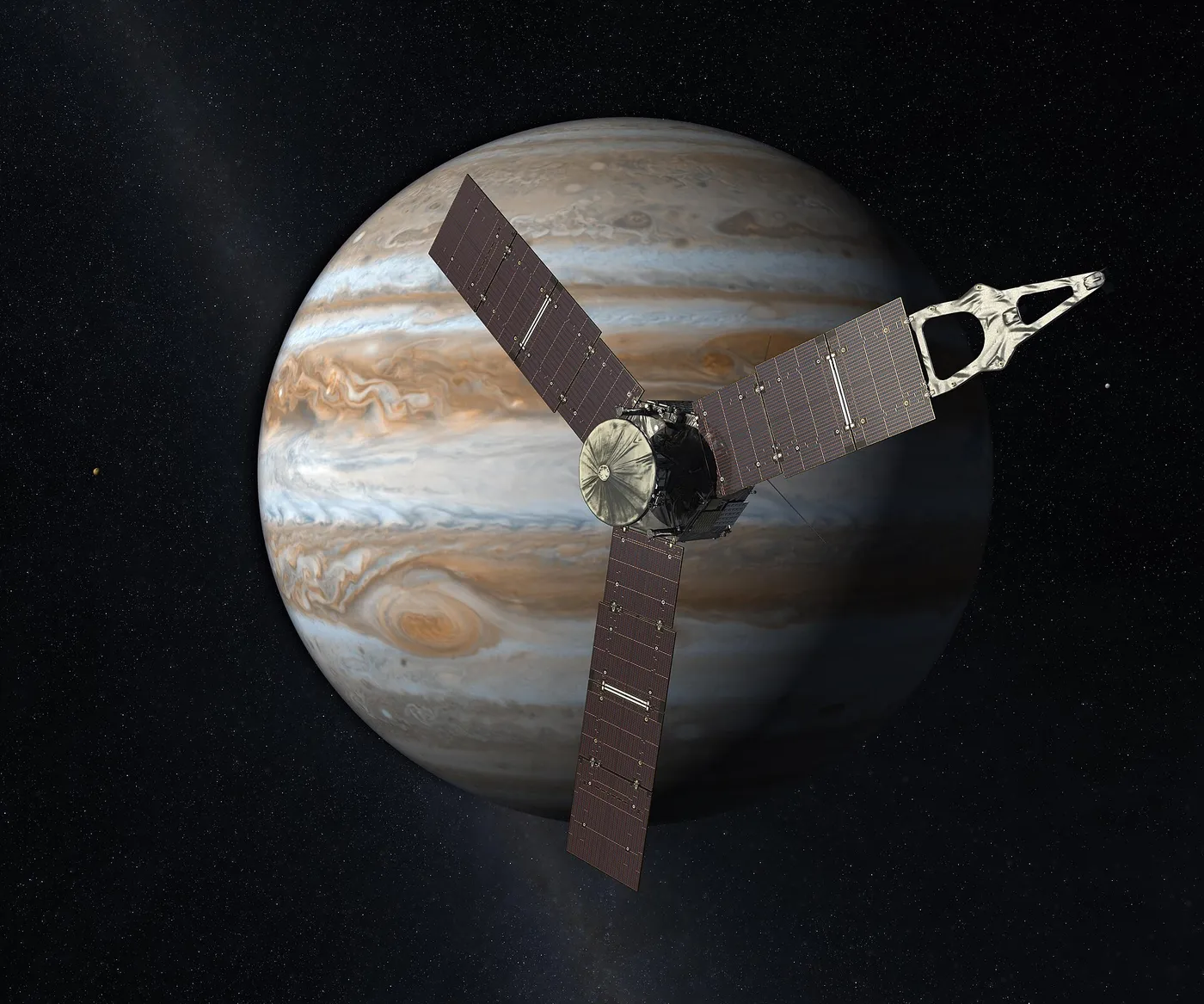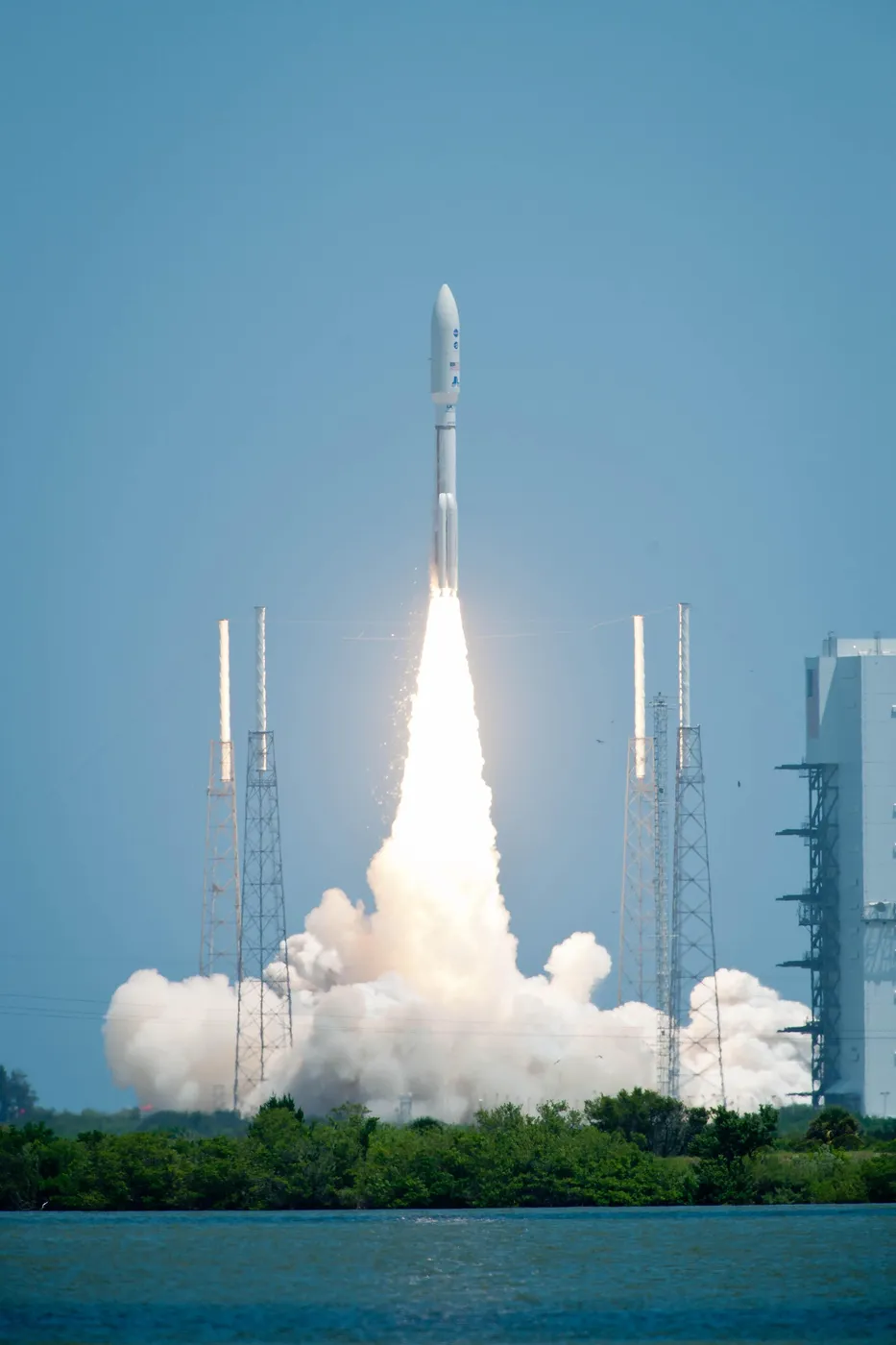
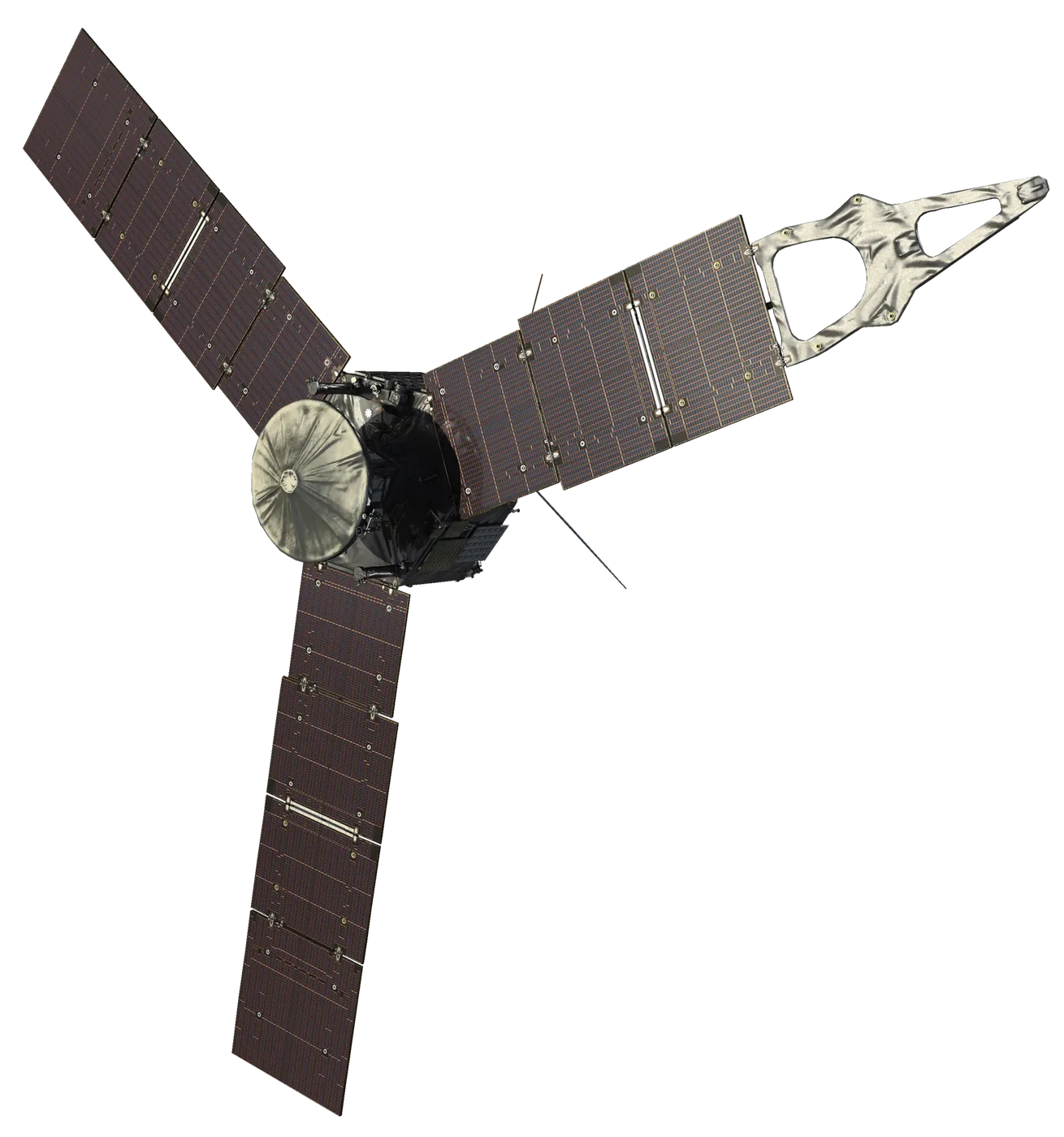

Juno flies where nothing else can survive. Jupiter's radiation belts are the most intense in the solar system, capable of destroying spacecraft electronics in weeks, so the mission was given a highly elongated polar orbit that dives through the gap between the planet and the inner radiation belt, spends a few hours at close range, and then retreats far beyond the danger. Its computers ride inside a titanium vault.
It is also solar-powered, which nobody had attempted so far from the Sun. Its three panels span more than twenty metres and collect about four per cent of the light they would receive at Earth — made feasible only by the efficiency gains in solar cells since Galileo flew on plutonium.
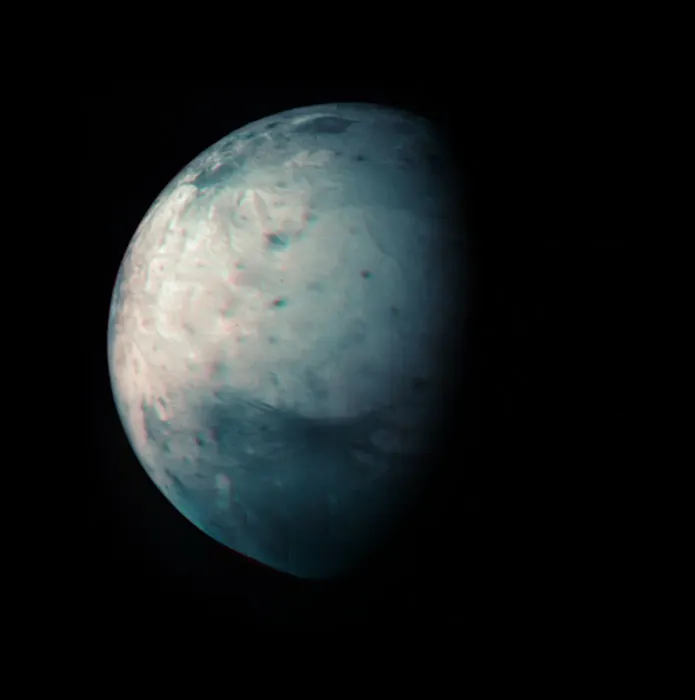
The main engine was never used after arrival. Concerns about sluggish helium check valves persuaded the team not to risk the burn that would have tightened the orbit from 53 days to 14, so Juno has flown its entire mission on the longer orbit — fewer close passes, but each one complete, and a spacecraft that has now lasted far longer than planned.
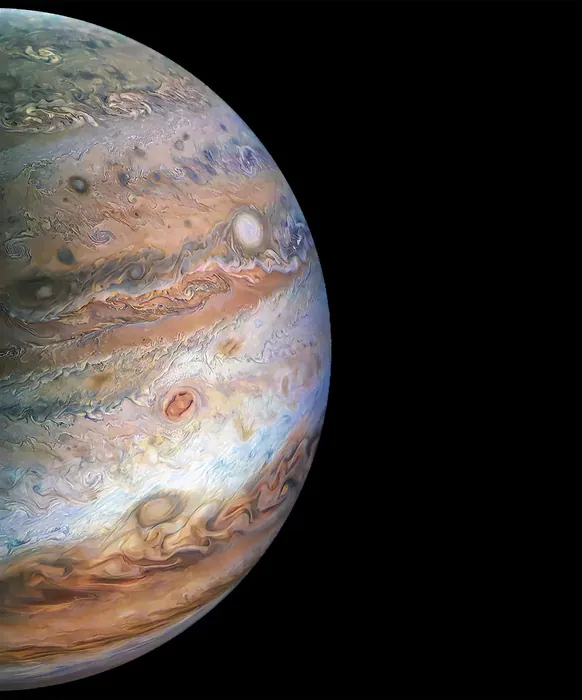
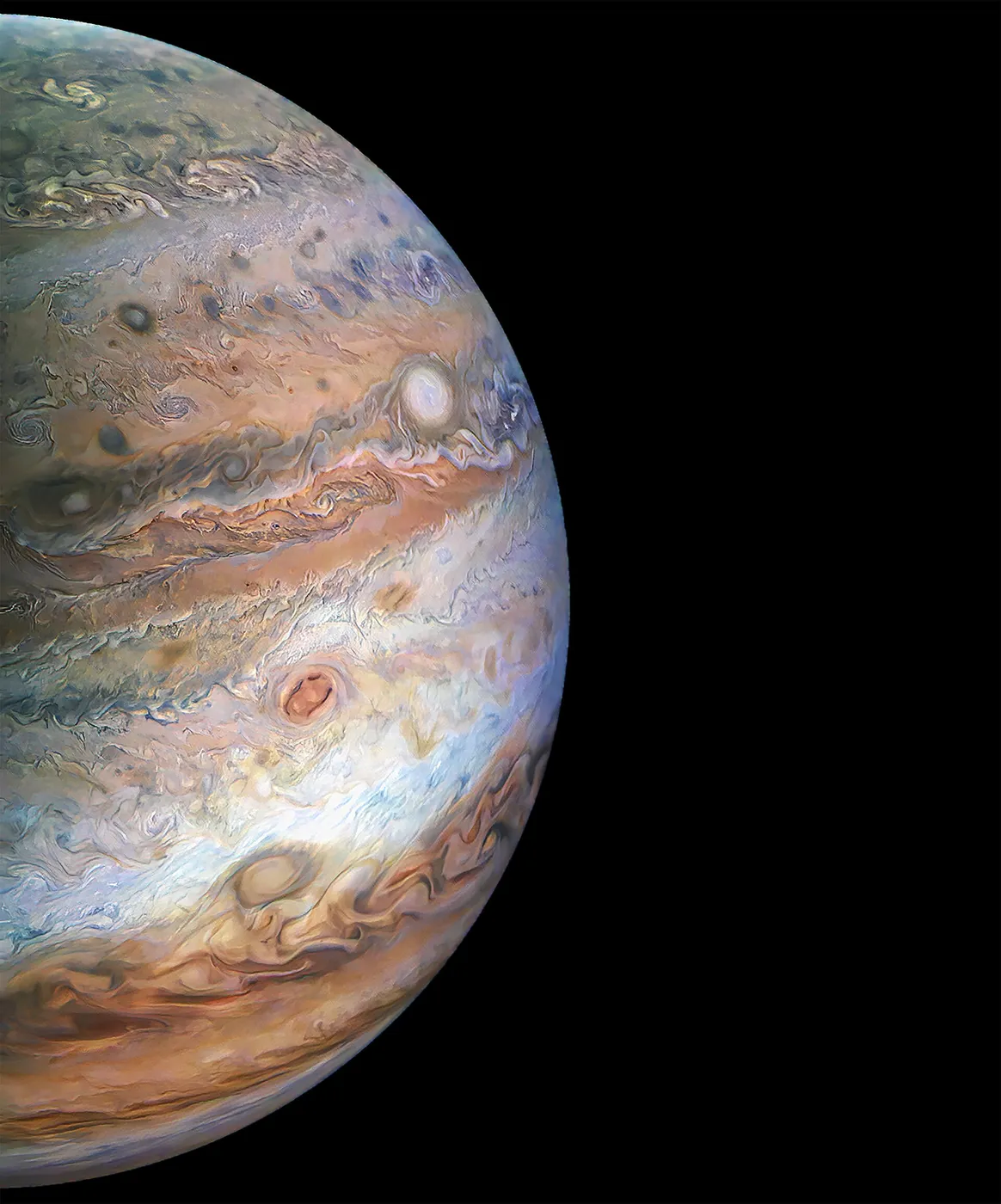
Its results have rewritten Jupiter's interior. The gravity measurements show the core is not a compact ball of rock but a dilute, fuzzy region blended into the surrounding hydrogen — probably the aftermath of a giant collision early in the planet's history. The atmospheric jets that form the familiar bands run some 3,000 kilometres deep, far deeper than expected.
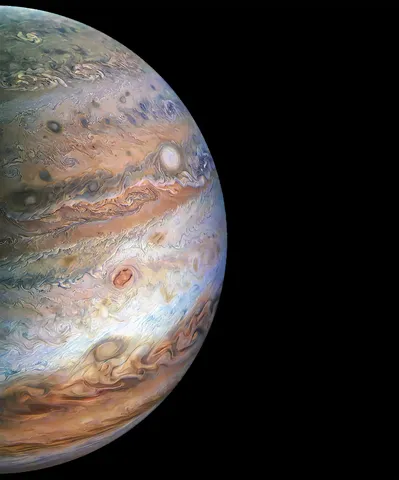
At the poles it found something nobody had predicted: geometric arrangements of cyclones, eight surrounding a central storm in the north and five in the south, each the size of a continent, holding their formation for years. Its public camera, JunoCam, was included for outreach with images processed by volunteers, and has produced some of the most widely reproduced planetary photographs ever taken.