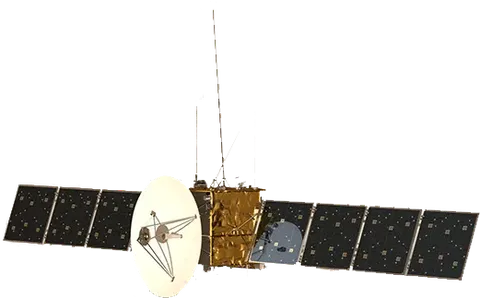

JUICE is going to Jupiter to study its moons rather than the planet, and it will end by entering orbit around Ganymede — the first spacecraft ever to orbit a moon other than our own. Ganymede is the largest moon in the solar system, bigger than Mercury, and the only one known to generate its own magnetic field.
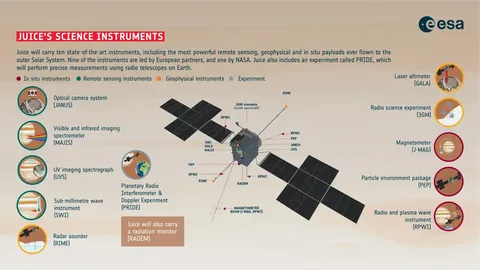
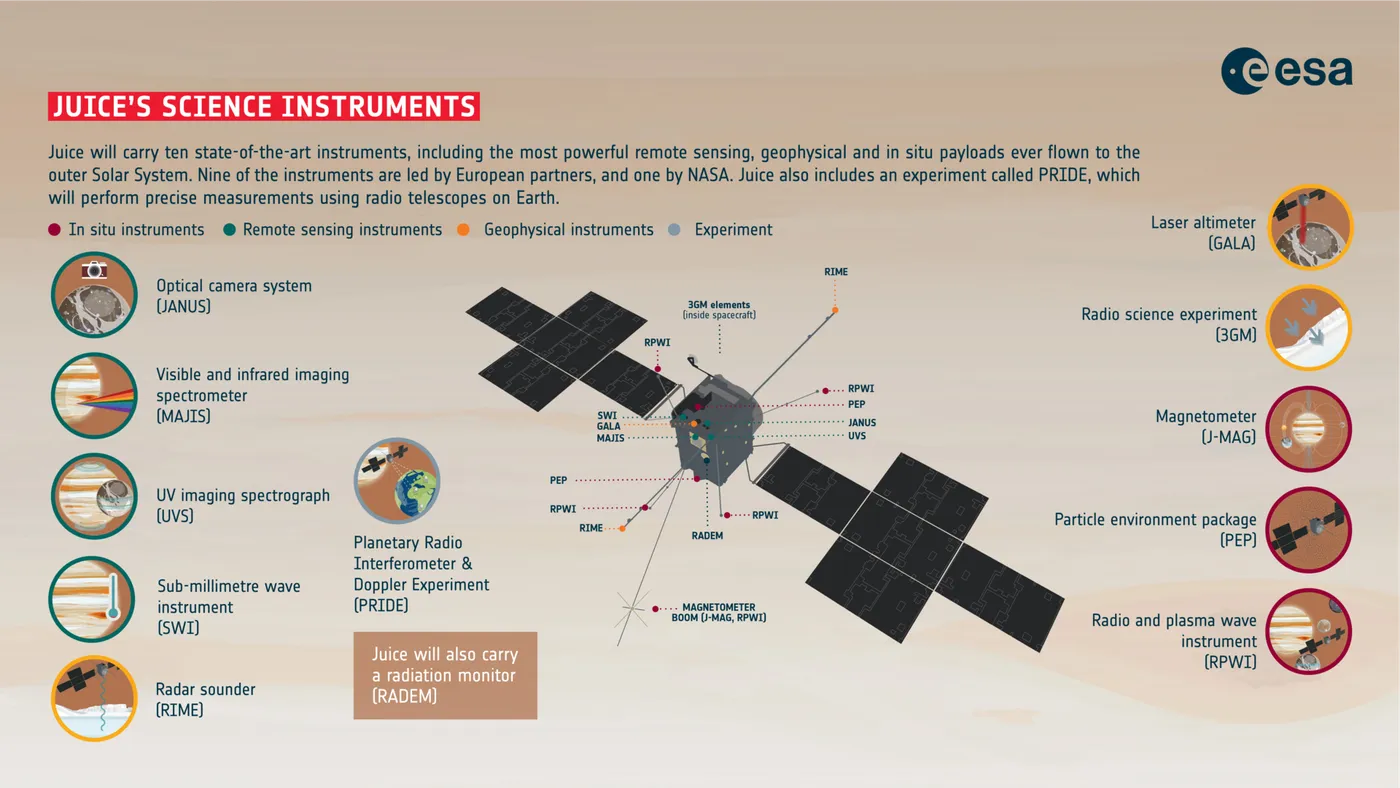
The scientific premise is that the outer solar system contains more liquid water than the inner one. Ganymede, Callisto and Europa are all believed to hold subsurface oceans beneath their ice, and JUICE carries ice-penetrating radar, spectrometers and a magnetometer intended to characterise those oceans — how deep, how salty, and whether they touch rock.

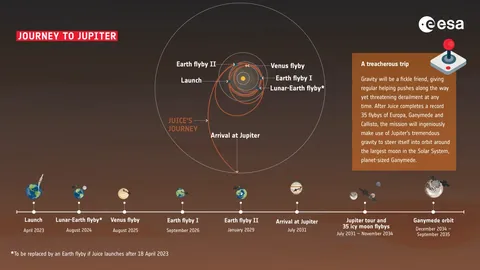
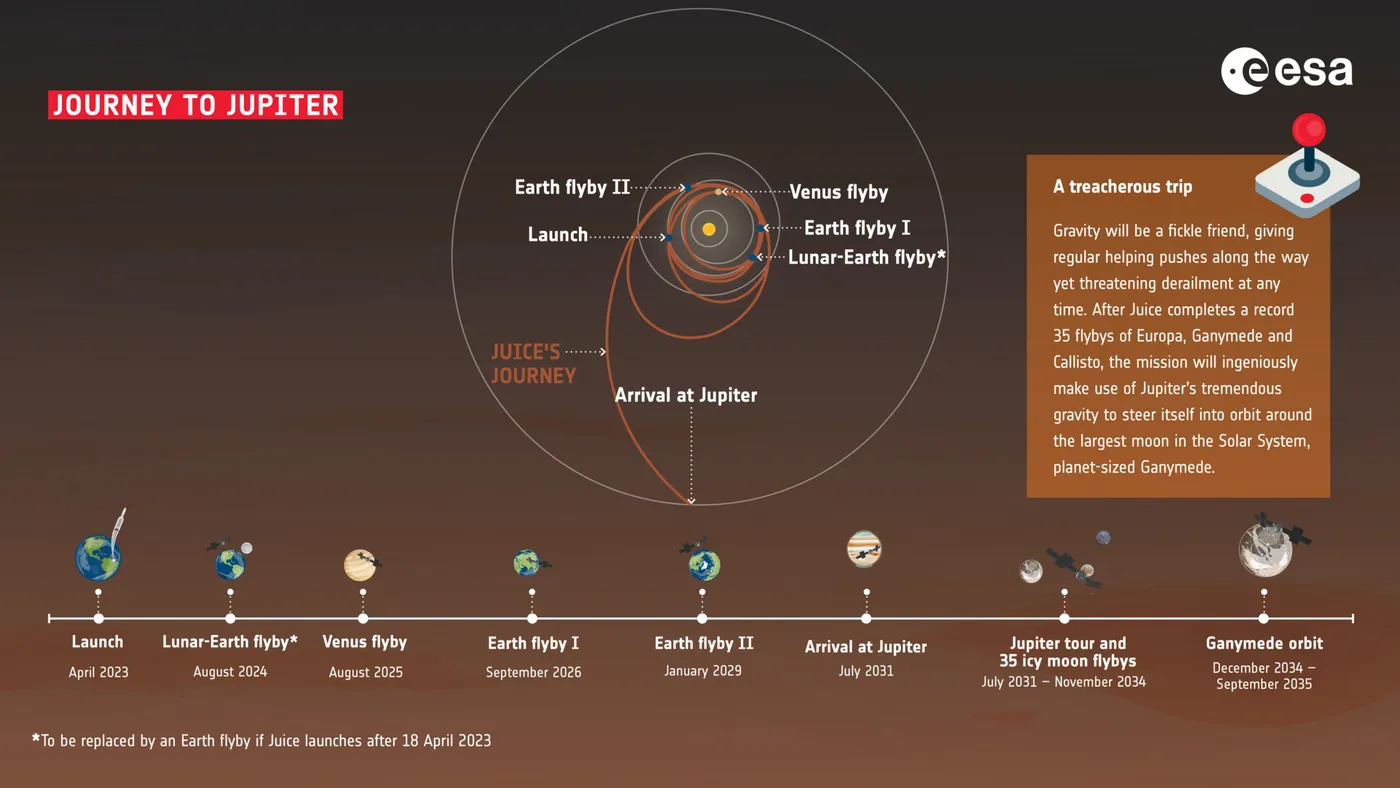
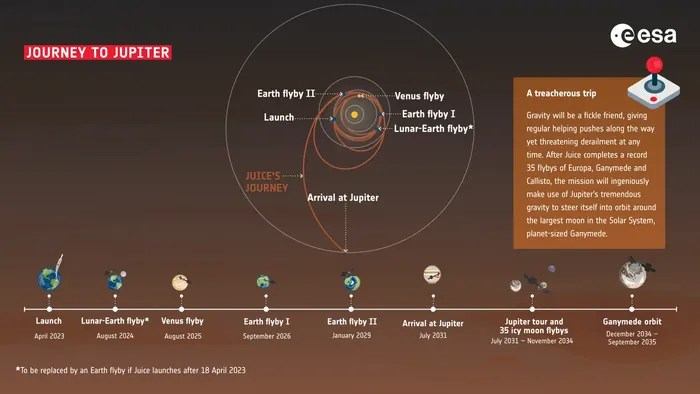
Reaching Jupiter took an unusually elaborate route, including the first ever lunar-Earth gravity assist: a pass by the Moon followed within a day by a pass at Earth, a manoeuvre requiring precision measured in tens of metres and saving a substantial amount of propellant.
The cruise began with a scare. The 16-metre boom carrying the ice-penetrating radar antenna failed to unfold, apparently held by a jammed pin, and engineers spent weeks shaking the spacecraft with its thrusters and warming the mechanism in sunlight before it finally sprang free — a familiar category of problem for anything that must unfold after launch.
It arrives in 2031 and enters Ganymede orbit in 2034, by which time NASA's Europa Clipper will have been working in the system for four years. The two missions were deliberately designed to complement each other, and between them they represent the most serious examination yet of whether life could exist somewhere other than a planet's surface.