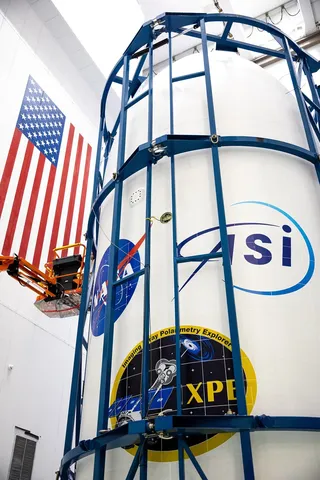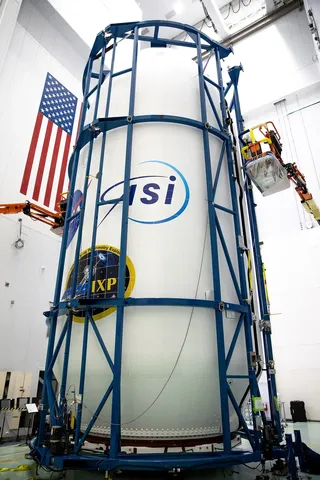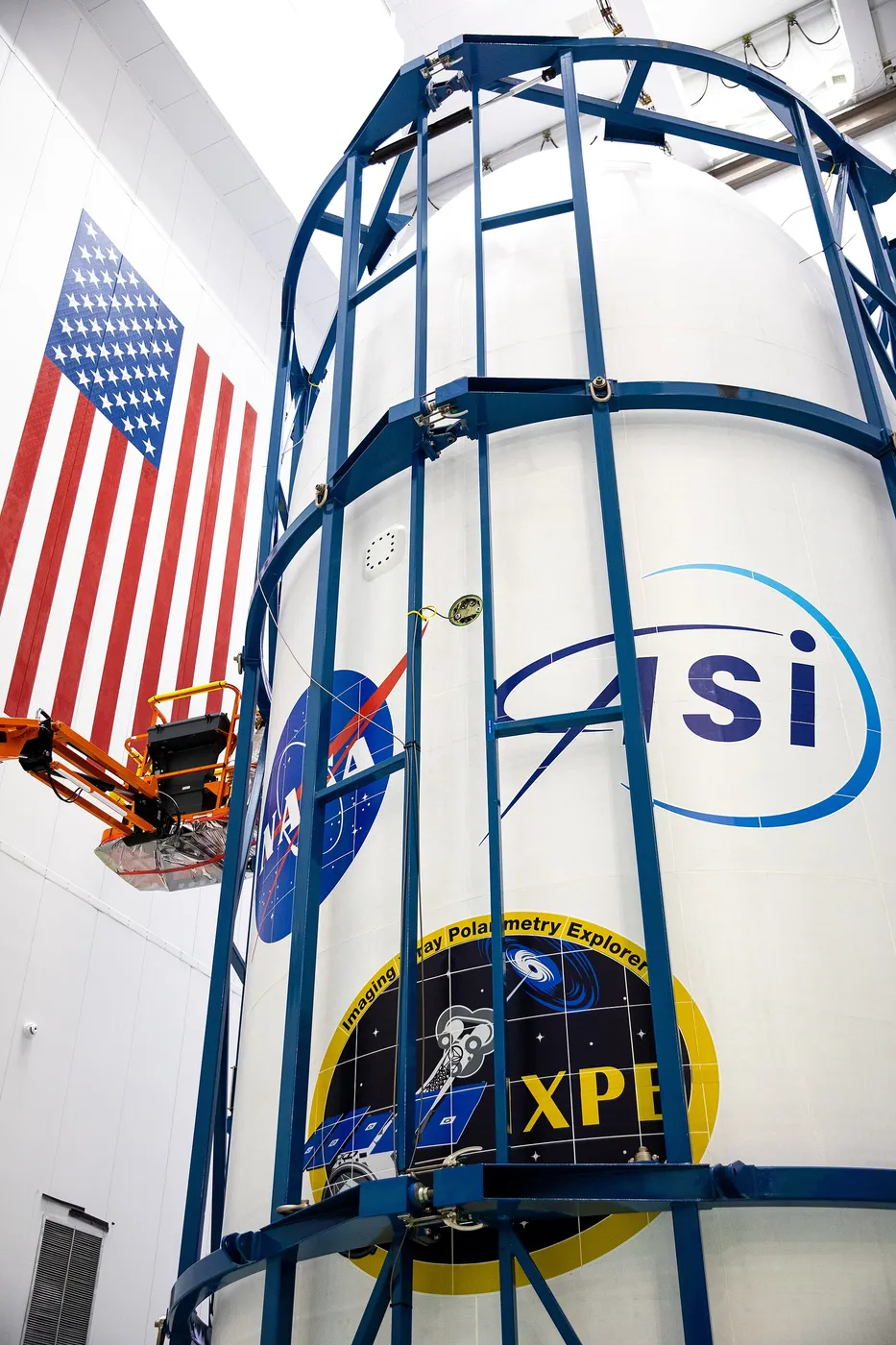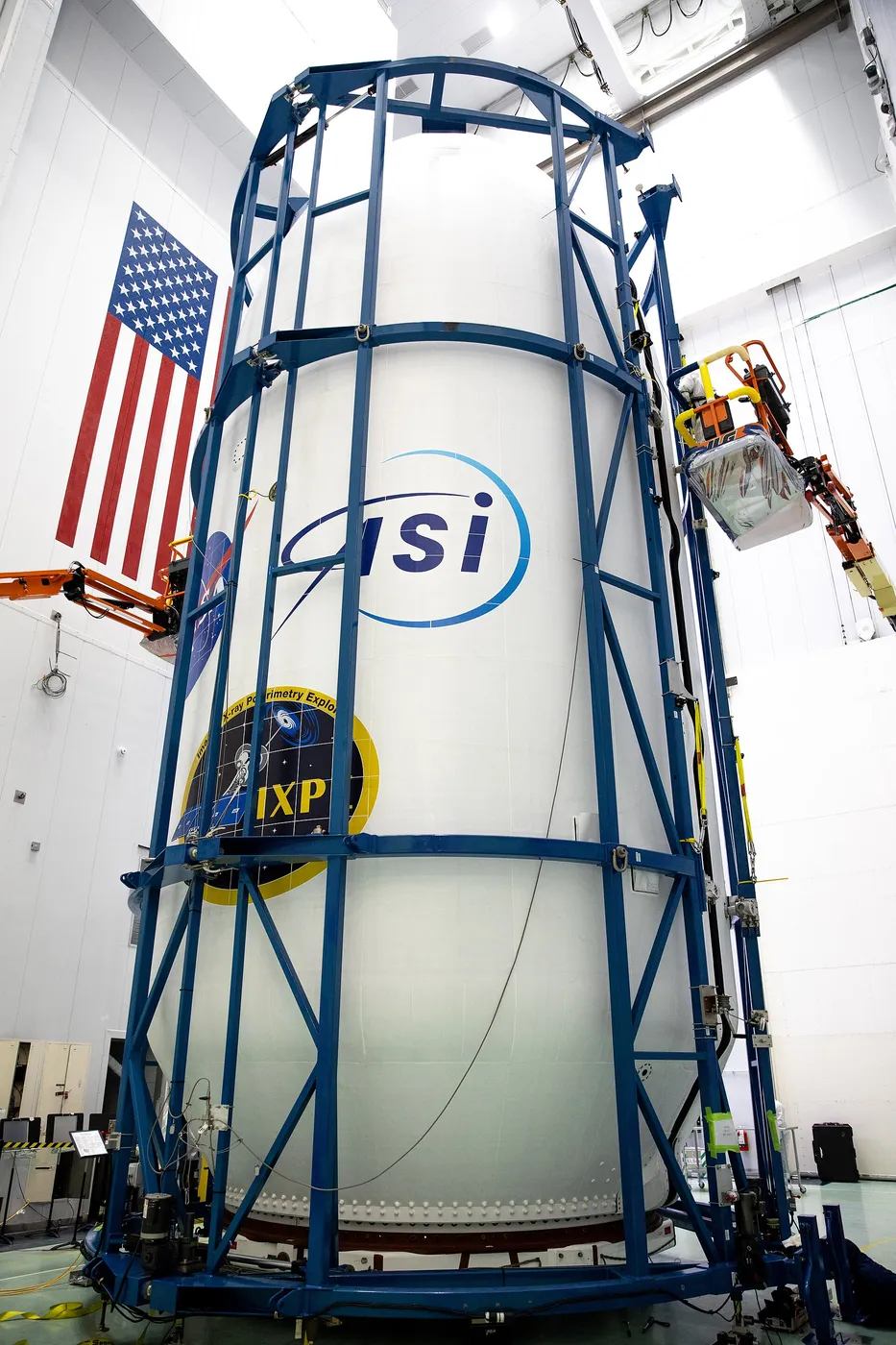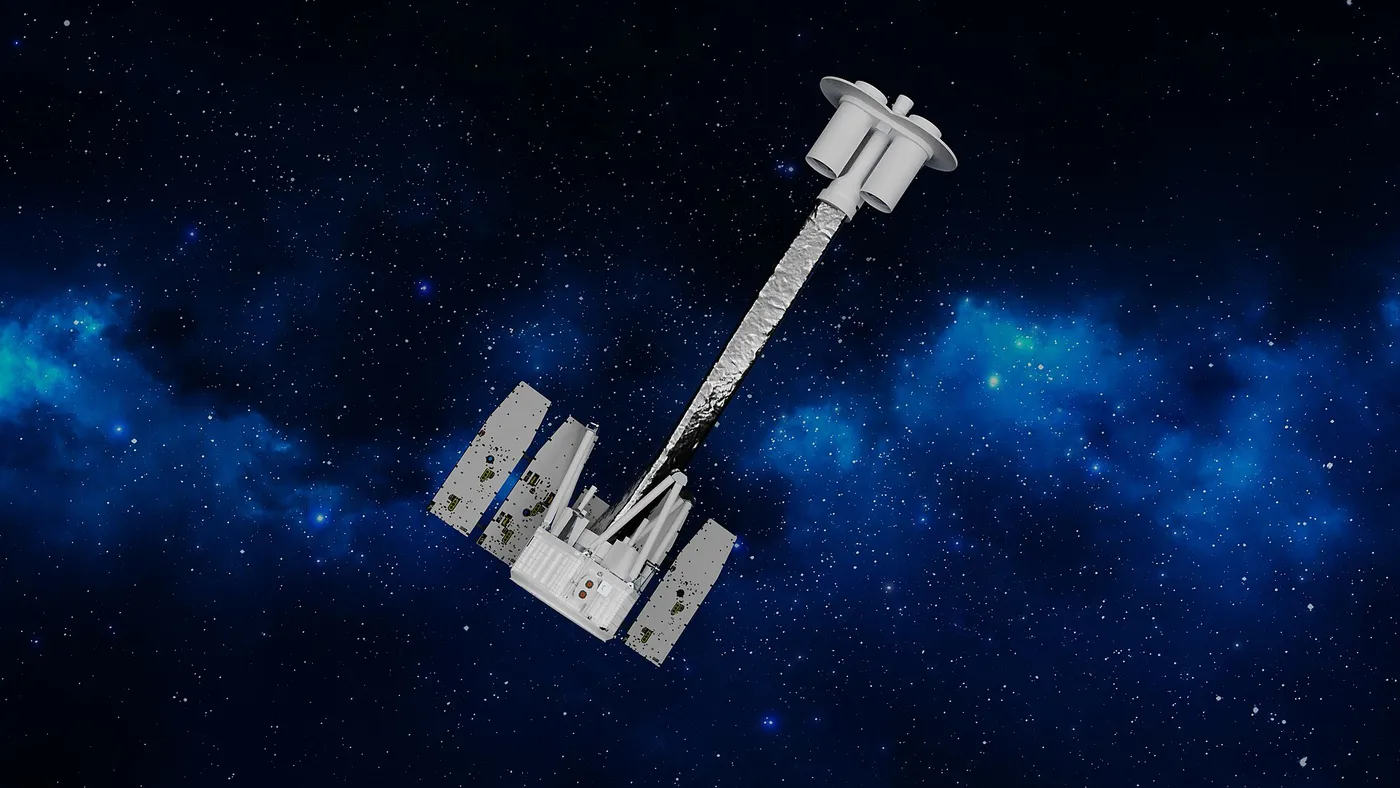


IXPE measures the polarisation of X-rays, a property that had been essentially unexploited for half a century. Polarisation encodes the geometry of a source — the shape and orientation of the structures producing the light — which imaging alone cannot reveal for objects that will never be resolved.
The technique is difficult because it requires detecting the direction in which each individual X-ray photon ejects an electron from a gas, and the necessary detectors only became practical in the 2010s. The mission is a joint American and Italian project built around them.

Its results have constrained the geometry of accreting black holes, indicating that the hot corona responsible for their X-ray emission is a flattened structure close to the disk rather than a spherical cloud — a question that had been argued from spectra alone for decades without resolution.
It also examined magnetars, neutron stars with fields a thousand trillion times Earth's, and found polarisation consistent with quantum electrodynamic effects in which the vacuum itself becomes birefringent under extreme magnetic fields — a prediction from the 1930s observed for the first time.
Its observations of supernova remnants have mapped magnetic field orientation in the shock fronts where cosmic rays are accelerated, showing turbulent fields in some remnants and ordered ones in others — a discriminator between competing acceleration models that no other measurement provides.