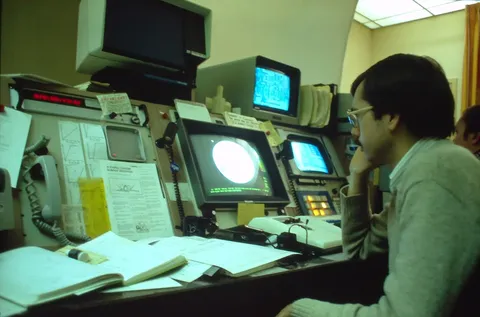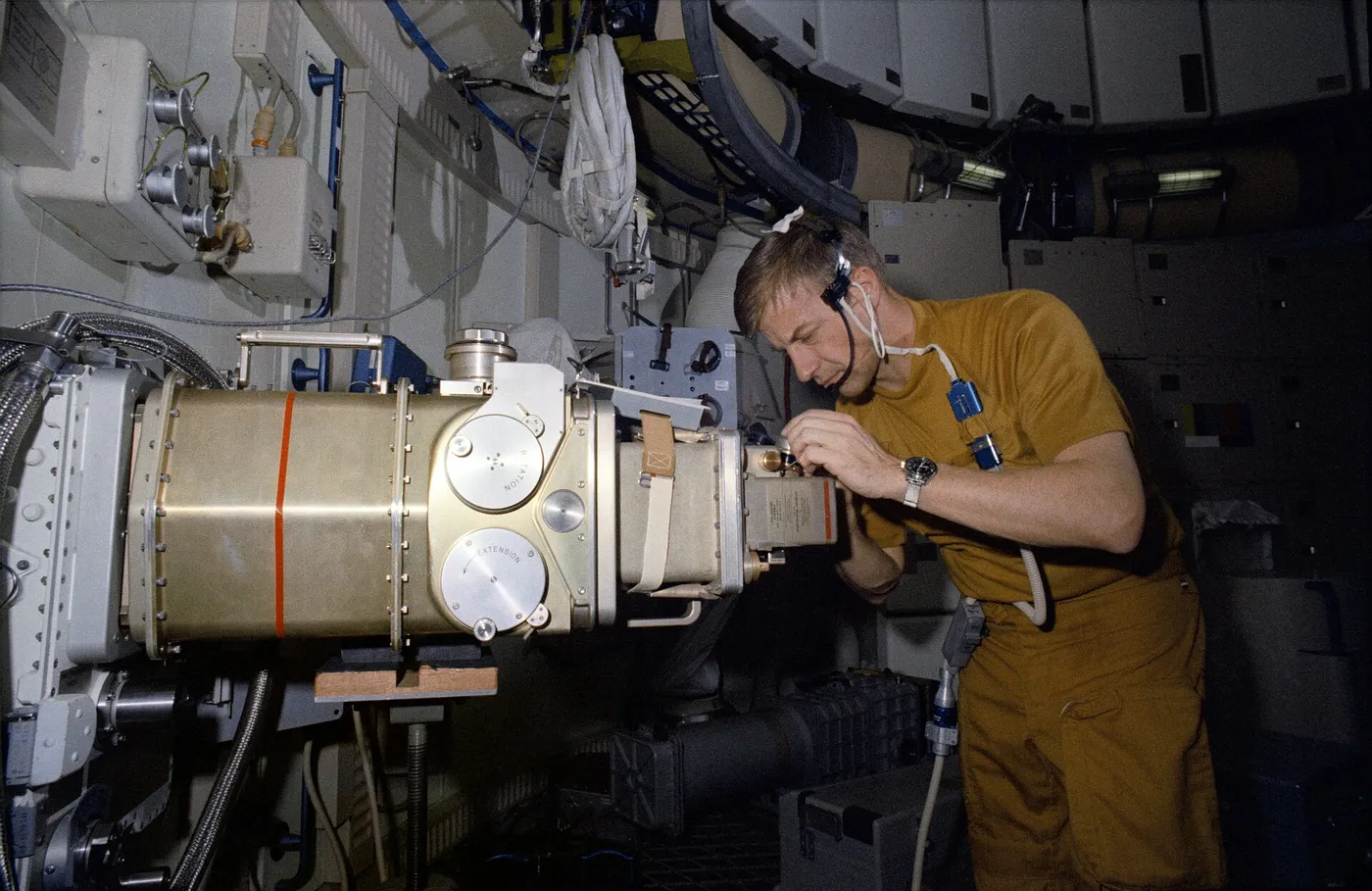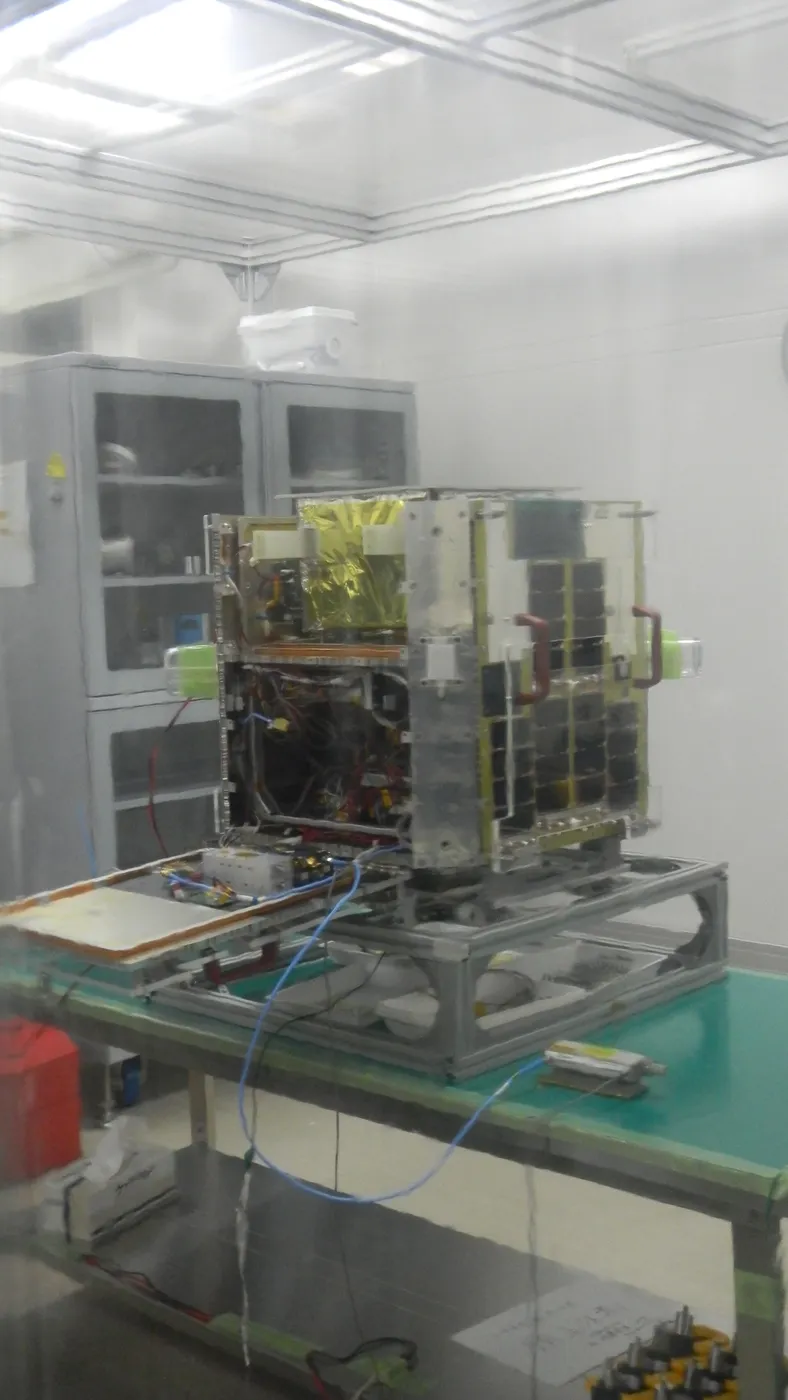
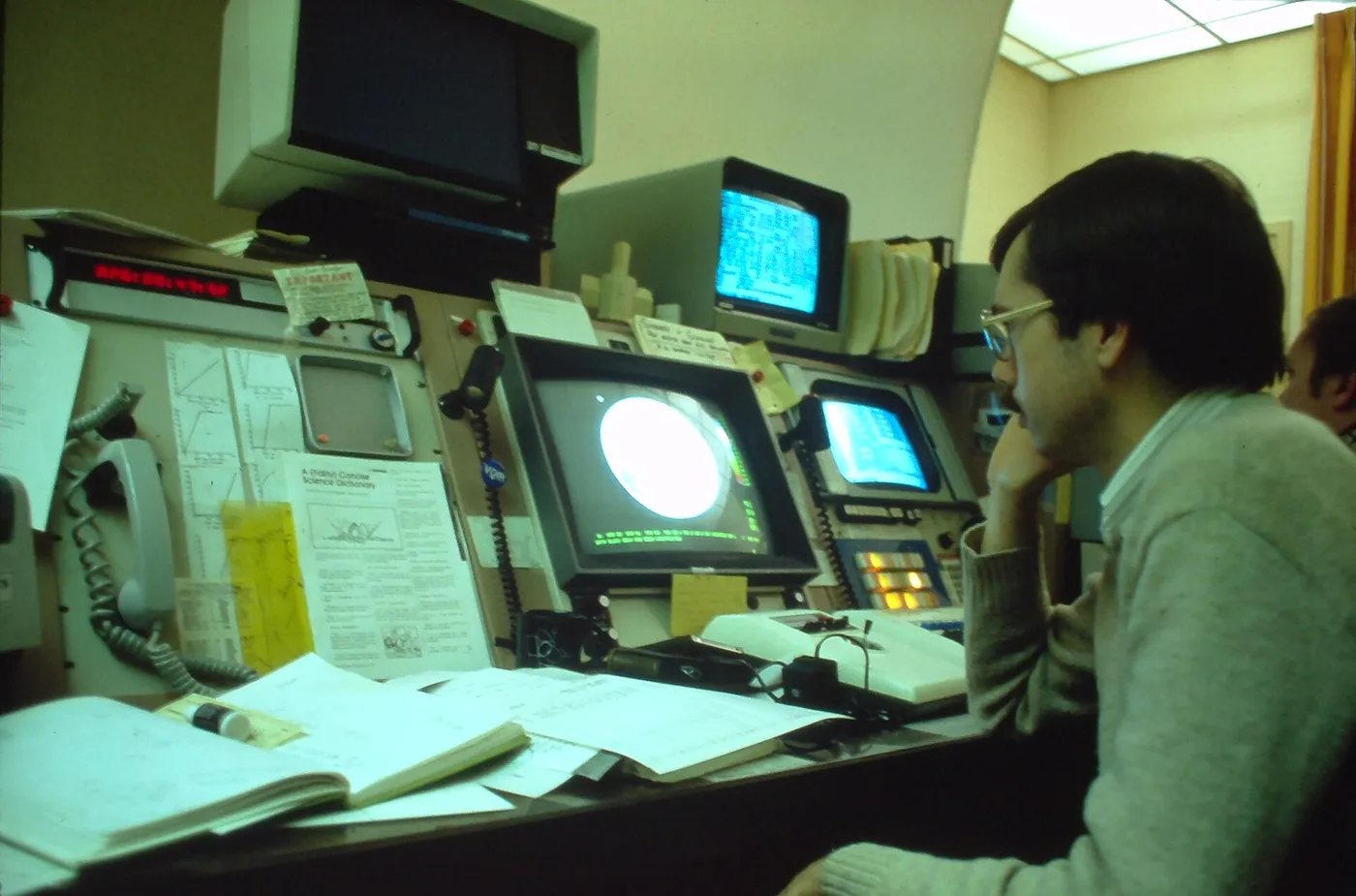

The International Ultraviolet Explorer was operated like a ground-based observatory, which at the time was novel. Astronomers booked time, travelled to a control centre in Maryland or Spain, sat at a console and observed in real time — deciding what to look at next based on what the previous exposure had shown.
That was possible because it flew in a geosynchronous orbit, staying permanently in view of its ground stations rather than passing overhead for a few minutes per orbit. The trade-off was a smaller telescope, but the operational flexibility more than compensated.
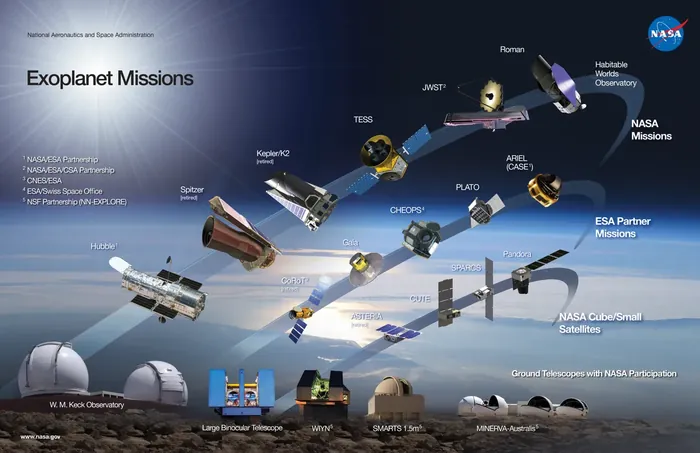
It was a genuinely international project — NASA, the European Space Agency and the British science research council — and it democratised access to space astronomy. Any astronomer could apply, including graduate students, and many people learned ultraviolet astronomy by sitting at that console.
Its most celebrated moment came in February 1987, when a supernova appeared in the Large Magellanic Cloud. IUE was observing it within hours, and its ultraviolet spectra identified the progenitor star and tracked the explosion's evolution — the best-studied supernova in history, caught by a nine-year-old telescope built for something else.
It was designed for three years and operated for eighteen and a half, producing over 100,000 observations and a public archive still in regular use. It was switched off in 1996 for budgetary reasons while still working, a decision that prompted considerable protest from the community that had grown up around it.