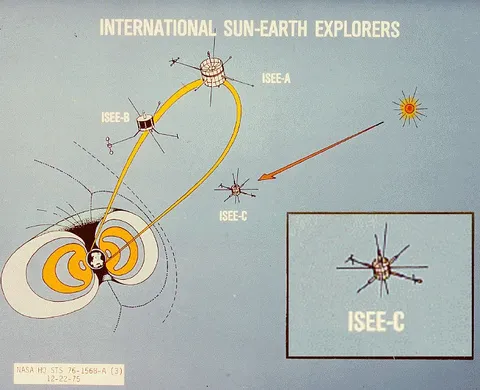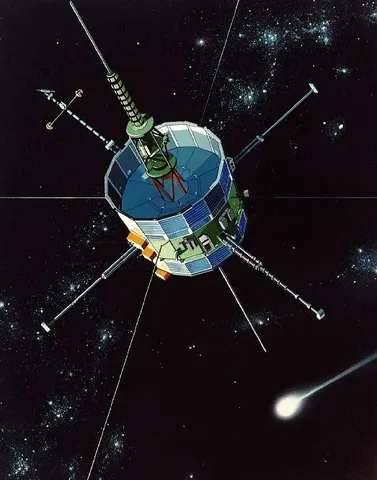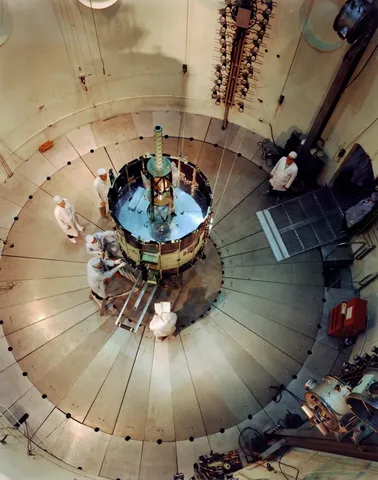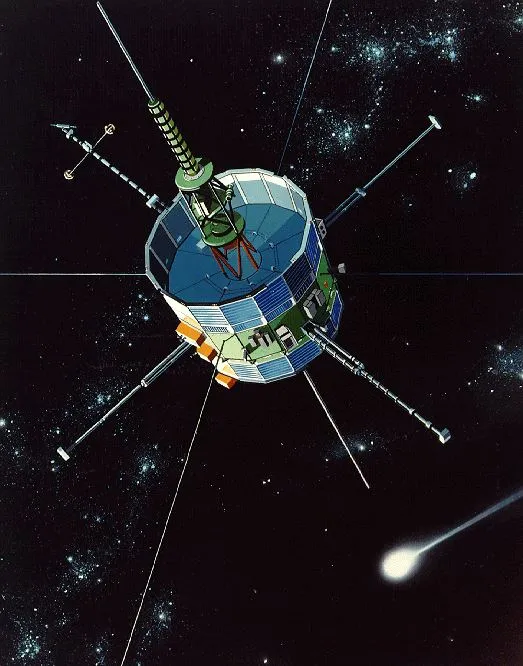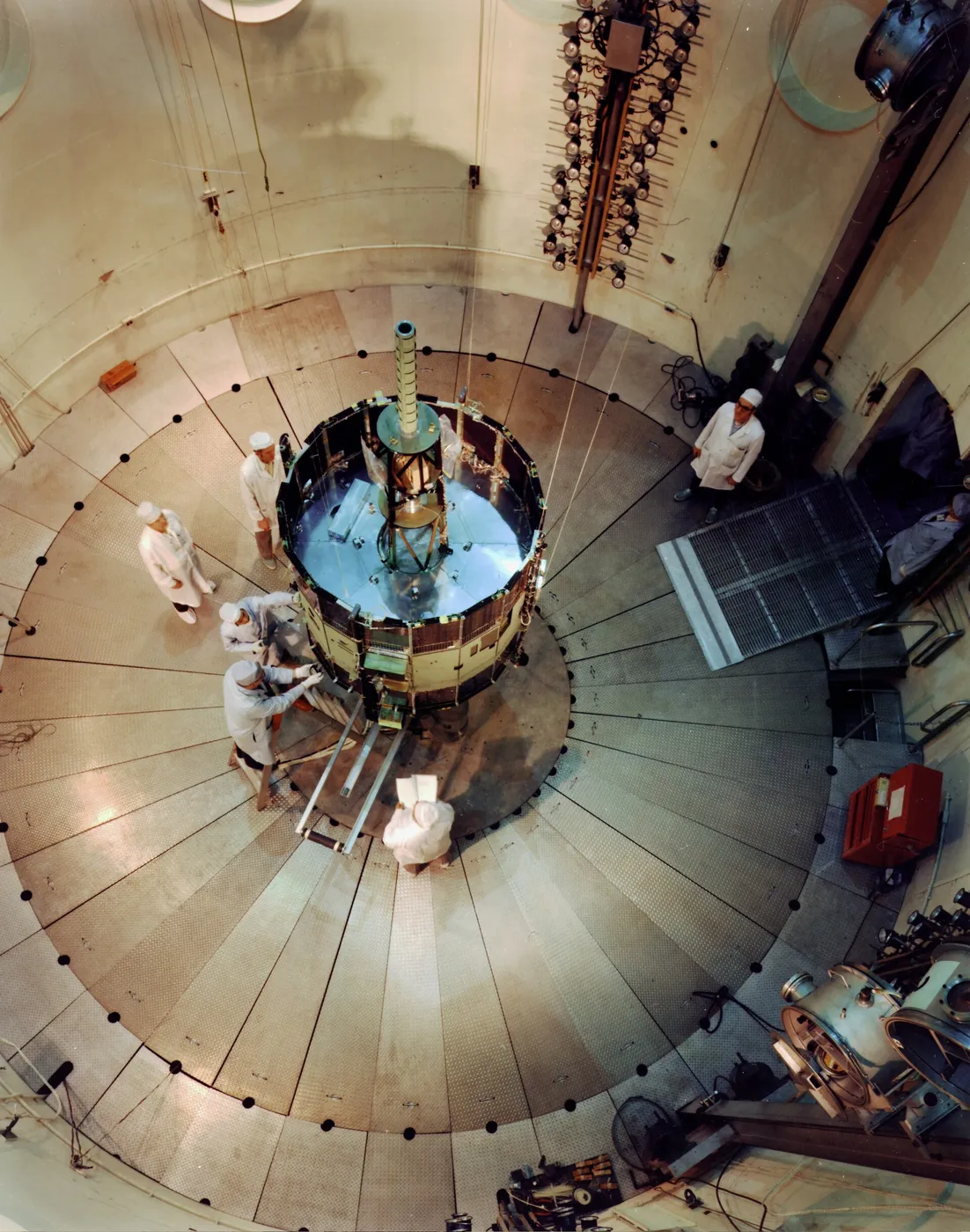
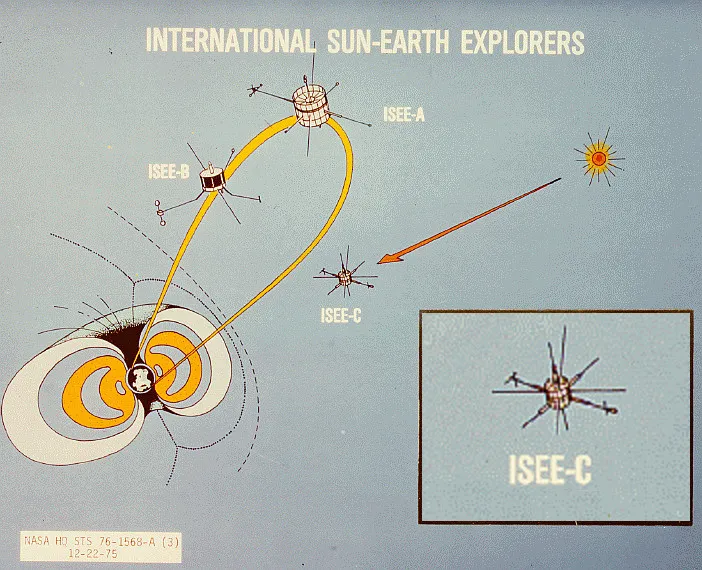

This spacecraft had three careers and a fourth attempted by amateurs. Launched in 1978, it was the first to be stationed at a Lagrange point — the gravitational balance point about 1.5 million kilometres sunward of Earth, where it could watch the solar wind approaching before it arrived. Every space-weather monitor since has used the same station.
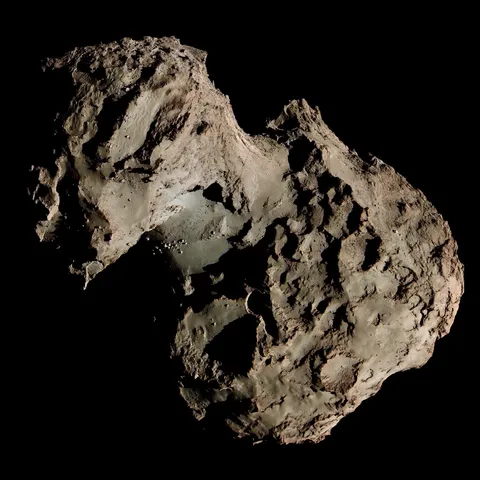
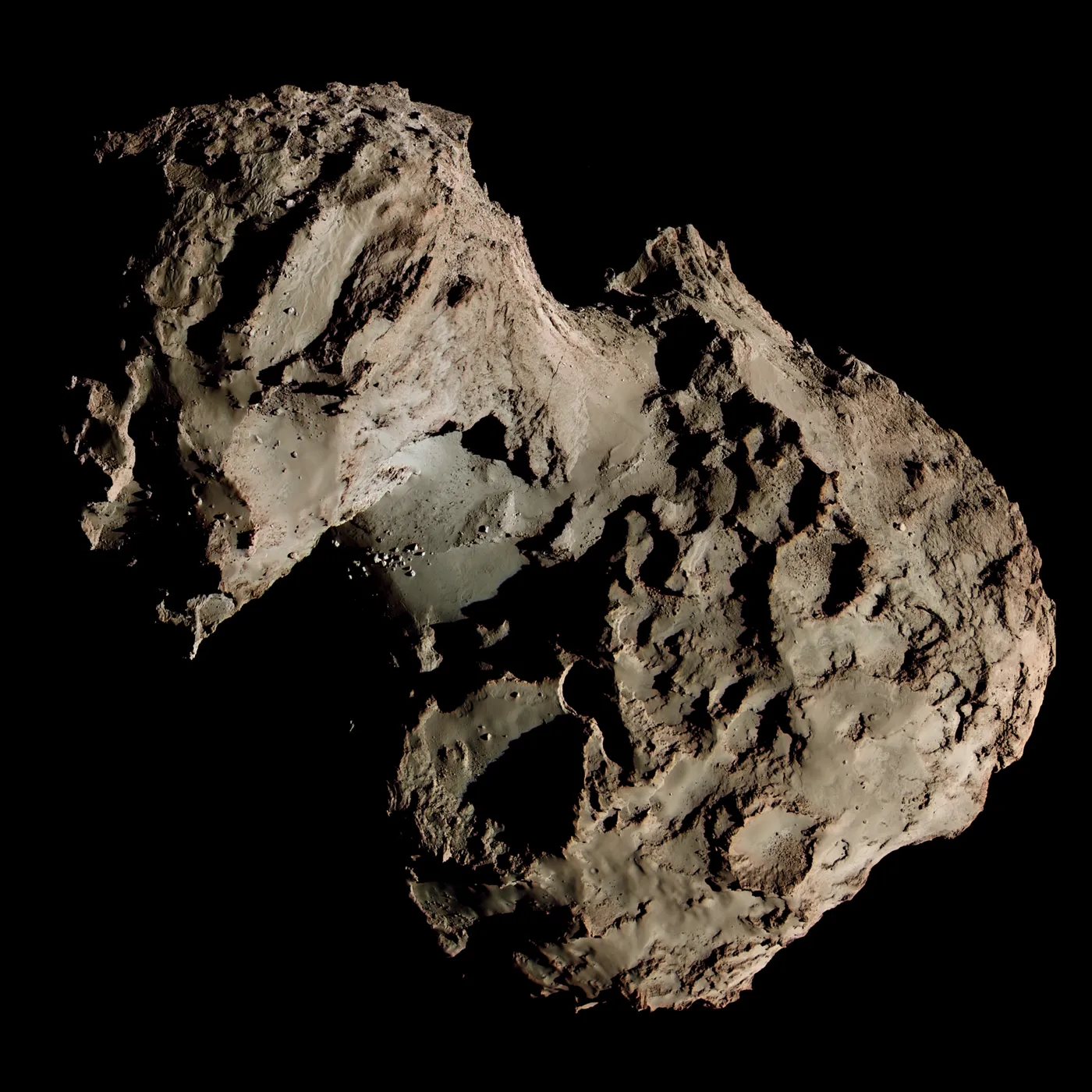
In 1982 its controllers did something audacious. Using a series of five lunar gravity assists of extraordinary precision — one pass came within 120 kilometres of the surface — they flung it out of the Earth-Moon system entirely and onto a course to intercept a comet. Renamed the International Cometary Explorer, in September 1985 it flew through the tail of comet Giacobini-Zinner, becoming the first spacecraft to encounter a comet, six months before the armada that met Halley.
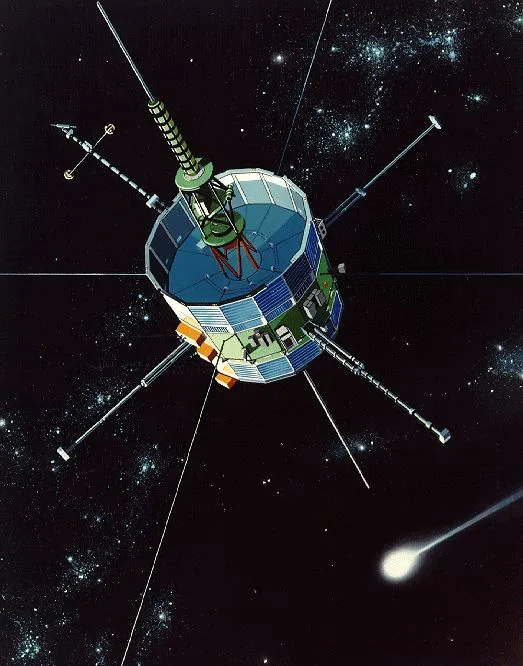
It then observed Halley from a distance, studied the solar wind for another decade, and was retired in 1997 with most of its instruments still working. NASA formally abandoned it in 1999, and the equipment needed to talk to it was dismantled.
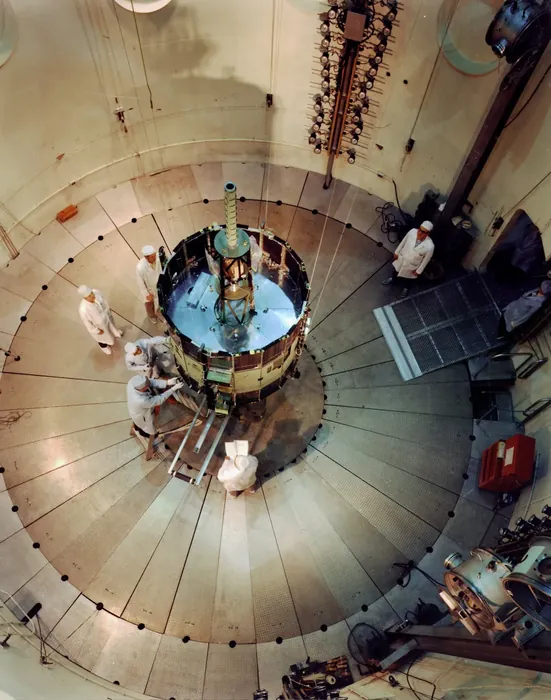
In 2014, as its long orbit brought it back near Earth, a group of engineers and enthusiasts raised money online, obtained permission through an unprecedented agreement with NASA, reconstructed the obsolete communications protocols from documentation found in archives, and re-established contact using the Arecibo dish. The spacecraft answered.
The reboot ultimately failed — the propellant tanks had lost the nitrogen needed to pressurise them, so the engines could not fire and the trajectory could not be corrected — and it sailed past to continue orbiting the Sun. But for a few weeks a group of volunteers had command of a 36-year-old interplanetary spacecraft, which is its own kind of achievement.