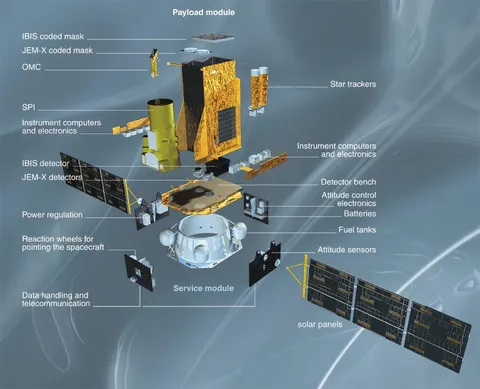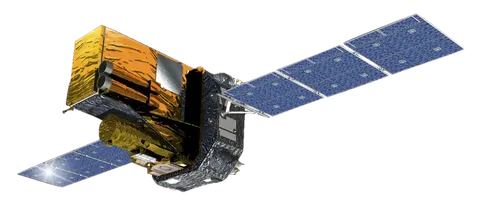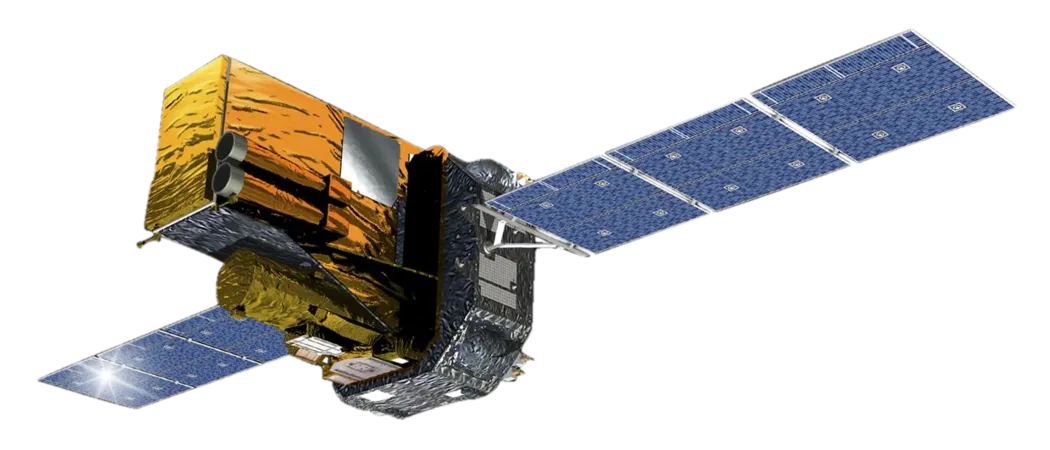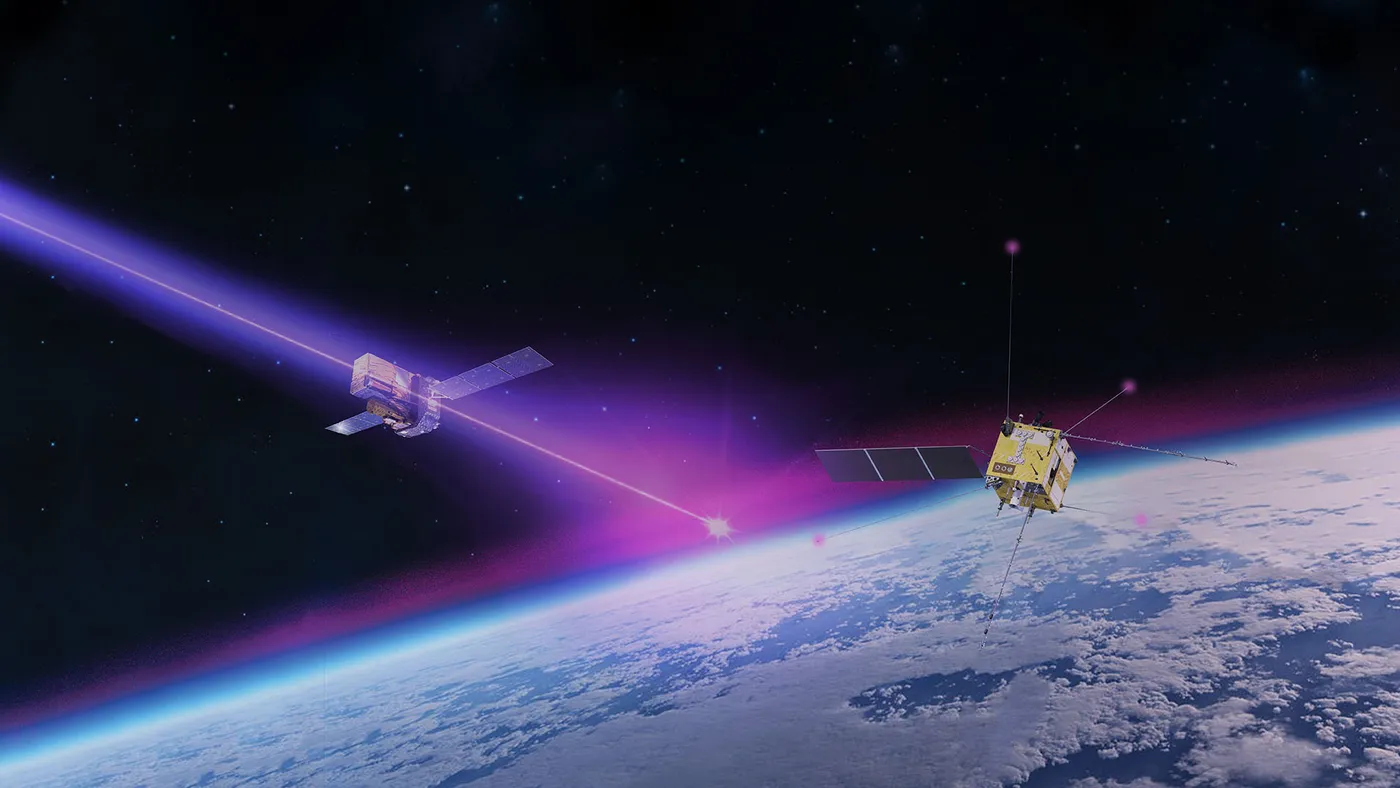
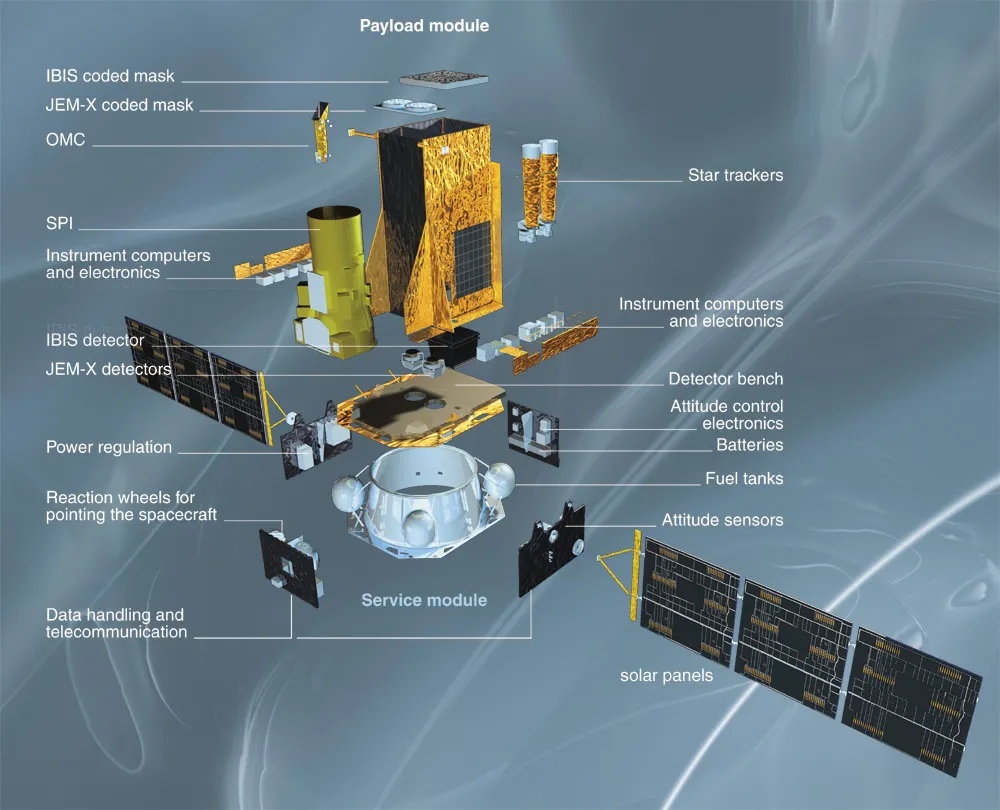

INTEGRAL observed the sky in gamma rays, where no lens or mirror works. It used a coded mask instead — a slab of tungsten drilled with a precise pseudo-random pattern of holes, casting a shadow on the detector below from which the sky's structure can be reconstructed mathematically.
Its central subject was nucleosynthesis: the creation of elements in stellar explosions, which announces itself through gamma-ray lines from specific radioactive isotopes. By mapping those lines it traced where and how recently the heavy elements around us were made.
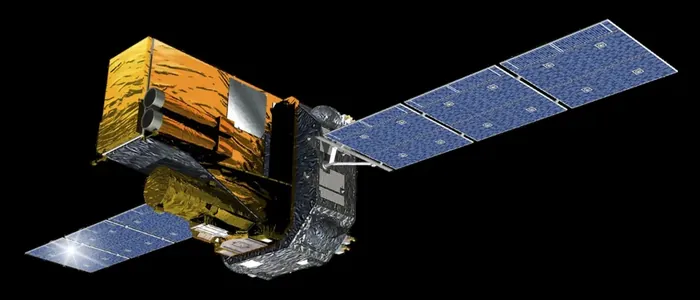
It also studied one of the odder features of our galaxy — a persistent glow at 511 kiloelectronvolts from the annihilation of positrons near the galactic centre. The source of that antimatter has never been satisfactorily explained, and INTEGRAL's mapping of its distribution constrained the possibilities without settling them.
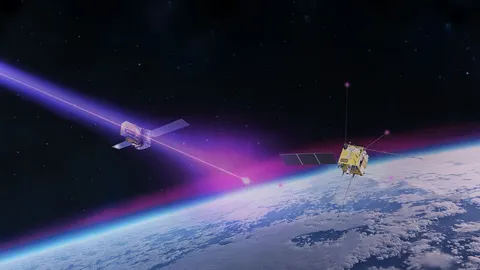
The mission caught the gamma-ray counterparts of neutron-star mergers and monitored black-hole binaries and magnetars, and its wide field made it a useful all-sky watchdog for transient events — a role it shared with Swift and Fermi.
A European mission with substantial Russian involvement, launched on a Proton rocket, it operated for more than two decades against a five-year design life, surviving a failure of its reaction wheels that engineers worked around by using the spacecraft's thrusters and then by exploiting solar radiation pressure for attitude control.