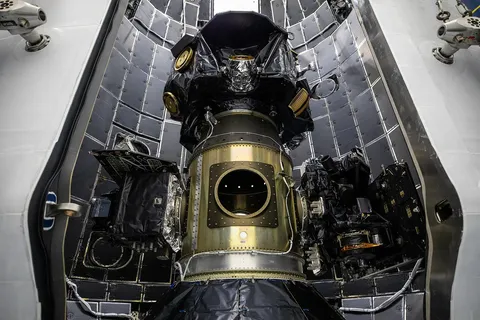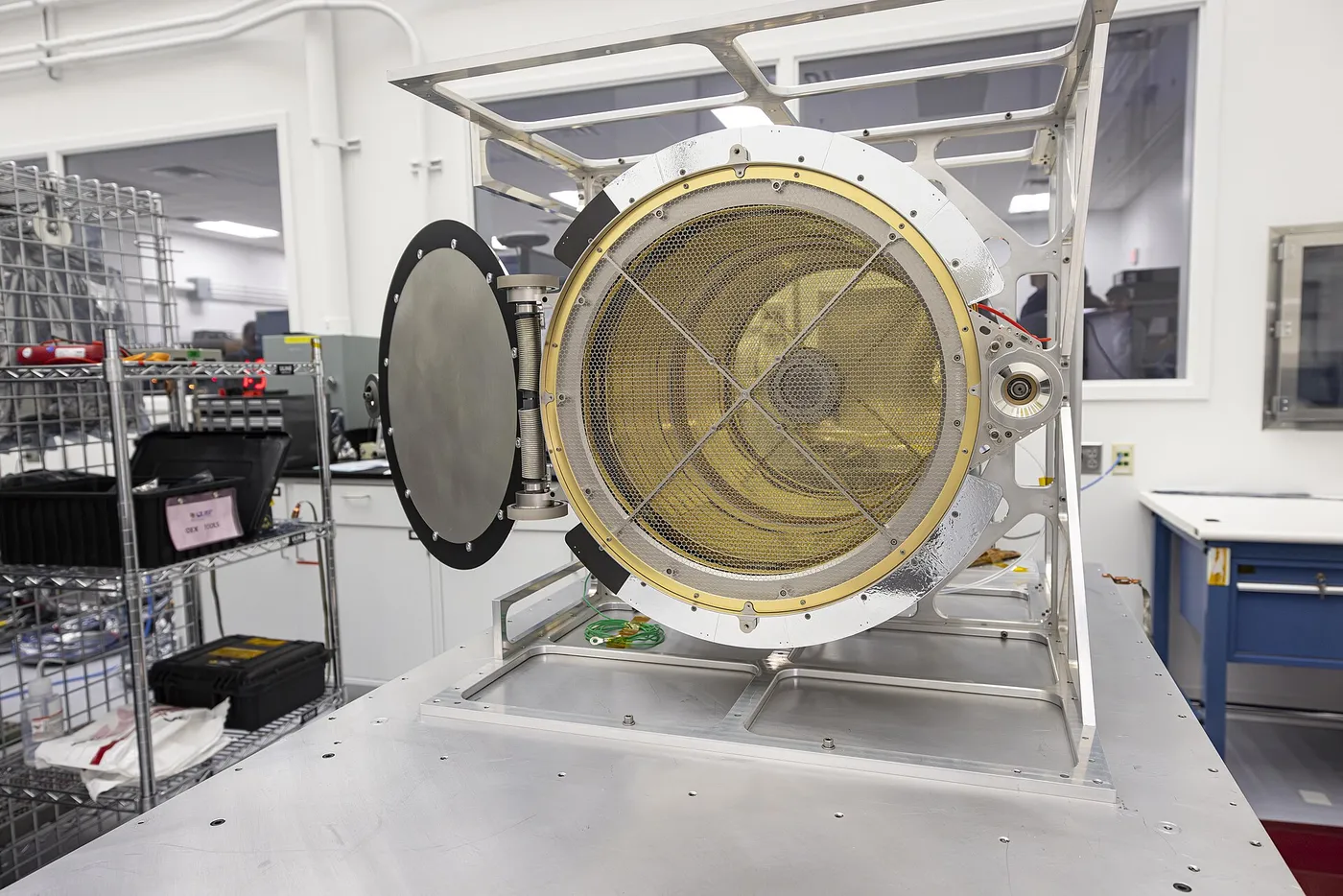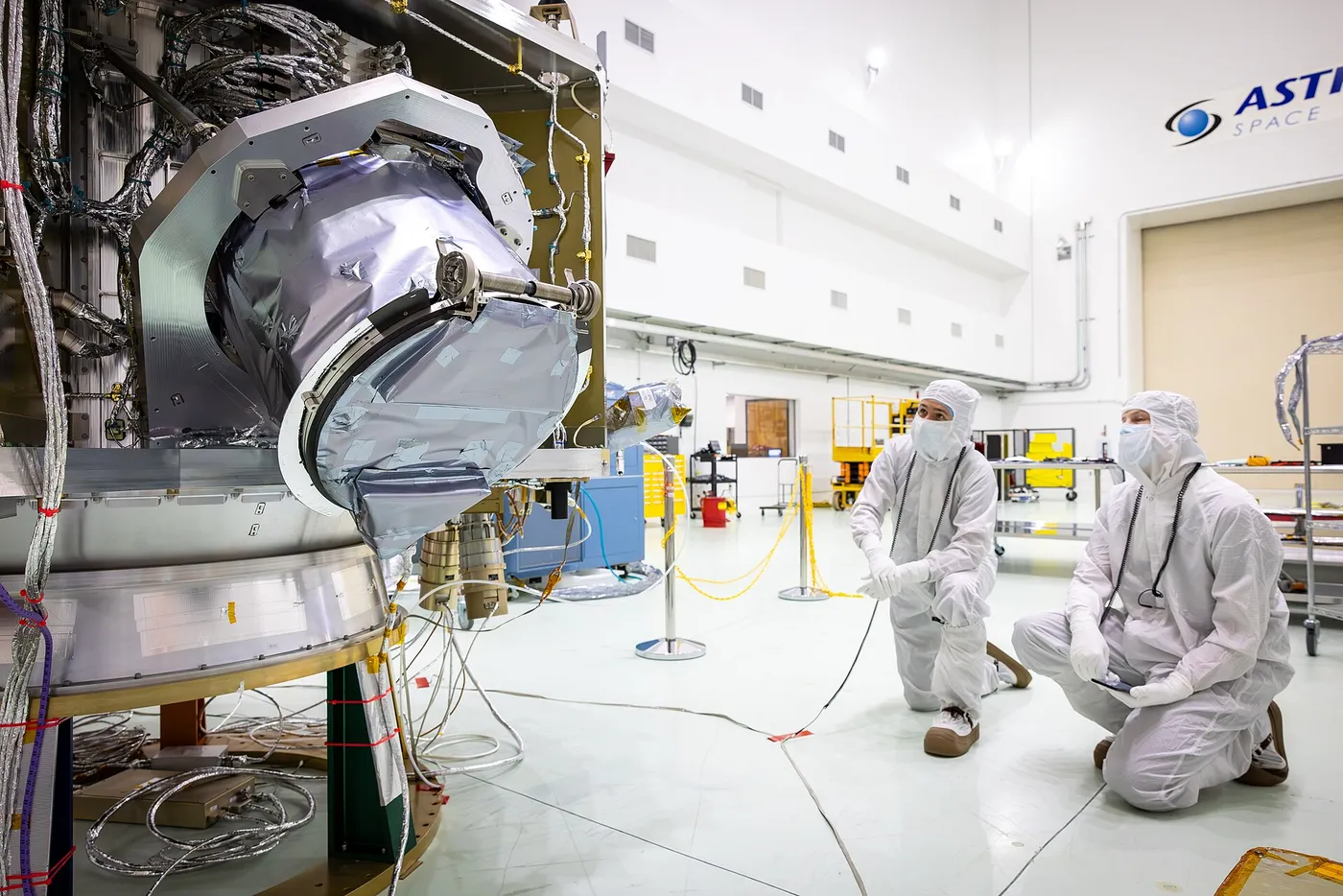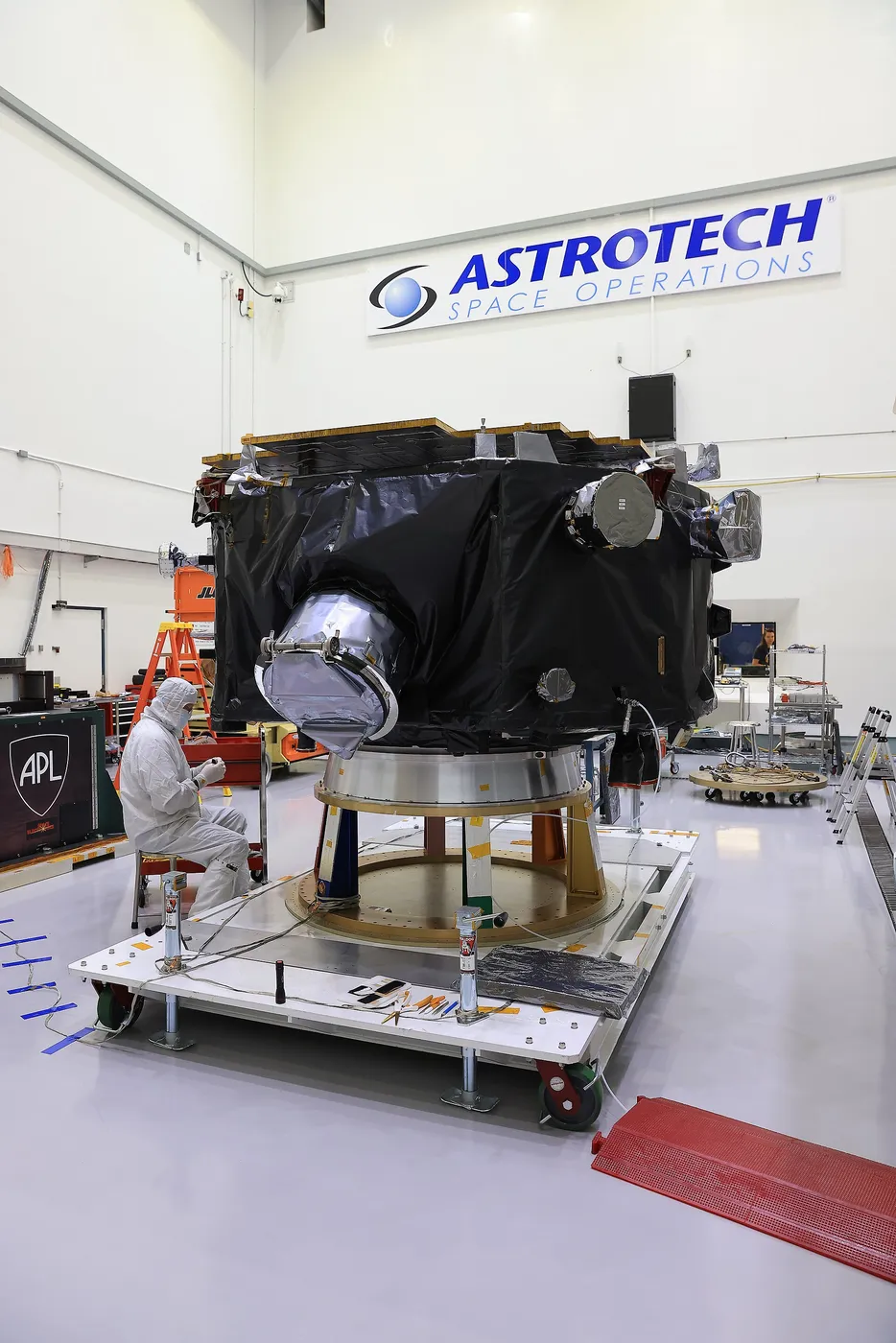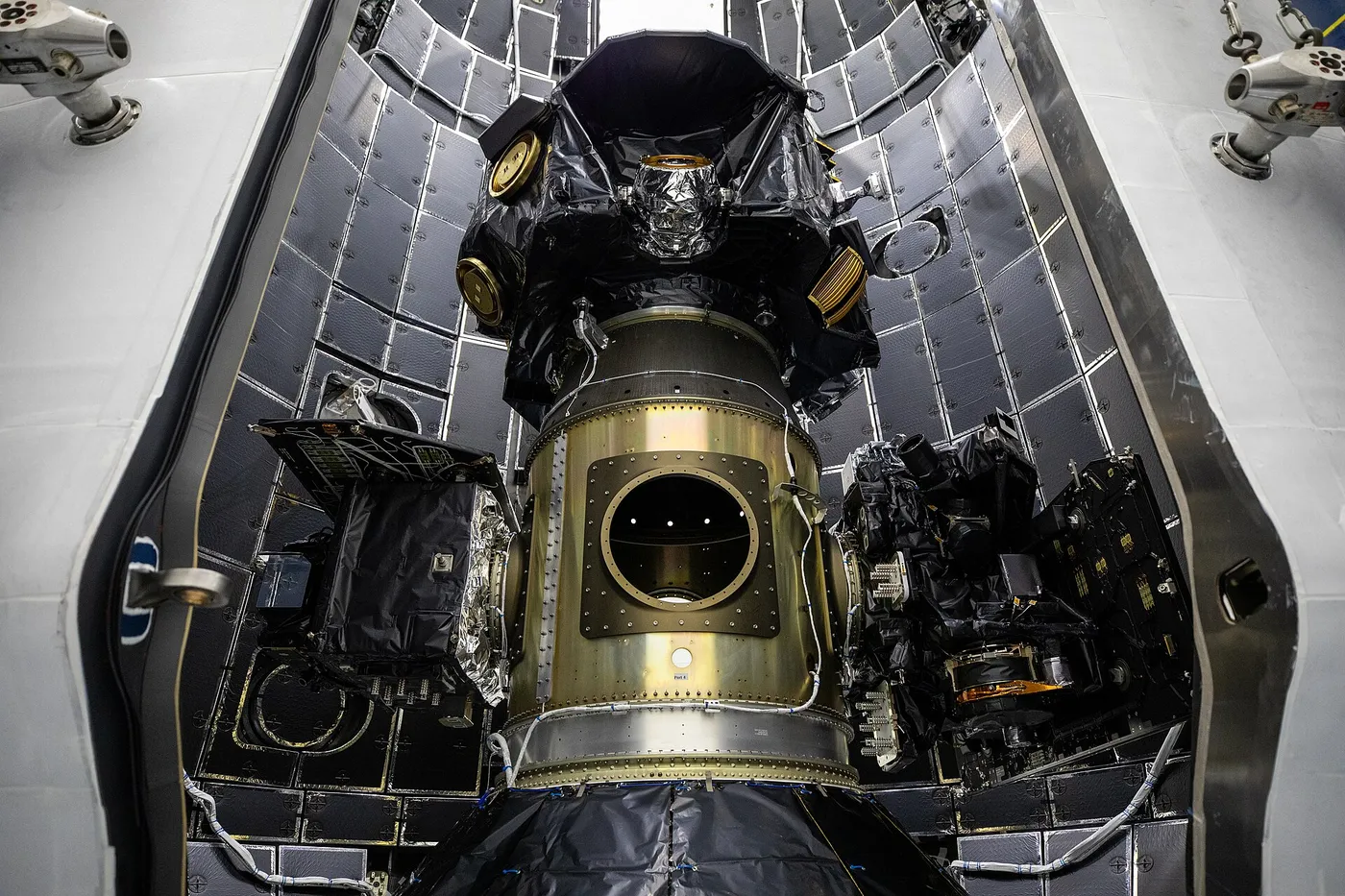
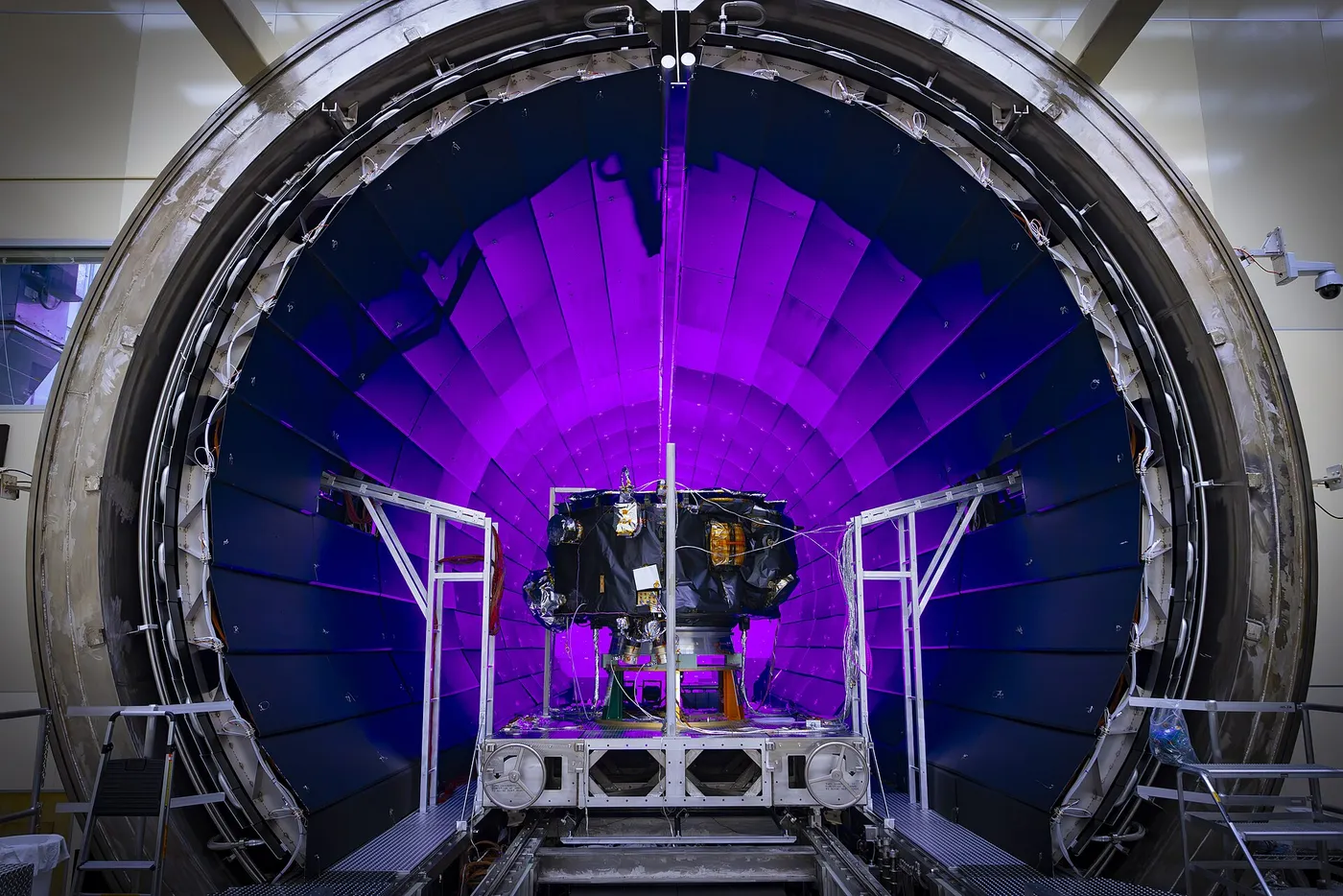

IMAP is the successor to IBEX, built to map the boundary of the heliosphere with instruments roughly thirty times more sensitive and from a far better vantage point — the Lagrange point, rather than an Earth orbit that carries the spacecraft repeatedly through the magnetosphere.
Its subject is the interaction between the solar wind and the interstellar medium: how the bubble the Sun blows around itself is shaped, how it filters the galactic cosmic rays that would otherwise reach the inner solar system in greater numbers, and what the unexplained IBEX ribbon actually is.
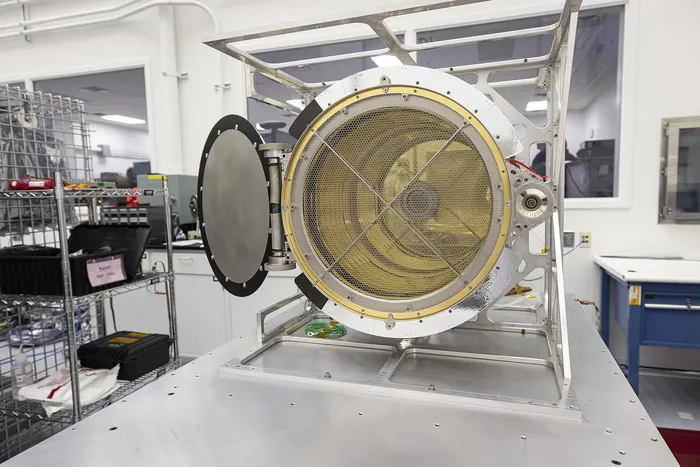
It also studies particle acceleration much closer to home, measuring how shocks in the solar wind energise particles — the process that produces the radiation storms hazardous to astronauts and spacecraft electronics.
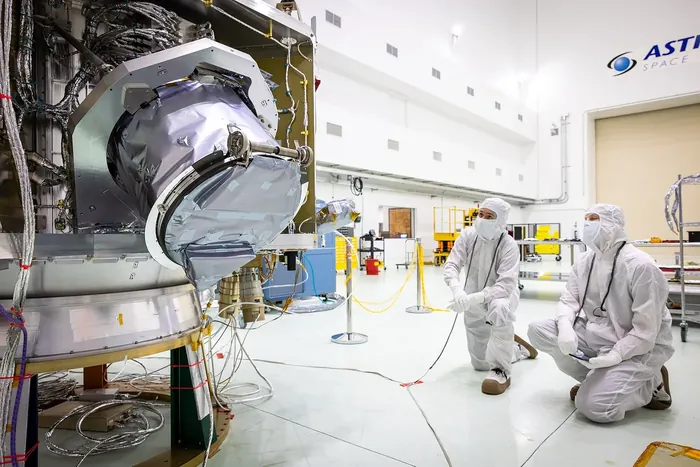
Like several recent missions it carries an operational as well as a scientific role, providing real-time solar wind data for space weather forecasting and helping to replace the ageing sentinel line of Wind, ACE and DSCOVR that the community has warned about for years.
It launched in 2025 with several rideshare payloads, including a solar wind monitor for the American weather service and a small mission to observe Earth's exosphere. The heliophysics programme has increasingly adopted this pattern of clustering complementary instruments on a single launch.