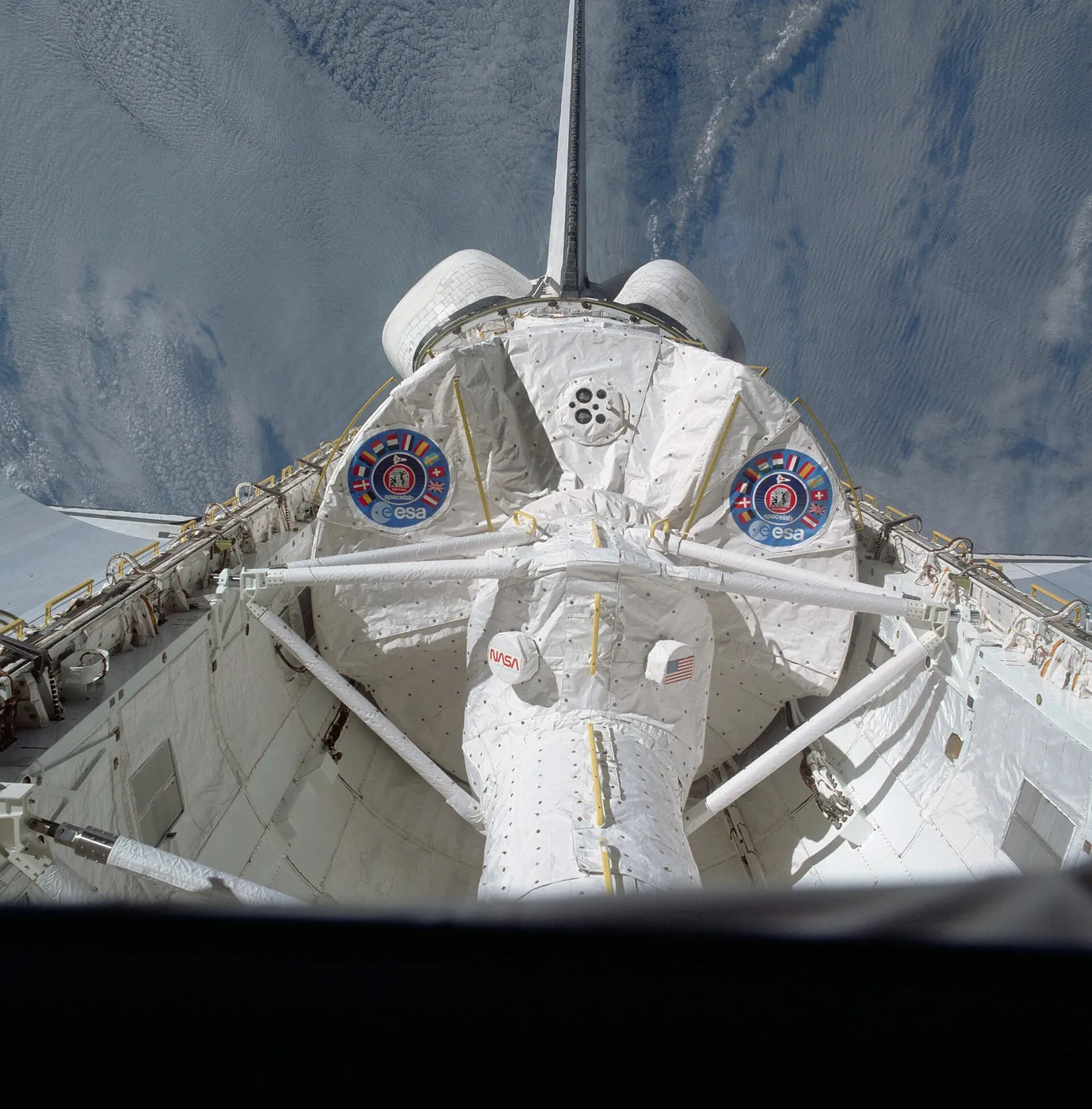

Hubble was born broken. Its 2.4-metre mirror had been ground to the wrong shape — too flat at the edge by about a fiftieth of the width of a human hair — because the test instrument used to check it had itself been assembled incorrectly, with a lens spaced 1.3 millimetres out of position. Two other tests indicated a problem and were dismissed as less reliable.
The result, discovered weeks after the 1990 launch, was a national embarrassment: the most expensive scientific instrument ever built returning blurred images, mocked on late-night television and hauled before Congress. Astronomers salvaged what they could with deconvolution software while a repair was designed.
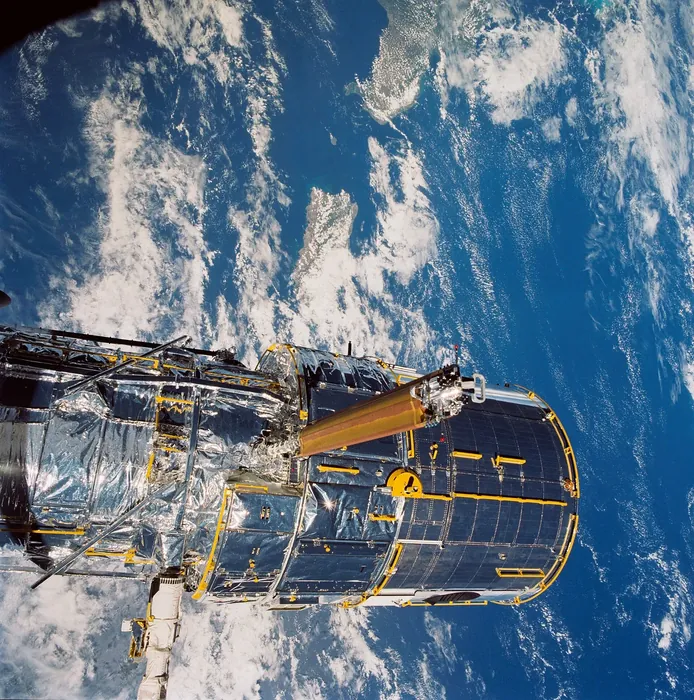
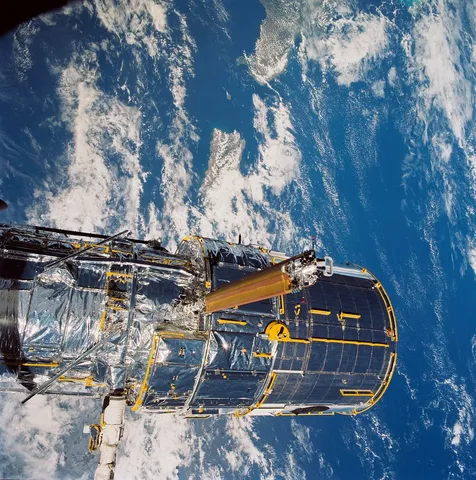
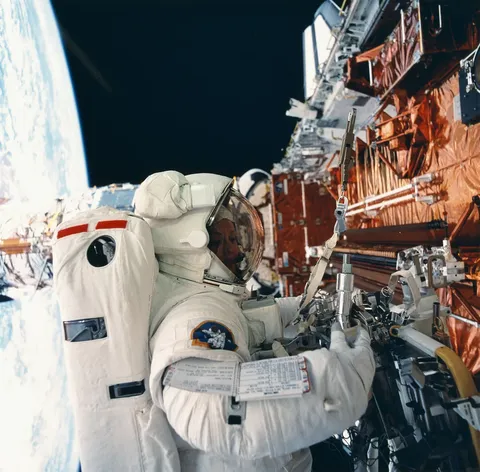
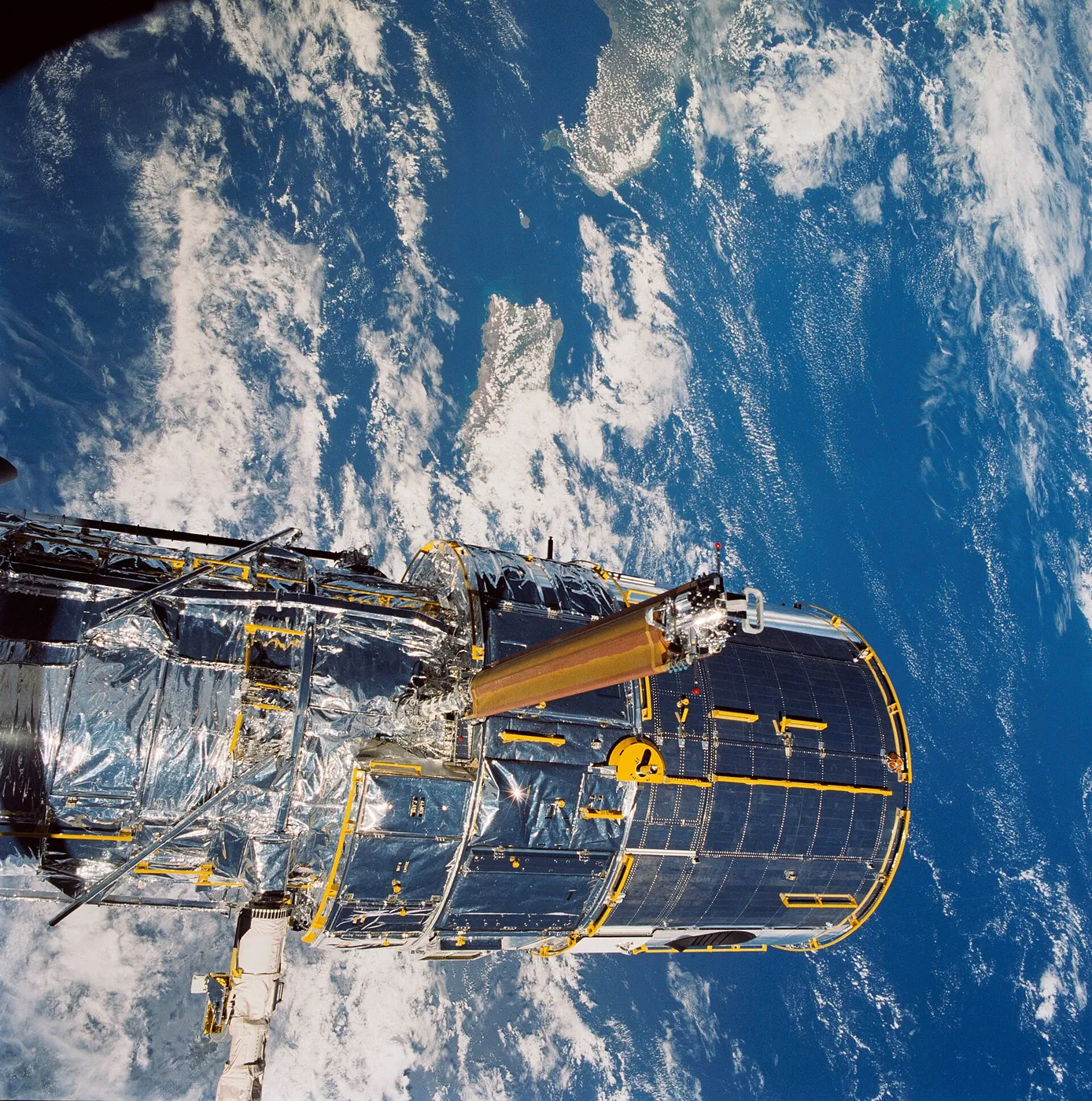
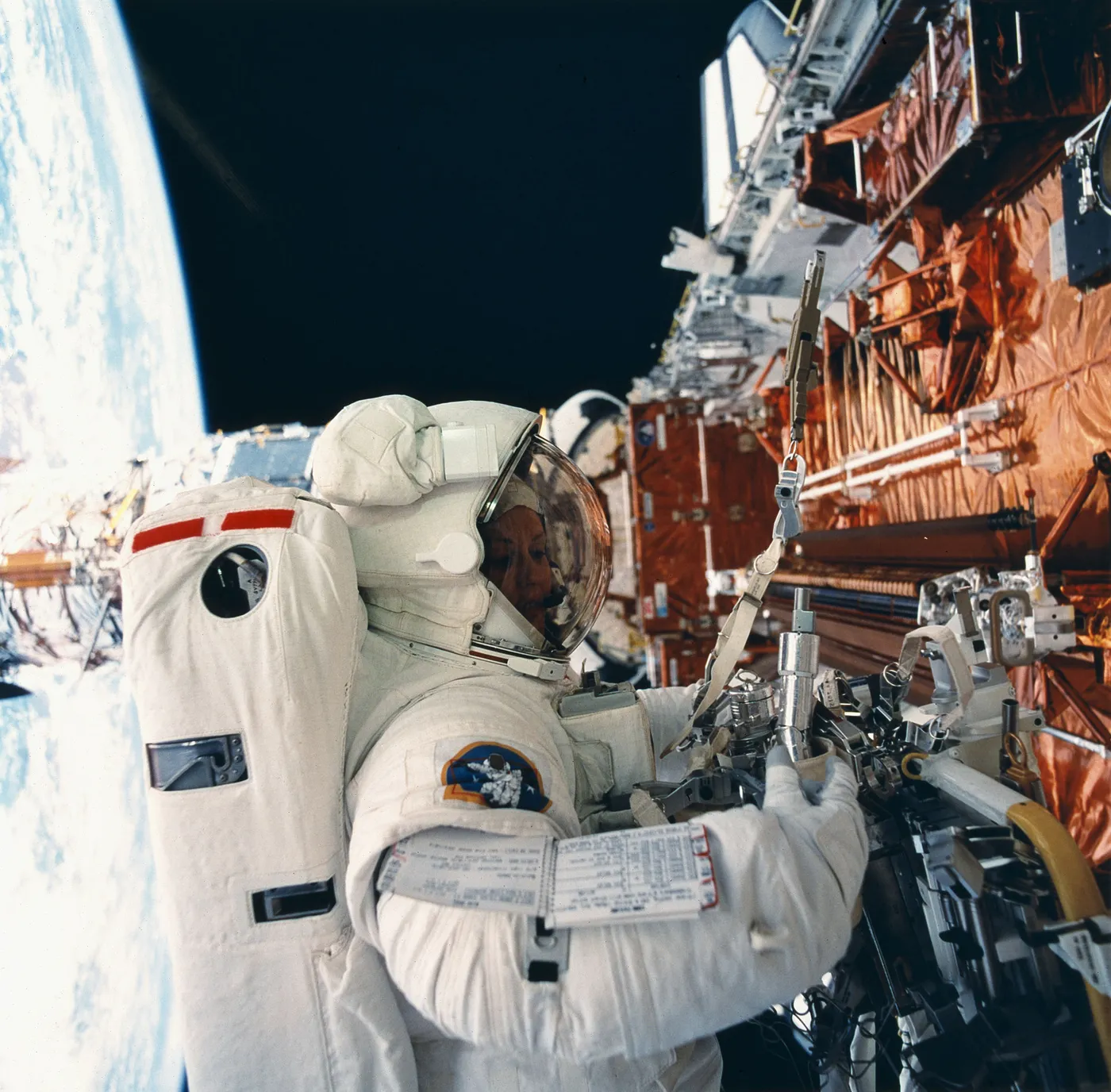
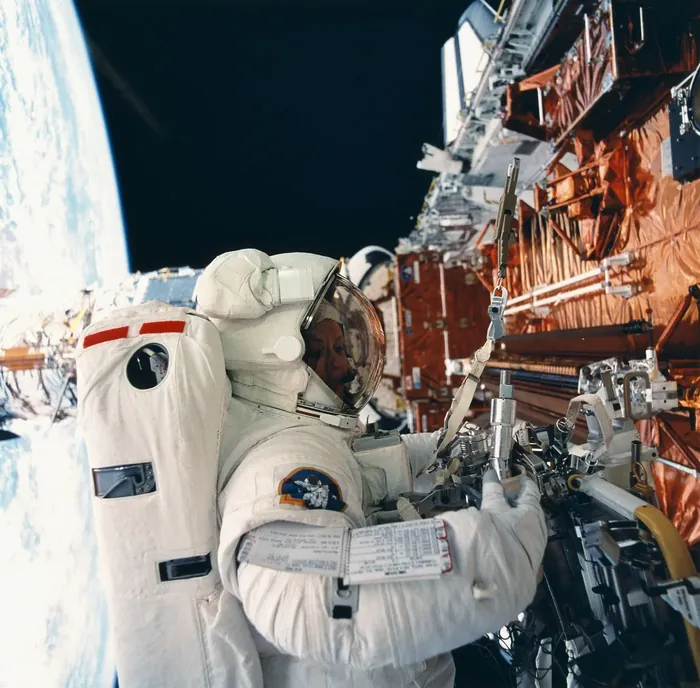
The 1993 servicing mission fitted the telescope with corrective optics — in effect, spectacles — and four further Shuttle visits replaced instruments, gyroscopes and batteries, each time returning a more capable observatory than the one launched. No other space telescope has ever been serviceable, and the difference is measured in decades.
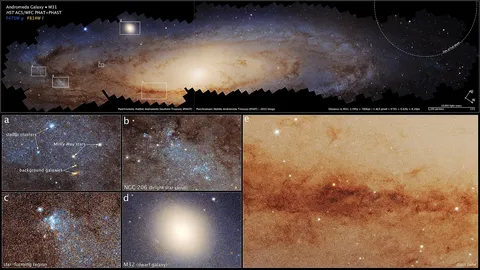
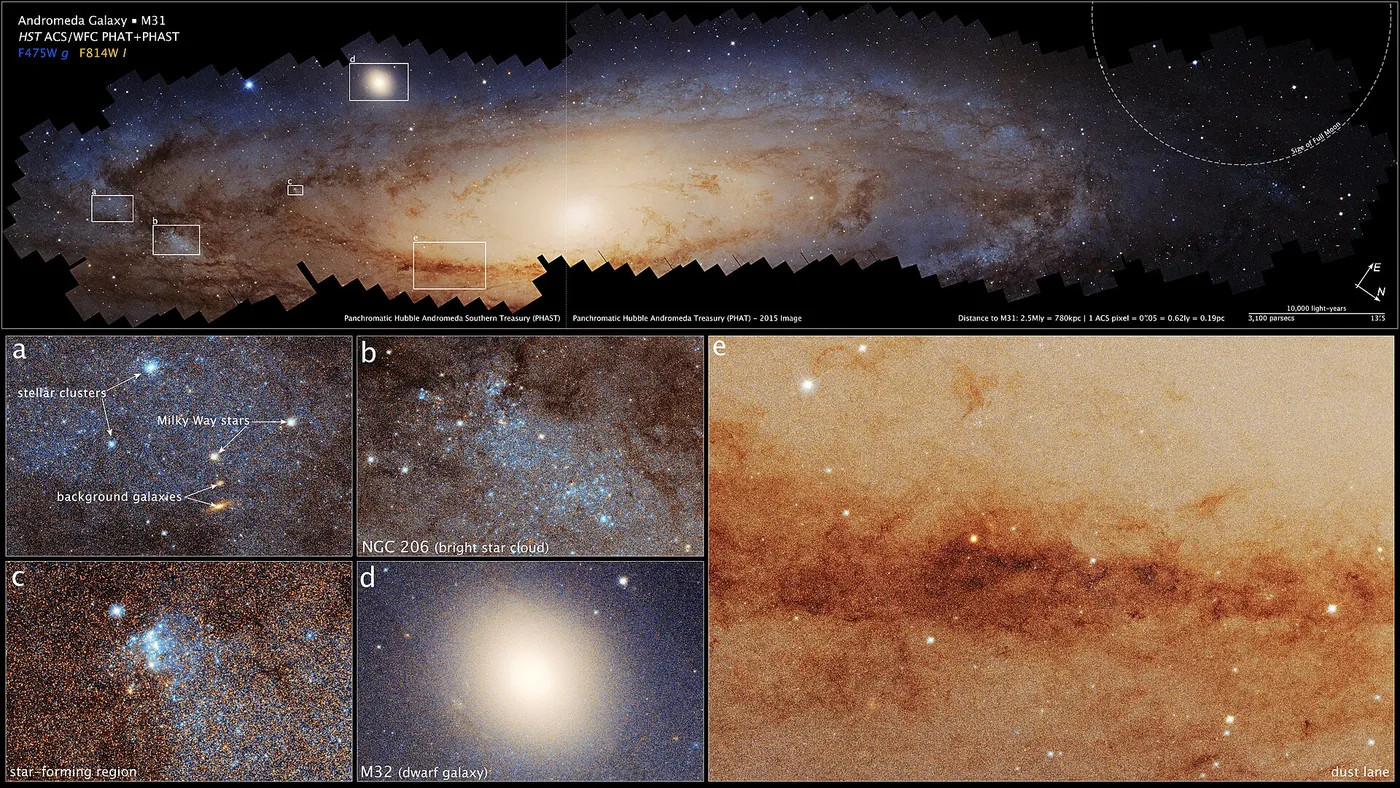
What it produced justified all of it. Hubble measured the expansion rate of the universe, contributed to the discovery that the expansion is accelerating, established the age of the cosmos at around 13.8 billion years, made the first measurements of exoplanet atmospheres, and found supermassive black holes to be ubiquitous at the centres of galaxies.
Its most famous images came from pointing at nothing. The Deep Fields — long exposures of apparently empty patches of sky — revealed thousands of galaxies in each, stretching back towards the beginning of time, and changed the public's sense of scale more effectively than any argument. It is still working after thirty-five years, on fewer gyroscopes than it was designed for, in a slowly decaying orbit.