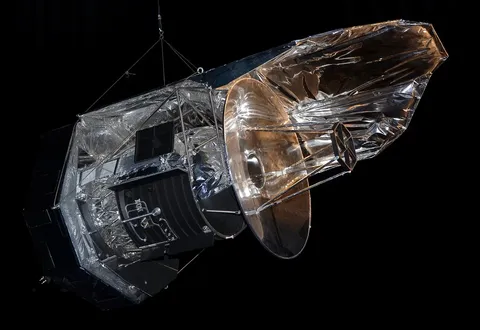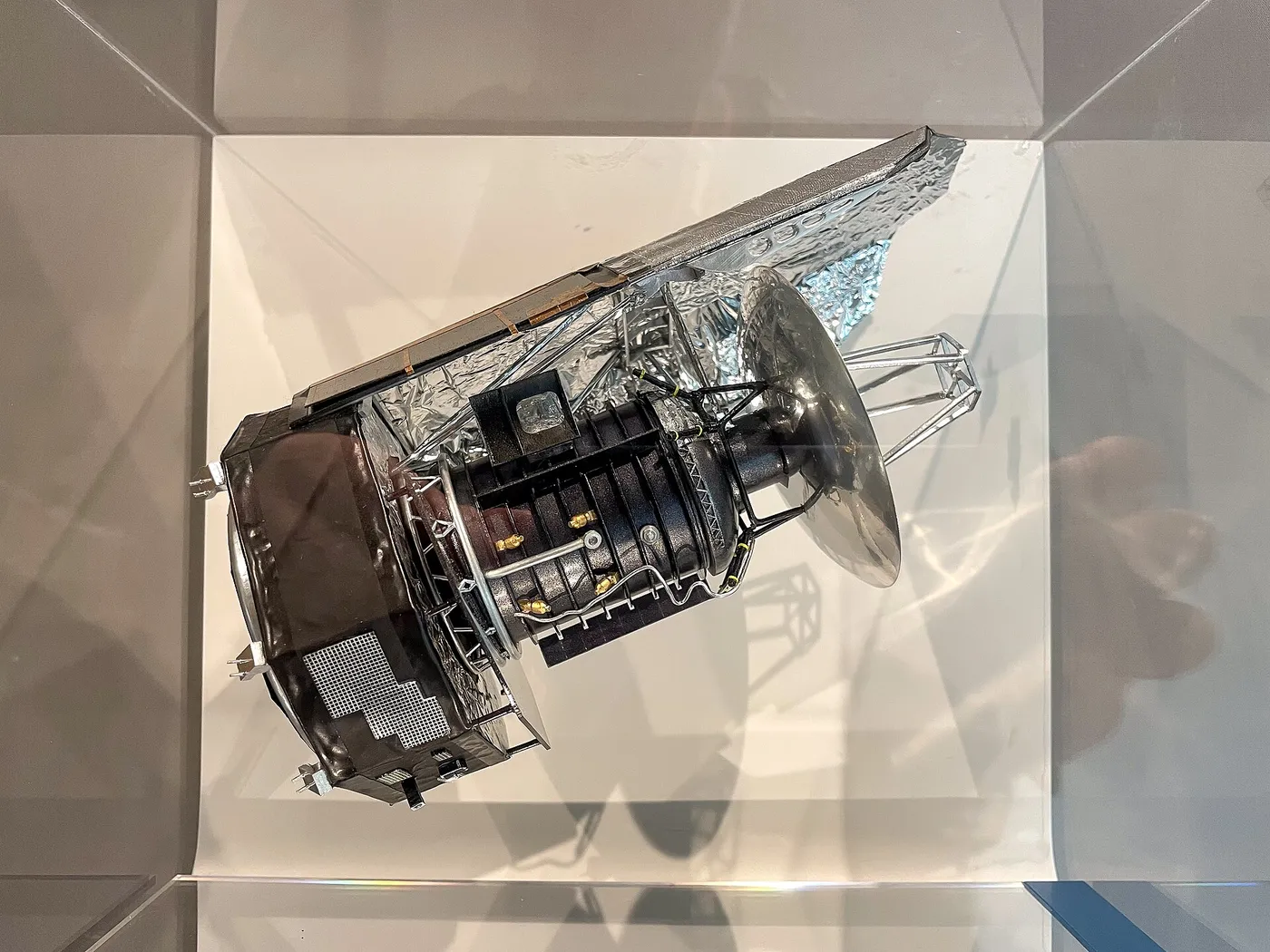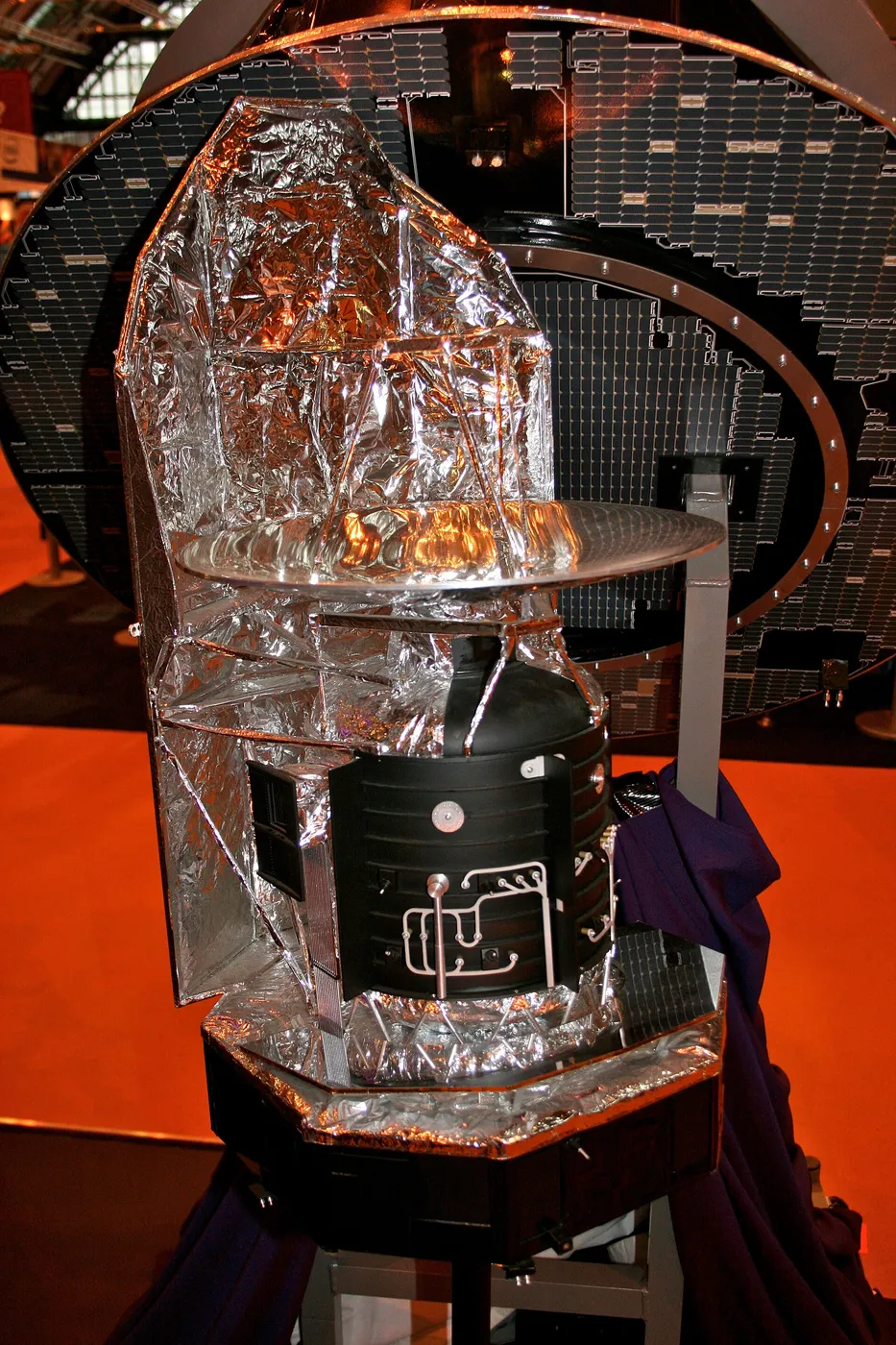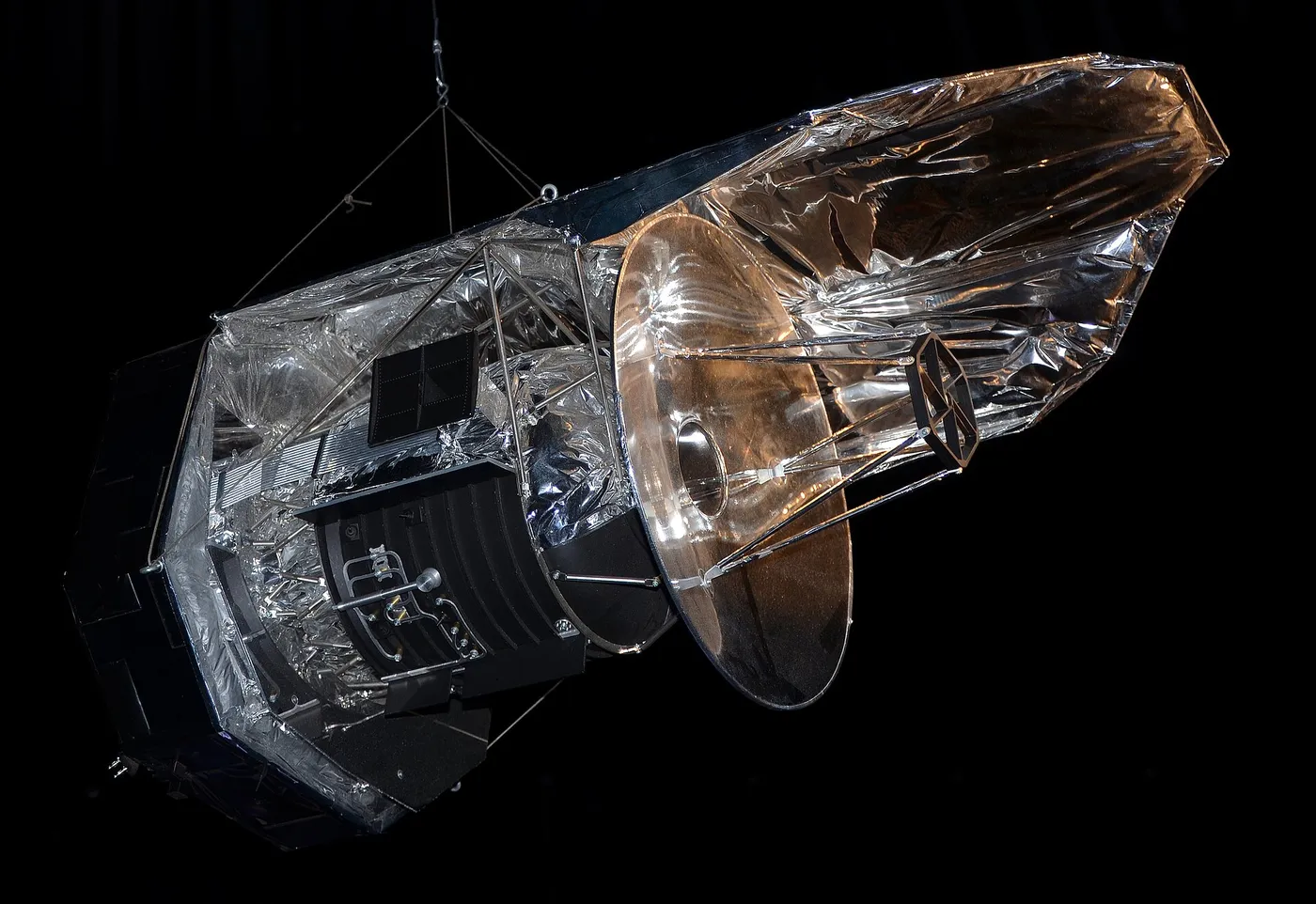
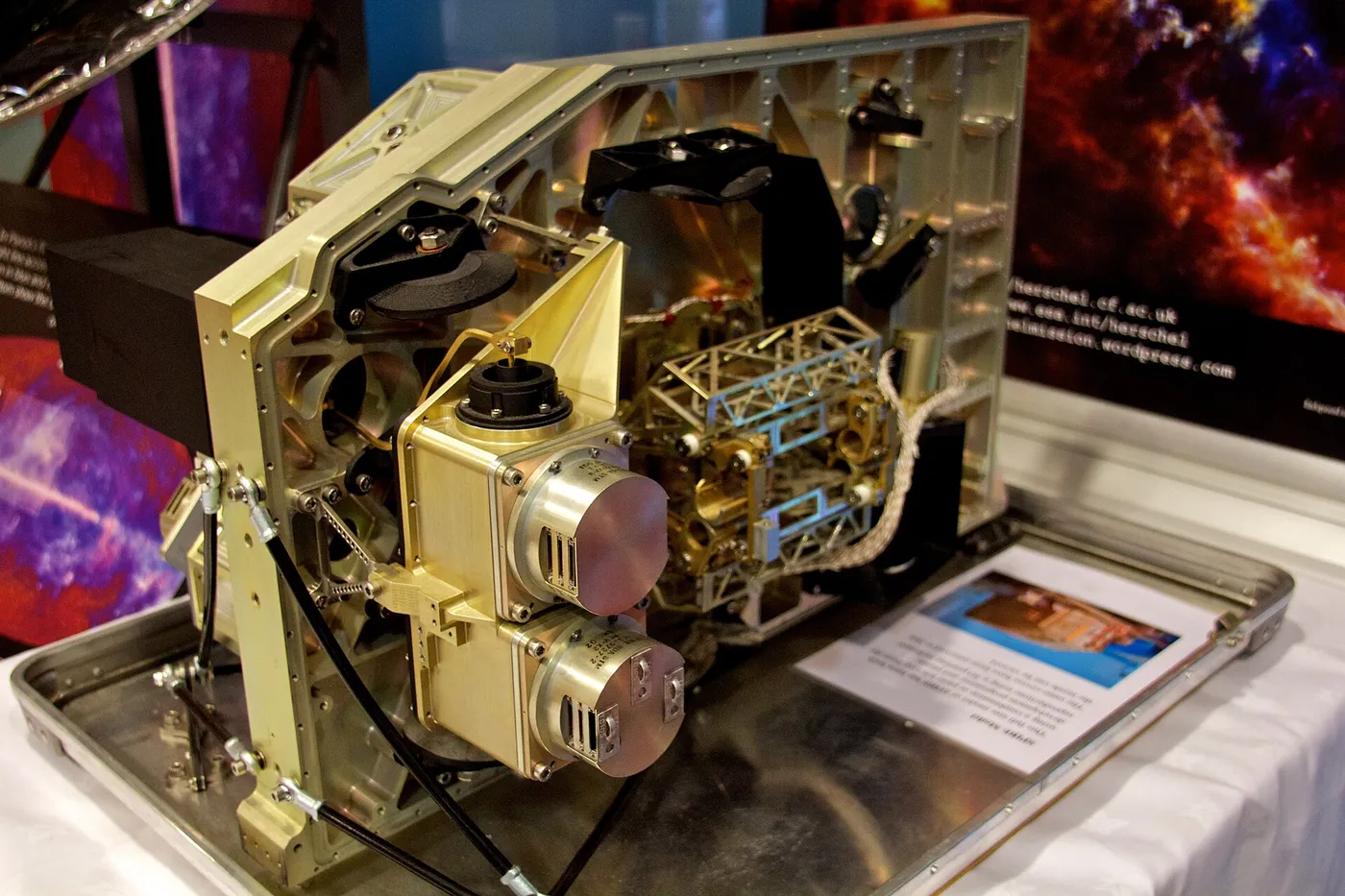

Herschel carried the largest single mirror ever flown in space — 3.5 metres of silicon carbide, chosen because glass of that size would have been impossibly heavy. It observed in the far infrared and submillimetre, wavelengths almost entirely blocked by the atmosphere and largely unexplored before it flew.
That part of the spectrum is where cold things glow: the dust and gas of star-forming clouds, the debris disks around young stars, and the obscured interiors of galaxies where most star formation actually takes place. Optical telescopes see the finished stars; Herschel saw the process.
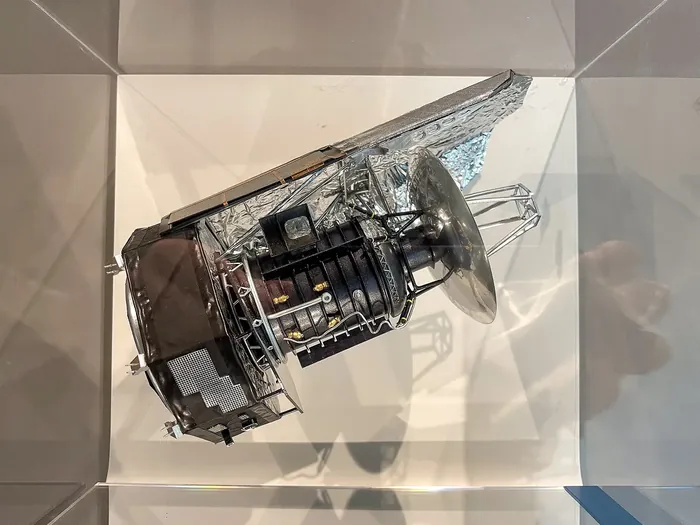
It found water almost everywhere it looked — in star-forming clouds, in comets, in the disks where planets form, and in the outflows of dying stars. Its measurement of the deuterium ratio in comet Hartley 2 matched Earth's oceans closely, which reopened the question of whether comets delivered our water after other comets had seemed to rule it out.
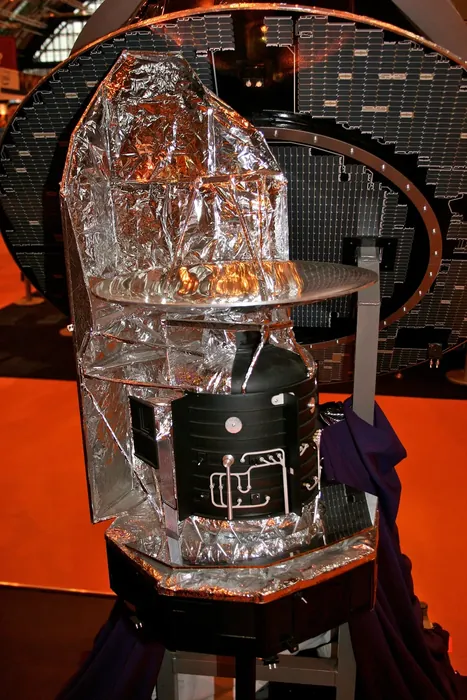
Its images of star-forming regions revealed enormous filamentary structures — networks of cold gas threading through molecular clouds, with new stars forming preferentially along them. That filamentary picture has substantially changed how star formation is modelled.
The mission was limited by its coolant, some 2,300 litres of superfluid helium that kept the detectors within a fraction of a degree of absolute zero and boiled away over three and a half years. It ended in 2013 and was pushed into a heliocentric graveyard orbit, its data still being worked through more than a decade later.