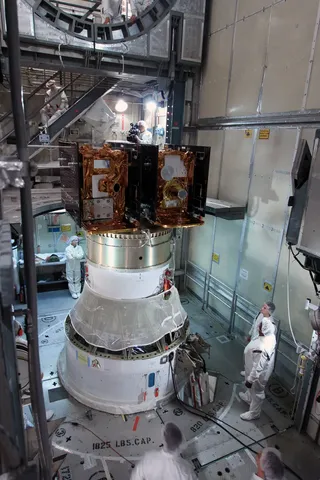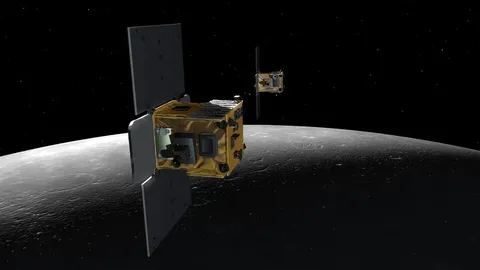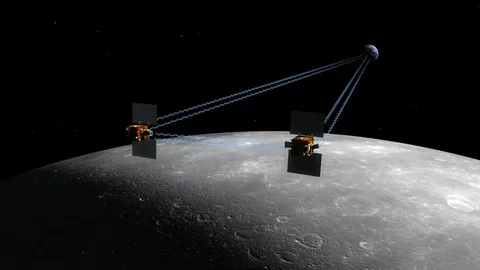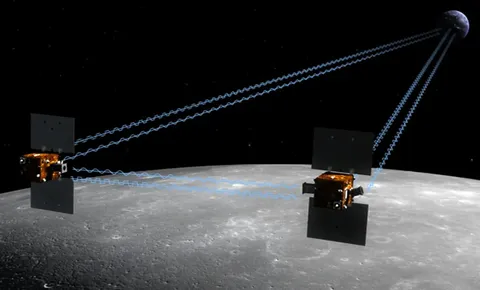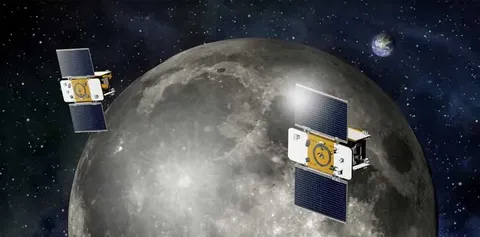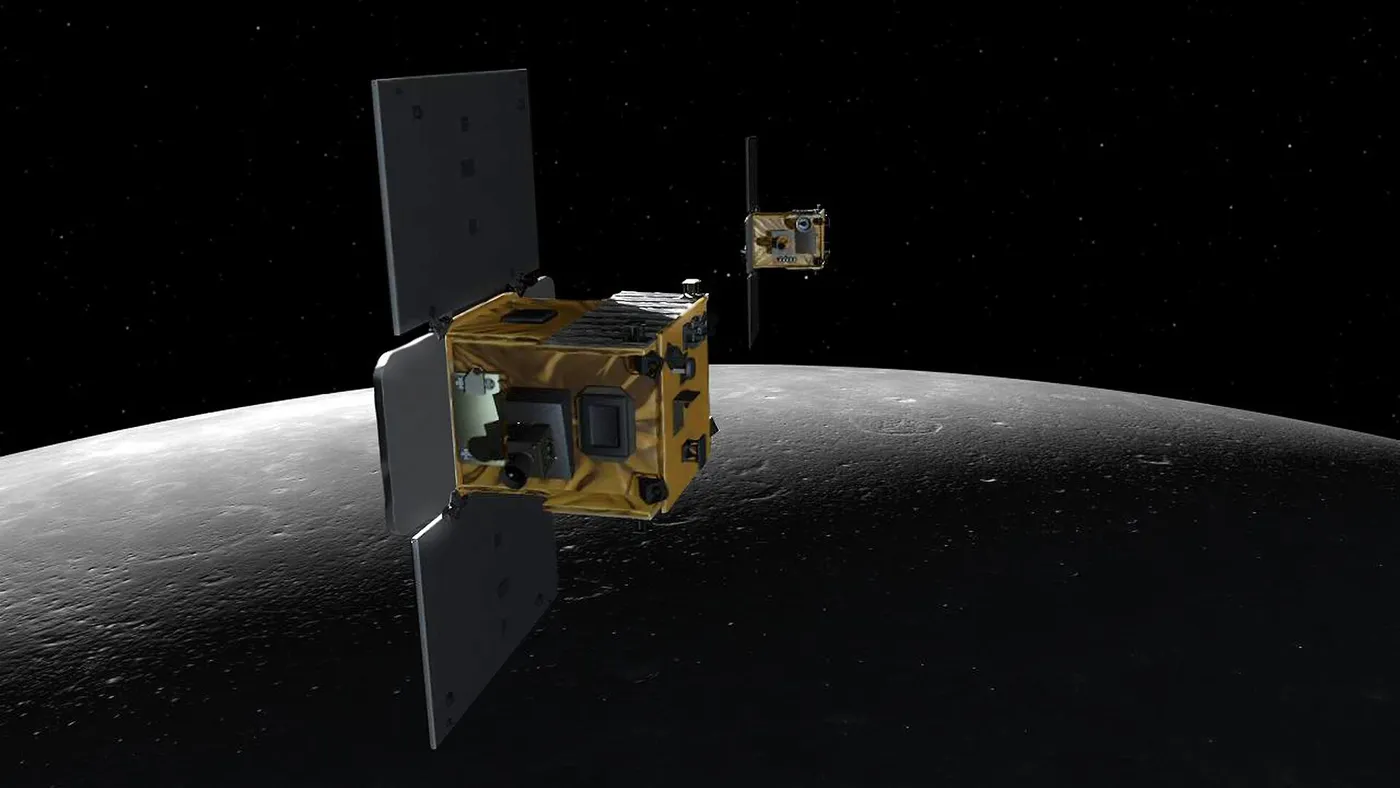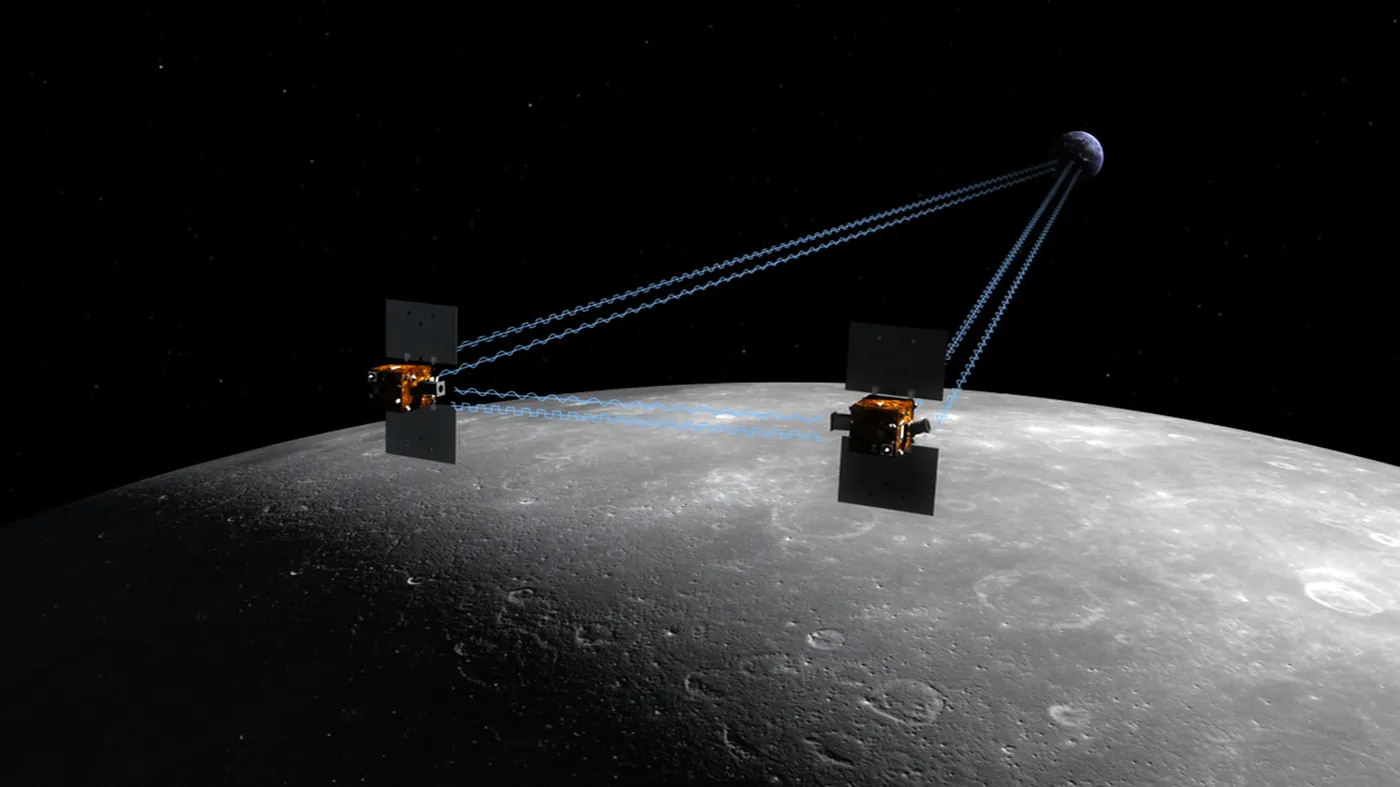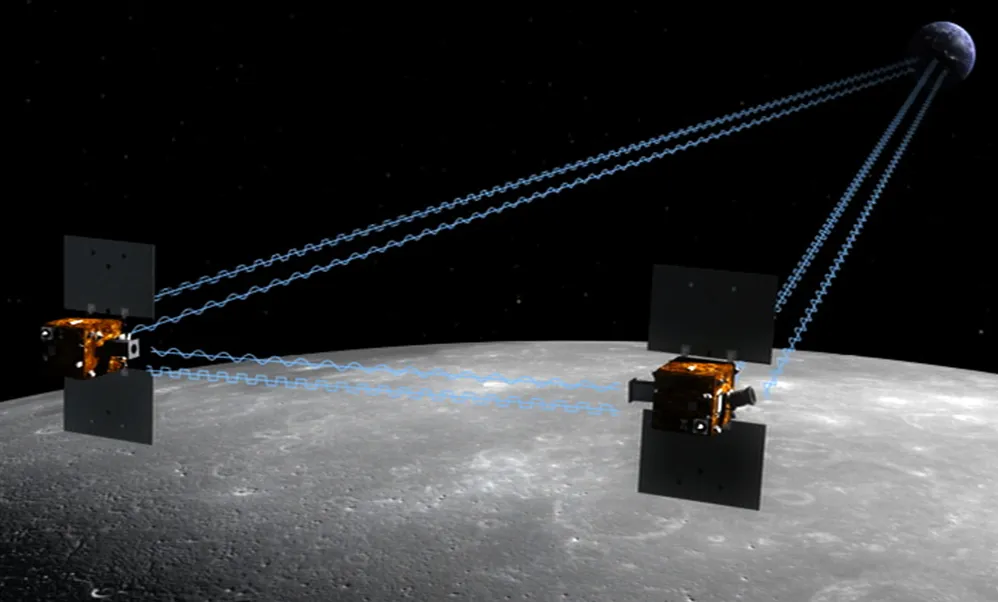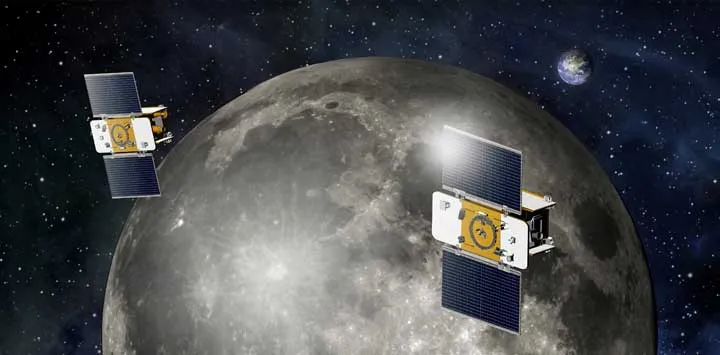
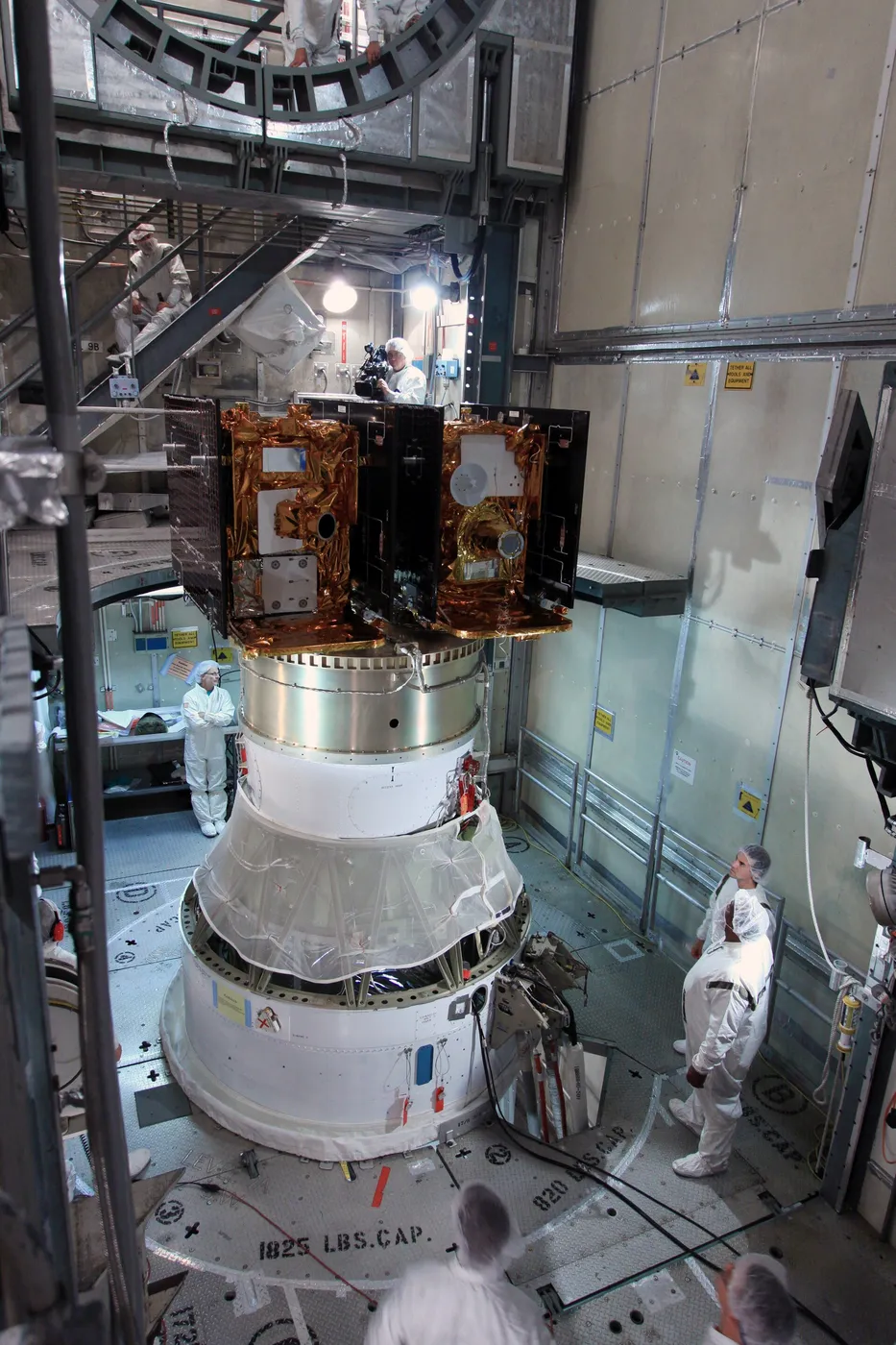

GRAIL measured the Moon by measuring the distance between two spacecraft. Ebb and Flow flew in formation, and as the leading one passed over a mass concentration it accelerated fractionally, changing their separation by amounts as small as a fraction of a micrometre — detectable by a radio link between them, and enough to map the gravitational field with extraordinary precision.
The resulting map is the most detailed gravity field of any body in the solar system, including Earth. It revealed that the lunar crust is far thinner than anyone had thought — perhaps 34 to 43 kilometres rather than 60 — which changes the estimate of the Moon's bulk composition and strengthens the case that it formed from material blasted off the early Earth.
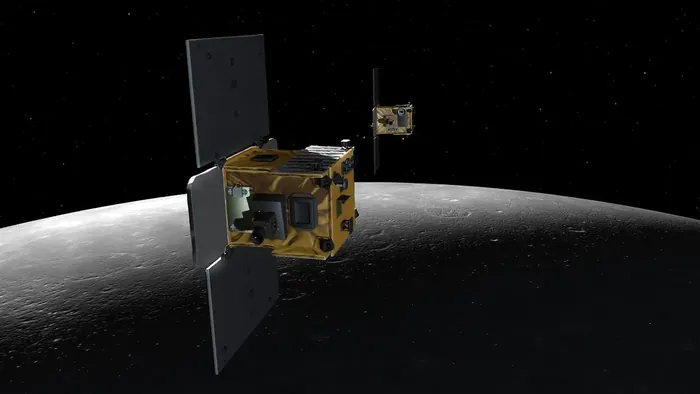
It also found enormous linear structures buried beneath the surface, hundreds of kilometres long: ancient dikes of dense magma that had intruded into the crust, evidence that the young Moon expanded slightly before contracting. And it showed that the crust has been pulverised by impacts far more deeply and thoroughly than the visible cratering suggests.
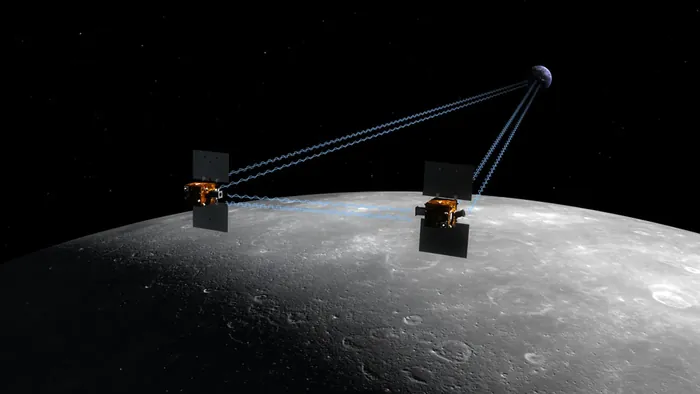
The two spacecraft were named by schoolchildren, after a competition won by a fourth-grade class in Montana. They carried cameras dedicated entirely to education, allowing students to request images of the lunar surface — a programme championed by Sally Ride, who had built a second career around science education.
Ride died in July 2012, months before the mission ended. When the two spacecraft ran low on fuel that December, they were deliberately crashed into a mountain near the north pole, and NASA named the impact site in her honour.