
GRACE Follow-On resumed the gravity measurement its predecessor had made for fifteen years, after a gap of about a year during which the record of ice loss and groundwater depletion was interrupted. Continuity was the mission's entire justification.
It flies the same concept — twin satellites tracking their separation as they pass over regions of varying mass — but adds a significant technology demonstration: a laser ranging interferometer measuring the distance between them, alongside the microwave system that does the operational work.
The laser proved roughly twenty times more precise than the microwave link, resolving changes in separation smaller than the width of an atom across 220 kilometres. It was the first inter-satellite laser interferometer ever flown, and it is the direct technological ancestor of the space-based gravitational wave observatory now in development.
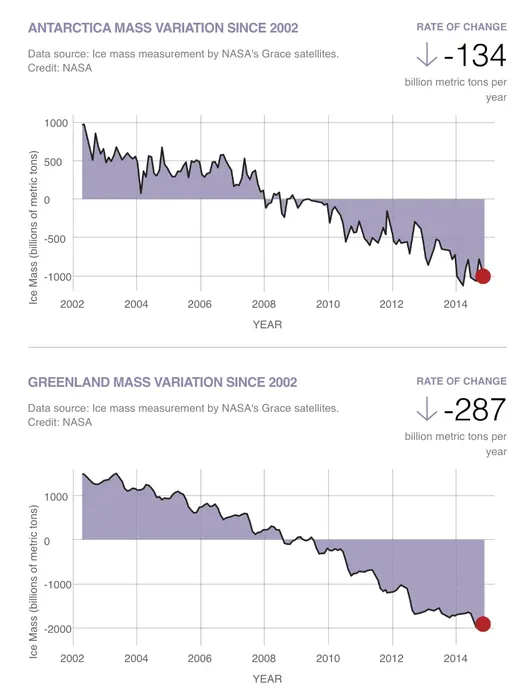
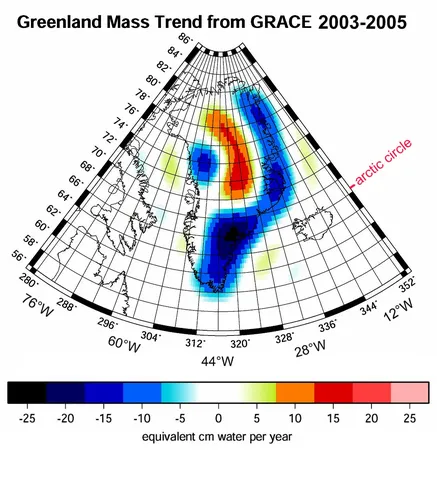
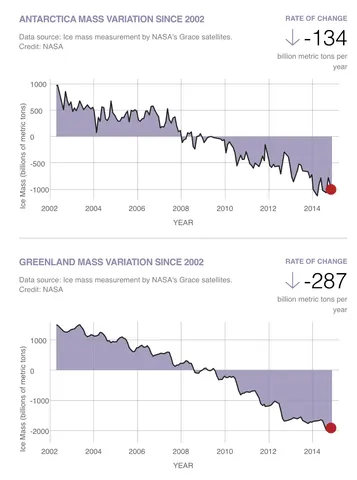
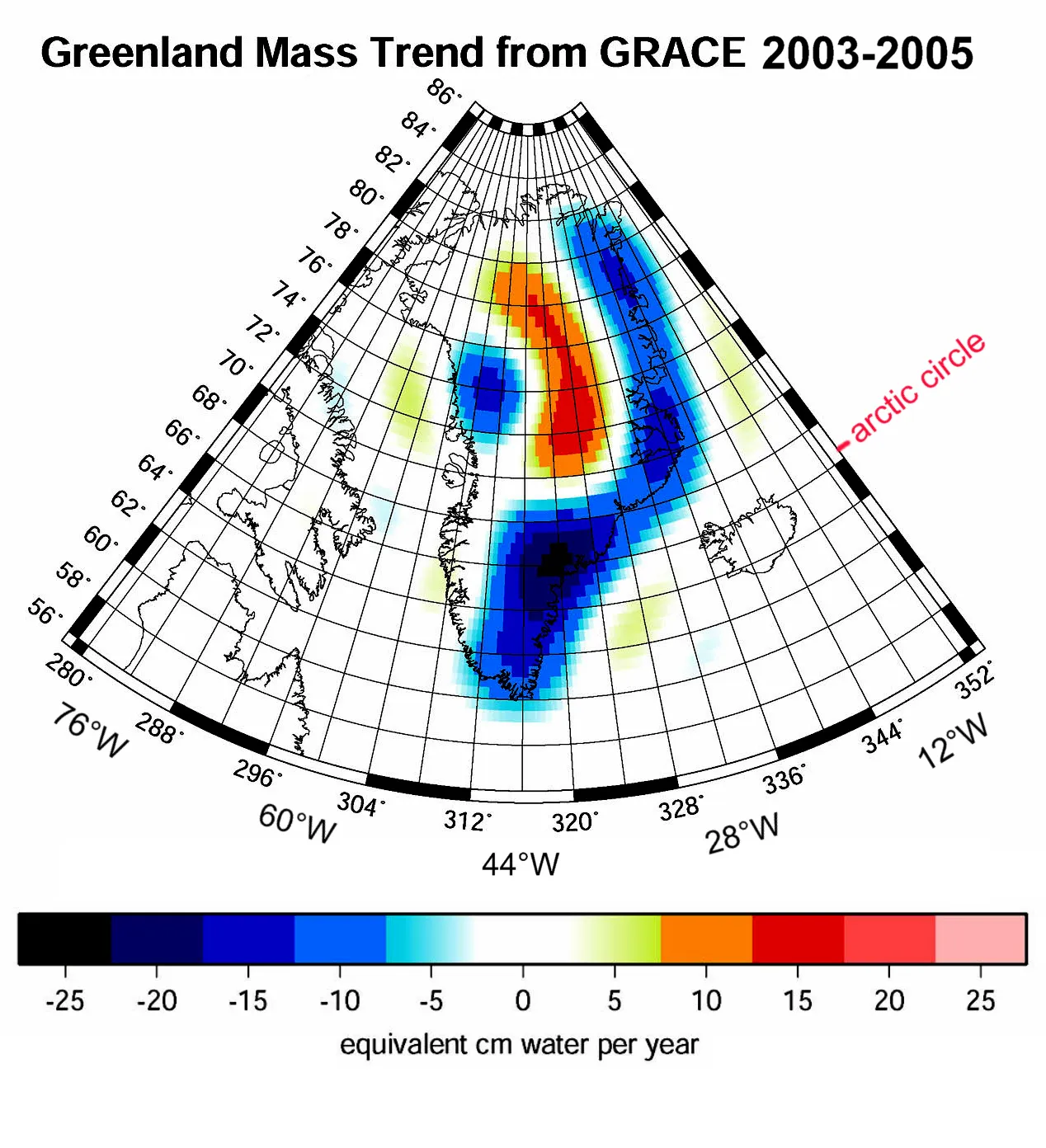
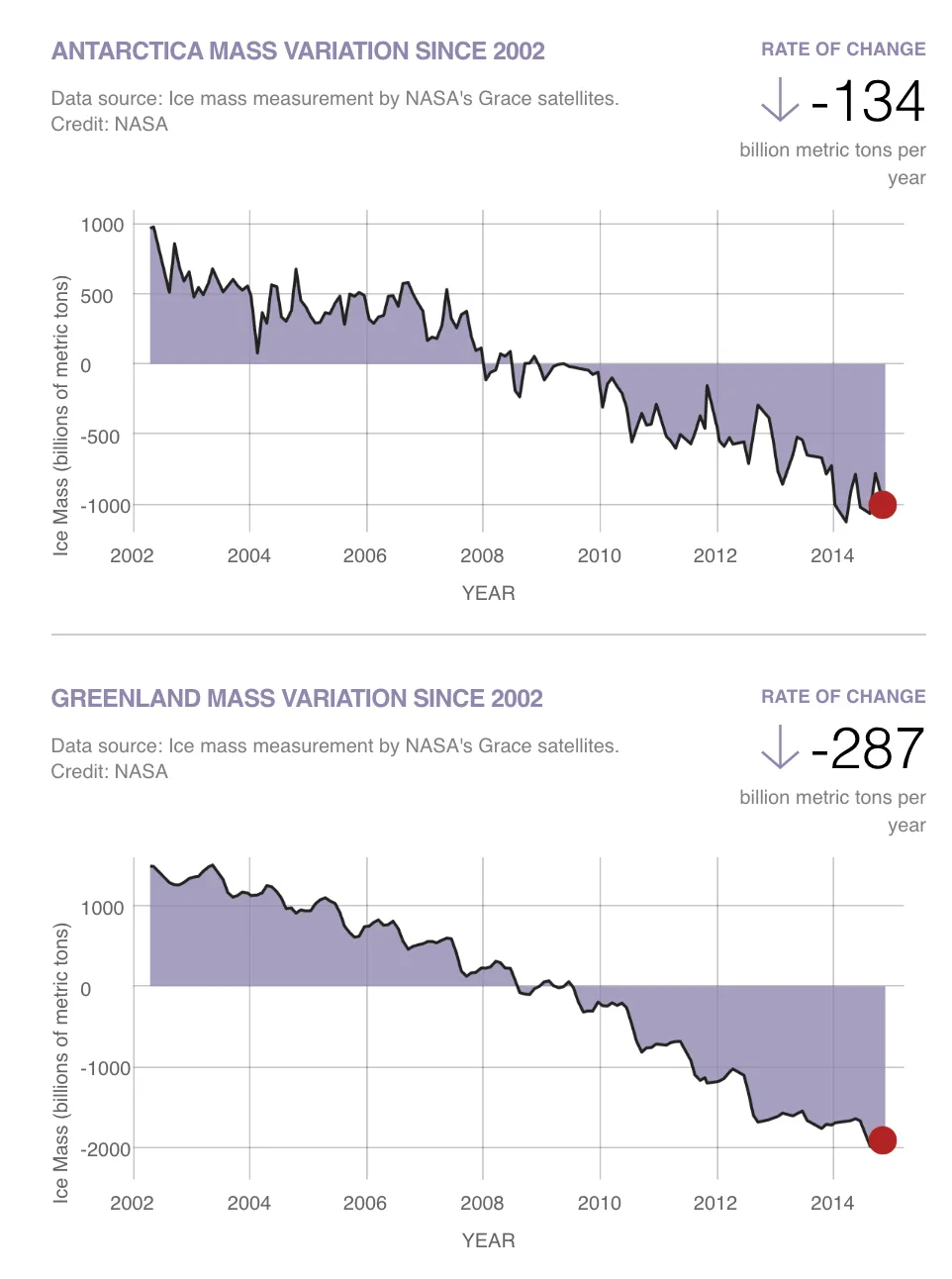
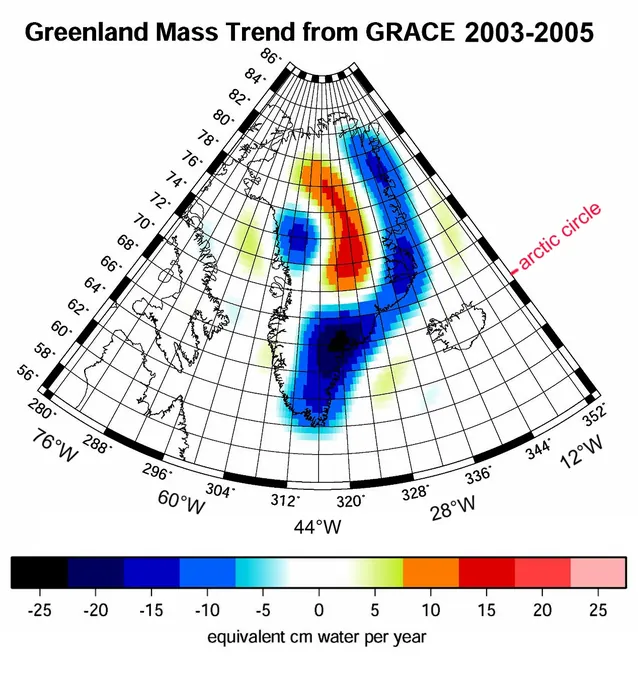
The science has continued and sharpened: ice sheet loss in Greenland and Antarctica has been tracked through a period of accelerating change, and the maps of aquifer depletion have been extended over enough years to distinguish drought cycles from structural over-extraction.
Its measurements now inform water management policy directly in several countries, and the combined GRACE record spanning more than two decades has become one of the most policy-relevant datasets produced by any space mission.