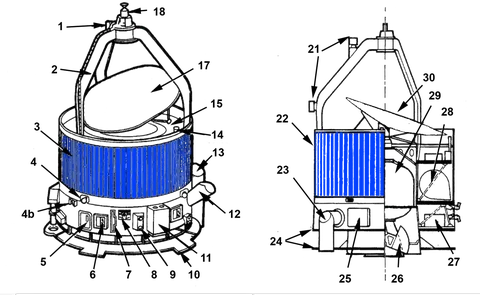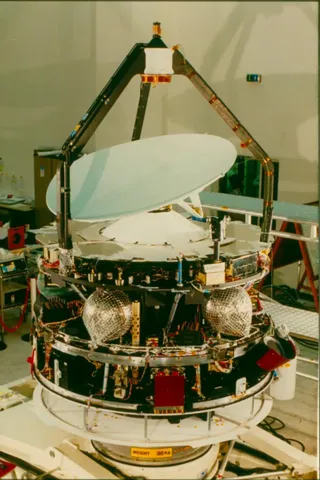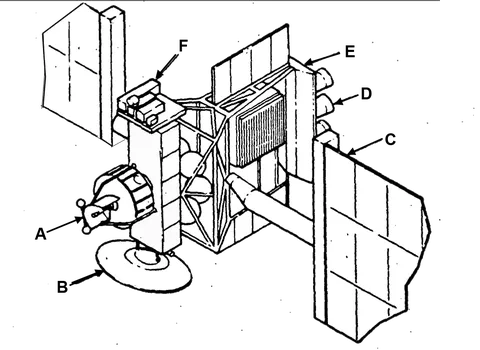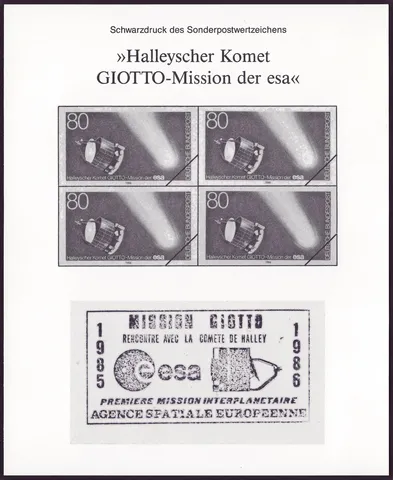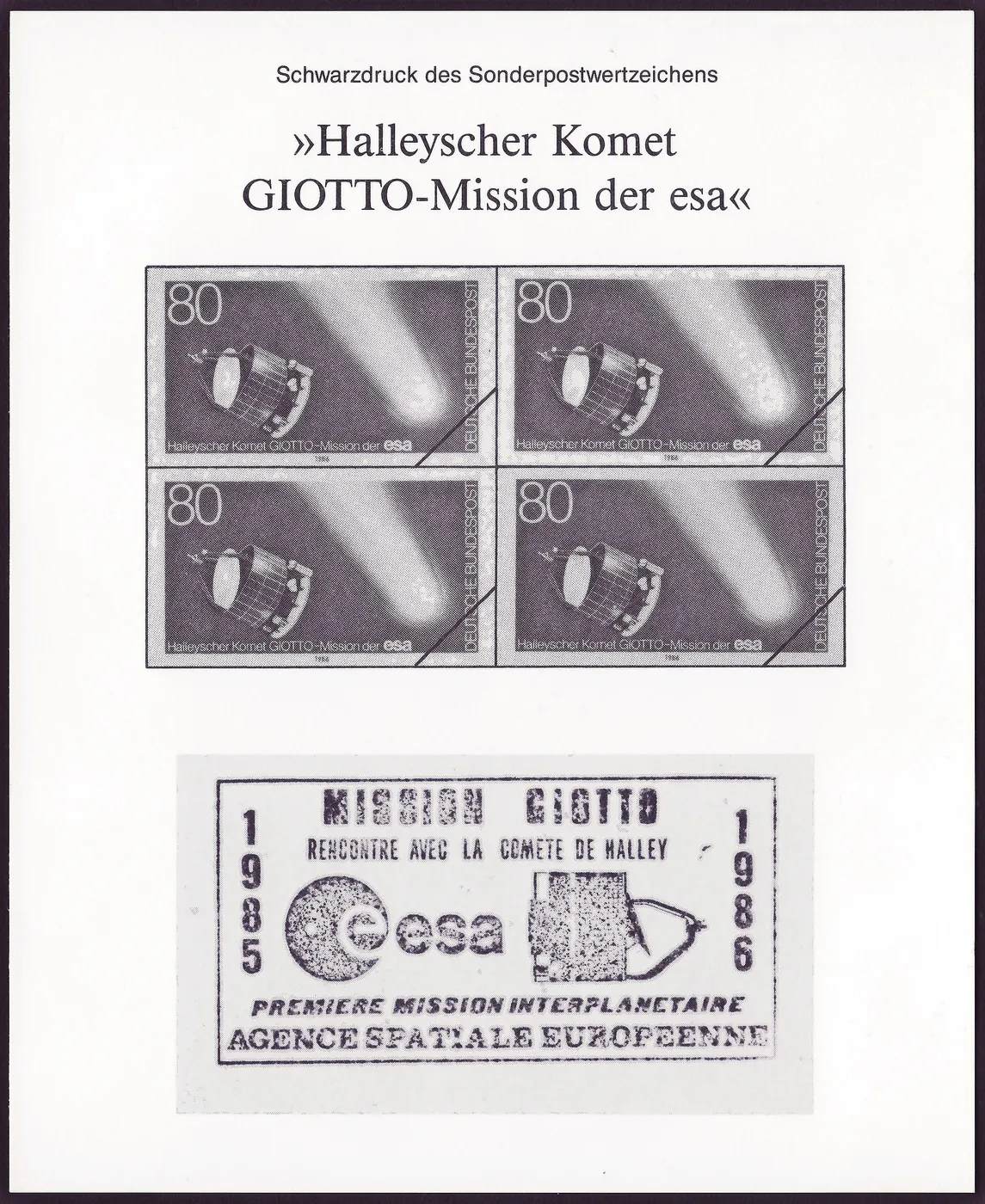
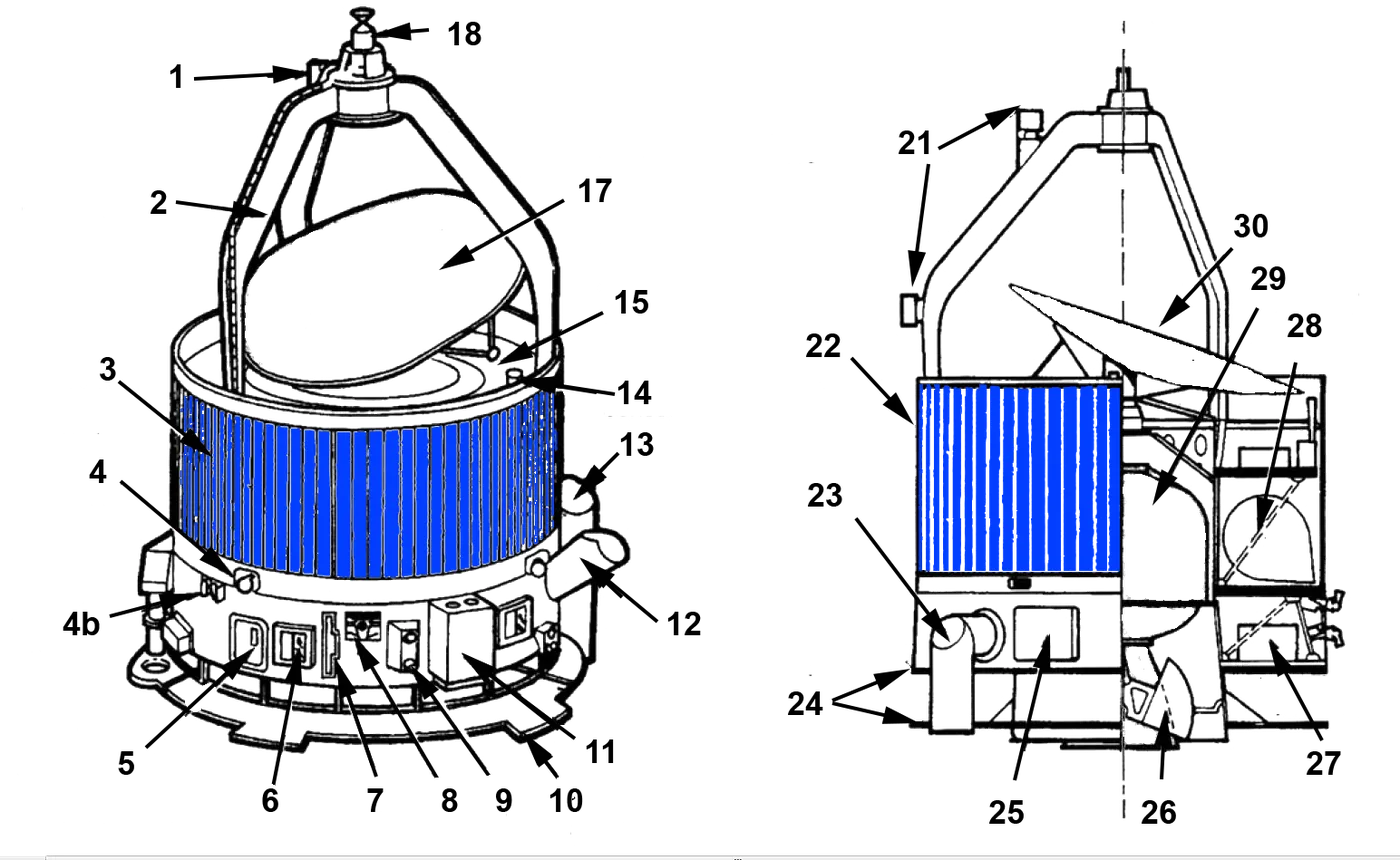

Halley's Comet returns every 76 years, and its 1986 apparition was the first to occur in the space age. Five spacecraft were sent to meet it — two Soviet, two Japanese and one European — in an informal collaboration nicknamed the Halley Armada, and Giotto was the one sent closest.
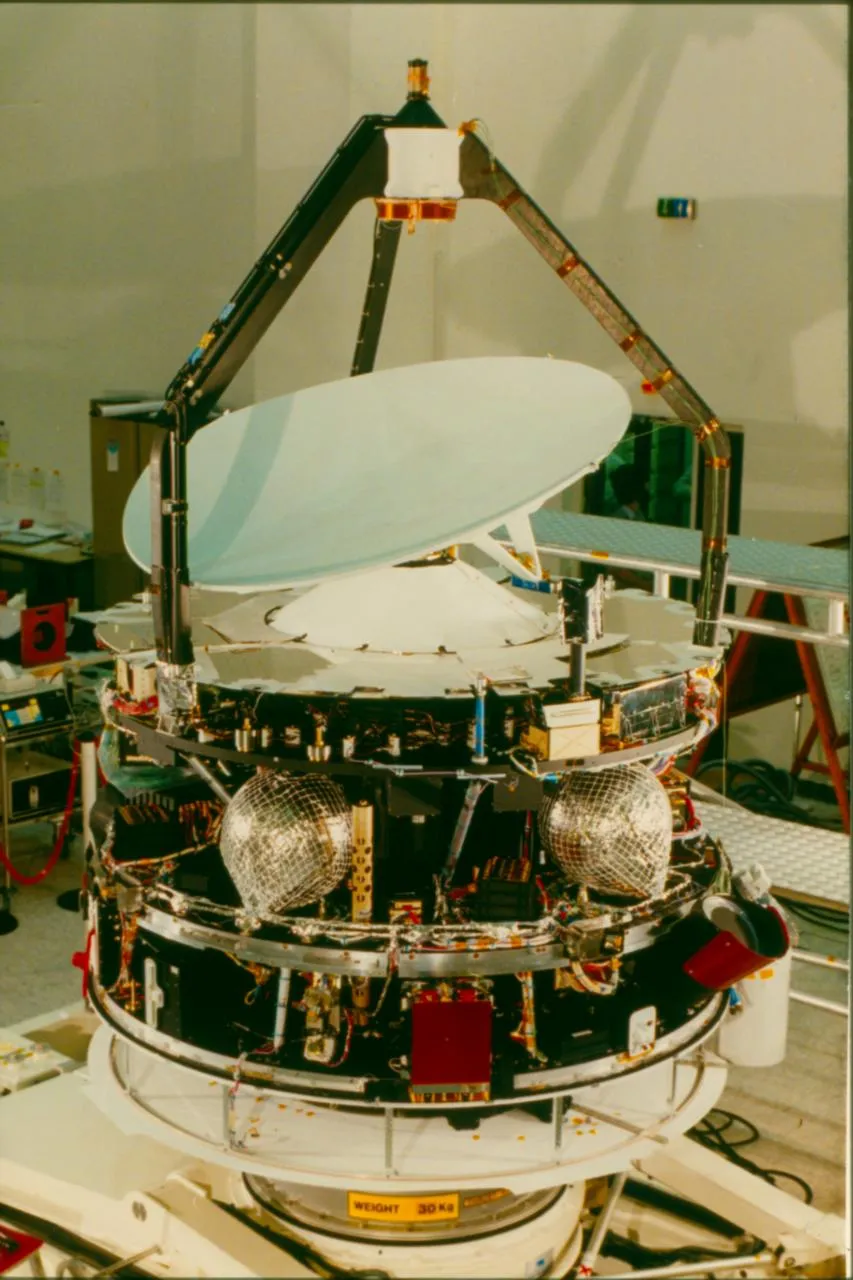
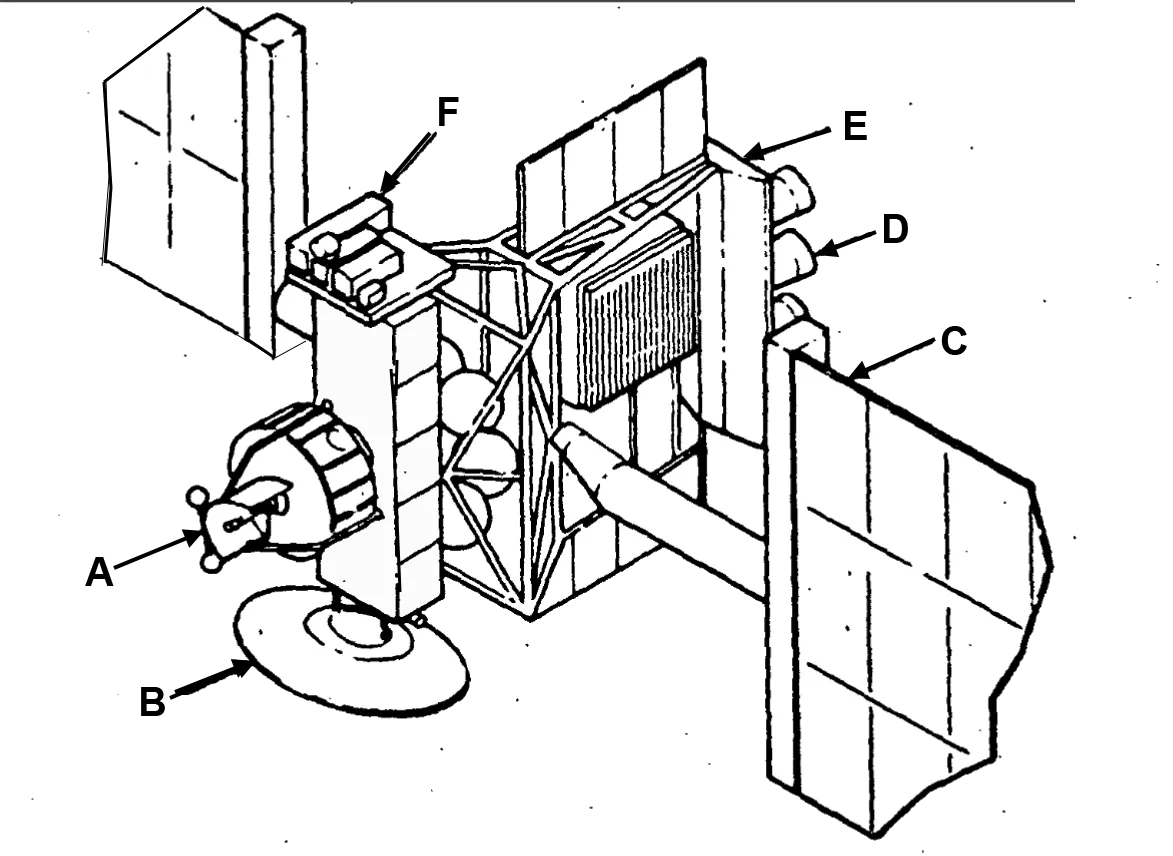
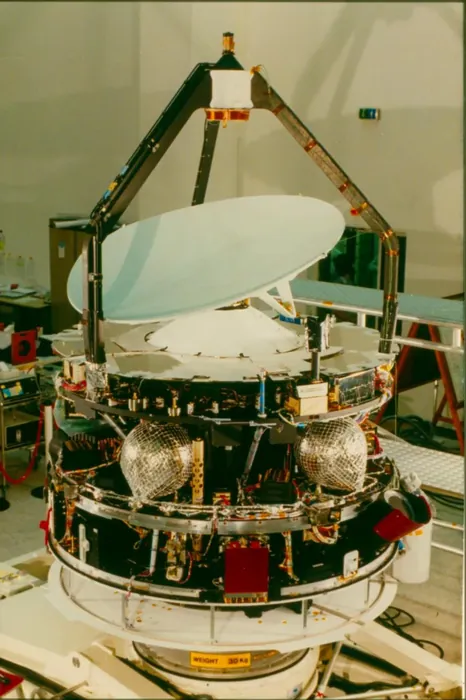
The plan was frankly dangerous. Flying through a comet's coma at 68 kilometres per second means being sandblasted by dust at a relative speed where a milligram particle carries the energy of a rifle bullet. The spacecraft was built around a two-layer bumper shield, spun for stability, and expected to be damaged.
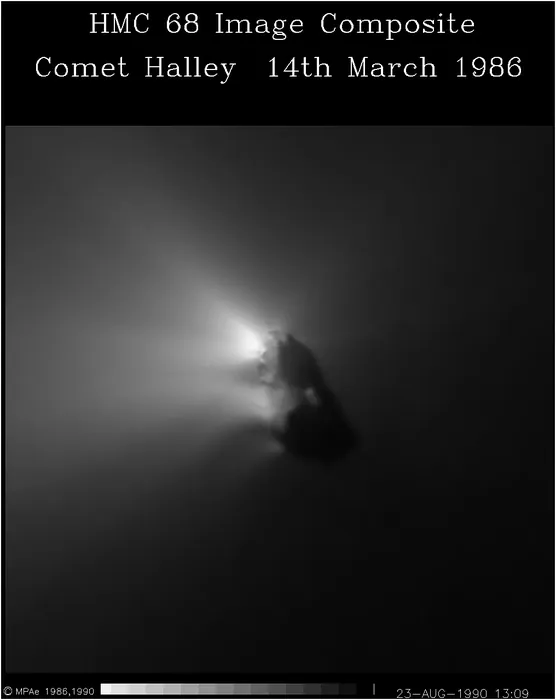
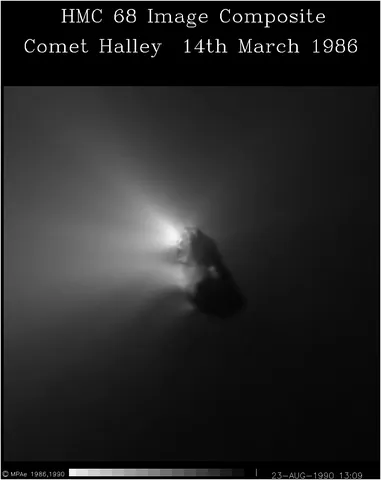
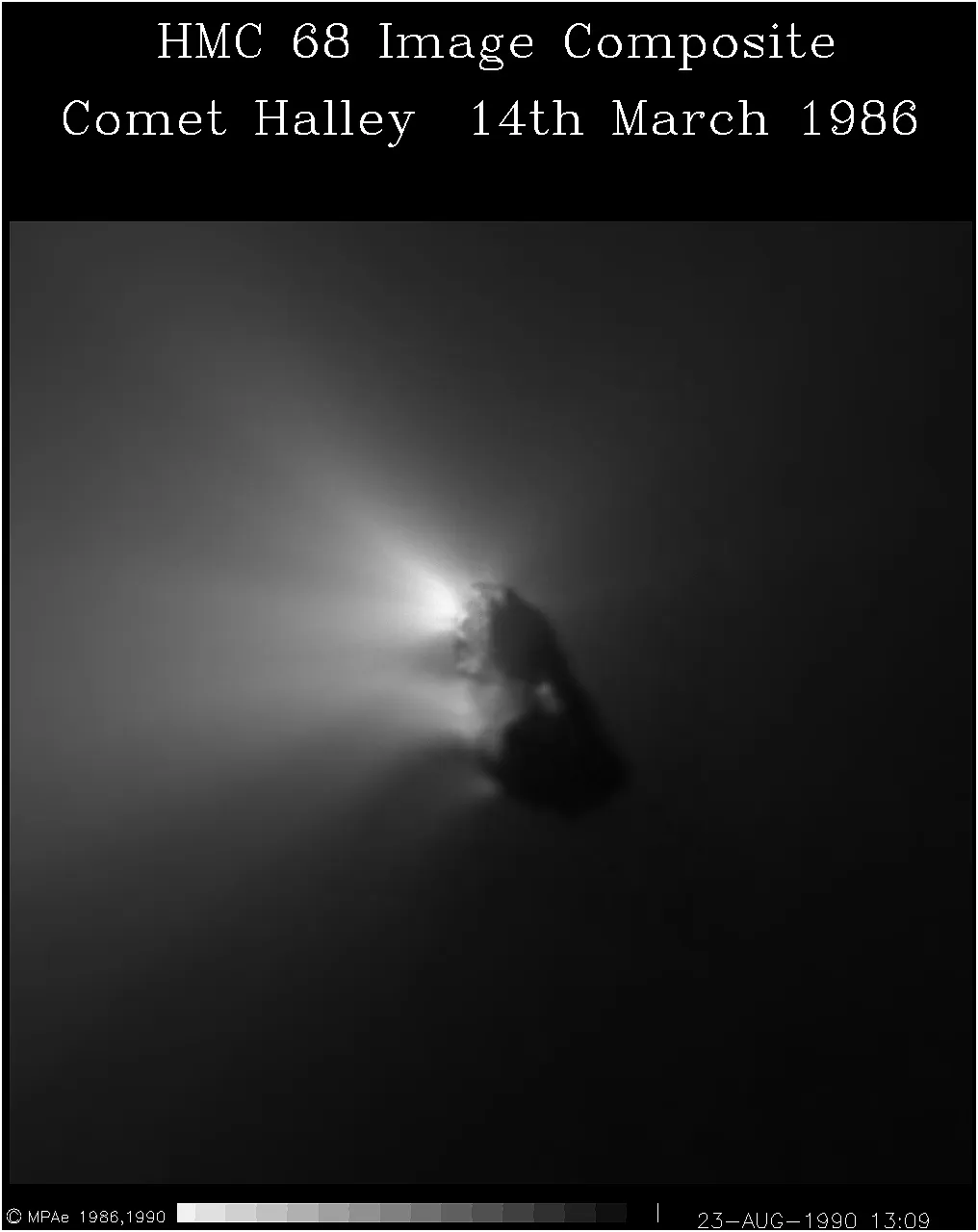
It was. On 14 March 1986 Giotto passed within about 596 kilometres of the nucleus, and seconds before closest approach a large particle struck it, knocking the spacecraft's spin axis askew and cutting the signal for half an hour. The camera was destroyed, but not before it had returned the first images of a cometary nucleus ever obtained.
What they showed astonished everyone. The nucleus was a peanut-shaped object some fifteen kilometres long and — this was the surprise — extraordinarily dark, reflecting about four per cent of the light falling on it, blacker than coal. The dirty snowball had a crust of carbon-rich material, with jets of gas and dust escaping from a few active regions rather than the whole surface.
Giotto survived, was put into hibernation, and was woken six years later to fly past a second comet, Grigg-Skjellerup, in 1992 — half blind, with a damaged shield, and still working. It was ESA's first deep space mission, and the confidence it produced runs directly to Rosetta two decades later.