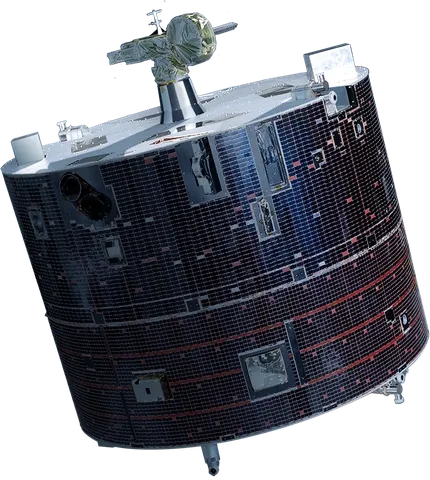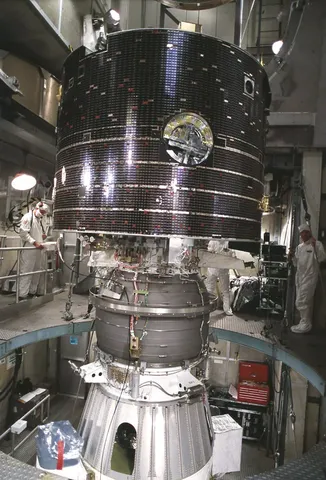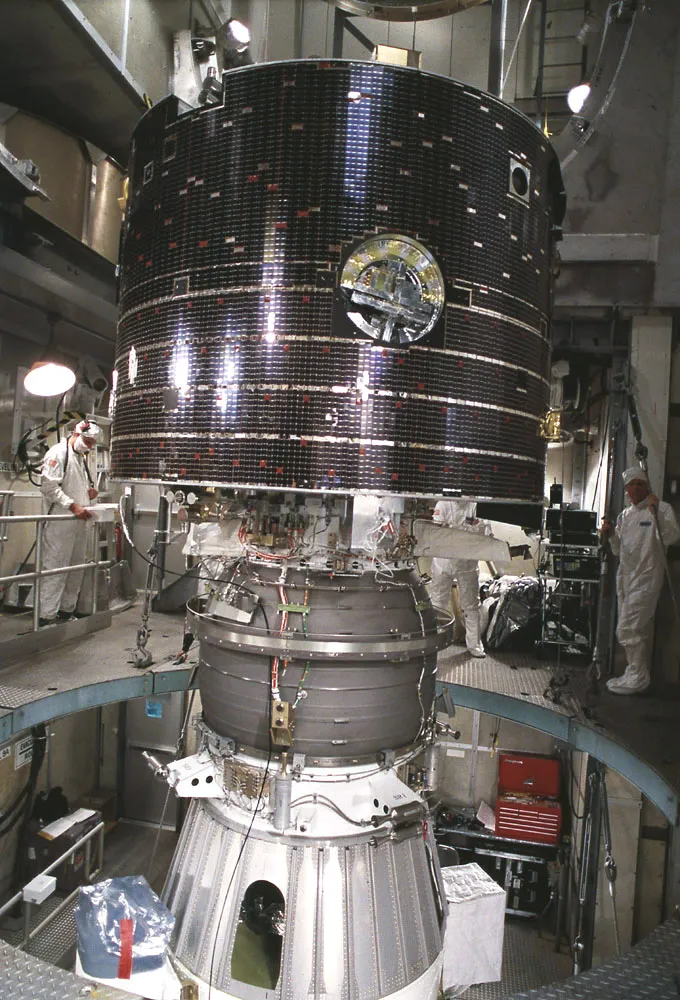
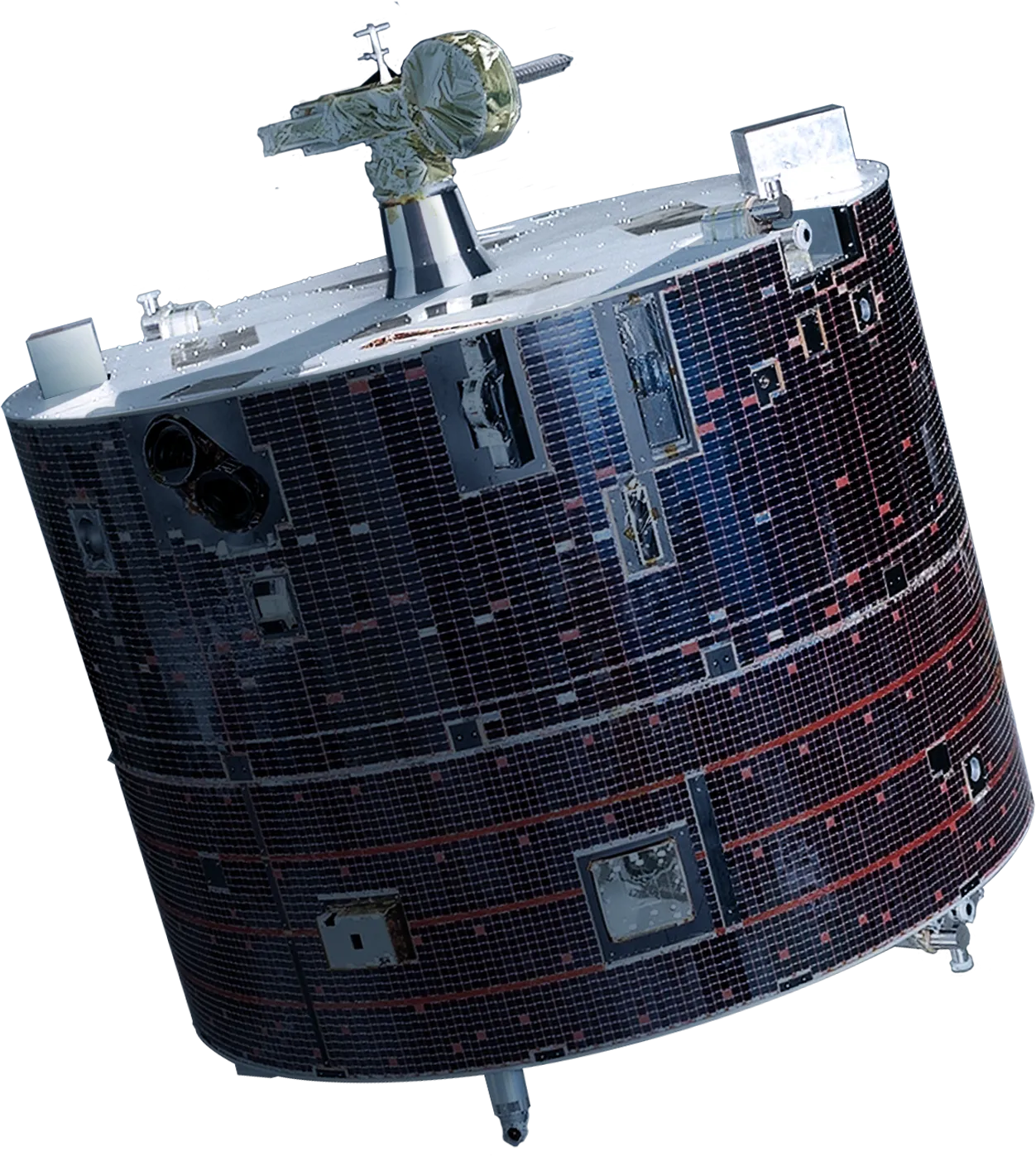

Geotail was Japan's first contribution to a coordinated international study of the Sun-Earth system, and its assignment was the magnetotail — the enormous streamer of magnetic field and plasma that the solar wind draws out behind the Earth, extending hundreds of Earth radii into the night side.
Its orbit was engineered with a series of lunar gravity assists to carry it far down that tail, sampling regions no spacecraft had reached, before being brought back closer for detailed study of the near-Earth region where the interesting physics happens.
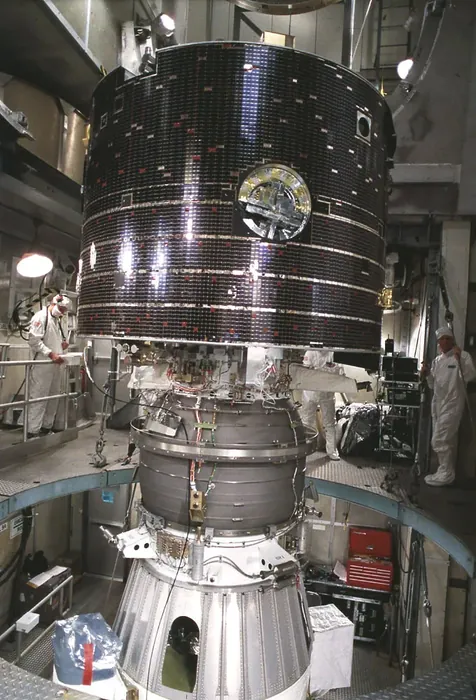
That physics is magnetic reconnection — the process by which stored magnetic energy is explosively released, driving the substorms that light the aurora. Geotail identified reconnection sites directly and measured the particle acceleration around them, establishing much of the observational basis for how substorms work.
It operated as part of a fleet, its measurements combined with those of Wind, Polar, Cluster and others to build a picture no single spacecraft could produce — the system-level approach that now characterises heliophysics.
It ran for thirty years, one of the longest-serving science satellites ever flown, before a data recorder failure ended the mission in 2022. Its archive spans nearly three solar cycles and remains in active use.