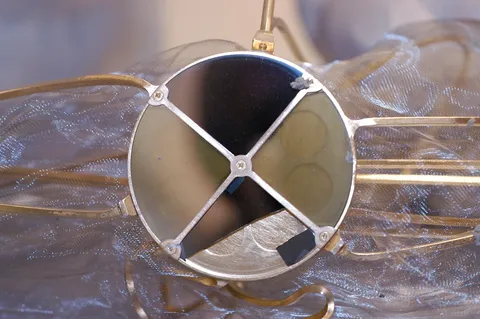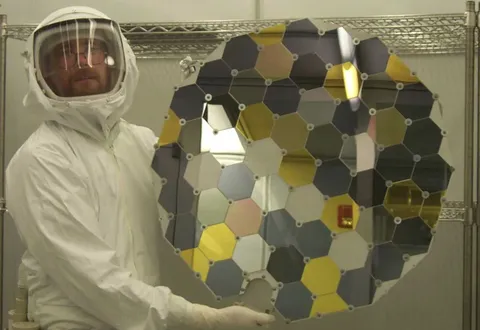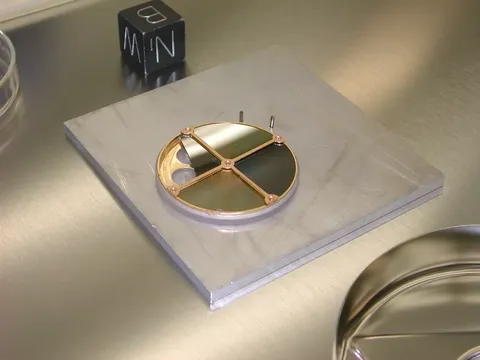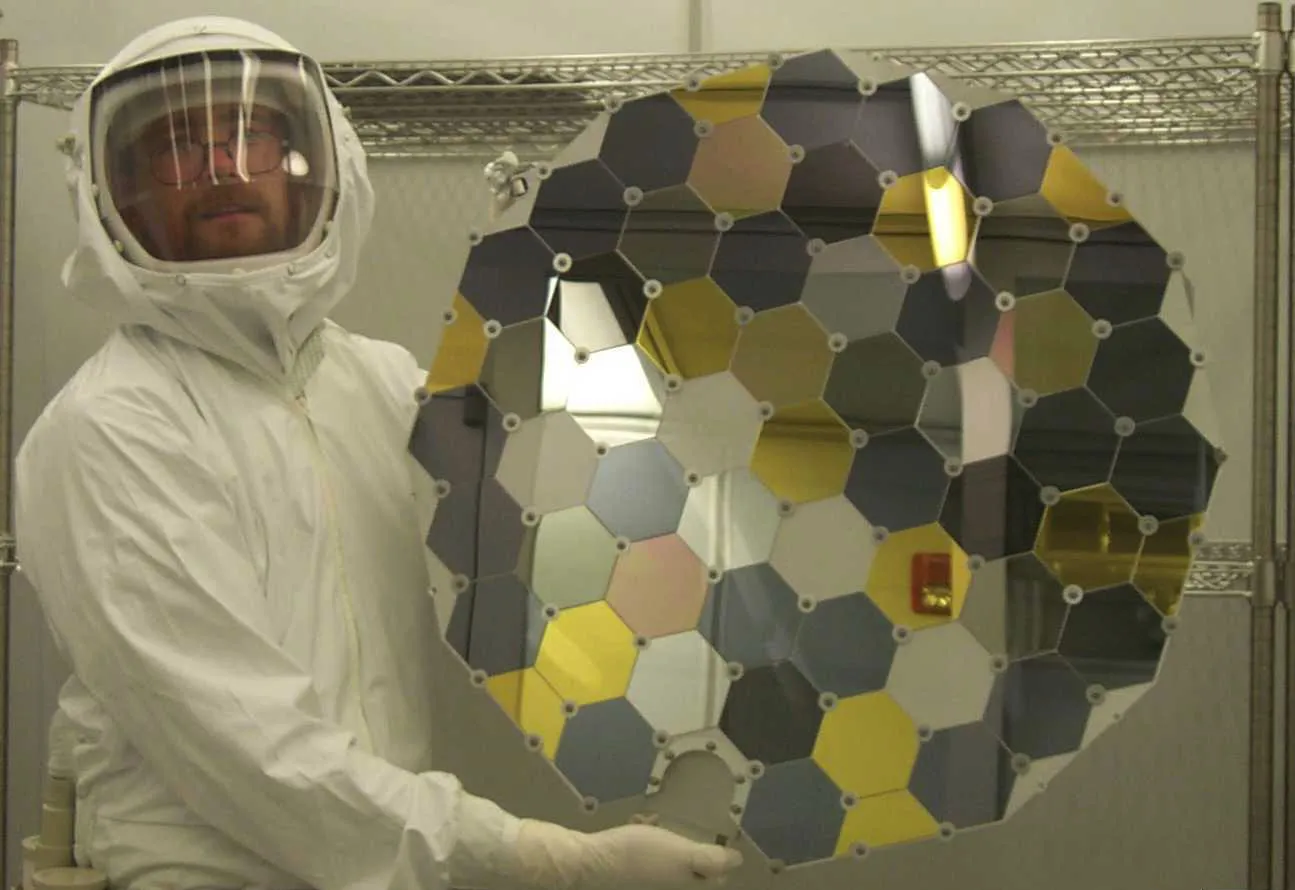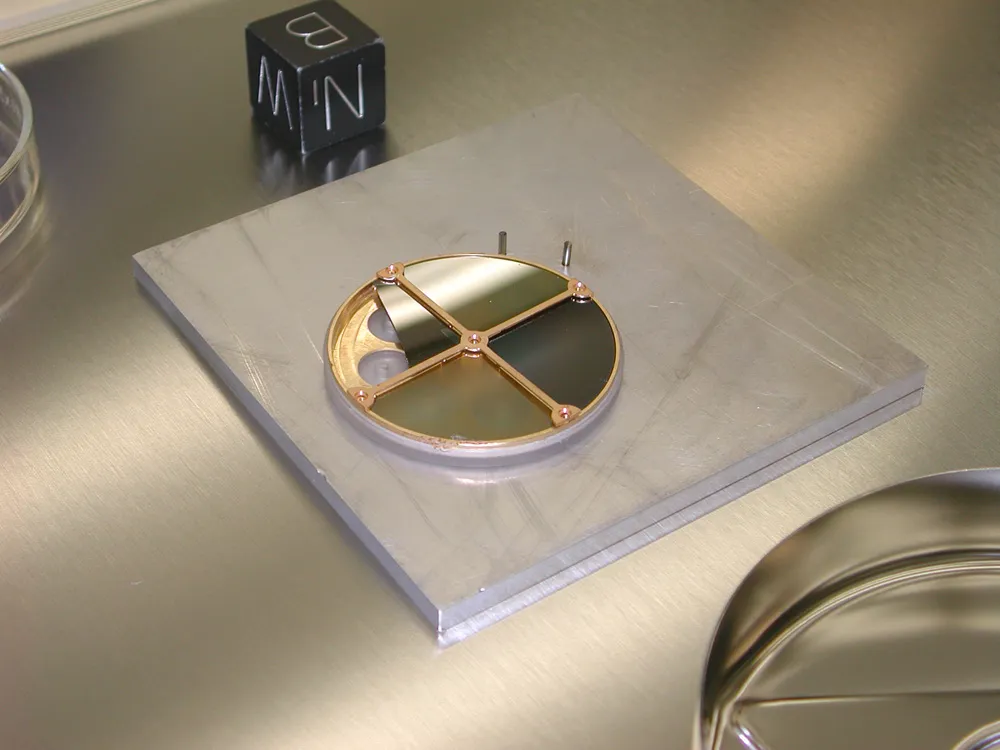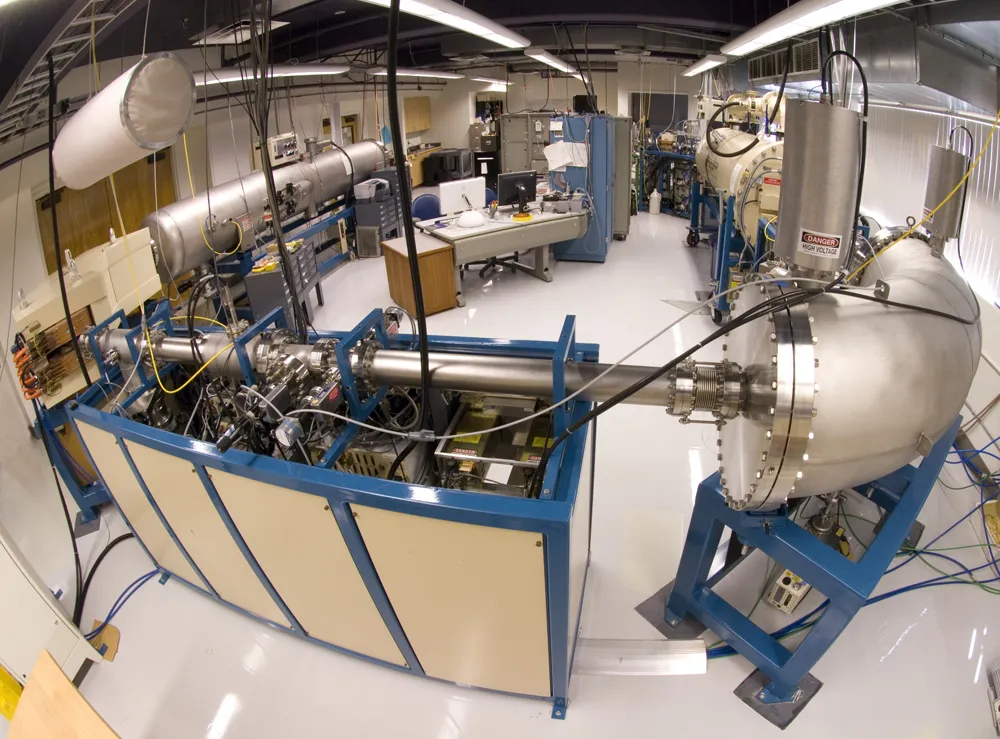
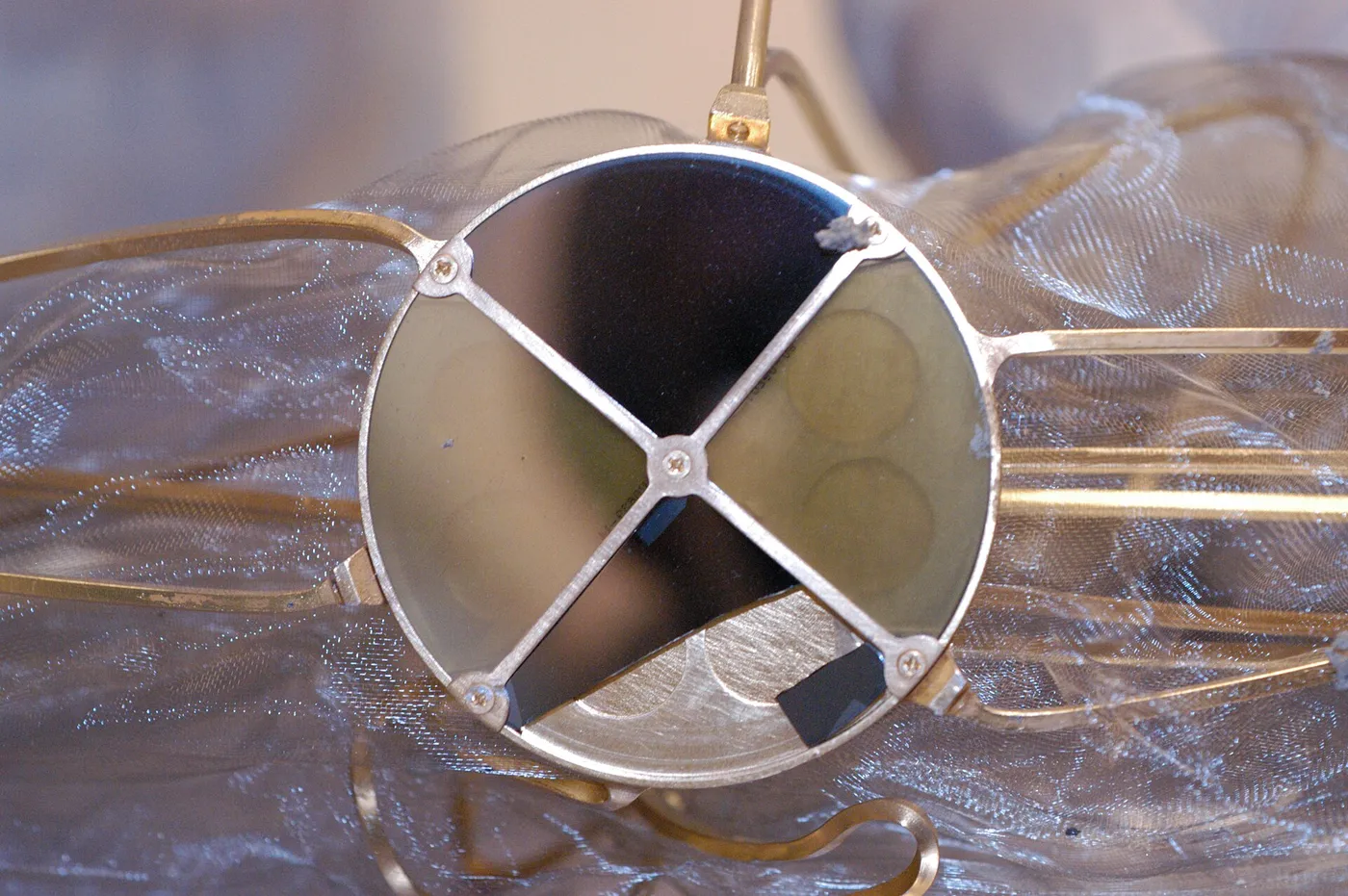

Genesis went to collect the Sun. It flew to the Lagrange point sunward of Earth, unfolded arrays of ultra-pure wafers — sapphire, silicon, gold, diamond-like carbon — and exposed them to the solar wind for 850 days, catching a few micrograms of the material the Sun is made of.
The purpose was to establish a baseline. Everything in the solar system condensed from the same cloud, and the Sun holds more than 99 per cent of its mass, so the Sun's composition is effectively the composition of the original nebula. Measuring it precisely lets planetary scientists work out how the planets diverged from that starting point.
The return went badly wrong. On 8 September 2004 the capsule entered the atmosphere over Utah and its parachutes never deployed, because a set of gravity-sensing switches that were supposed to detect deceleration had been installed backwards — an orientation error in the design drawings that no review had caught. The capsule struck the desert at around 300 kilometres per hour.
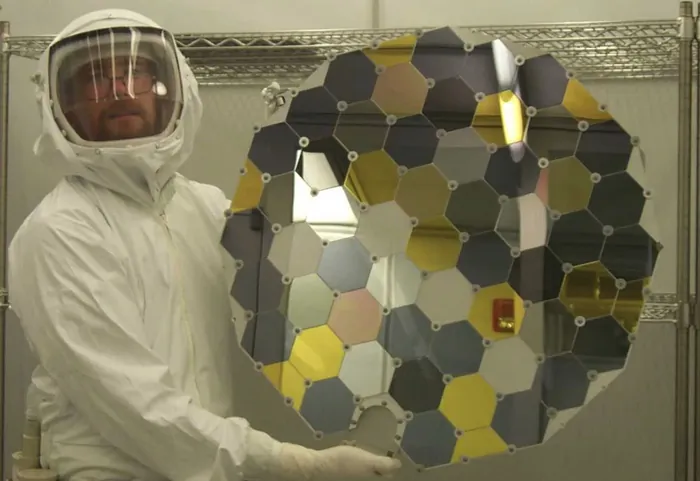
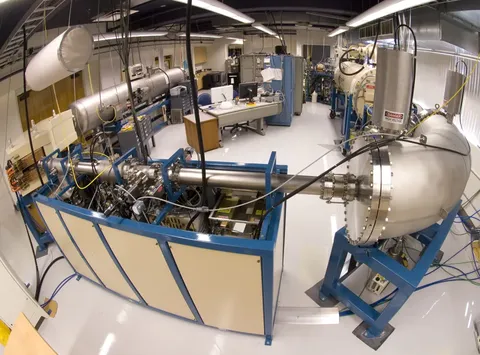
The collectors shattered into thousands of fragments, contaminated with Utah soil. What followed was a salvage operation of remarkable patience: curators picked through the wreckage in a cleanroom, identified fragments by material, and developed cleaning techniques to strip terrestrial contamination from surfaces holding solar atoms implanted a few nanometres deep.
It largely worked. The mission's headline result — that the Sun's oxygen and nitrogen isotope ratios differ measurably from the Earth's — was recovered from the wreckage and published in 2011, and it means the inner planets did not simply inherit the nebula's composition unchanged. A crashed mission produced the science it was sent for.