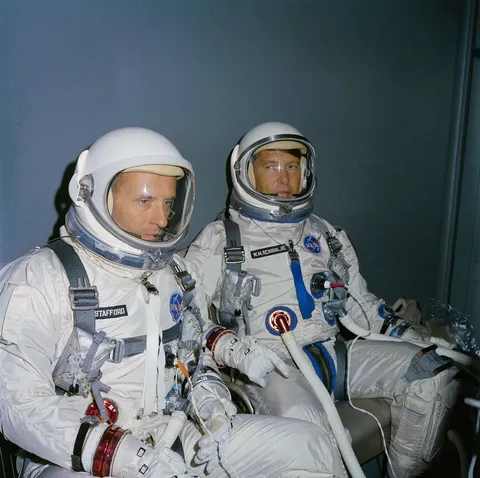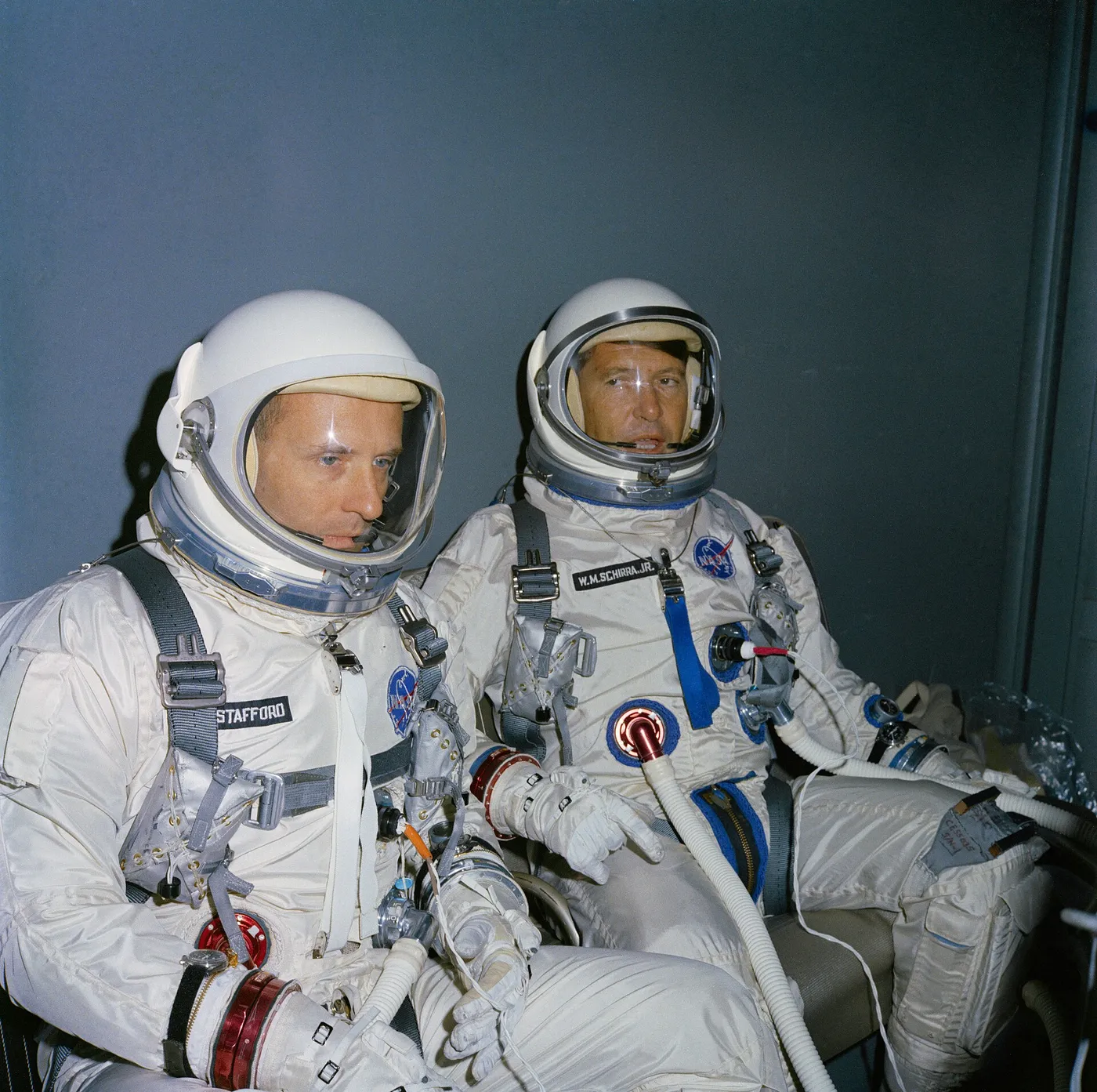
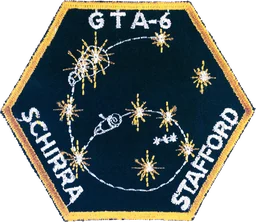
Gemini 6 was supposed to dock with an unmanned Agena rocket, and in October 1965 the Agena obligingly blew itself apart on the way to orbit. With their target gone, Wally Schirra and Tom Stafford faced cancellation — until someone proposed sending them to meet Gemini 7 instead, already scheduled for a fortnight in orbit. The mission was renamed Gemini 6A and rebuilt around the idea in weeks.
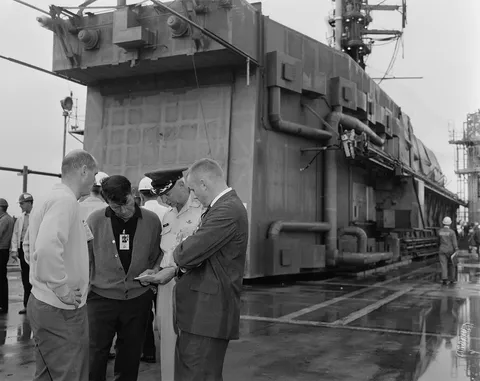
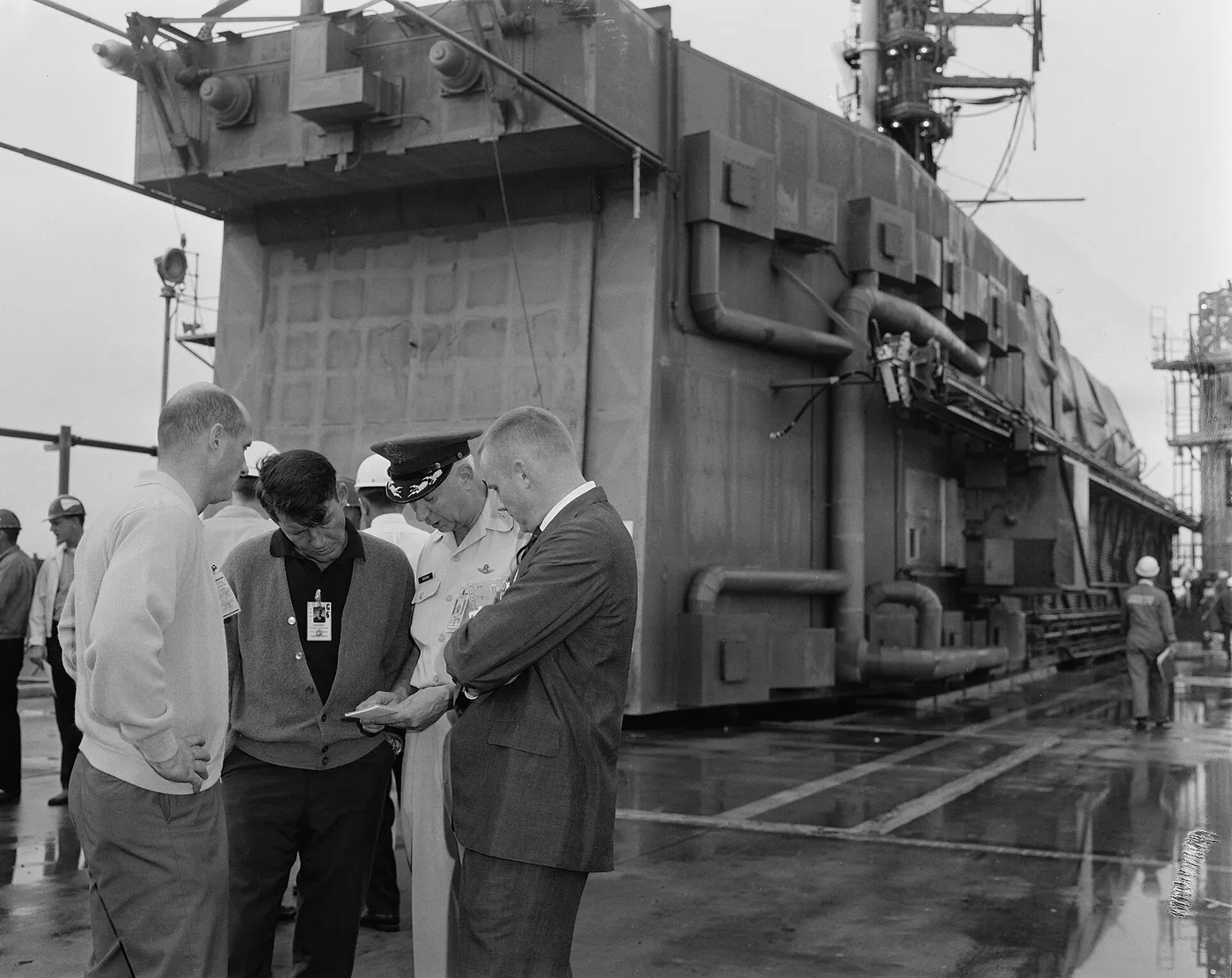
The first attempt nearly ended everything. On 12 December the Titan's engines lit, then abruptly shut down with the rocket still on the pad. The mission clock in the cockpit had started, which by the rulebook meant they had lifted off — and if they had lifted off and stopped, the rocket was about to topple and explode. Schirra's hand hovered over the ejection handle and, feeling no motion, he chose not to pull it. He was right: the rocket never moved, and the mission was saved for another day.
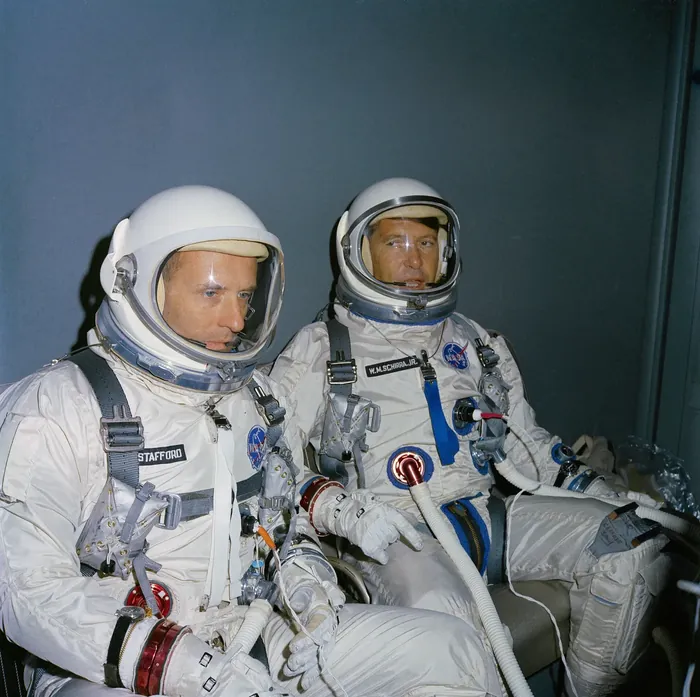
Three days later they flew. Over four hours of careful thrusting Stafford worked through the numbers and Schirra flew the approach until the two spacecraft hung together, nose to nose, about a foot apart — the first true rendezvous of two crewed vehicles in orbit. They held formation for more than five hours, circling and inspecting one another, proving the single manoeuvre on which the entire lunar landing plan rested.
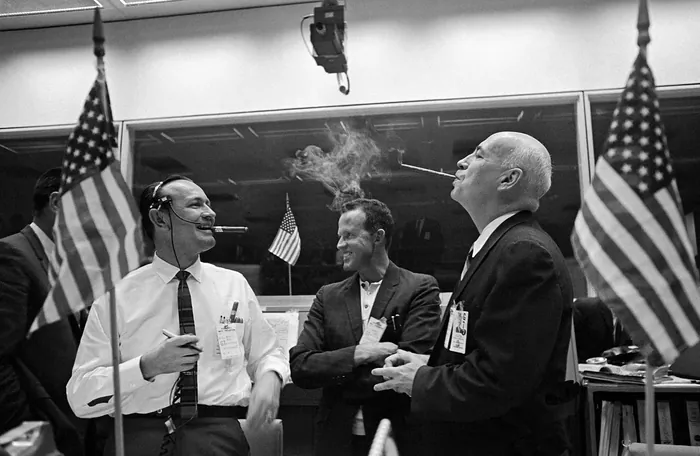
Then, being Schirra, he could not resist a joke. Shortly before coming home, the crew solemnly reported an unidentified object in a polar orbit, its pilot wearing a red suit — before producing a small harmonica and a set of sleigh bells smuggled aboard and playing Jingle Bells down to a startled Mission Control. It was the first music ever performed in space, and the instruments now sit in the Smithsonian.
Gemini 6A splashed down within sight of its recovery ship after just over a day aloft, having answered the question that mattered most. Rendezvous was no longer theory; it was a procedure. Everything Apollo would later do around the Moon — a lander lifting off to find its mother ship — began with those two small capsules holding station over the Pacific.