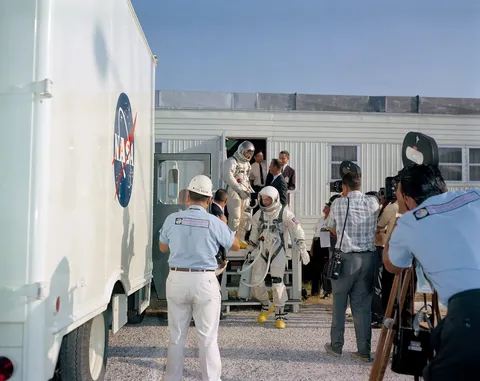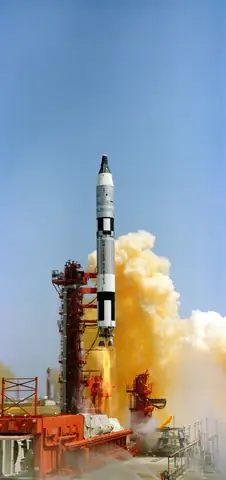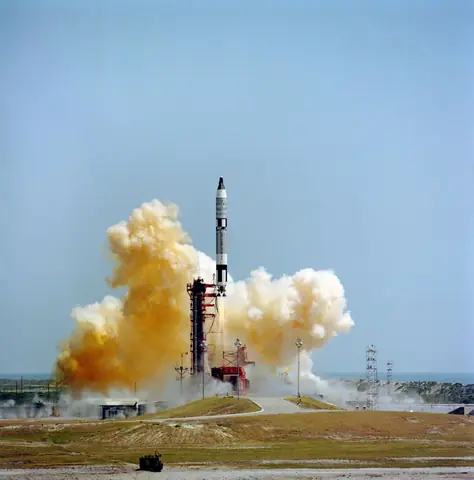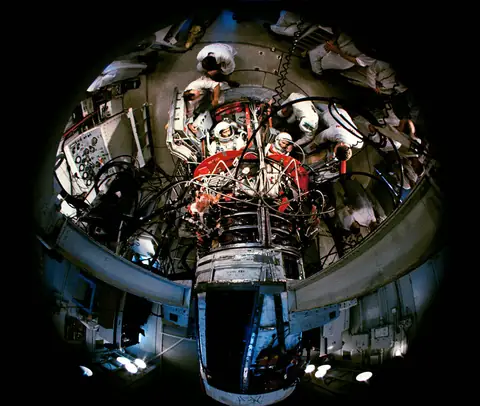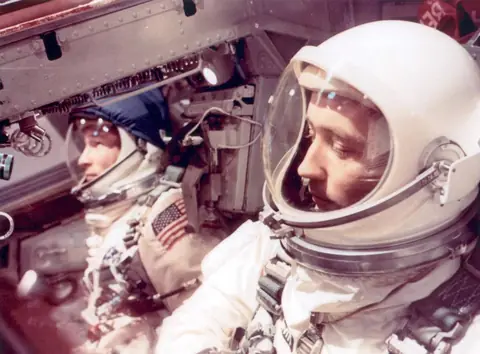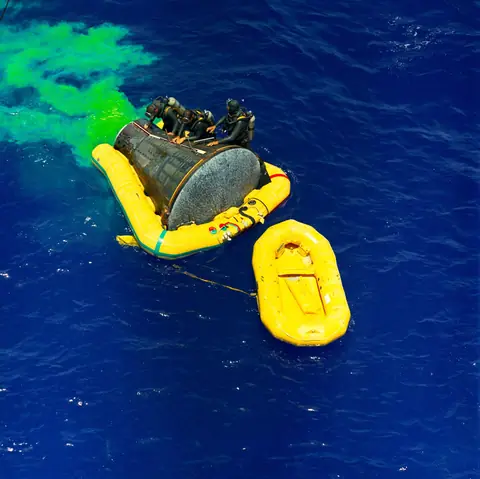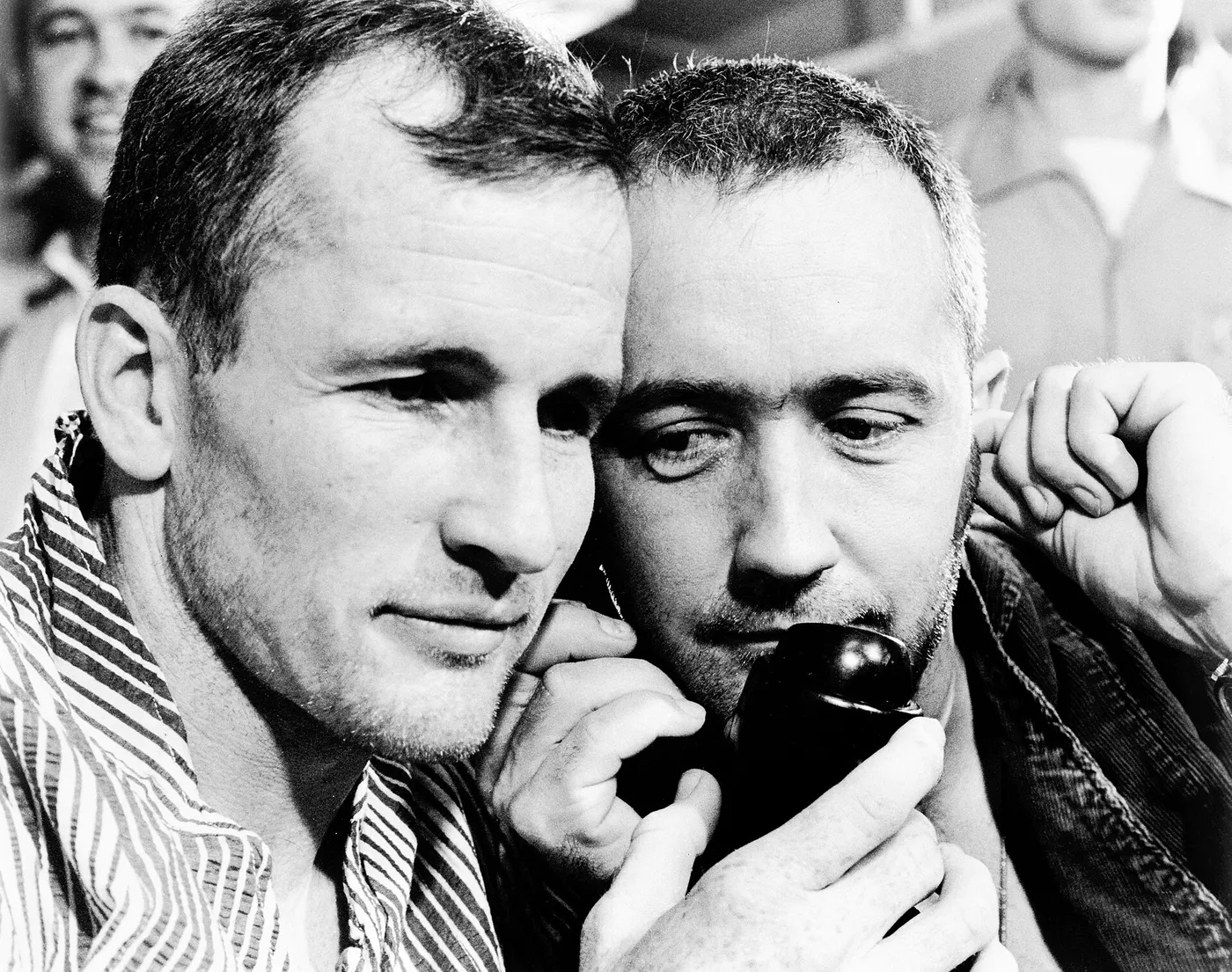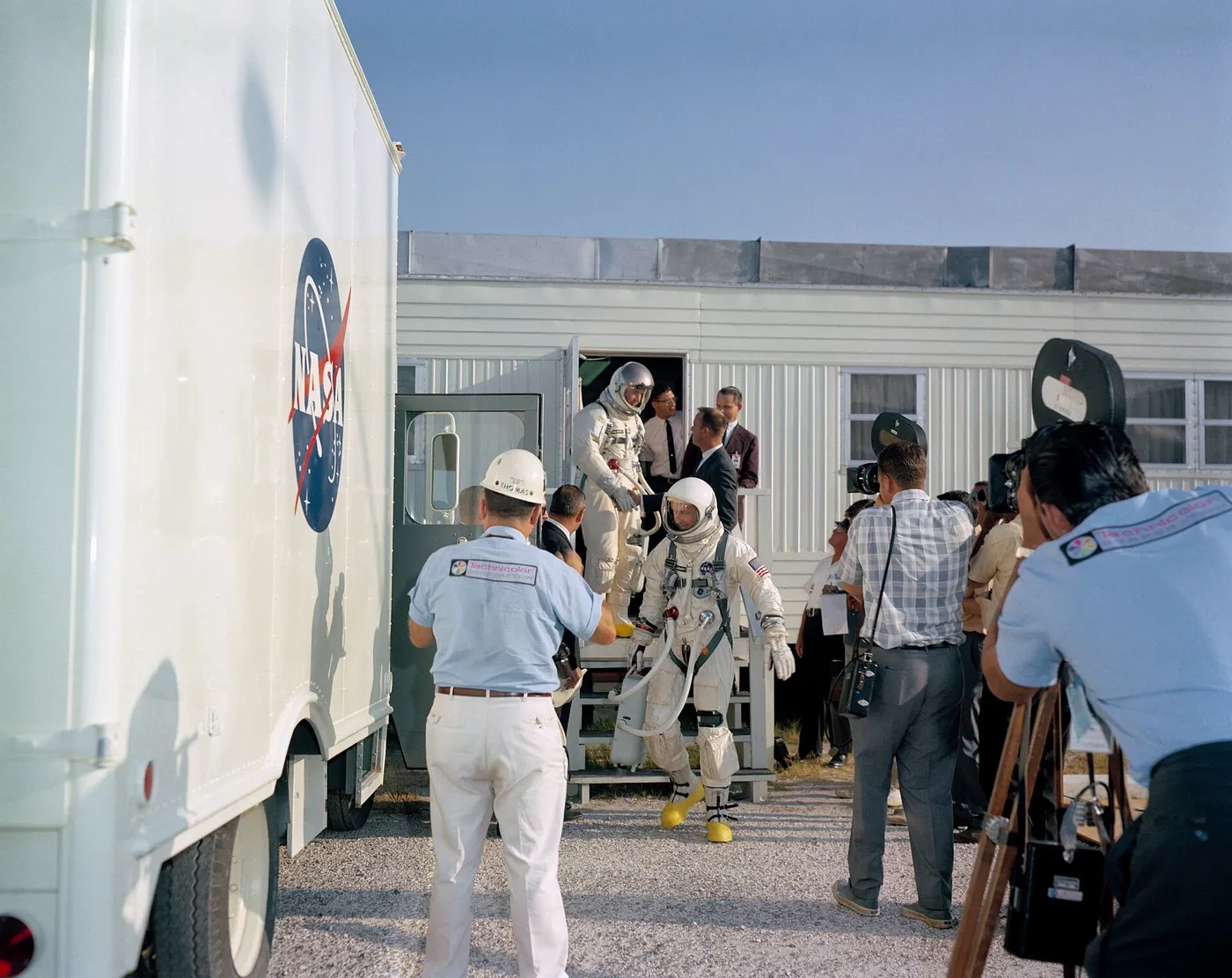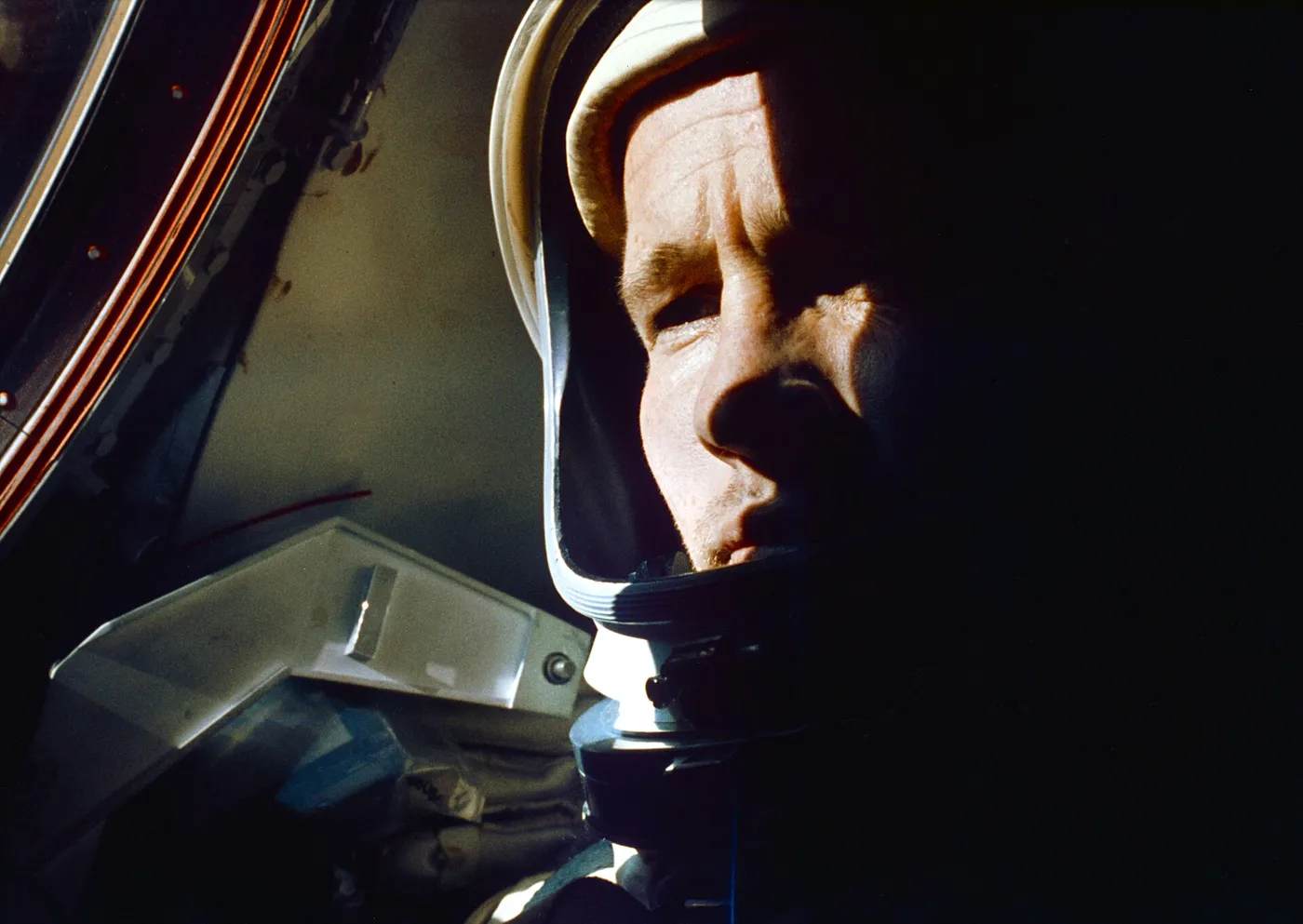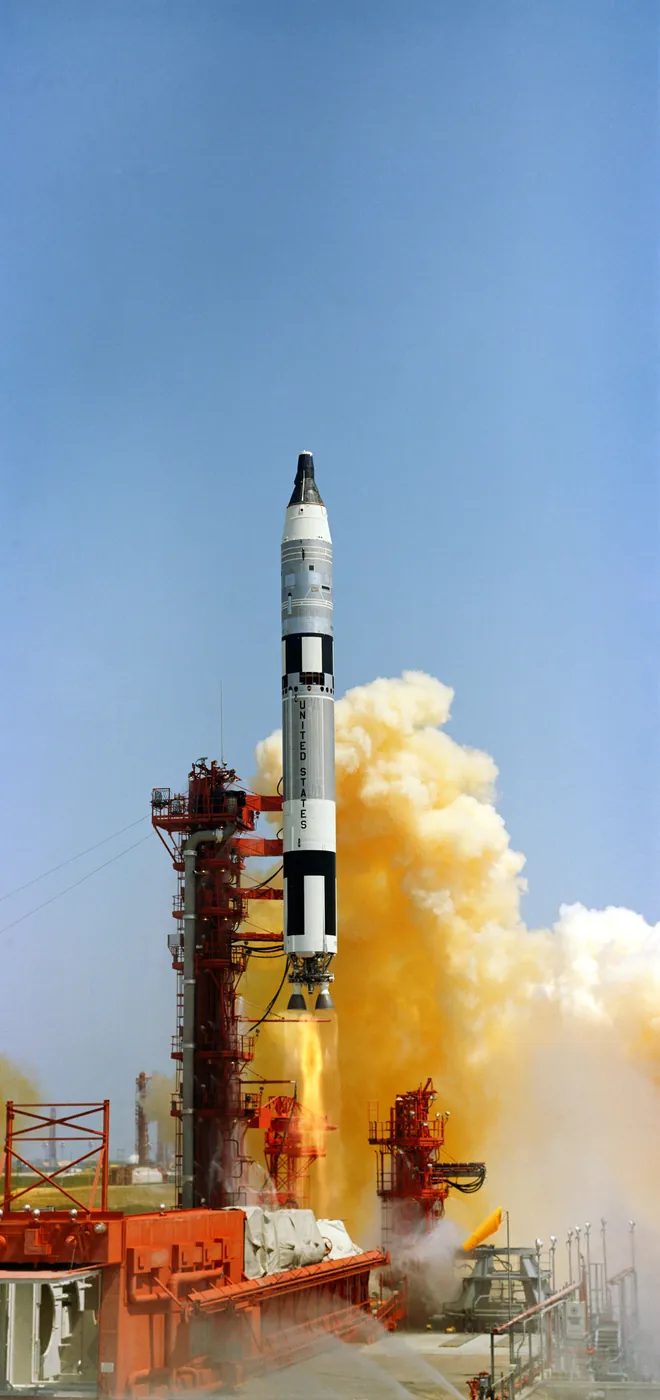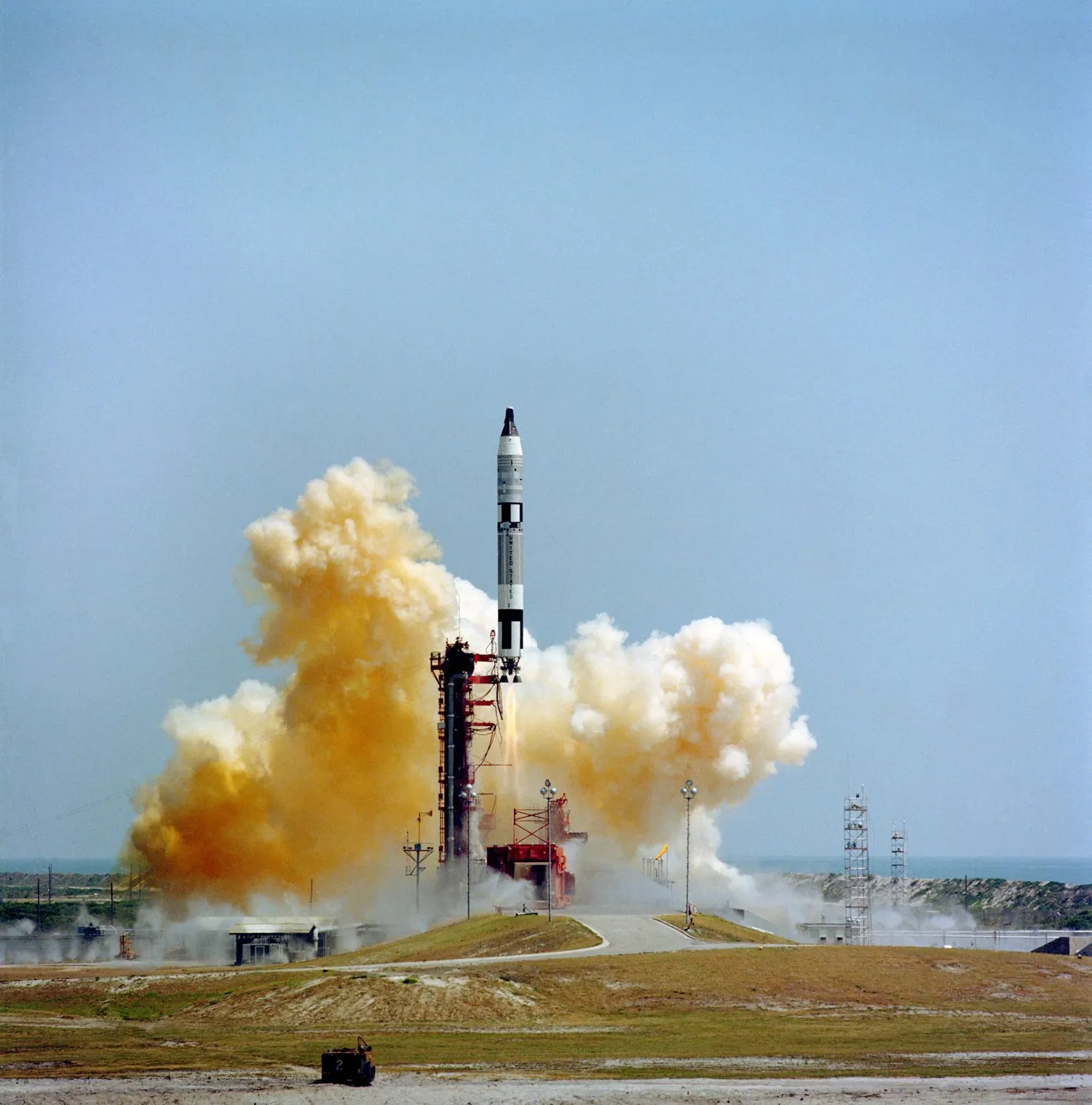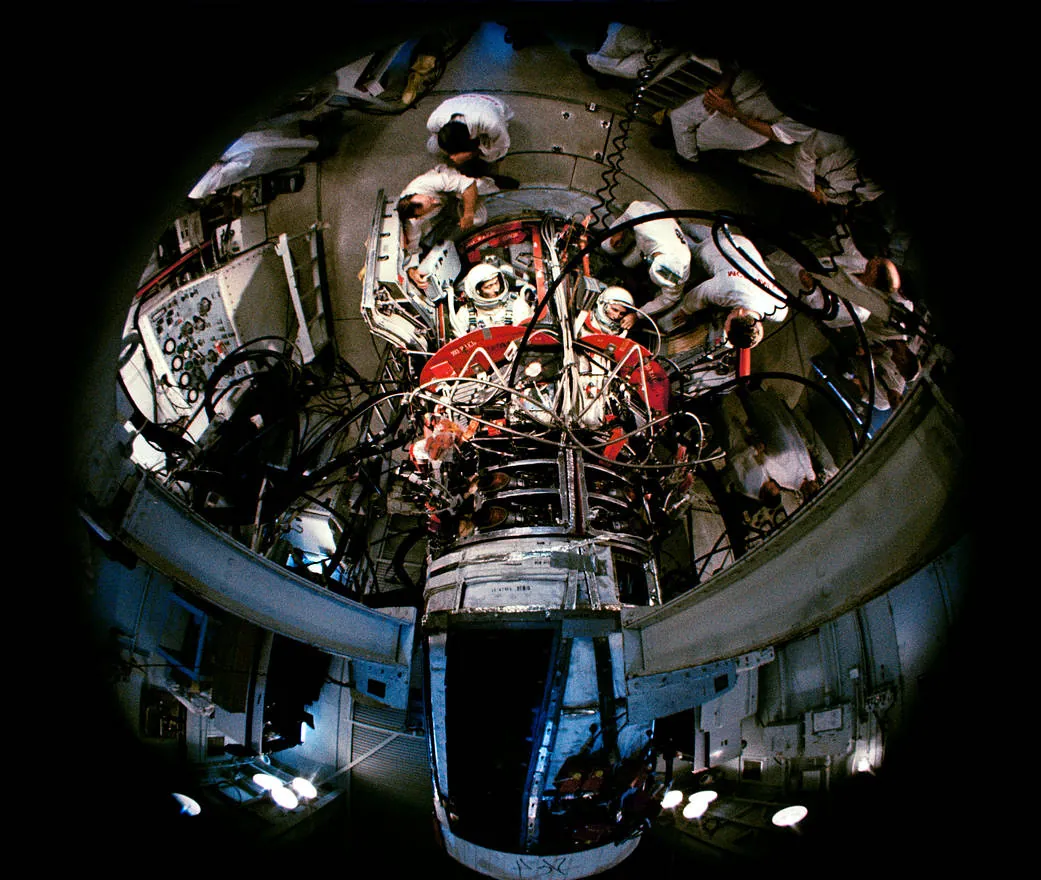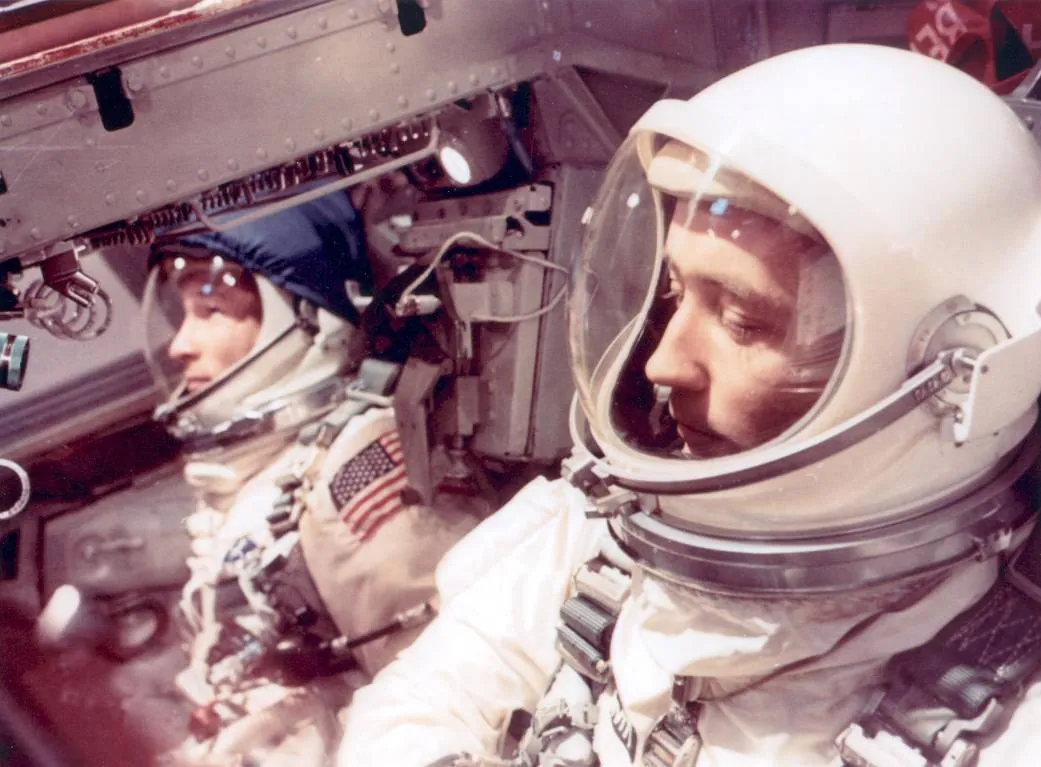
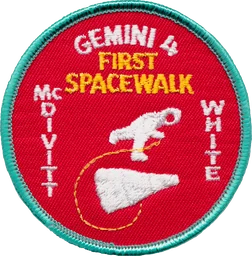
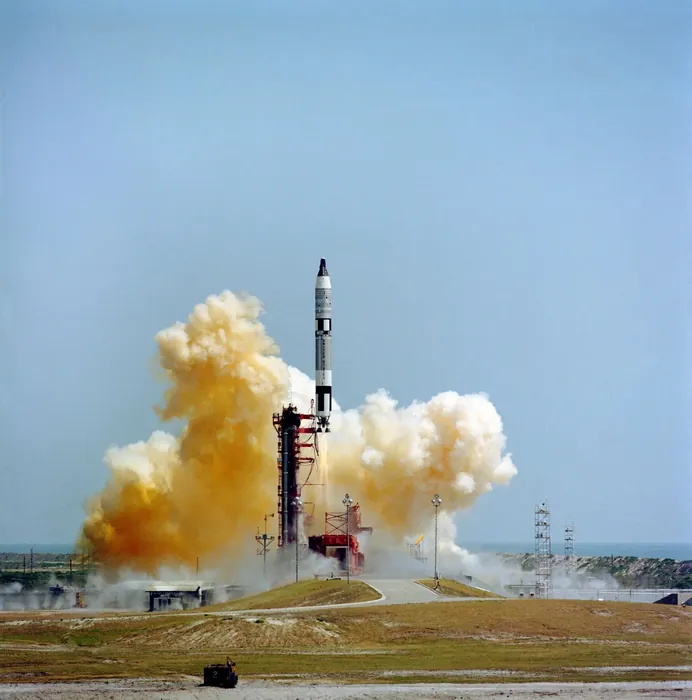
Ten weeks after Molly Brown, Gemini 4 set out to do something far more ambitious: stay up for four days and send a man outside. James McDivitt and Ed White lifted off on 3 June 1965 for a flight that would stretch American endurance in orbit from hours to days, and it was the first mission directed from the new Mission Control in Houston — the room that would run every American spaceflight thereafter.
It began with a lesson in the strange arithmetic of orbits. McDivitt tried to close on the spent upper stage of their own rocket and found that every time he thrust toward it, the target drifted further away. Pushing forward raises an orbit, and a higher orbit travels more slowly — so chasing something in space by aiming at it simply does not work. The attempt burned fuel and failed, but it taught NASA exactly why rendezvous needed to be computed, not eyeballed.
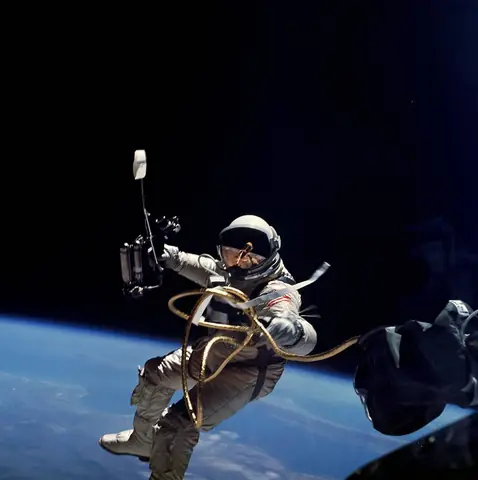
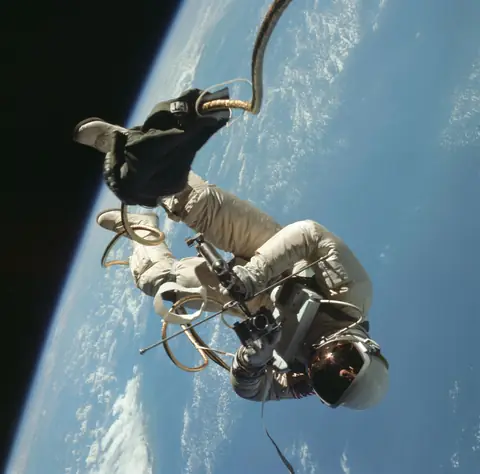
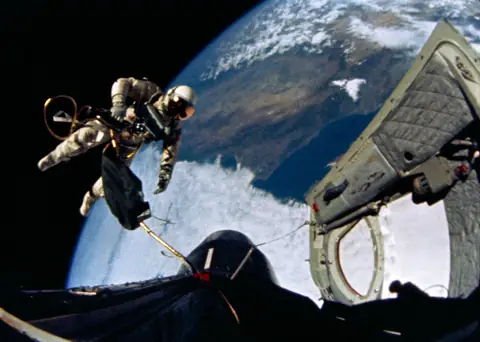
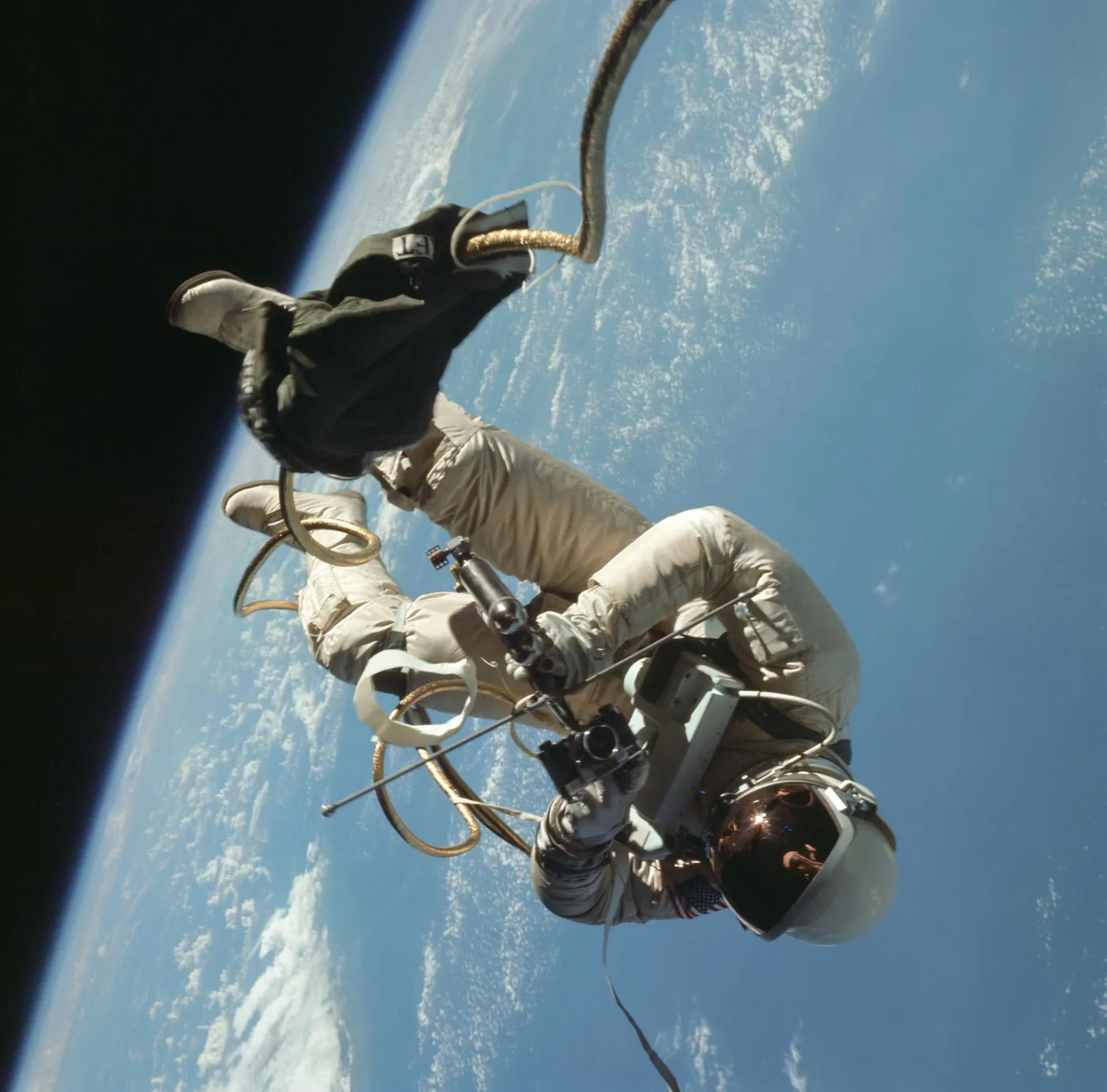
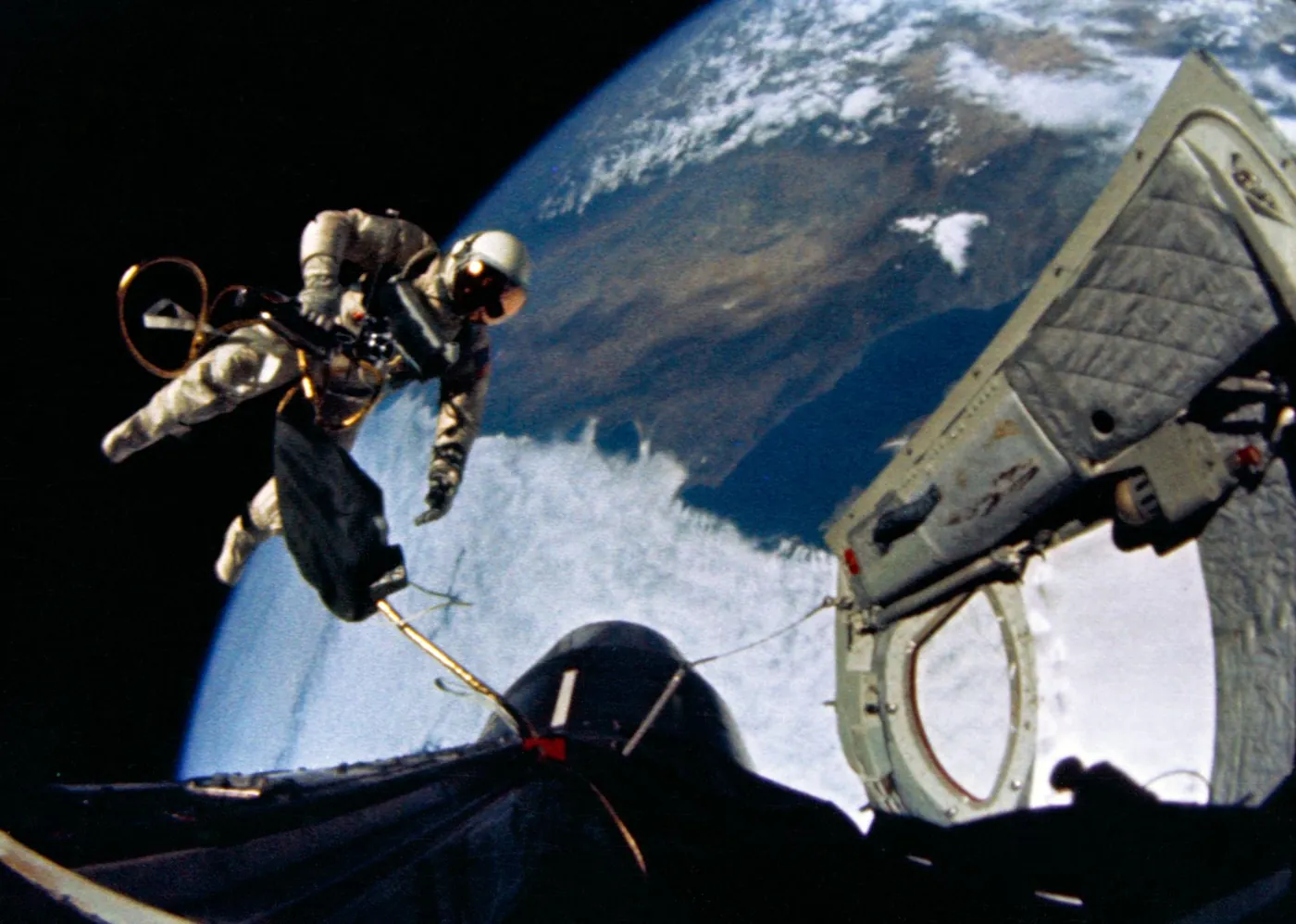
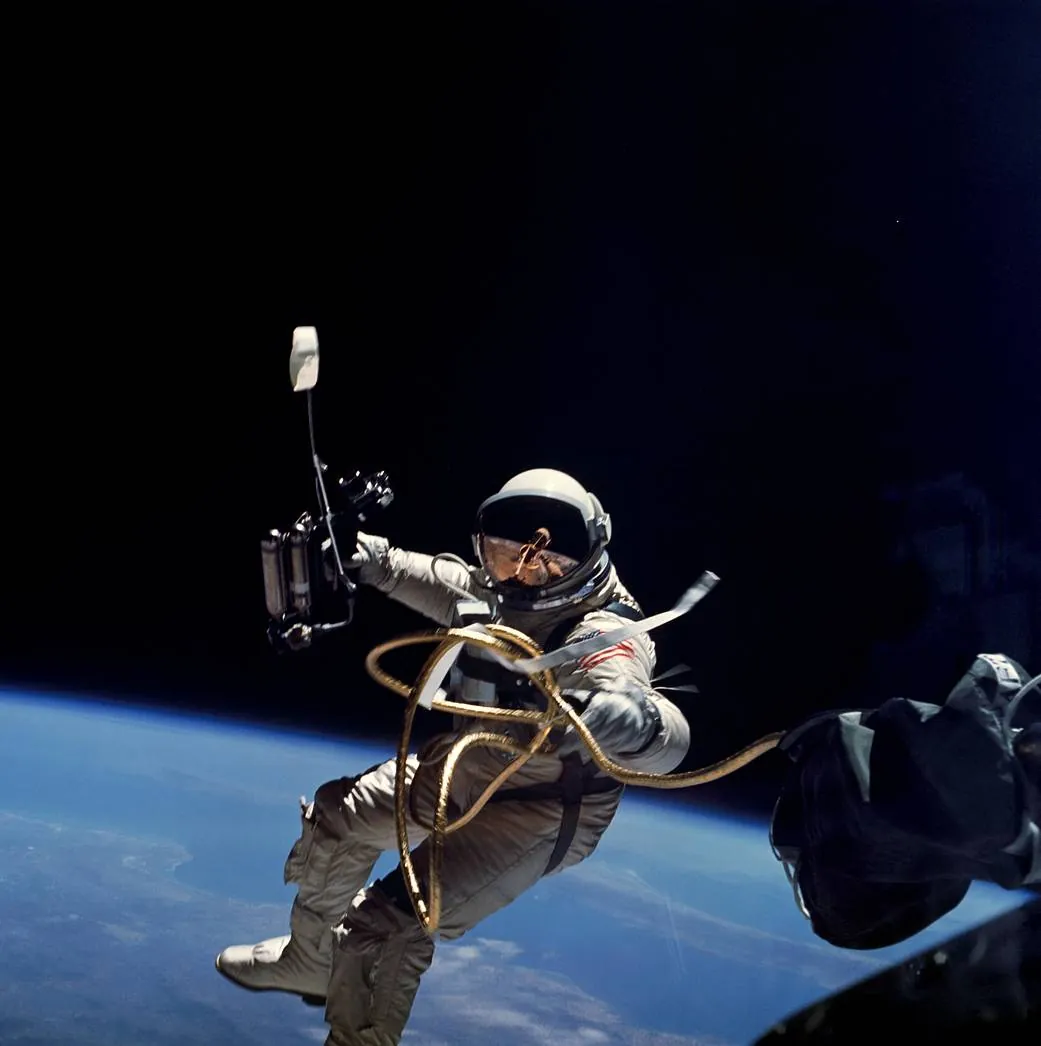
Then came the moment the world remembers. On the third orbit White opened the hatch and floated out on a golden tether, holding a small gun that puffed compressed oxygen to push him about. For twenty-three minutes he drifted over the Pacific and across the United States, turning and playing with his makeshift thruster until its gas ran out and he was reduced to tugging on the tether.
“On the third orbit White opened the hatch and floated out on a golden tether”
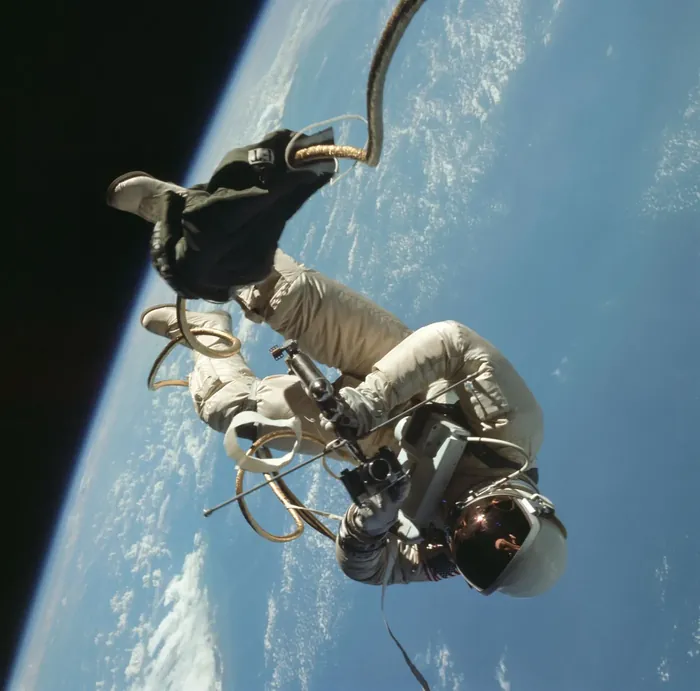
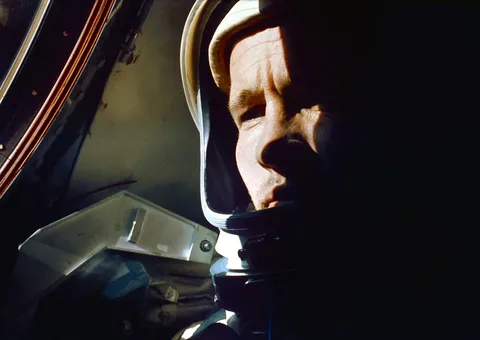
Getting him back in proved harder than getting him out. Reluctant to end it, White finally answered the repeated calls to return by calling it the saddest moment of his life. Wrestling a stiff, pressurised suit through the narrow hatch left both men soaked with sweat and exhausted, and the troublesome hatch had to be hauled shut and latched by hand — an early hint that working outside would be far more punishing than it looked.
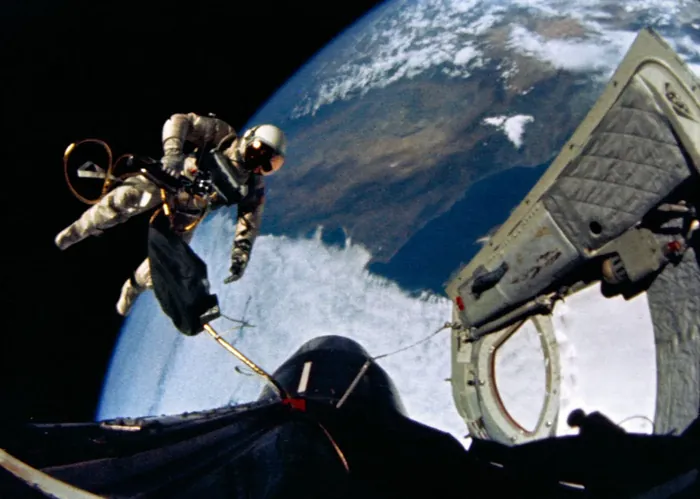
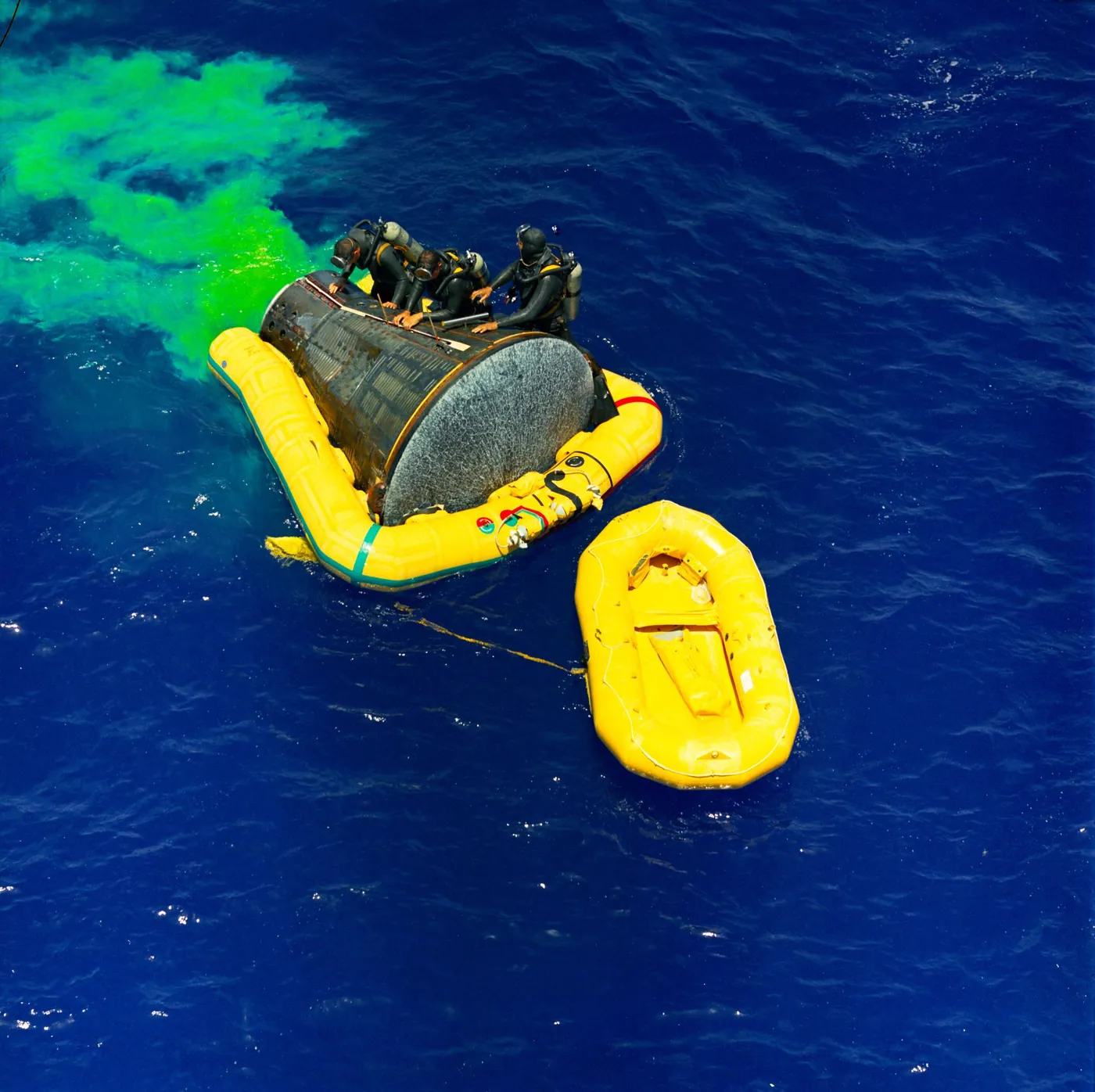
The crew stayed aloft four days, long enough to prove that men and machine could endure, though a computer fault forced a rolling, unguided re-entry at the end. It was the flight that put America level in the public imagination after Alexei Leonov's spacewalk that March. White never flew again: he died with Grissom and Roger Chaffee in the Apollo 1 fire in January 1967.