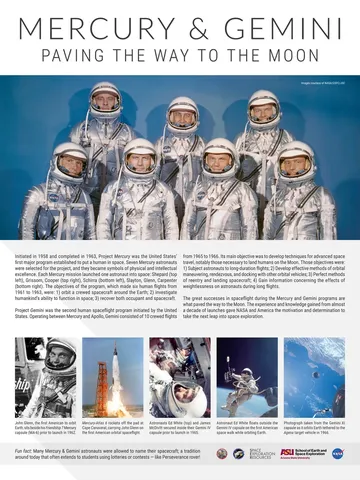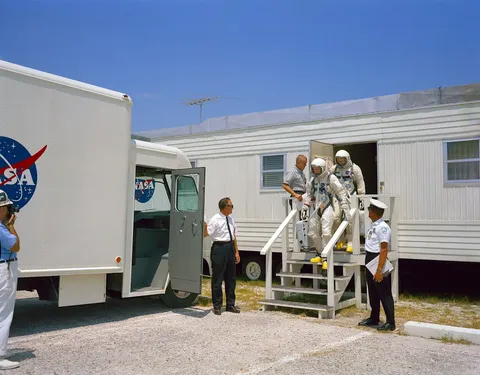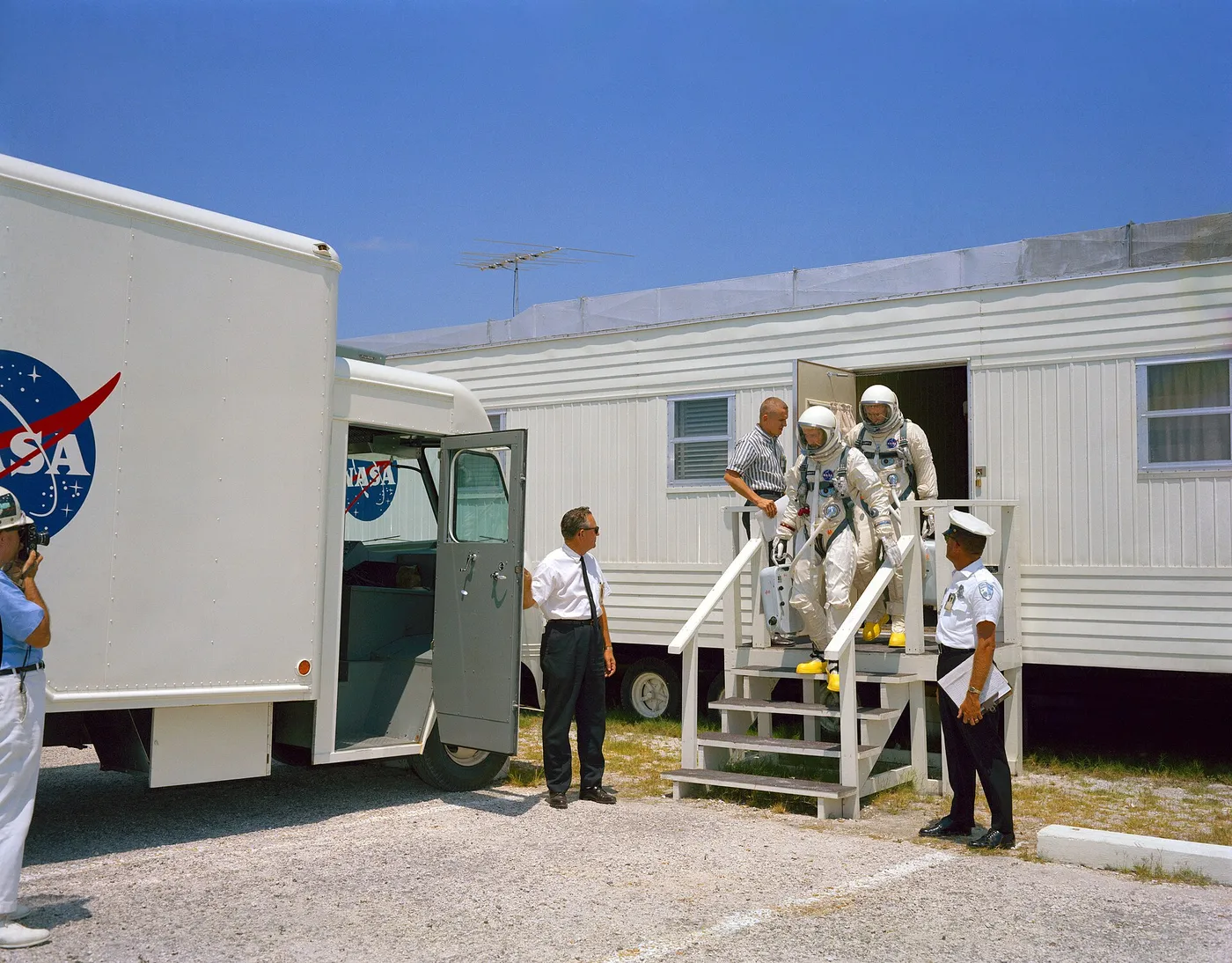
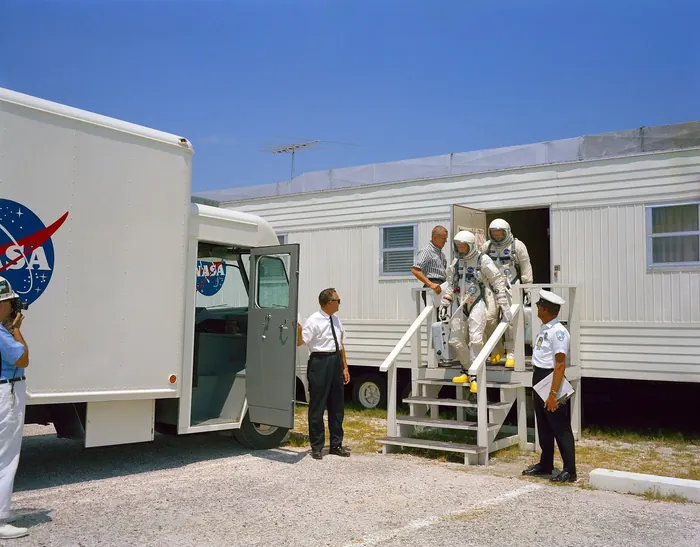
Project Mercury had proved an American could survive in orbit; Gemini had to prove two of them could work there. The new spacecraft was a different animal — bigger, built for a crew of two, and, crucially, able to change its own orbit, the skill any mission to the Moon would depend on. On 23 March 1965 Gus Grissom and John Young rode the first one into space, Grissom becoming the first person ever to make a second journey beyond the atmosphere.
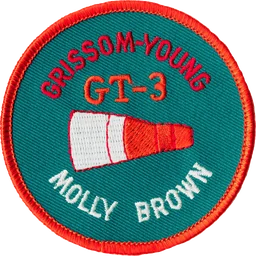
Grissom named the capsule Molly Brown, after the Broadway heroine billed as unsinkable — a wry nod to the Liberty Bell 7 that had filled with seawater and sunk beneath him four years earlier. NASA's managers found the joke undignified and asked for something else; Grissom offered “Titanic,” and the name Molly Brown quietly stood.
The flight lasted under five hours and three orbits, but its heart was a few seconds of thrust. Firing the manoeuvring thrusters, Grissom nudged the craft into a different, lower orbit — the first time a crewed spacecraft had changed its own path around the Earth rather than simply coasting where its rocket had flung it. Modest as it looked, it was the foundation of every rendezvous and docking still to come.
The mission is remembered just as fondly for a sandwich. Young had tucked a corned beef sandwich from a Cocoa Beach deli into a pocket of his suit, and produced it mid-flight; Grissom took a bite, crumbs began drifting through the cabin, and it was hastily stowed away. The stunt drew a scolding in Congress over the waste of a carefully planned menu — and became one of the best-loved stories of the programme.
Splashdown was rougher than the flight. Molly Brown came down short of the target, and the capsule pitched nose-down in the swell until a distinctly green Grissom was lifted out. It hardly mattered: the machine worked, it could steer, and Gemini was open for business. Young went on to walk on the Moon with Apollo 16 and to command the first Space Shuttle flight, one of the most remarkable careers in the astronaut corps.