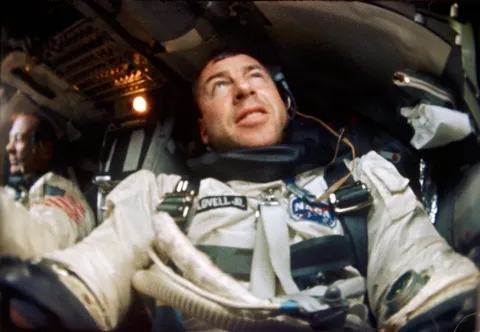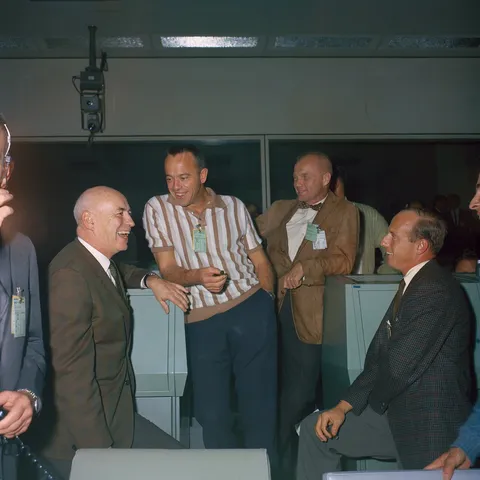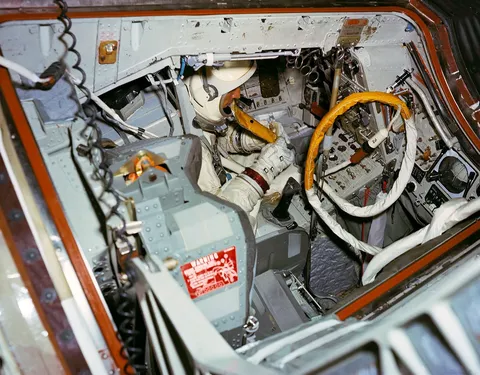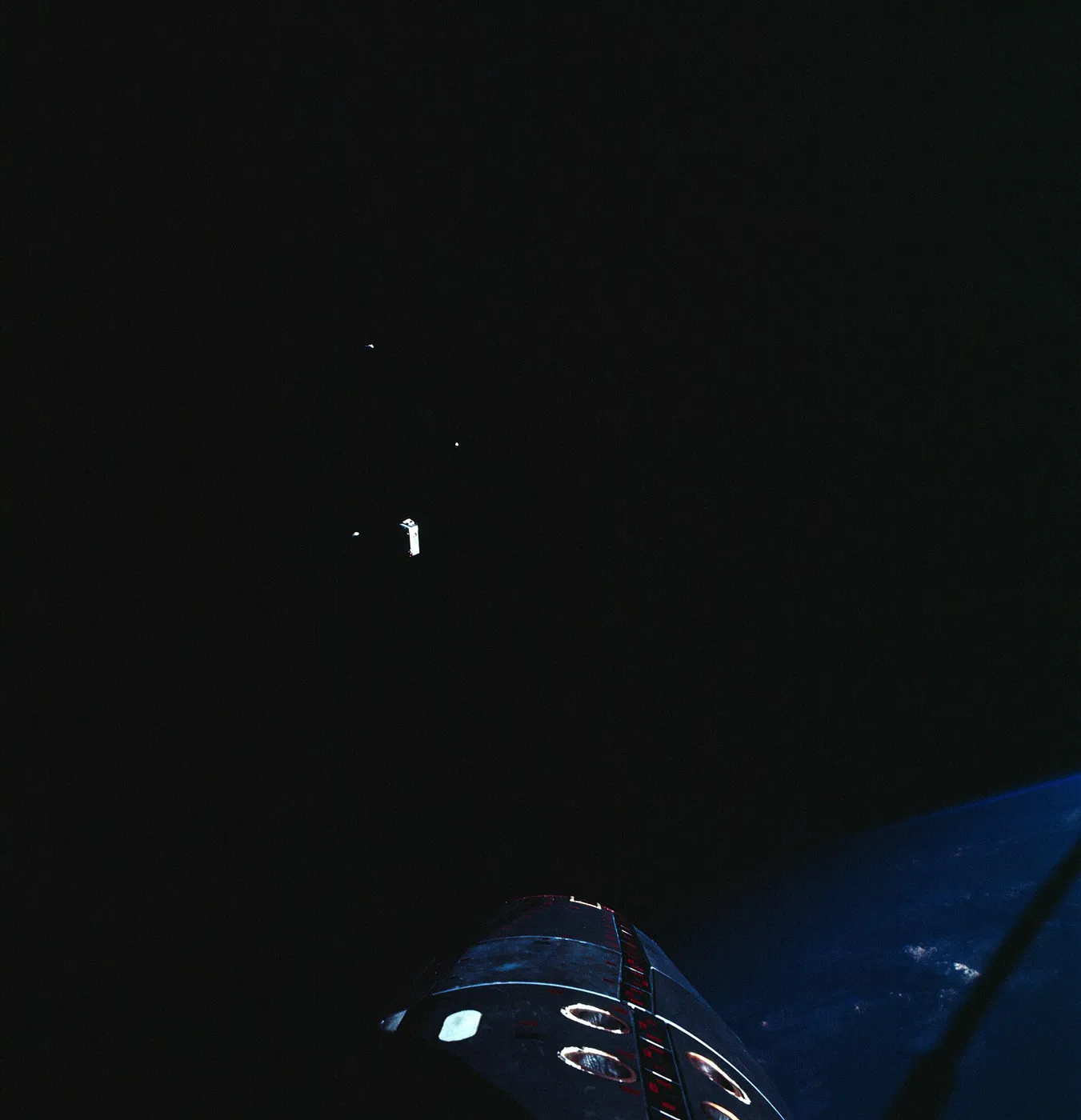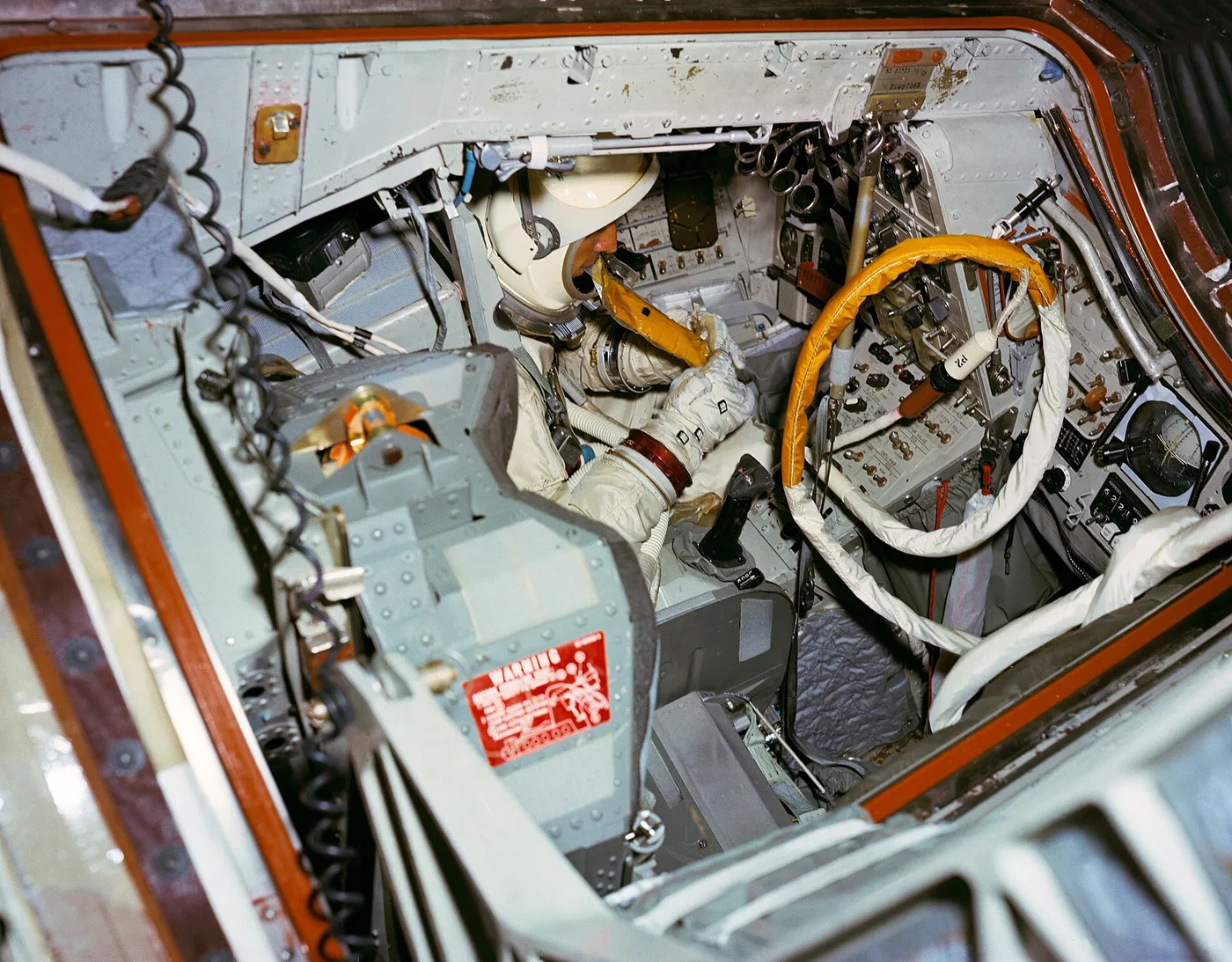
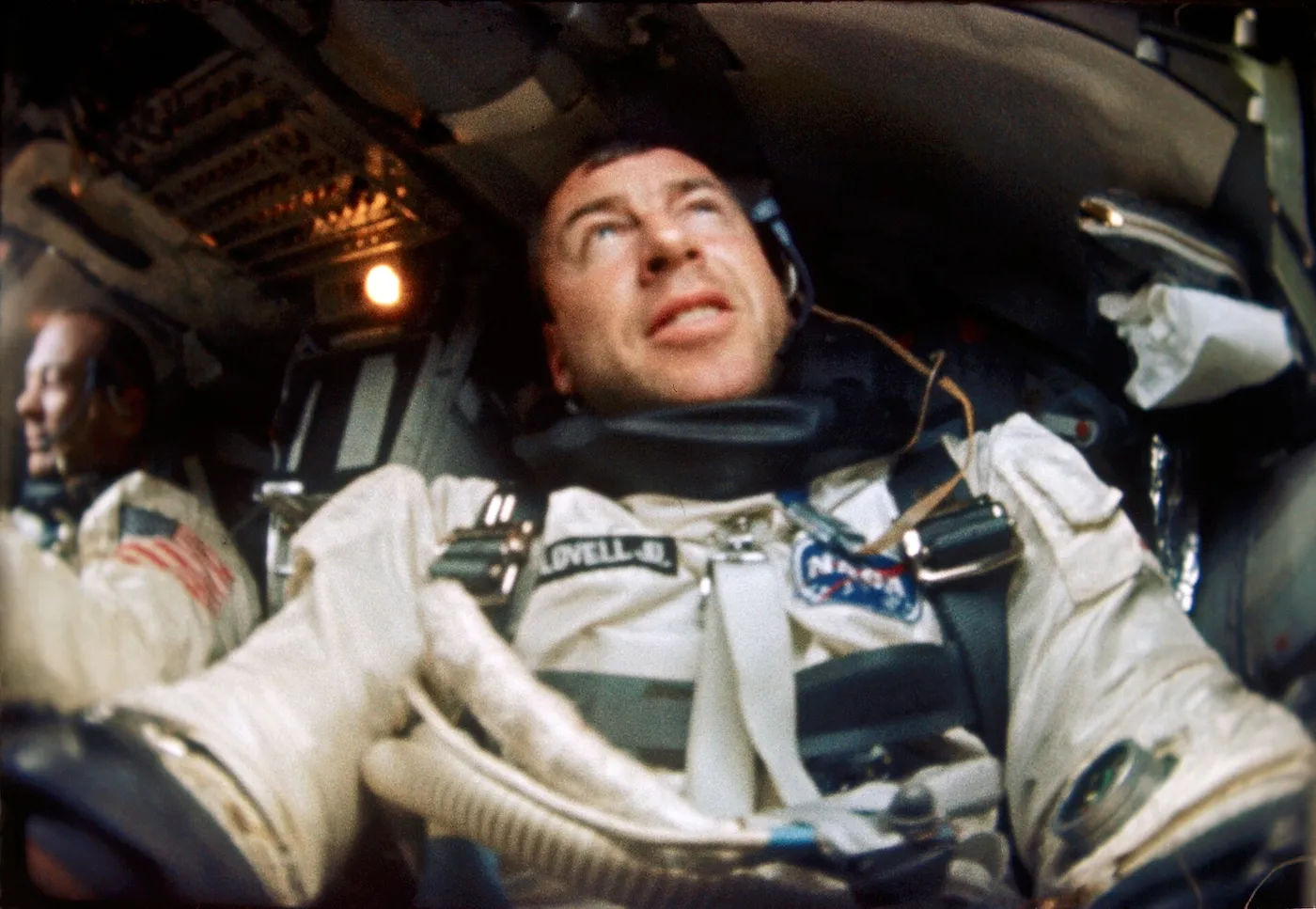
Gemini had solved rendezvous, docking, endurance and long flights. One problem remained stubbornly unsolved: how to work outside a spacecraft without becoming exhausted. The last mission of the programme, launched on 11 November 1966 with Jim Lovell and Buzz Aldrin, was built almost entirely around fixing it.
Aldrin was an unusual choice and exactly the right one. He had written a doctoral thesis at MIT on how two spacecraft should find one another in orbit, and carried the nickname Dr. Rendezvous with a mixture of pride and resignation. When Gemini 12's rendezvous radar failed on the way to its Agena target, he simply pulled out a sextant and a sheaf of hand-drawn charts, worked the angles himself, and talked Lovell into a textbook docking.
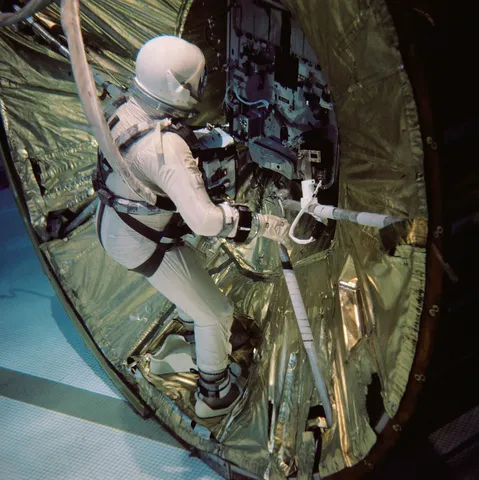
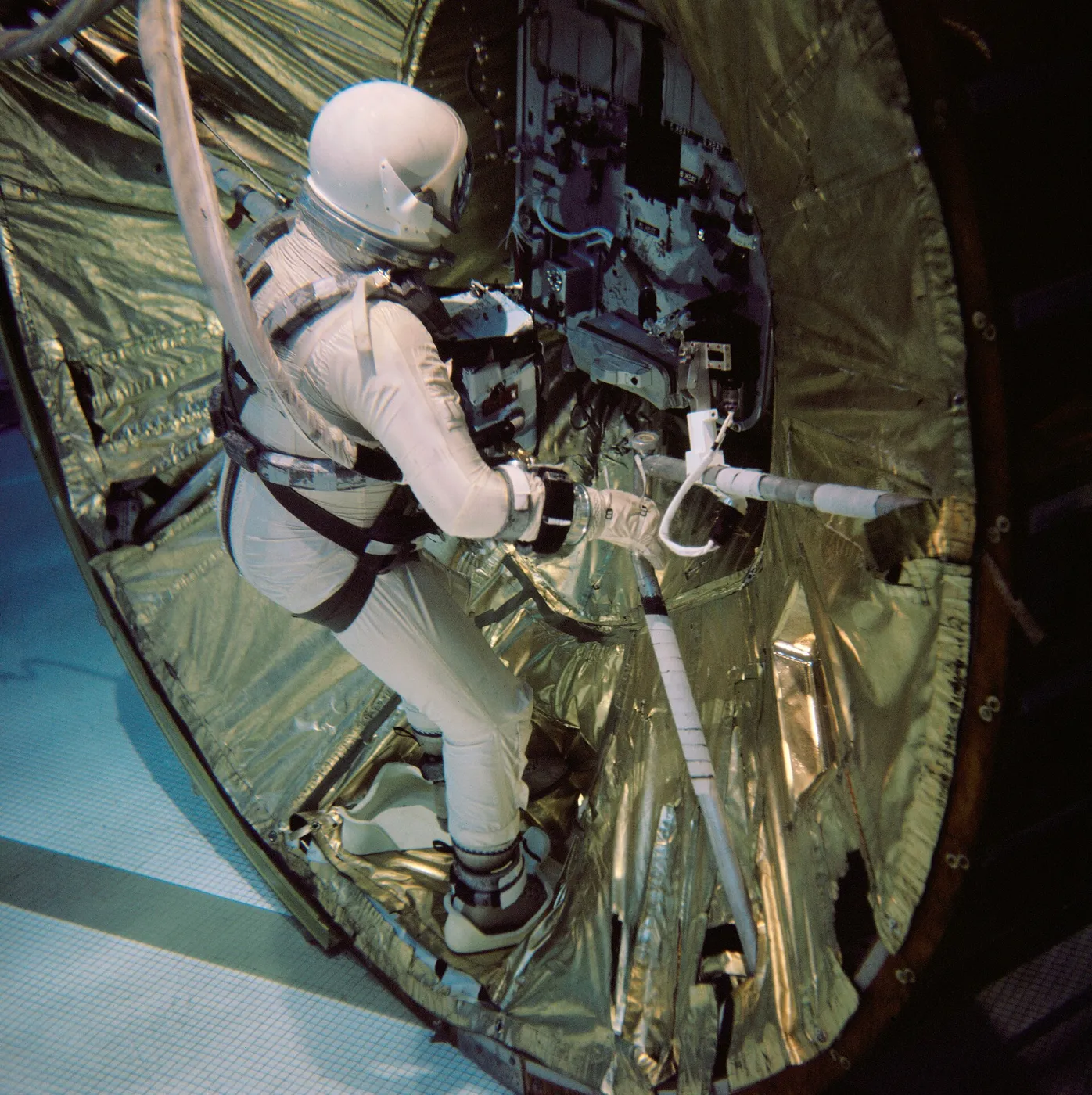
The spacewalks were the real prize, and their success lay in preparation rather than heroics. Aldrin had rehearsed every movement underwater in a swimming pool, weighted to hover neutrally — the training method every astronaut has used since. The spacecraft was fitted with handrails, waist tethers and a pair of foot restraints the crews nicknamed golden slippers, so that a man could anchor himself instead of fighting to stay still.
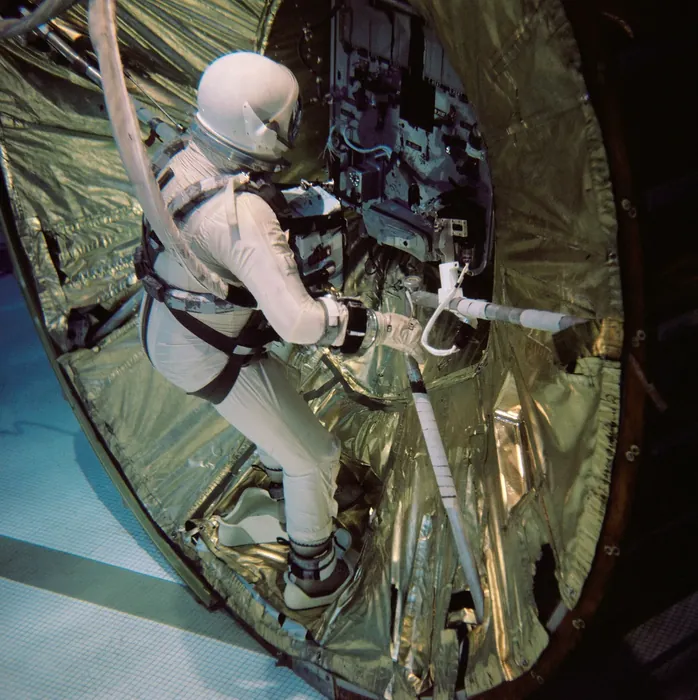
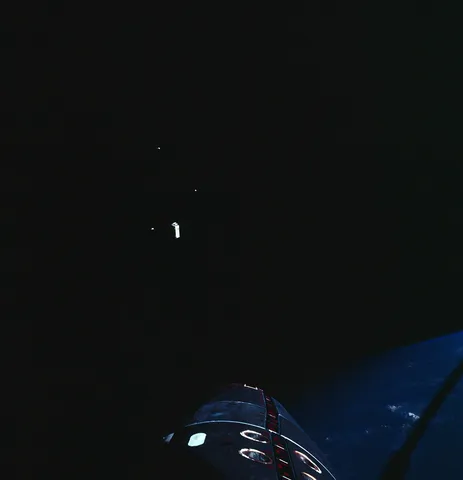
Over three excursions totalling more than five hours he worked calmly through a list of chores — connecting cables, turning bolts and fasteners, cutting metal — resting deliberately between tasks and coming back inside with his heart rate barely raised. After the near disasters of Gemini 9A and 11, it was a quiet, methodical demolition of the idea that space was simply too hostile a place to work in.
When Gemini 12 splashed down on 15 November the programme ended, having taken the United States in under two years from a first tentative orbital manoeuvre to crews who could find, catch, join and service another spacecraft and labour outside their own. Everything Apollo needed had been learned. Lovell would fly to the Moon twice, on Apollo 8 and the crippled Apollo 13; Aldrin would follow Armstrong down the ladder in July 1969.