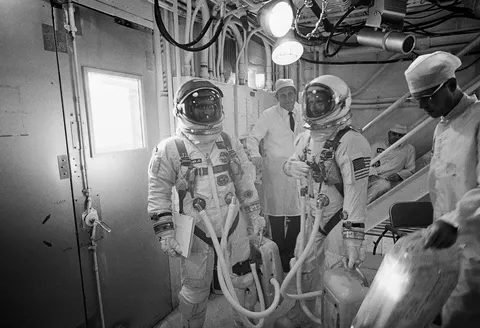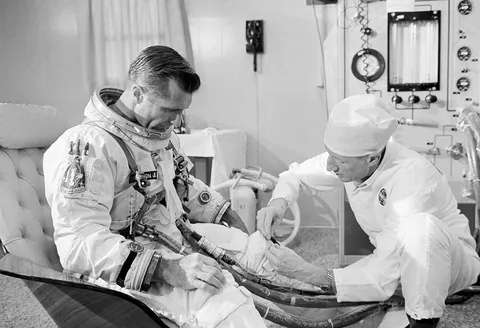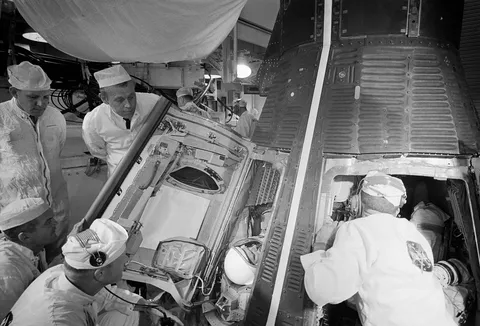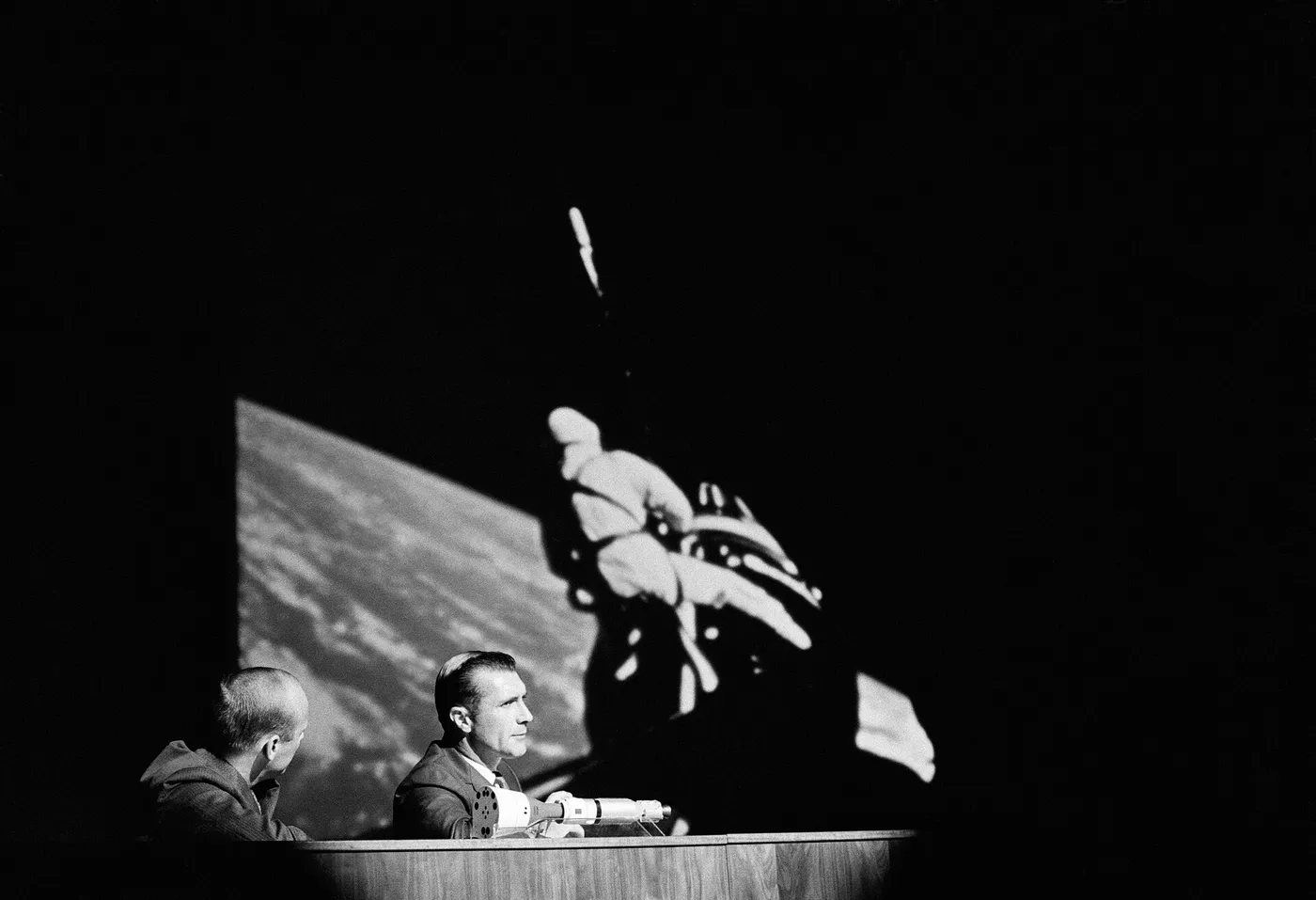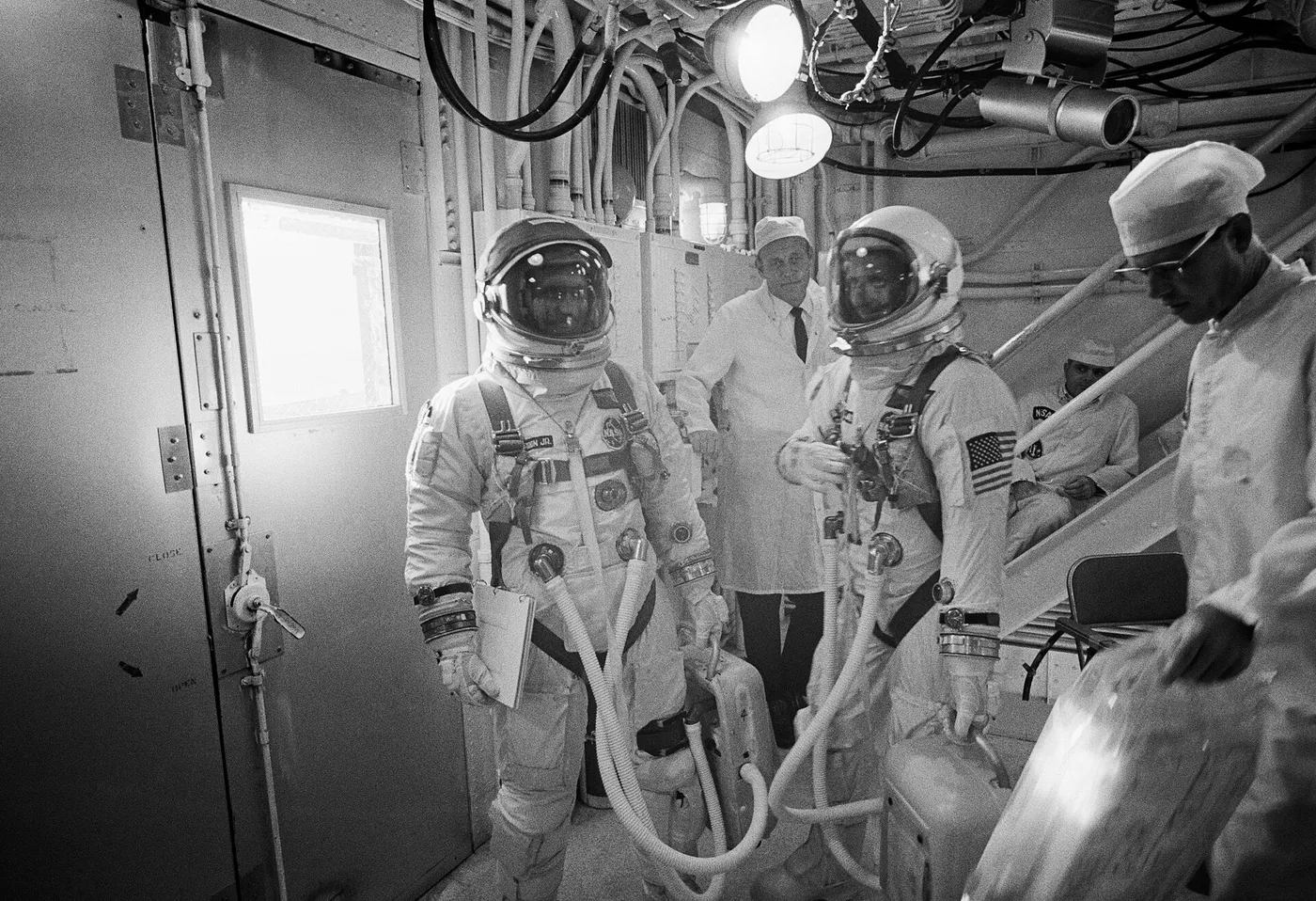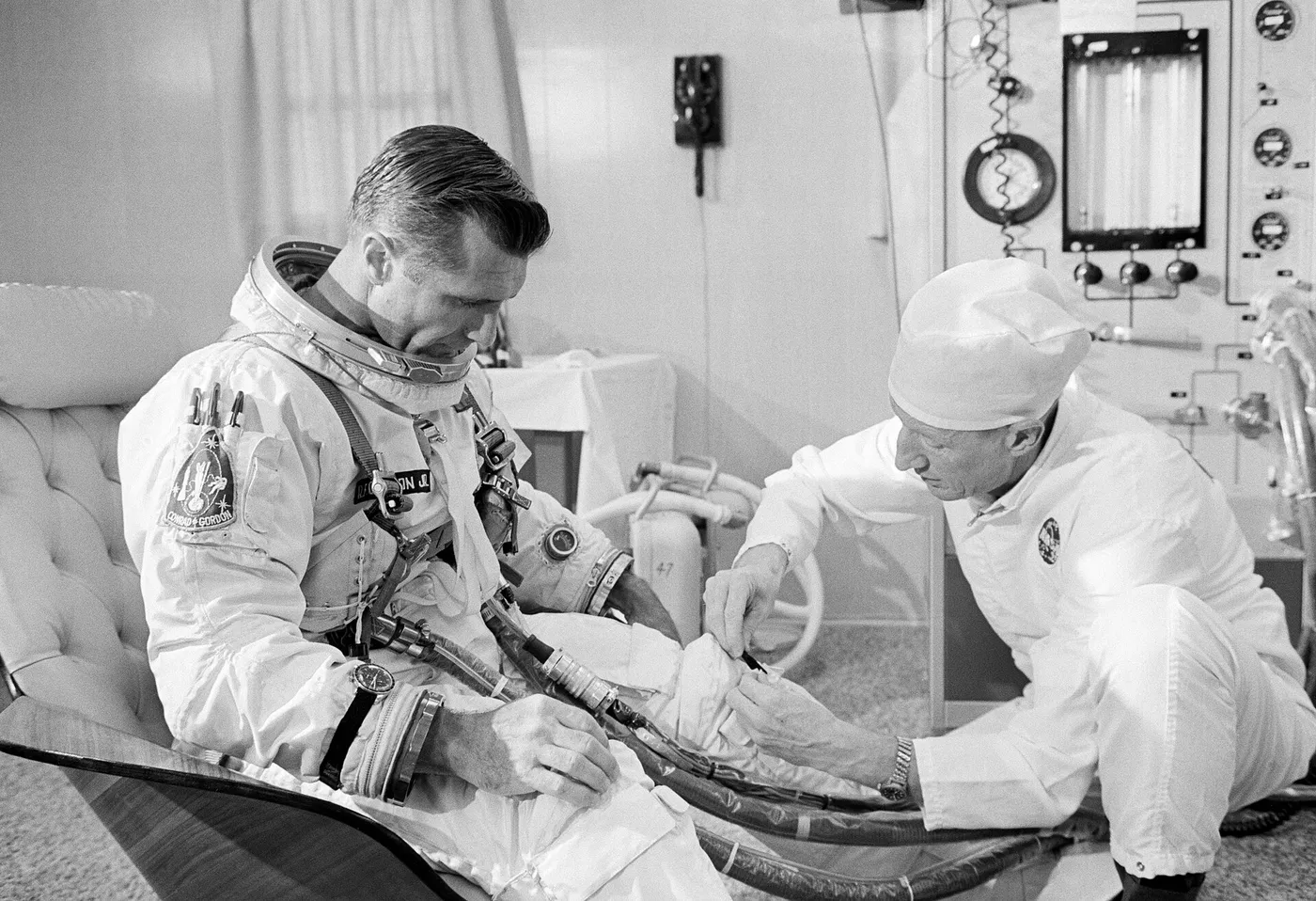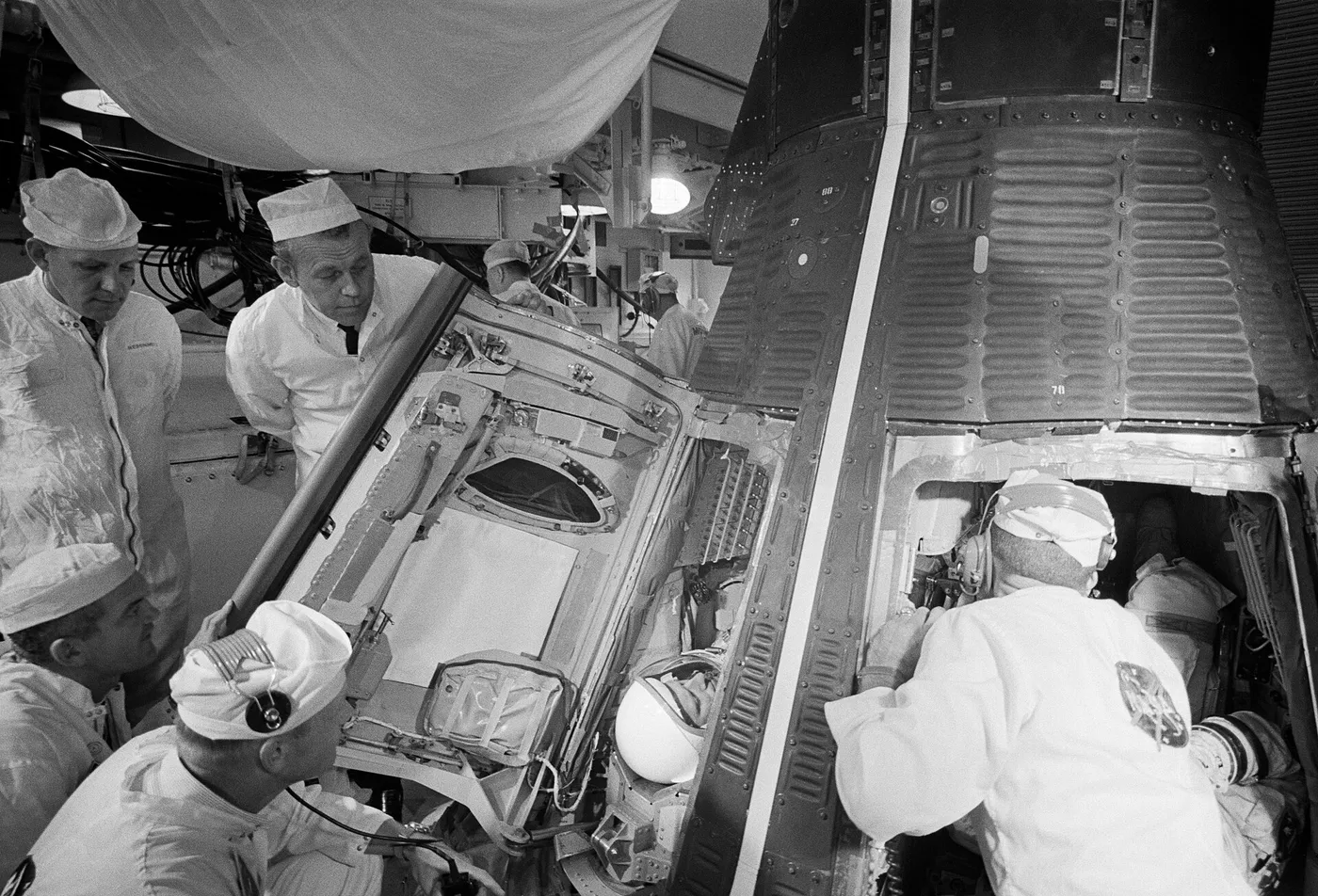
A lunar module lifting off the Moon would have one chance to catch its mother ship, and no time to spare. Gemini 11 was flown to prove it could be done. On 12 September 1966 Pete Conrad and Dick Gordon launched into a window barely two seconds wide and caught their Agena target on the very first orbit, closing and docking within about eighty-five minutes of leaving the pad.
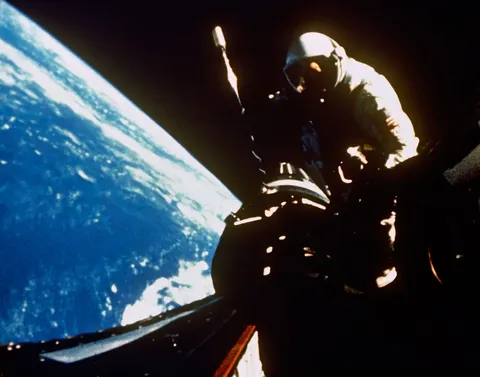
With the target firmly attached they used its engine to climb, and kept climbing, to just under 1,400 kilometres — an altitude record for a crewed Earth-orbital flight that still stands. From up there the whole curve of the planet filled the window at once, and the crew's photographs of a visibly round Earth became some of the most striking images the programme produced.
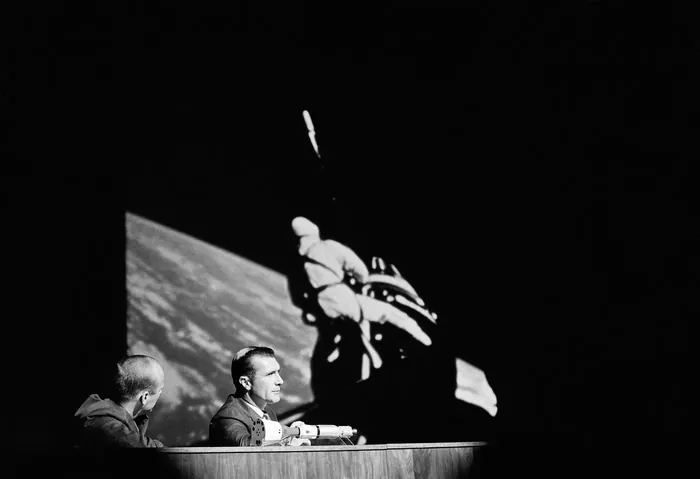
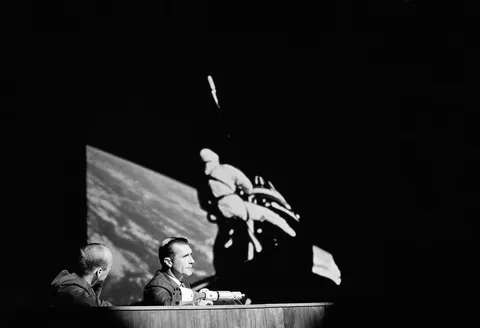
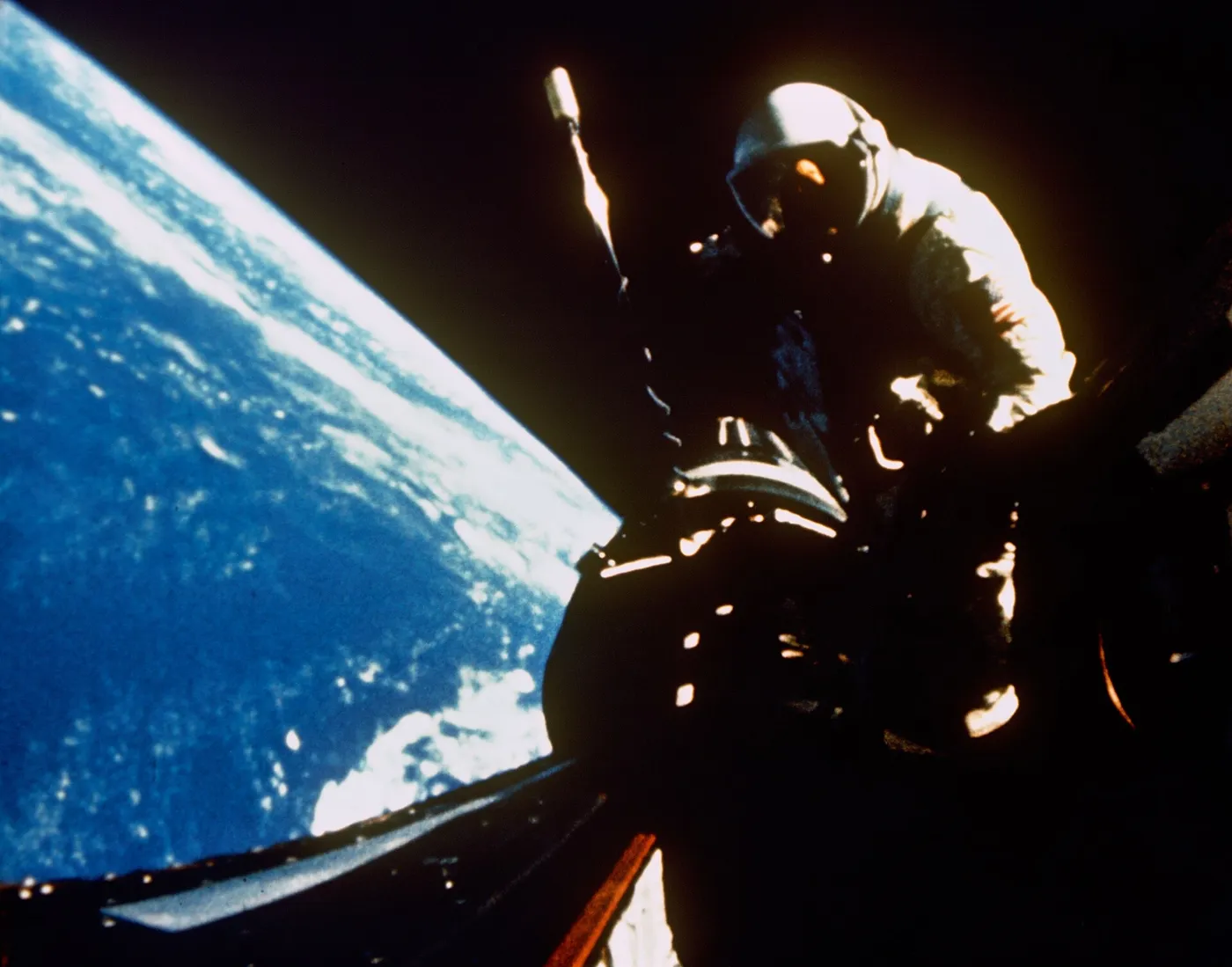
Gordon's spacewalk was another matter. Sent out to clip a tether between the two craft, he found himself sliding and drifting until he ended up straddling the nose of the spacecraft to hold himself steady, prompting Conrad's delighted cry of “ride 'em, cowboy.” The work left him sweating so heavily that one eye stung shut and his visor fogged, and the excursion was cut short — the same brutal lesson Cernan had brought home.
The tether he had fixed produced the flight's strangest experiment. Backing away until the line pulled taut, the crew set the two joined vehicles slowly rotating about their common centre, generating a whisper of artificial gravity — enough to make a loose camera drift gently to the back of the cabin. It was the first demonstration of the idea outside a physics lecture.
They finished by handing the landing to a machine, letting the onboard computer fly the re-entry automatically and splashing down within a few kilometres of the carrier. Conrad, as ebullient as ever, would command Apollo 12 and dance across the Ocean of Storms the following year, with Gordon orbiting overhead in the command module.