
Gateway is a small space station intended to orbit the Moon rather than the Earth — the first crewed outpost beyond low orbit, and a deliberately different concept from either Apollo's direct flights or the ISS's permanent occupation. It will be visited rather than continuously inhabited, hosting crews for perhaps a month at a time.
It flies an unusual path called a near-rectilinear halo orbit, a long ellipse balanced between the Earth's and Moon's gravity that swings close over the lunar north pole and far out over the south. The orbit is nearly free to maintain, gives continuous communications with Earth, and is reachable by Orion — but it is also far from the surface, which is the central criticism of the whole design.

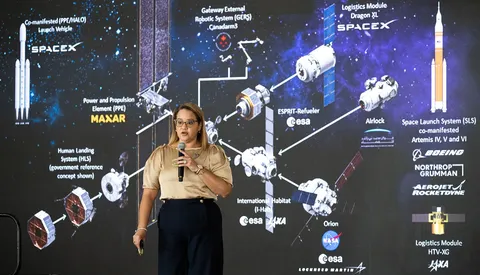
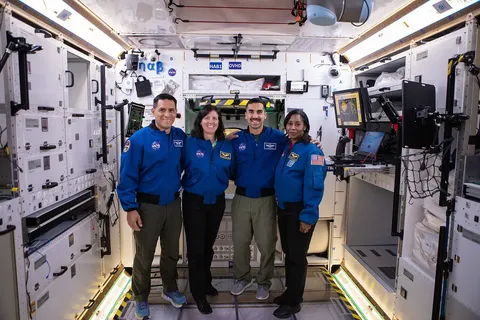
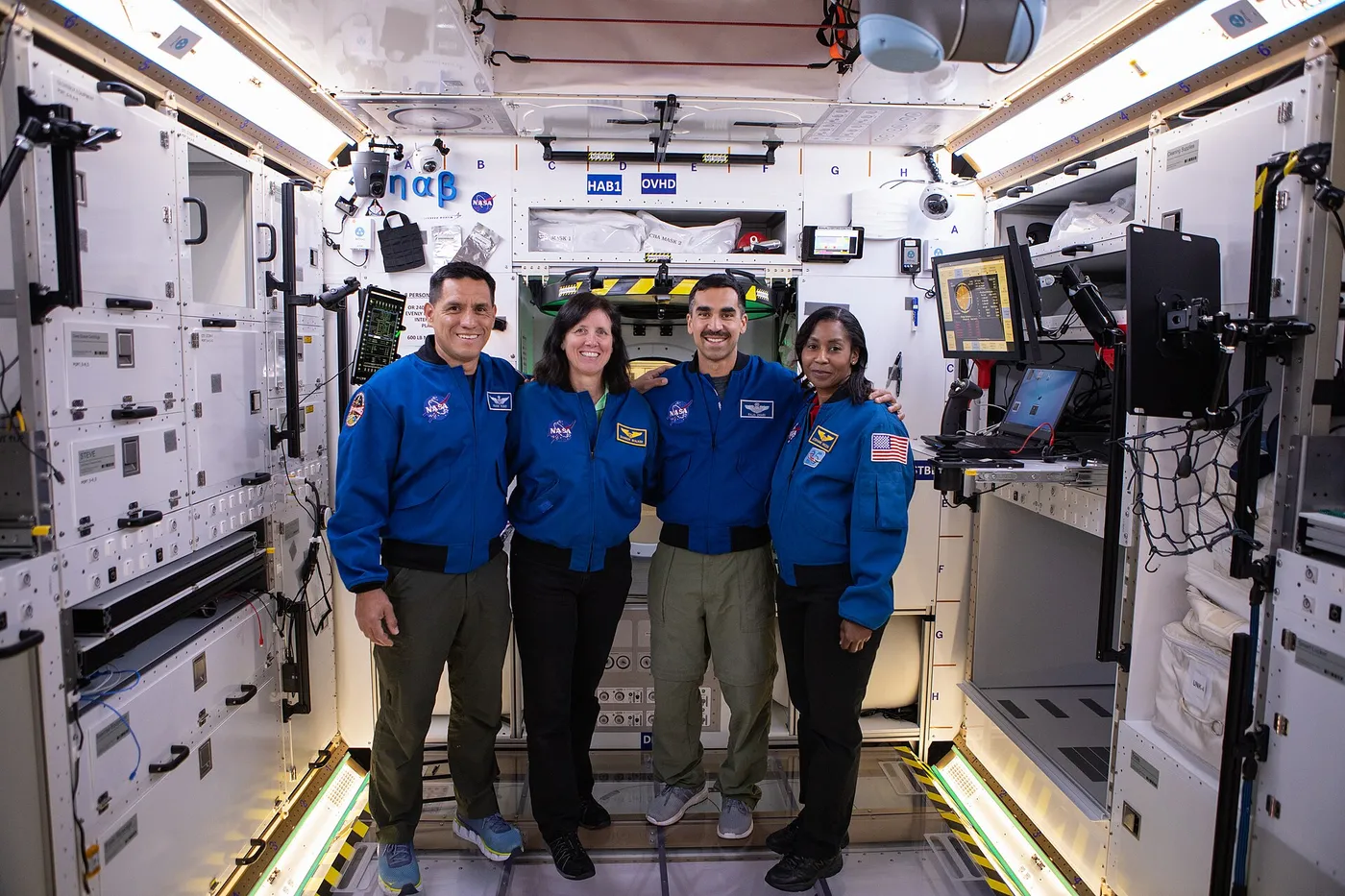
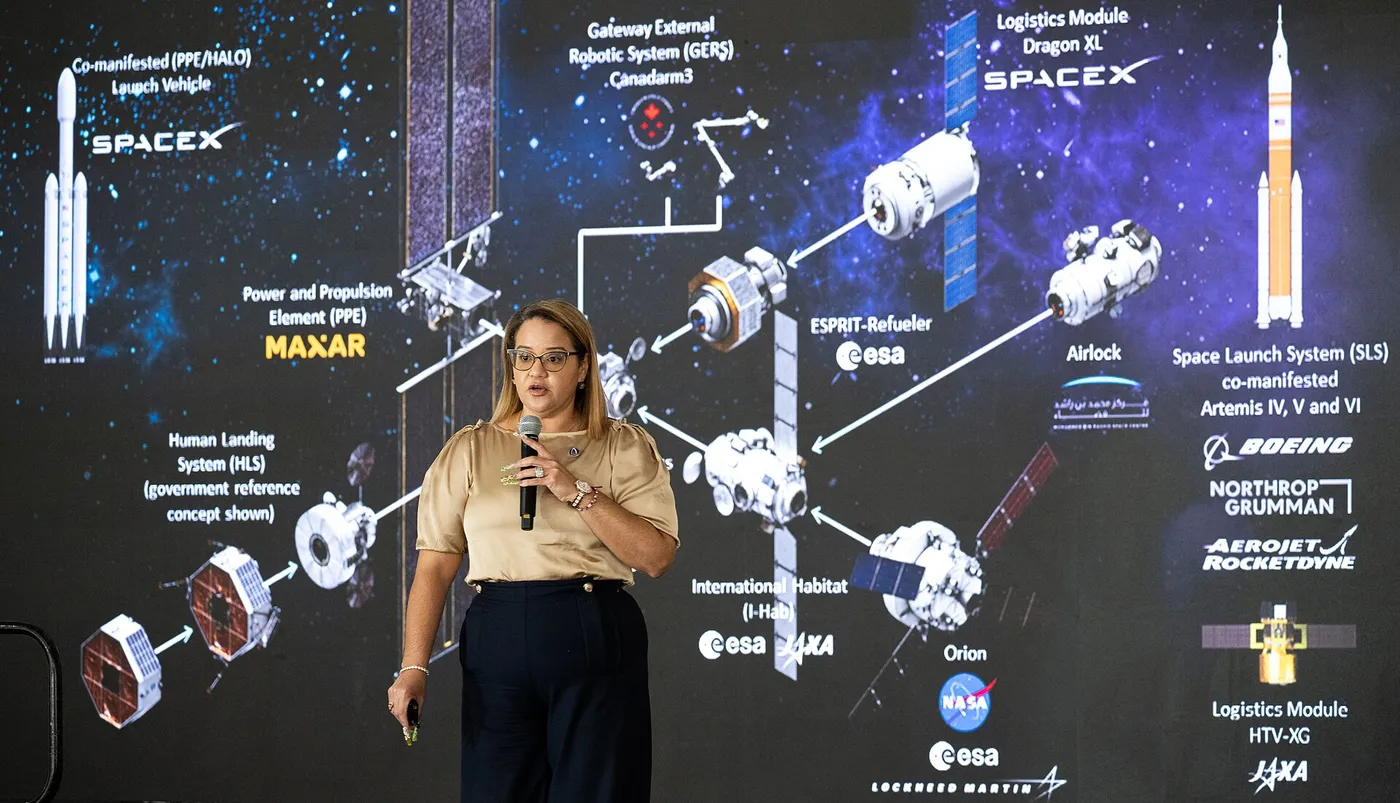
The first two elements — a power and propulsion module driven by solar-electric thrusters, and a small habitat built in Italy — are to be launched together on a commercial rocket. Further modules are promised by Europe, Japan and the United Arab Emirates, and Canada is providing a third-generation robotic arm.

Its justification is contested even among people who support returning to the Moon. Supporters argue it provides a staging point, a communications relay for the polar regions, a deep-space testbed and a structure that keeps international partners committed. Critics point out that Apollo reached the surface without anything of the kind, and that a station in the wrong orbit adds a rendezvous to every landing.
It has survived at least one serious attempt at cancellation and remains on the manifest for the late 2020s. Its real function may be political rather than orbital: a programme with modules built in half a dozen countries is considerably harder for any single administration to cancel.