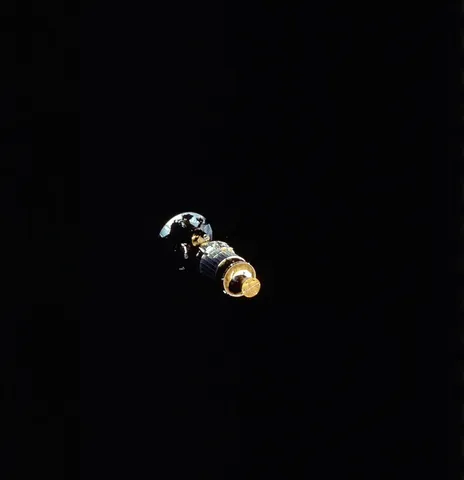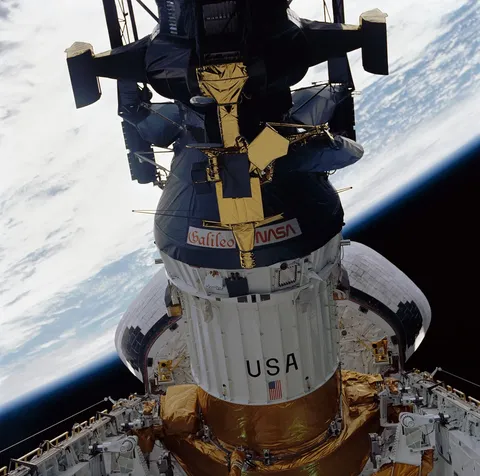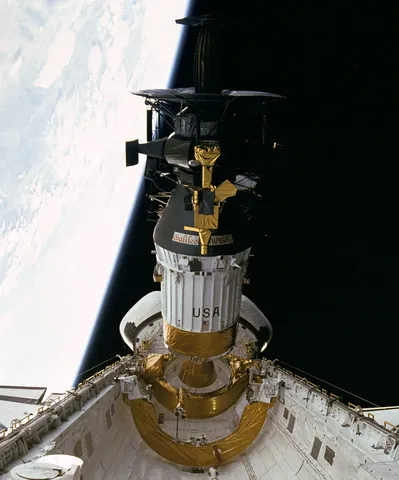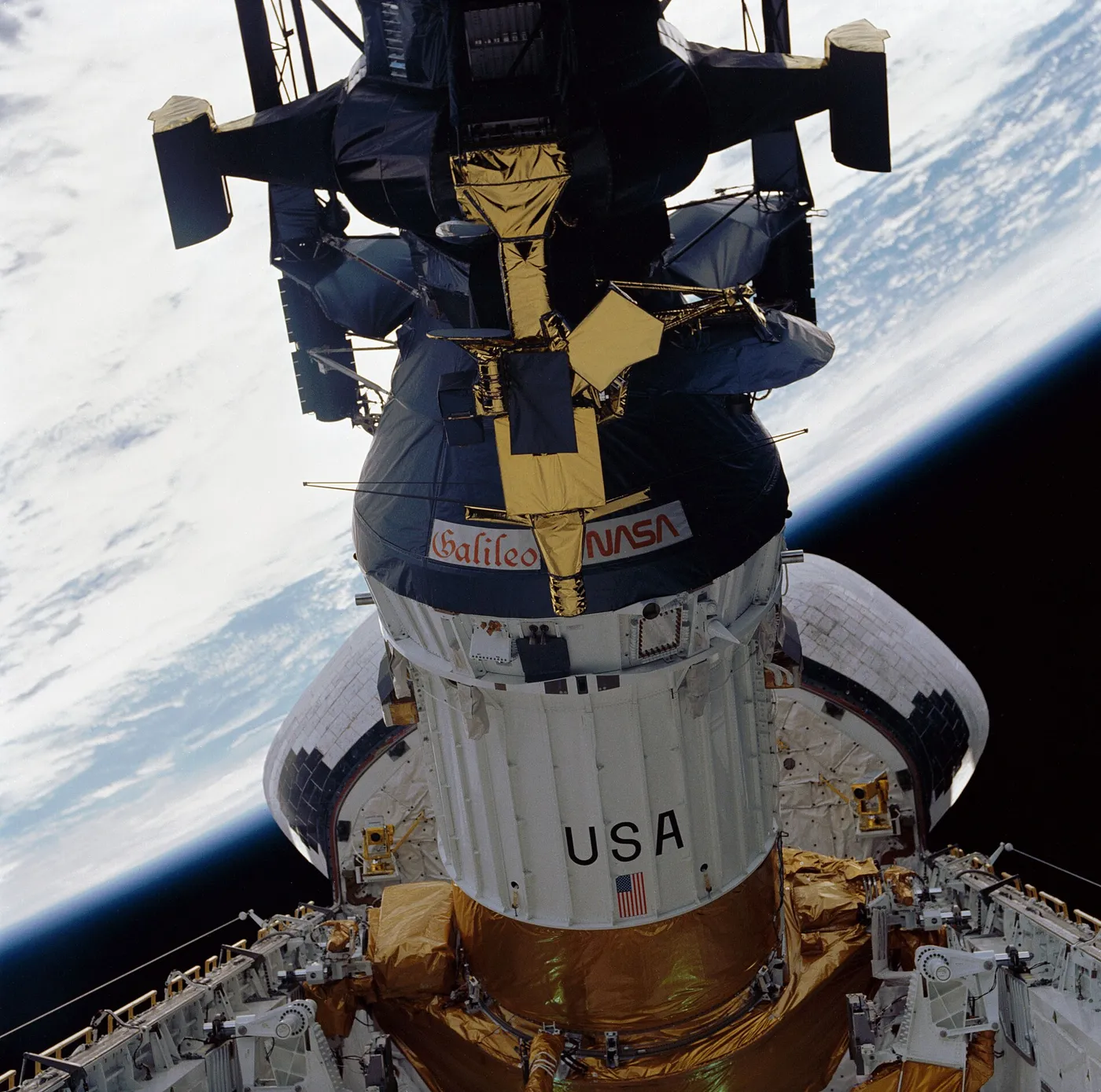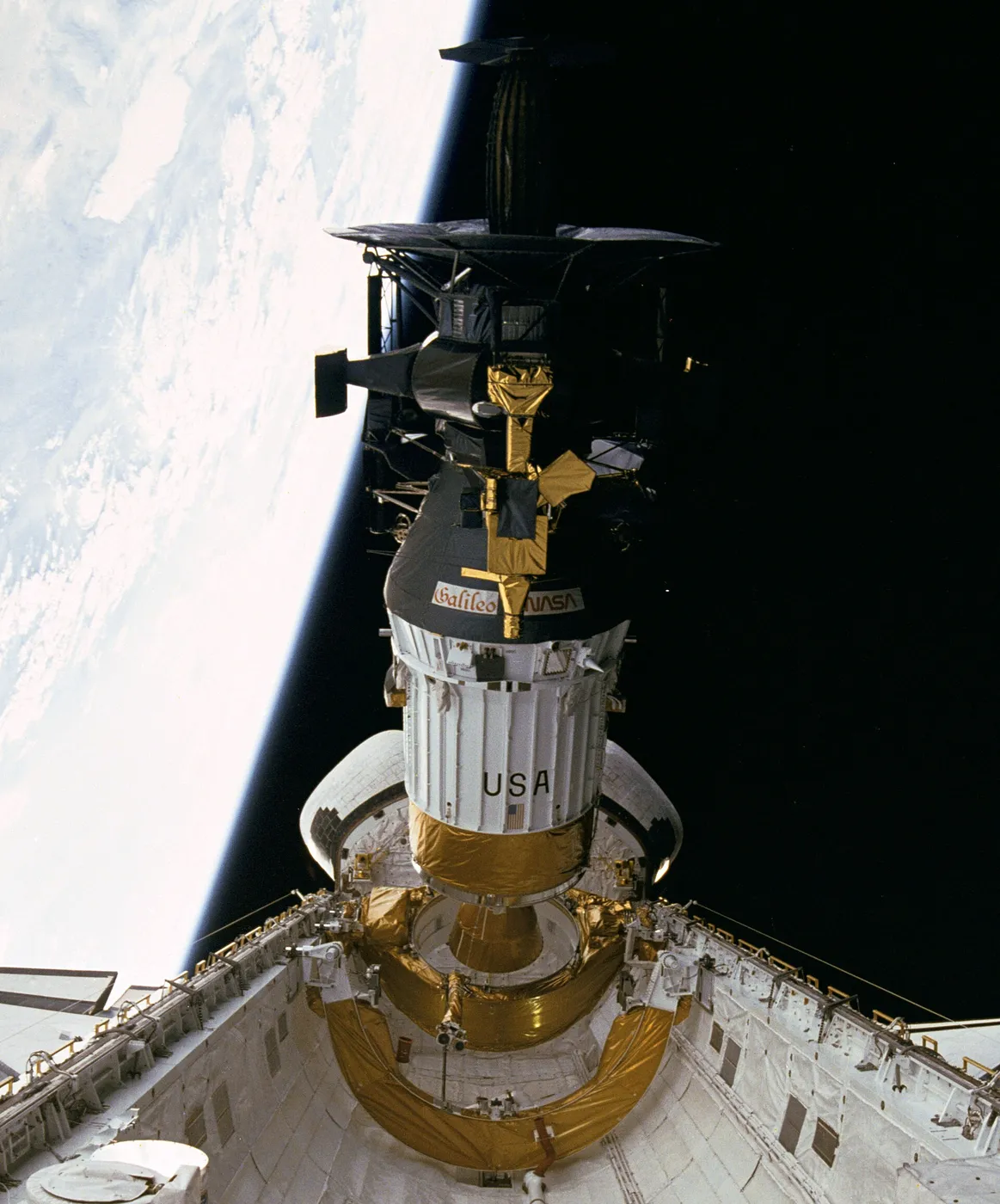
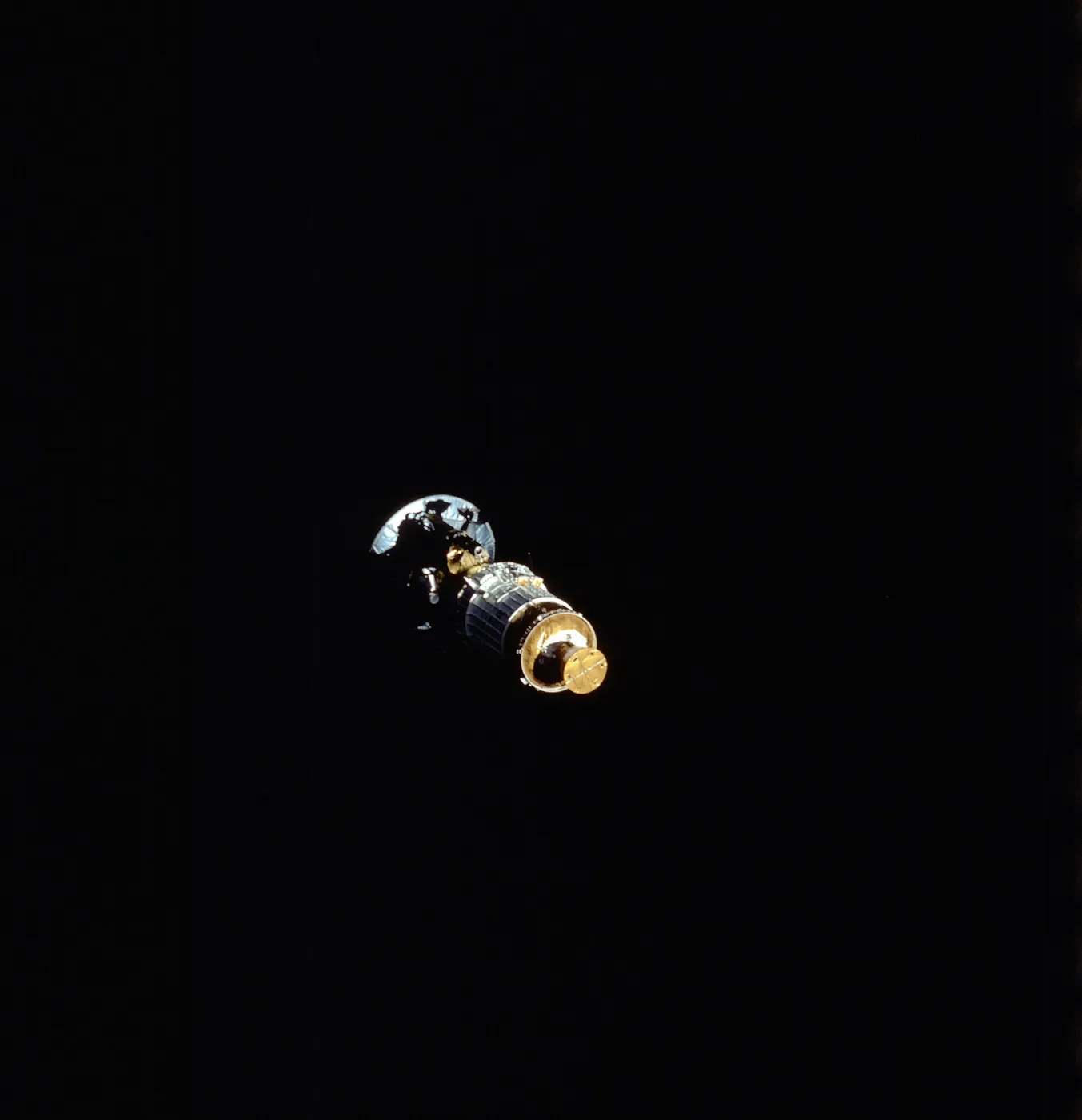

Galileo spent six years getting to Jupiter, because no rocket could throw it there directly after the Challenger accident forced its powerful upper stage to be replaced with a weaker one. It flew past Venus once and Earth twice, gathering speed, and on the way became the first spacecraft to visit an asteroid — discovering, at Ida, that asteroids can have moons of their own.
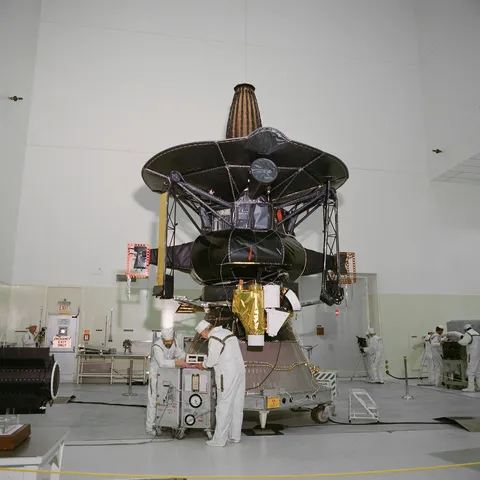
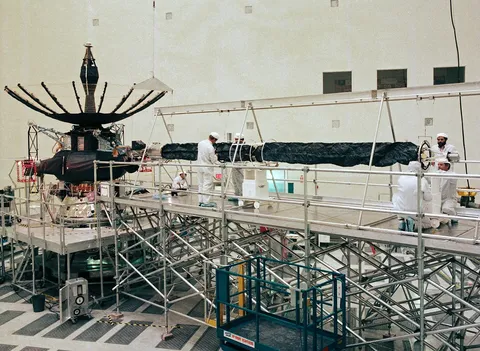
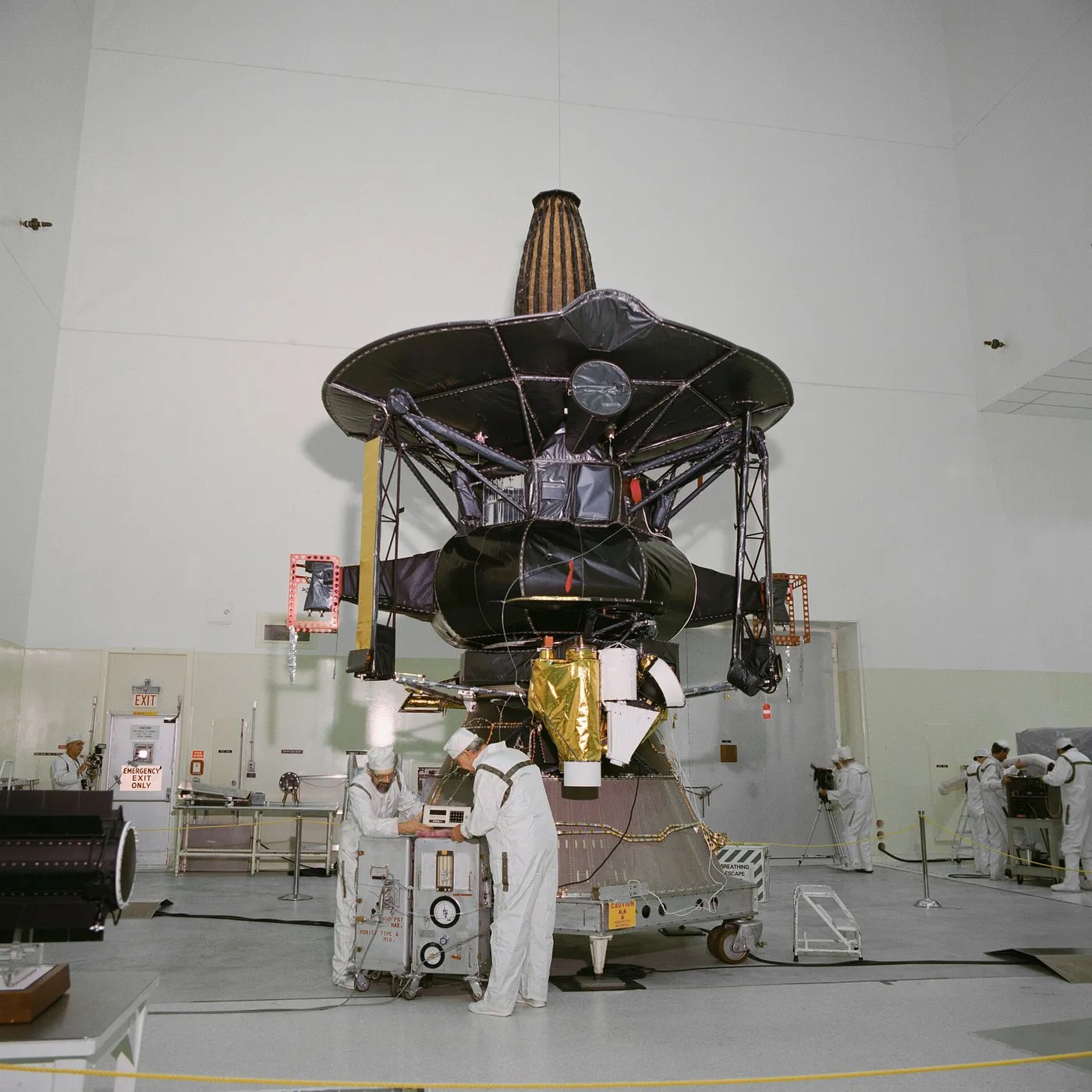
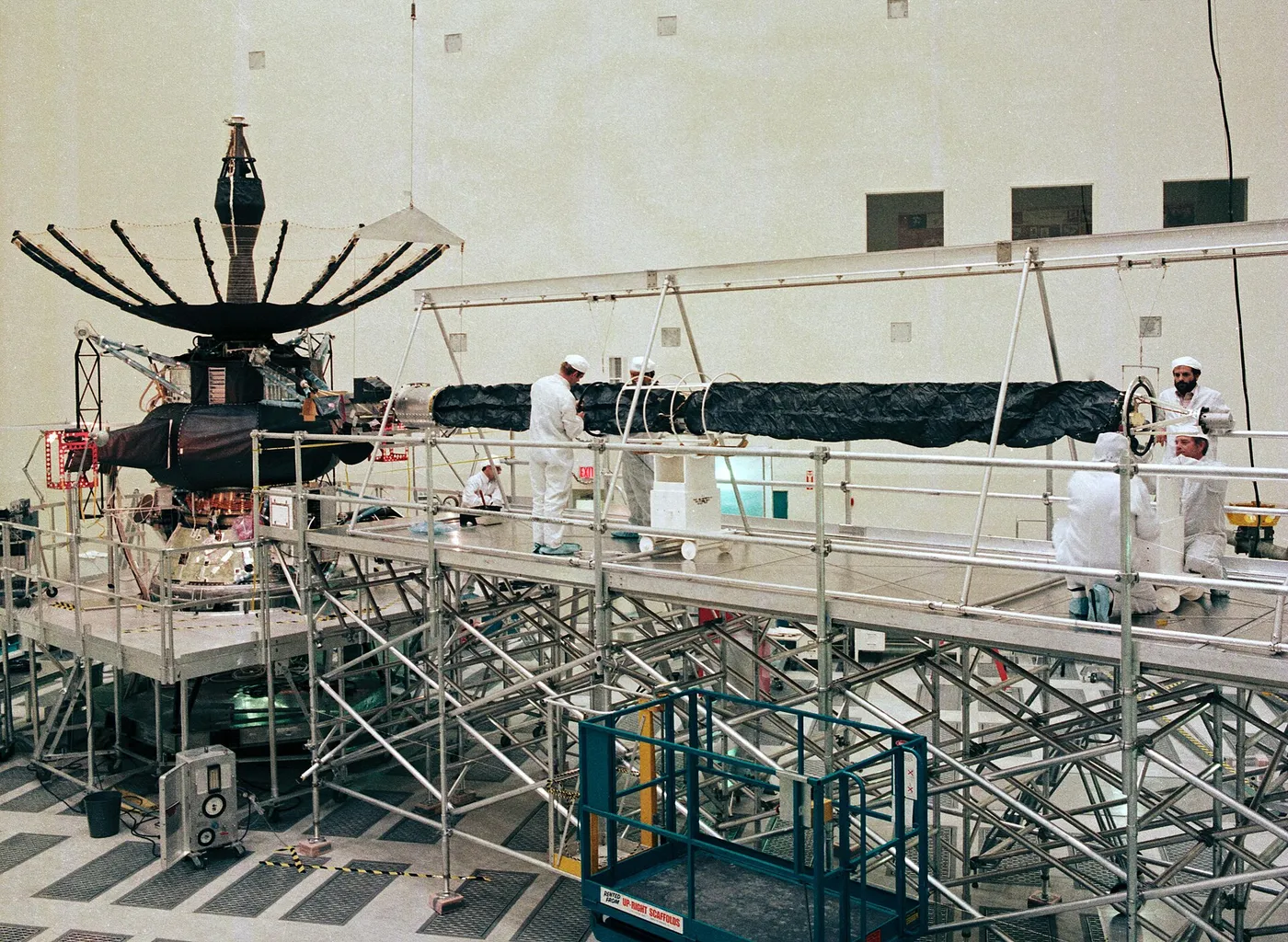
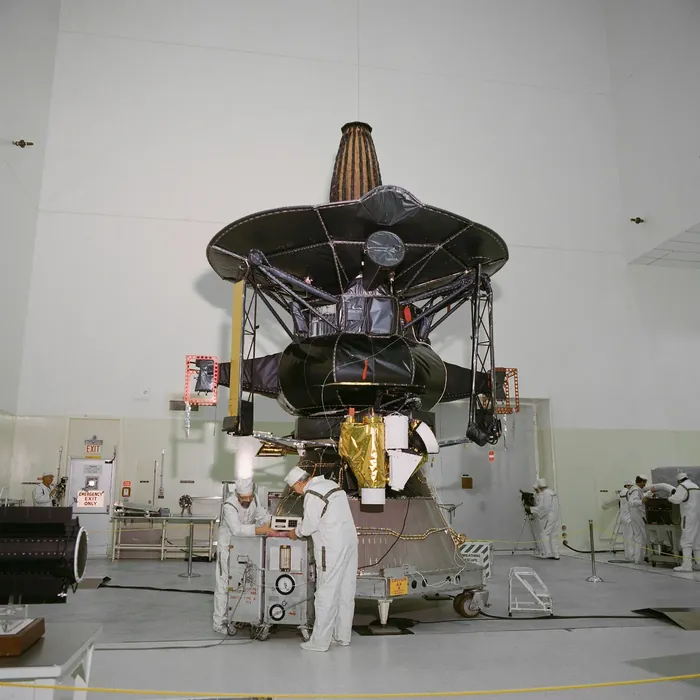
Then the antenna failed. The umbrella-like main dish, folded for launch and stored for years, jammed with several ribs stuck — probably because lubricant had worn away during repeated cross-country truck journeys while the mission waited out delays. The spacecraft's data rate collapsed to a tiny fraction of what had been planned.
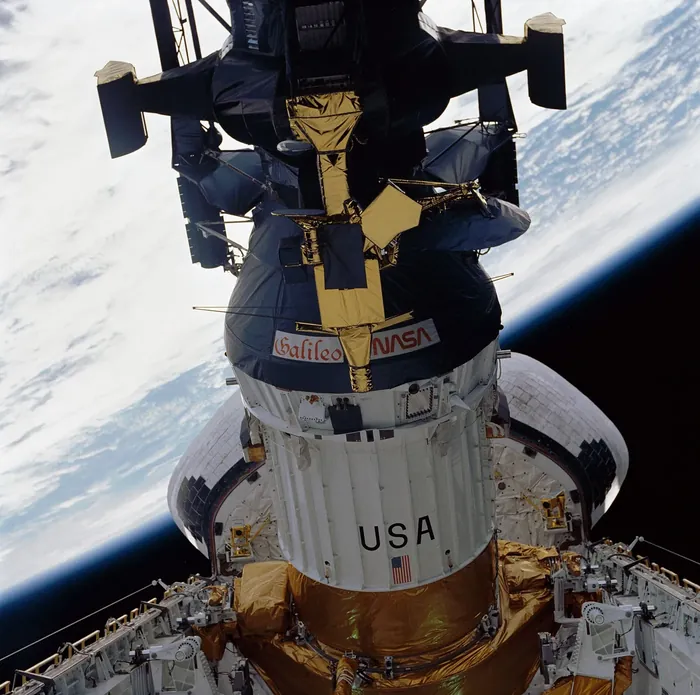
What followed was one of the great software rescues. Engineers rewrote the onboard computers from hundreds of millions of kilometres away, adding sophisticated data compression and editing routines so that the spacecraft could decide what was worth sending, and reprogrammed ground stations to array multiple dishes together. The mission recovered perhaps 70 per cent of its science.
It arrived in December 1995, having already watched fragments of comet Shoemaker-Levy 9 strike Jupiter the previous year from the only vantage point with a direct view. Its atmospheric probe plunged into the clouds and survived for 58 minutes, reporting winds that strengthened with depth and far less water than expected.
Its greatest legacy is Europa. Magnetometer readings indicated a conducting layer beneath the ice — most plausibly a salty ocean holding more liquid water than all of Earth's — and the chaotic, cracked surface supported the idea. To avoid any chance of contaminating that ocean with terrestrial microbes, the spacecraft was deliberately destroyed in Jupiter's atmosphere in 2003.