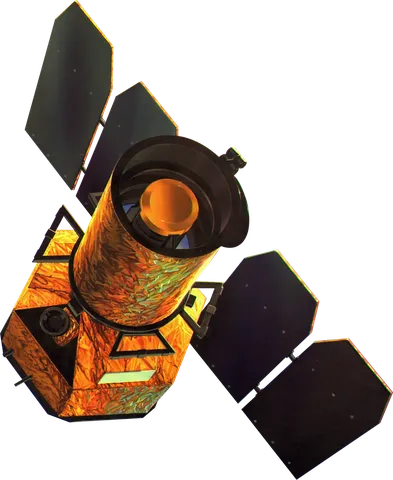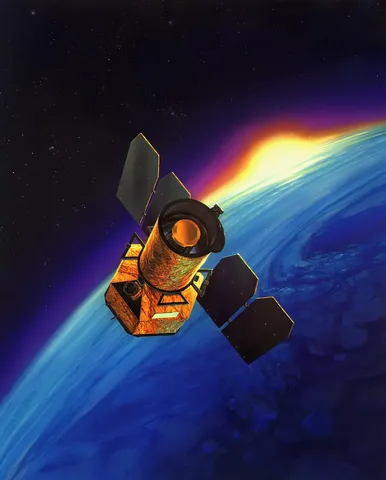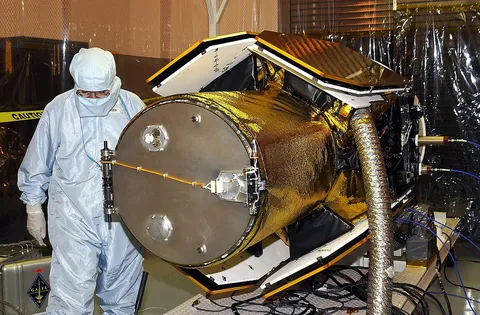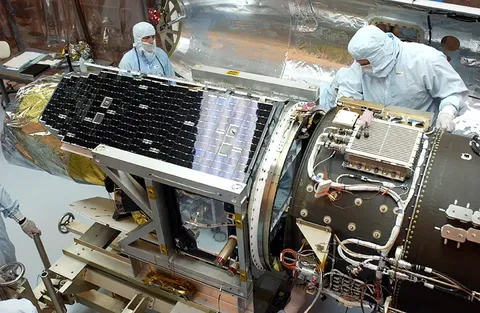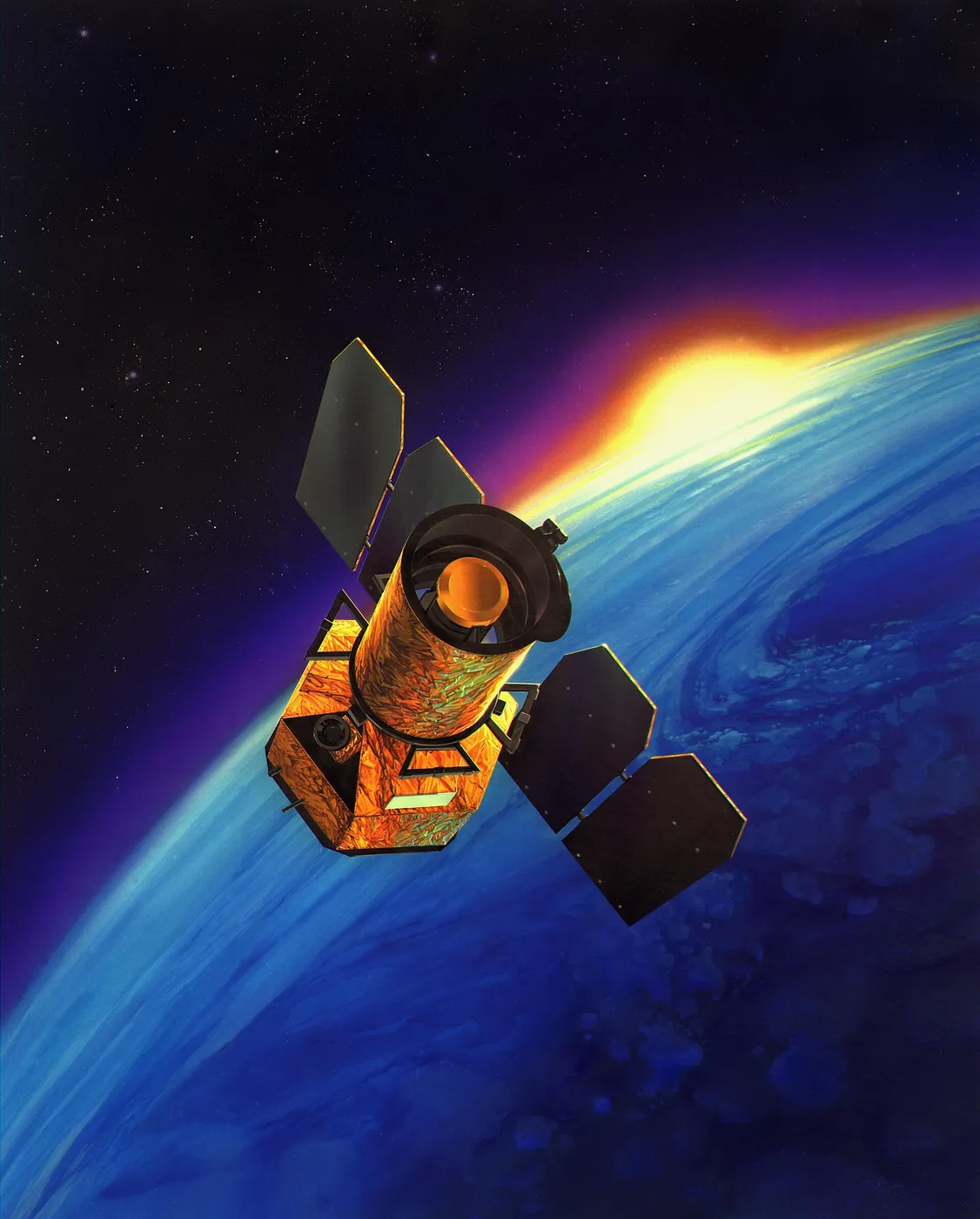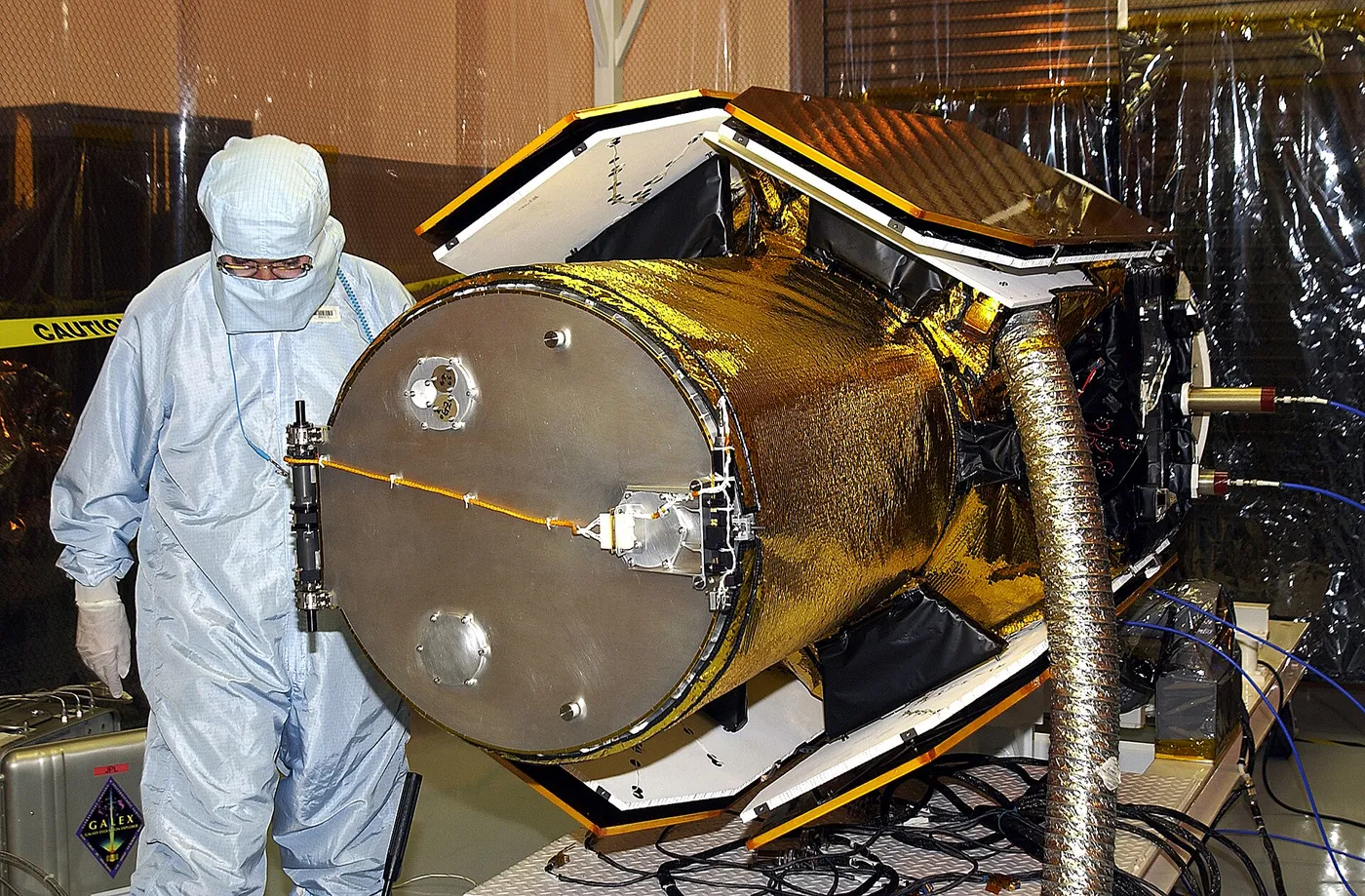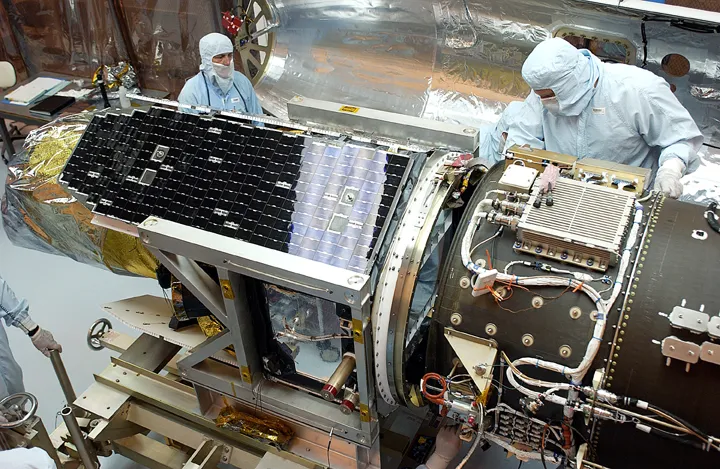
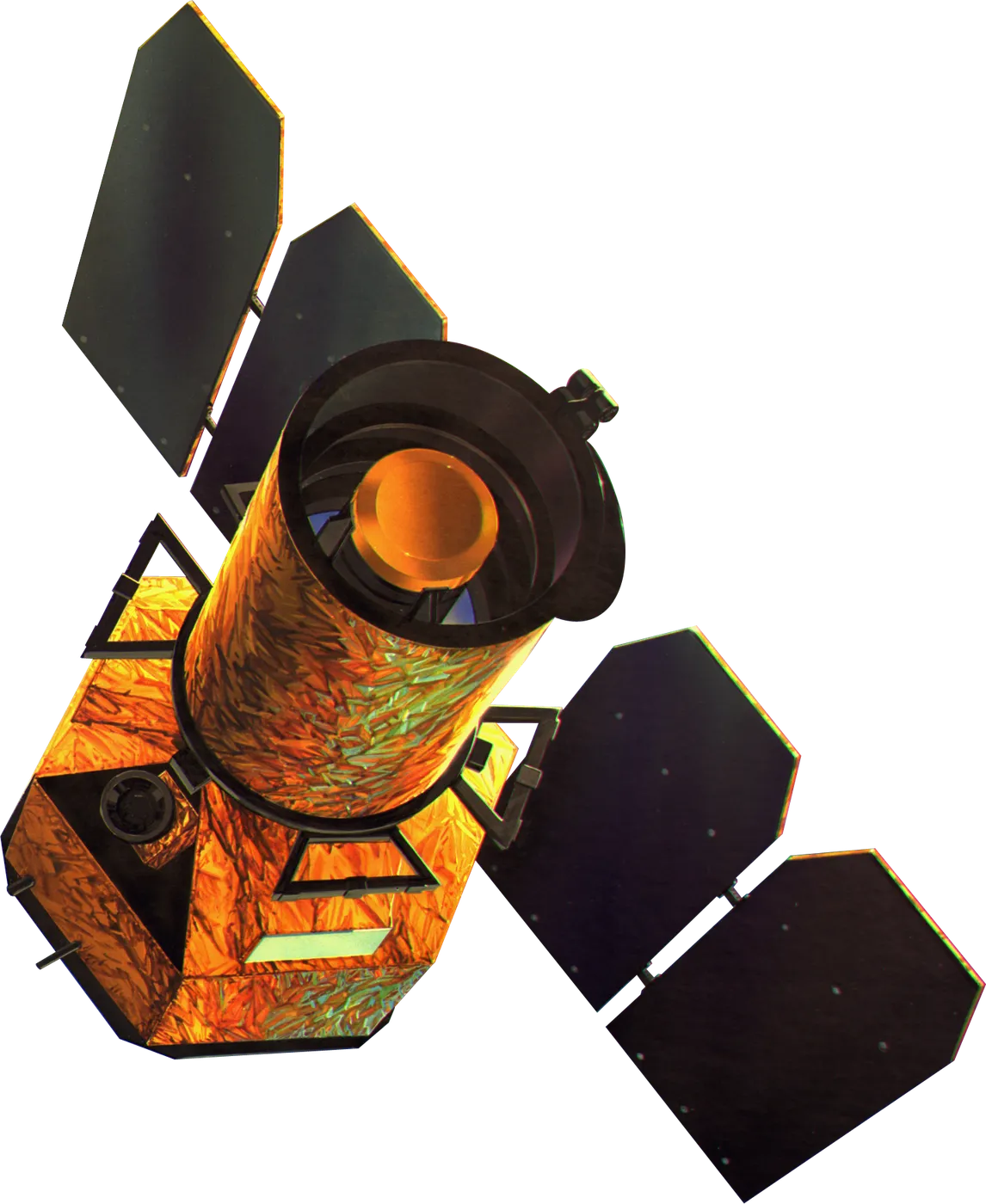

GALEX surveyed the sky in ultraviolet, which is where young, hot, massive stars shine most brightly — and since such stars live only a few million years, ultraviolet brightness is effectively a direct measure of how fast a galaxy is currently forming stars.
Mapping that across tens of millions of galaxies produced a history of star formation over the last ten billion years, showing that the universe's rate of star birth peaked long ago and has been declining ever since. We live in a quiet, ageing cosmos.

It also found things nobody was looking for. Trailing behind the red giant star Mira, GALEX discovered a tail of shed material stretching thirteen light years — the star is moving fast enough through interstellar gas to leave a wake, like a comet, and nothing had ever been seen shedding material that way.
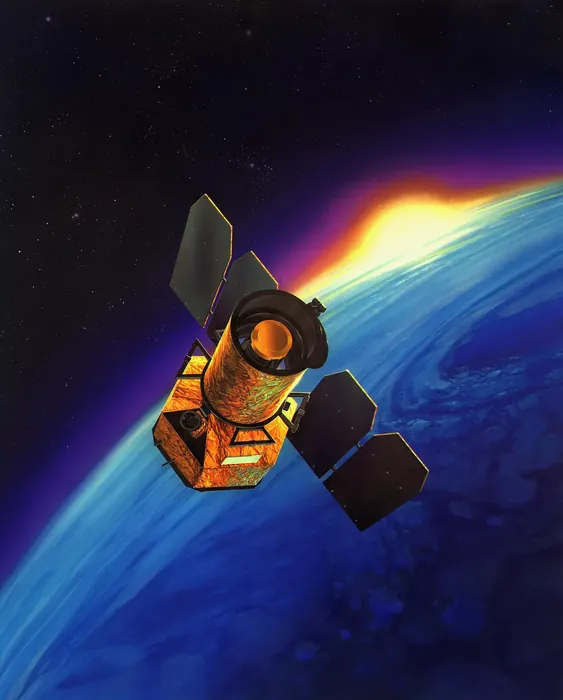
Its survey also revealed extended ultraviolet disks around many spiral galaxies, showing star formation continuing far outside the visible optical disk in regions previously assumed to be empty.
The mission operated for ten years. In an unusual arrangement NASA transferred the still-working spacecraft to Caltech in 2012, which operated it privately for a further year before it was decommissioned — one of the few cases of a space telescope being handed over to a university to run.