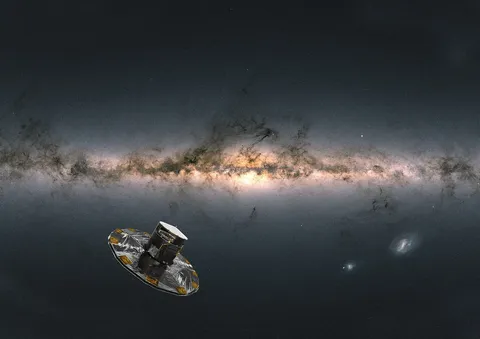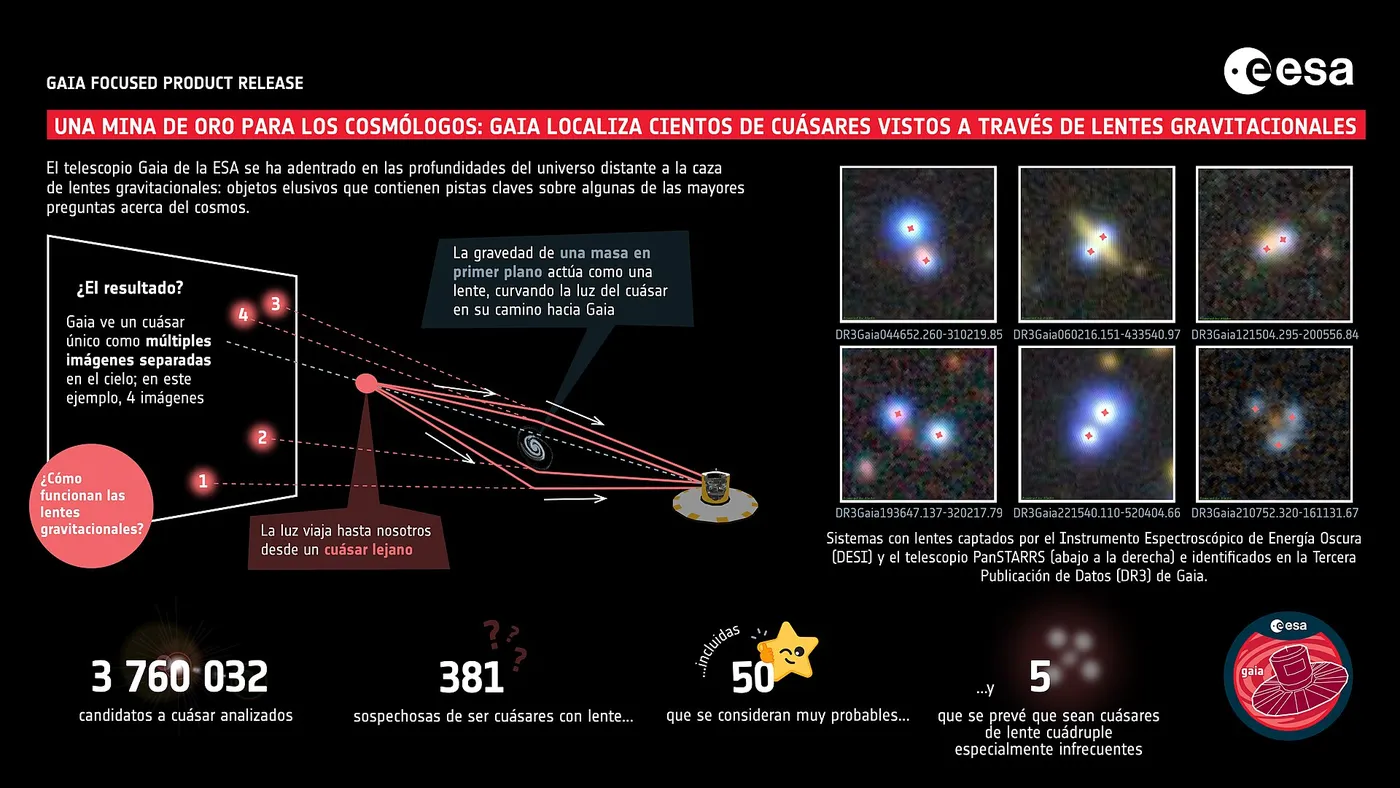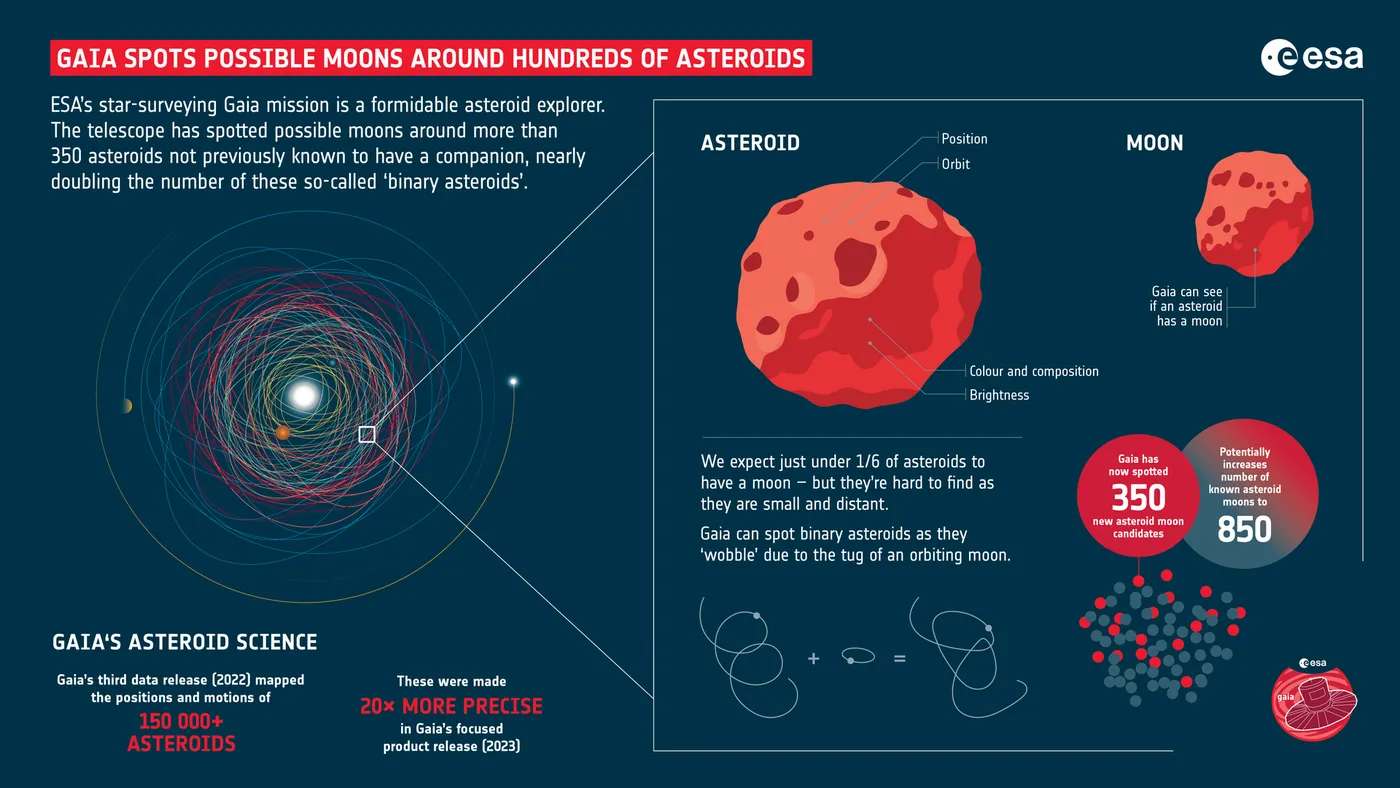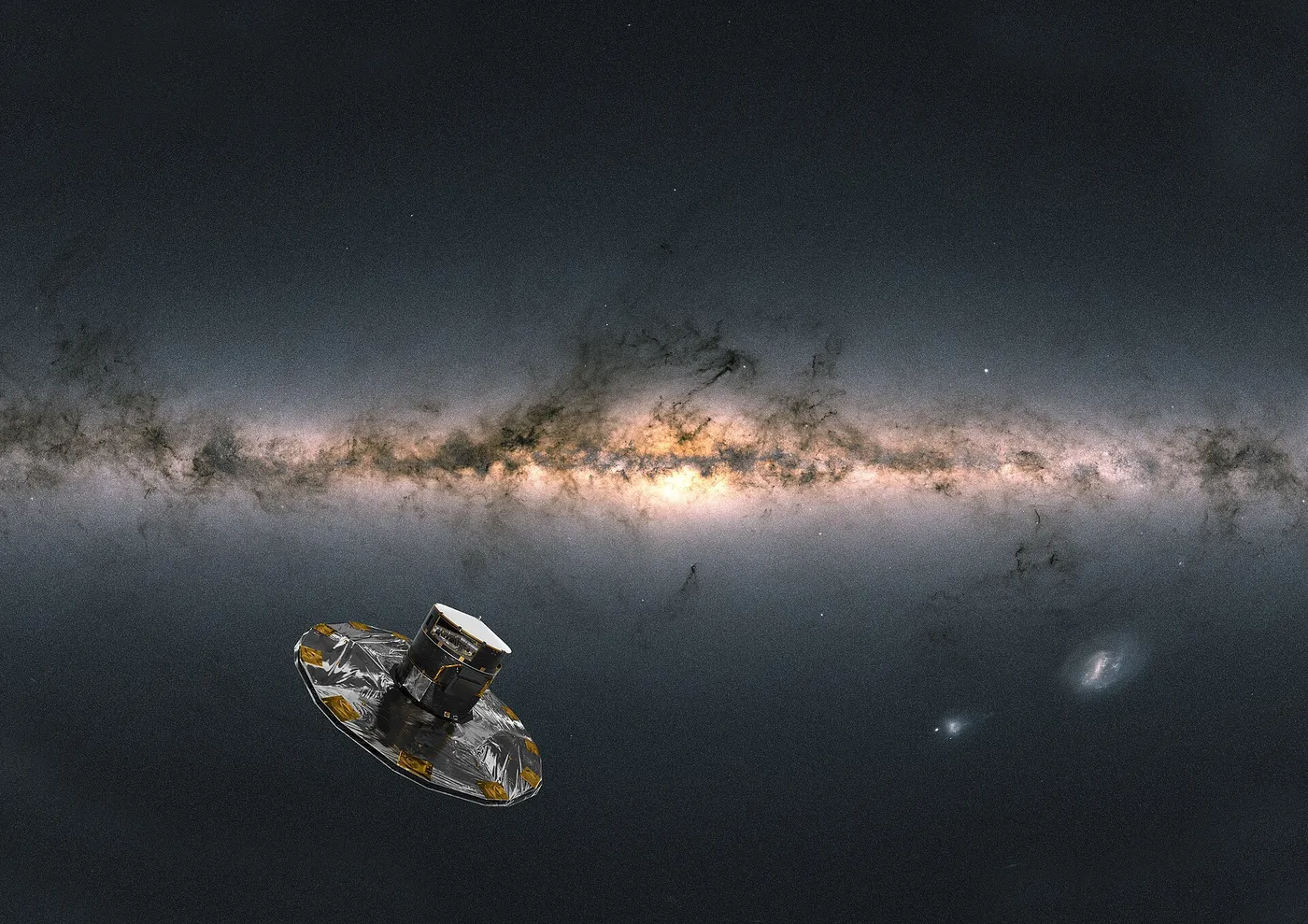

Gaia measured where things are. That sounds modest and is not: knowing the distance to a star is the foundation on which almost all astrophysics rests, and before Gaia those distances were known accurately for a few thousand stars and estimated, often badly, for everything else.
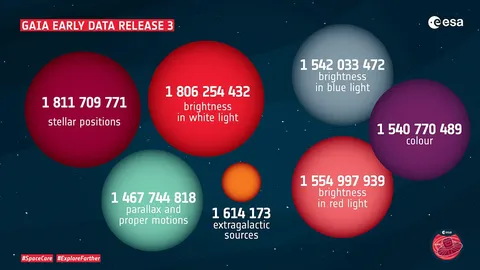
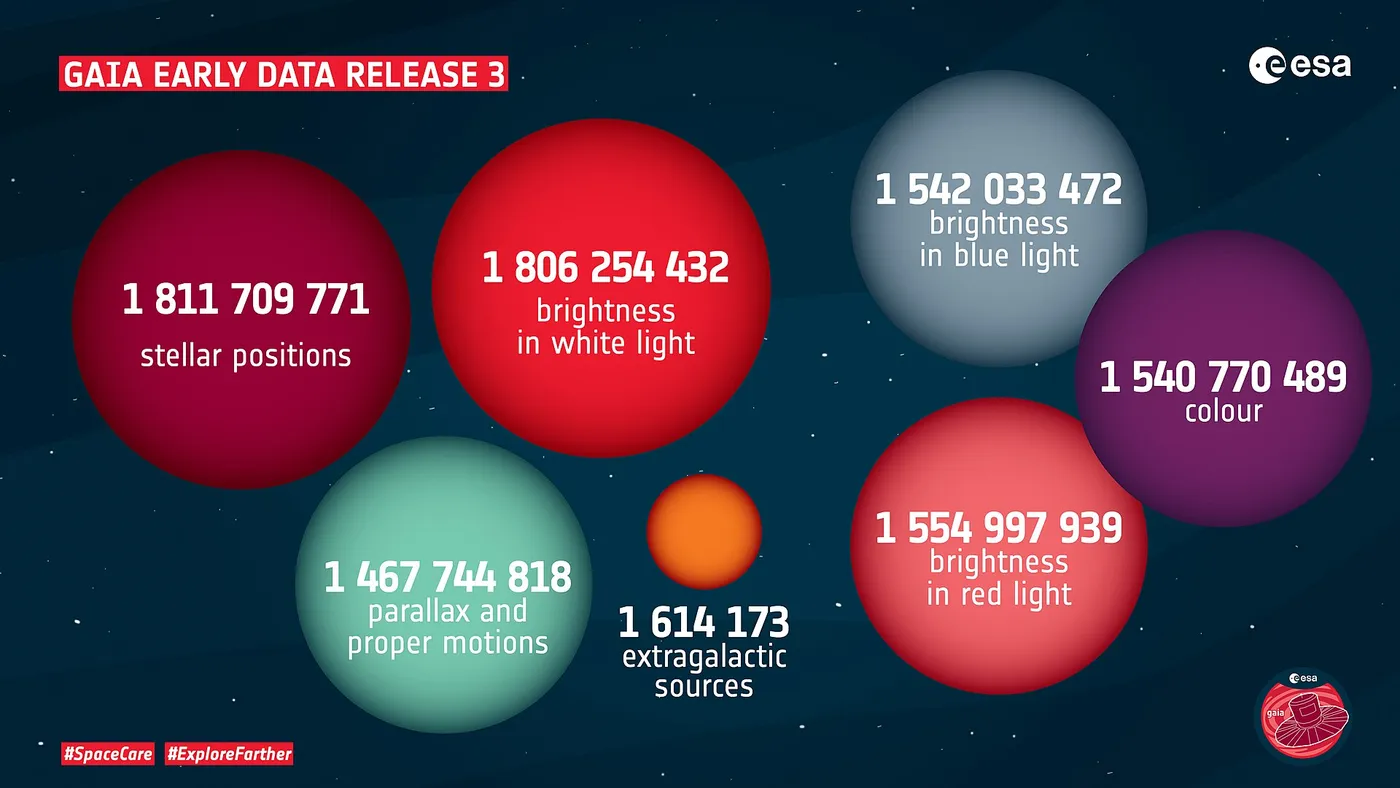
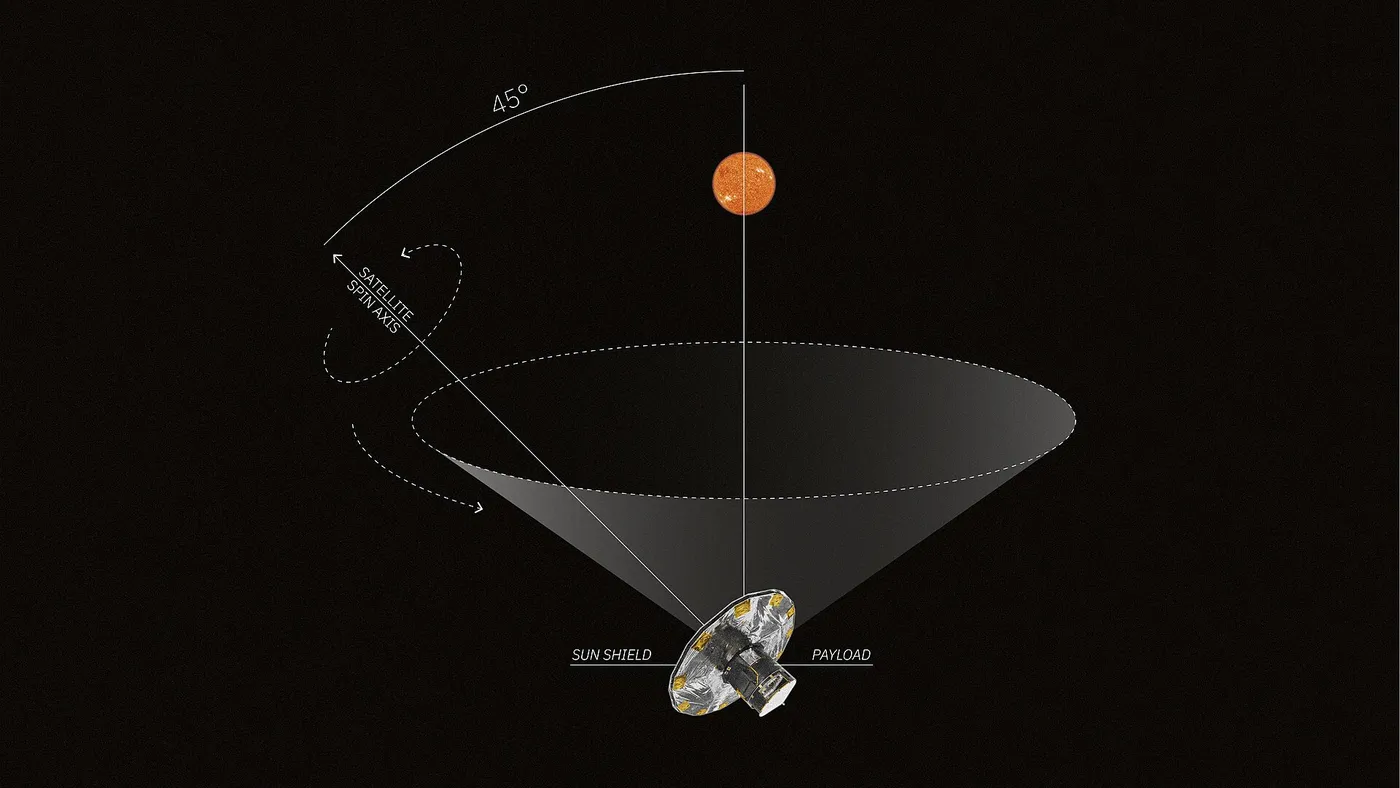
It worked by parallax — the tiny apparent shift of a nearby star against distant ones as the Earth moves around the Sun — measured with a precision of microarcseconds, equivalent to resolving the width of a human hair at a thousand kilometres. It observed each of nearly two billion objects around seventy times over a decade.
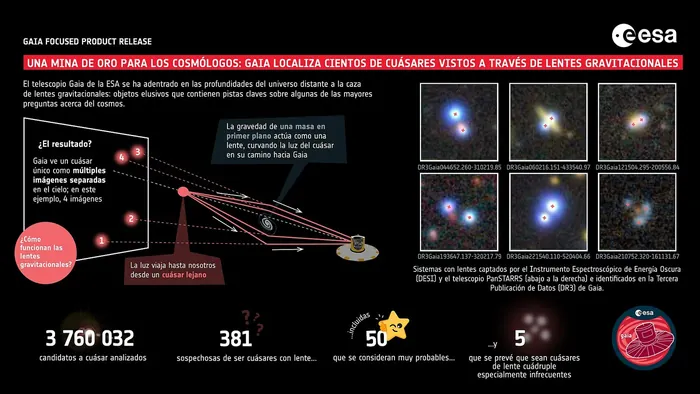
The resulting catalogue is a three-dimensional map of the Milky Way with motions attached, and it has been used in tens of thousands of scientific papers — probably the most productive single dataset in the history of astronomy. It recalibrated the cosmic distance ladder from its bottom rung upward.
It also rewrote our galaxy's biography. By tracking how stars move, astronomers identified the debris of ancient collisions — most notably a substantial galaxy, now called Gaia-Enceladus, that merged with the Milky Way some ten billion years ago and whose stars still move together in distinguishable streams. The galactic disk turned out to be warped and rippling, apparently still recovering from more recent encounters.
The spacecraft was retired in 2025 after its cold gas ran out, and was steered into a heliocentric orbit clear of the Lagrange point. Its final data releases are still being prepared, and will remain the reference frame for astronomy for decades.