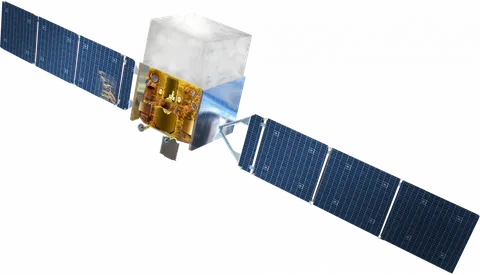
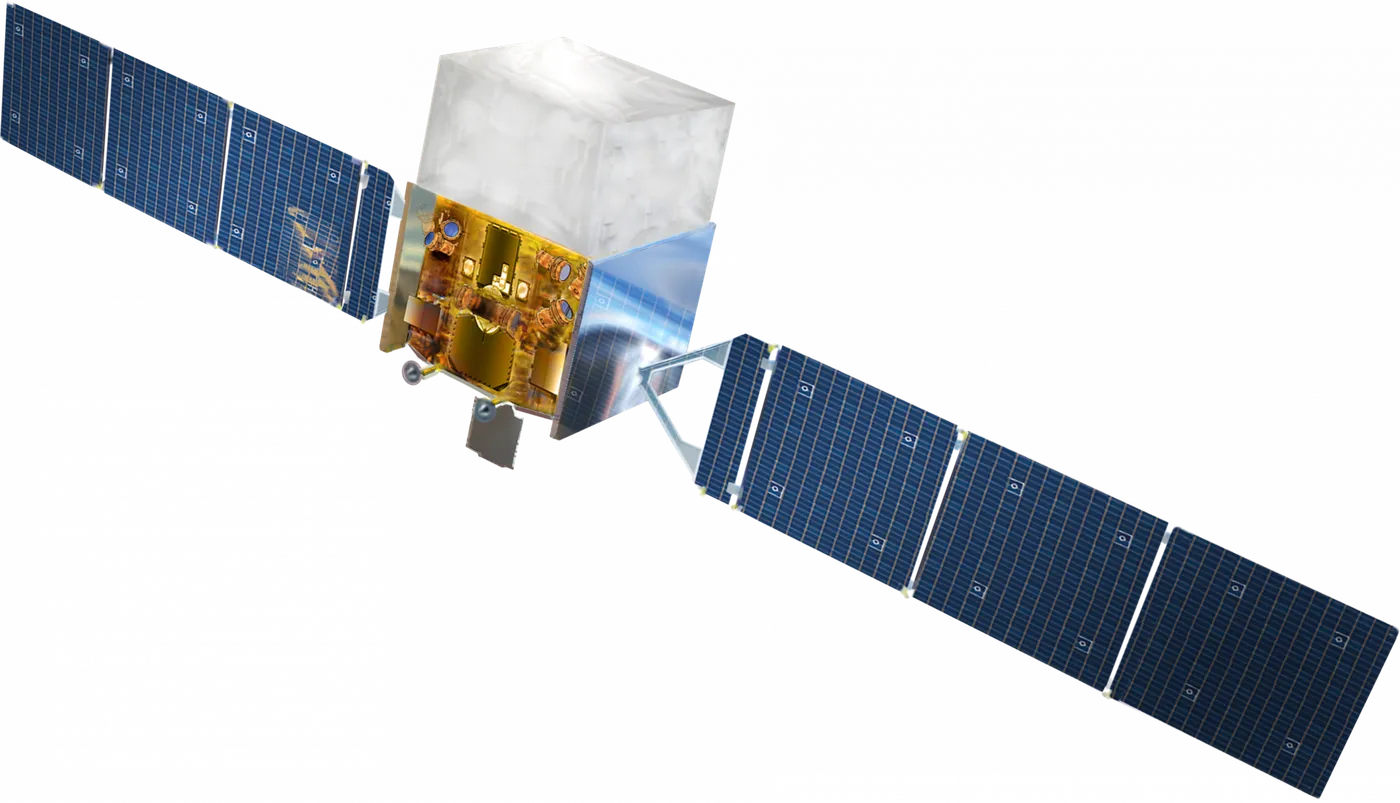

Fermi observes the most energetic light in the universe. Gamma rays cannot be focused at all — they pass through any mirror — so its main instrument works instead by letting them convert into electron-positron pairs in layers of tungsten and tracking the resulting particles, reconstructing the original direction.
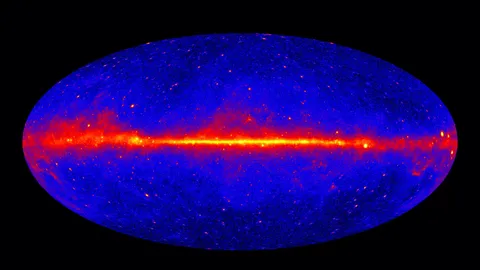
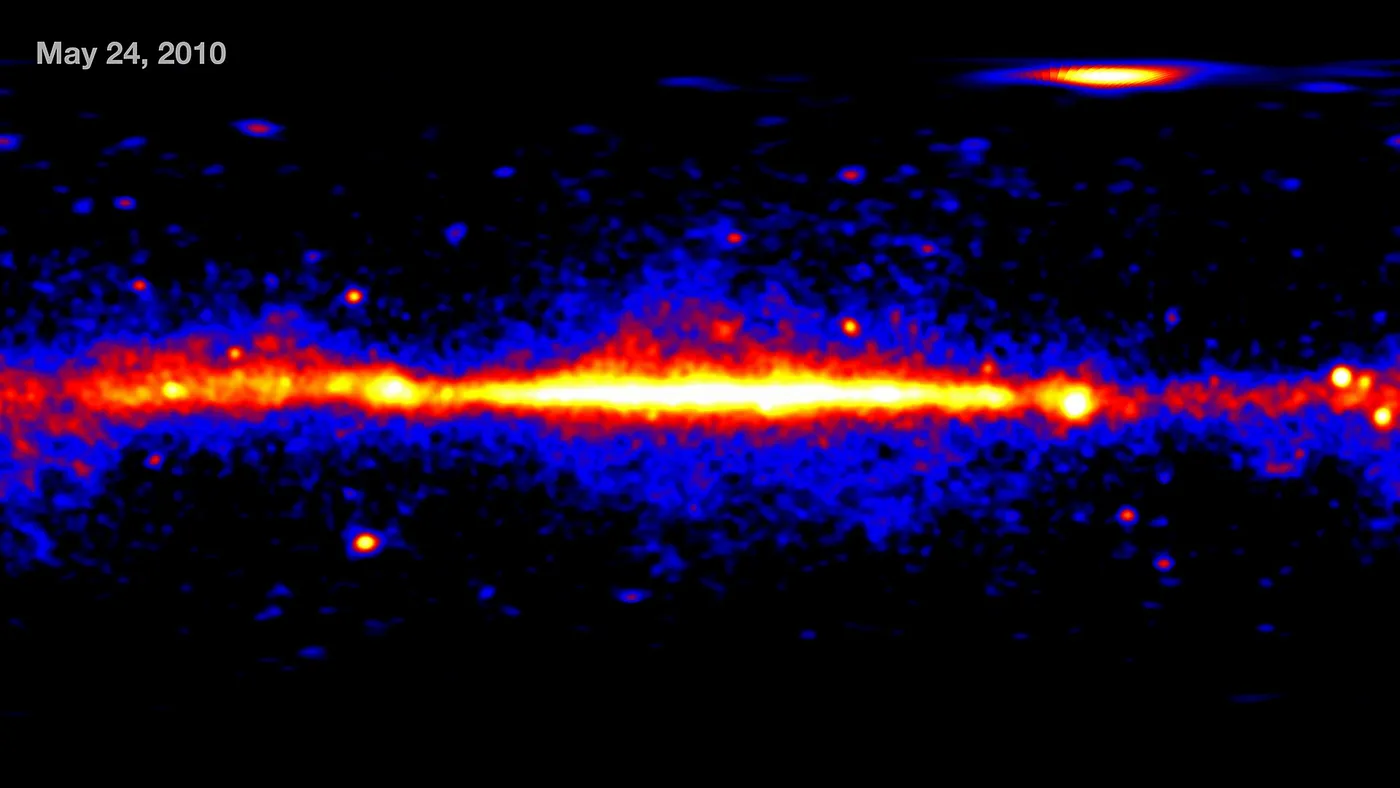
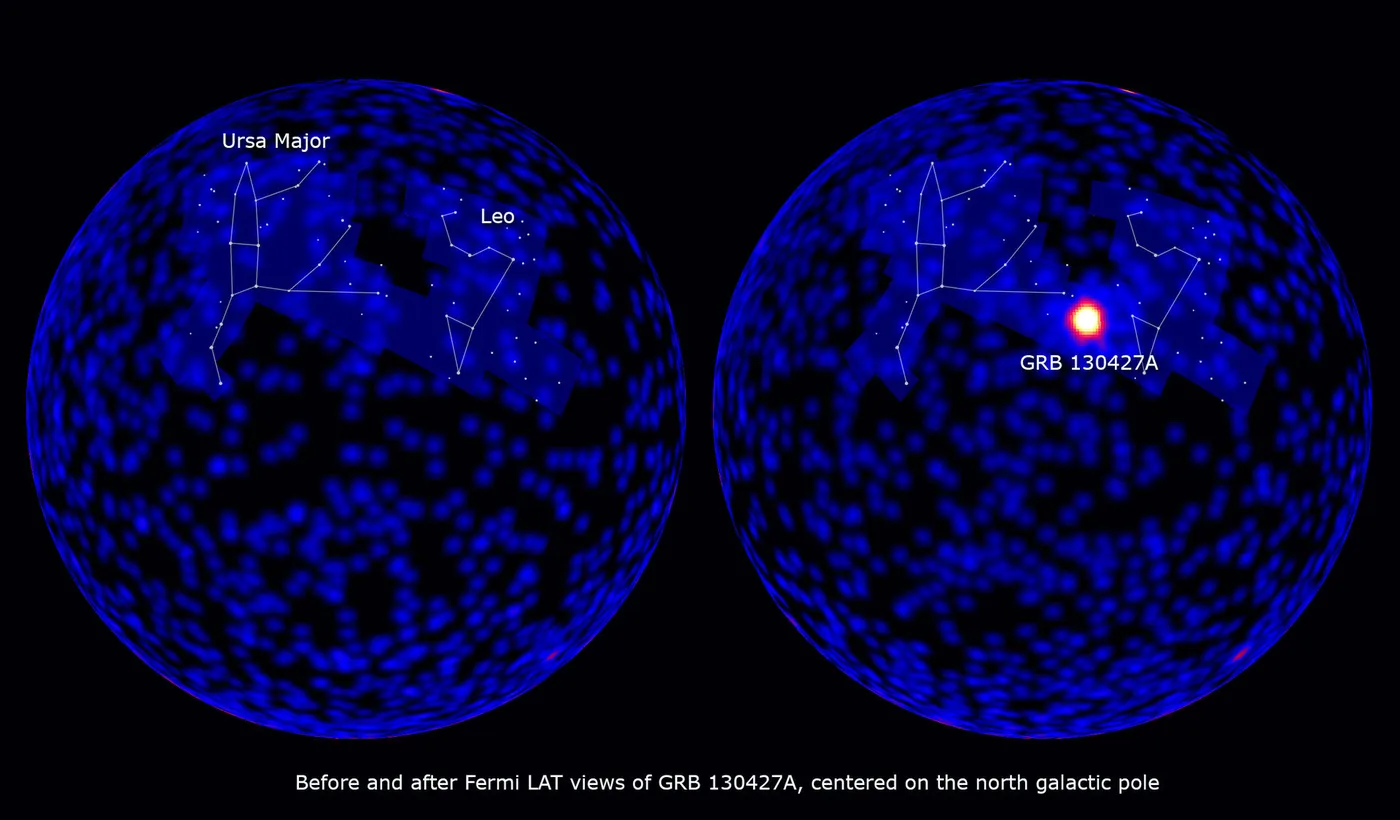
Its field of view covers about a fifth of the sky at once, and the spacecraft rocks as it orbits so that it surveys the entire sky every three hours. That makes it the natural instrument for catching things that happen without warning, which in gamma-ray astronomy is most things.
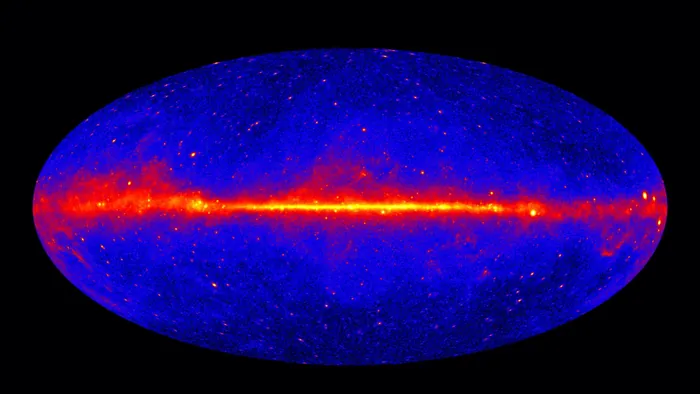
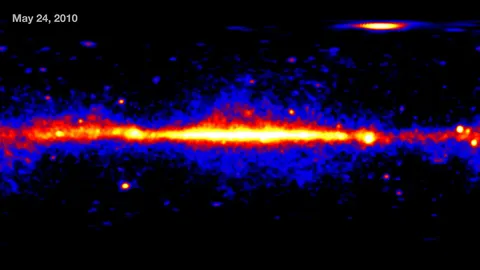
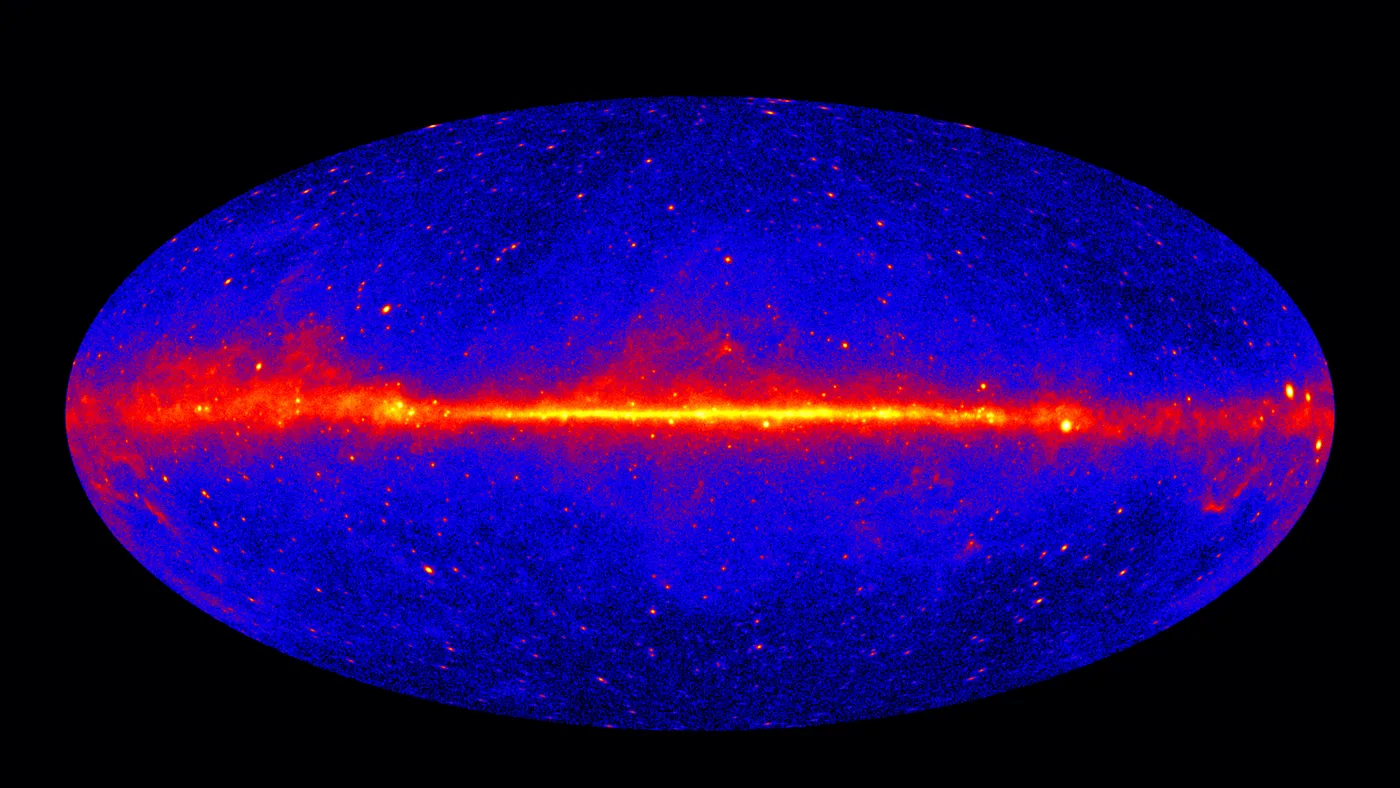
In 2010 a pair of researchers analysing its data found something nobody had suspected: two enormous lobes of gamma-ray emission extending some 25,000 light years above and below the centre of the Milky Way. The Fermi bubbles are now generally attributed to an outburst from the central black hole a few million years ago, and they had been hiding in plain sight in our own galaxy.
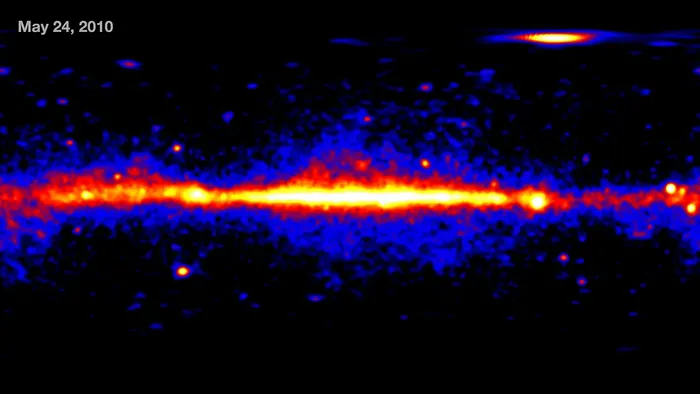
It has catalogued thousands of gamma-ray sources, more than trebling the known population, and discovered a large number of pulsars that emit in gamma rays but not in radio — a class of object that was essentially invisible before. It also showed that terrestrial thunderstorms produce gamma-ray flashes, which was distinctly unexpected.
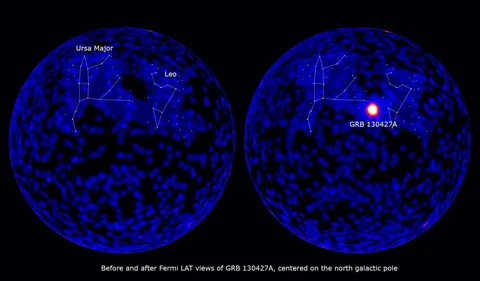
In 2017 it detected a short gamma-ray burst 1.7 seconds after gravitational-wave detectors recorded two neutron stars merging — the first time an event had been observed in both gravitational waves and light, confirming that such mergers produce short bursts and are a major source of the universe's heavy elements.