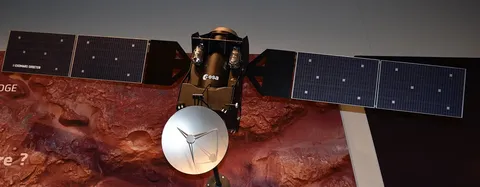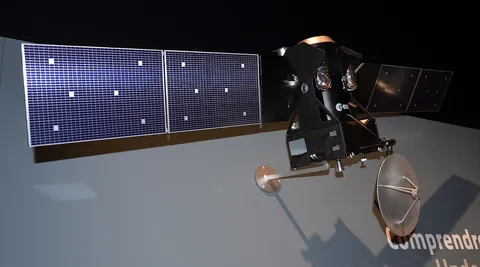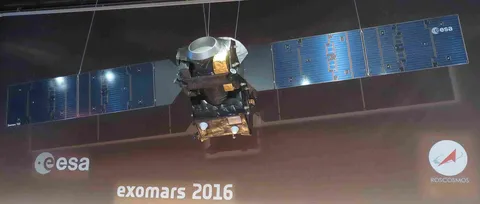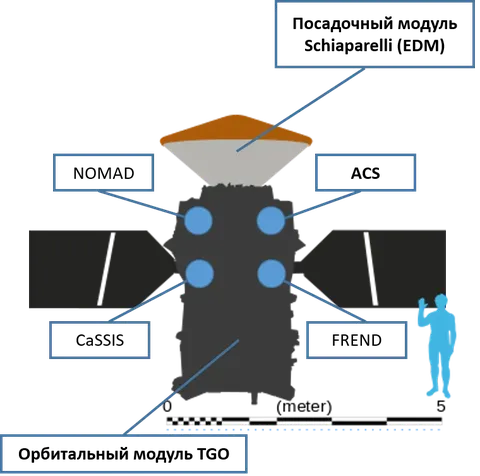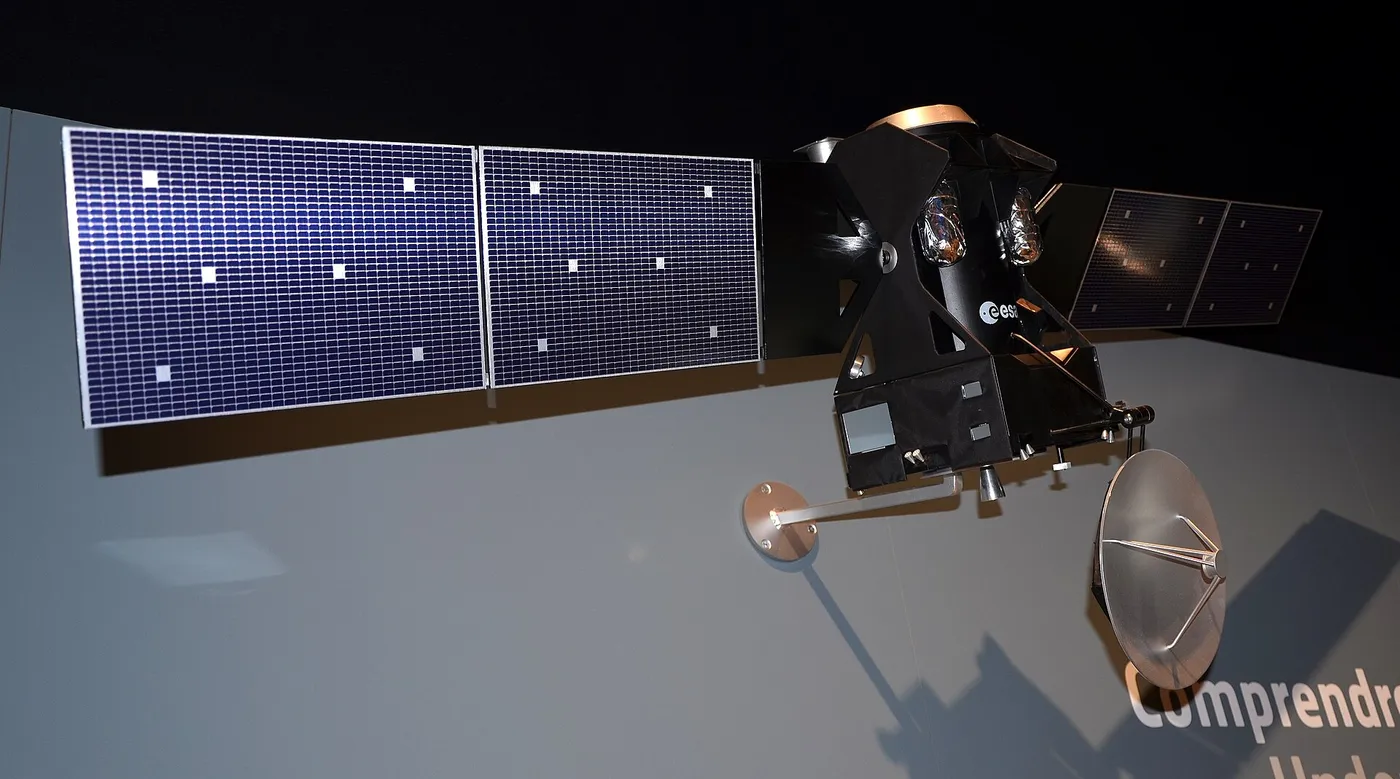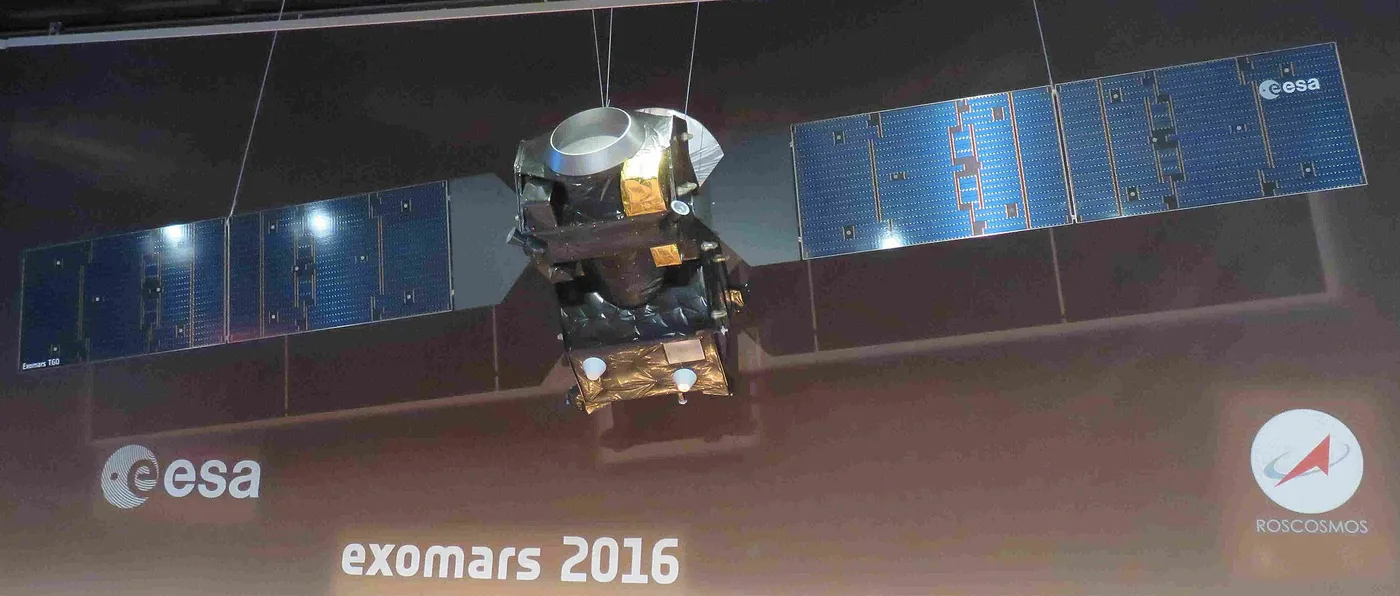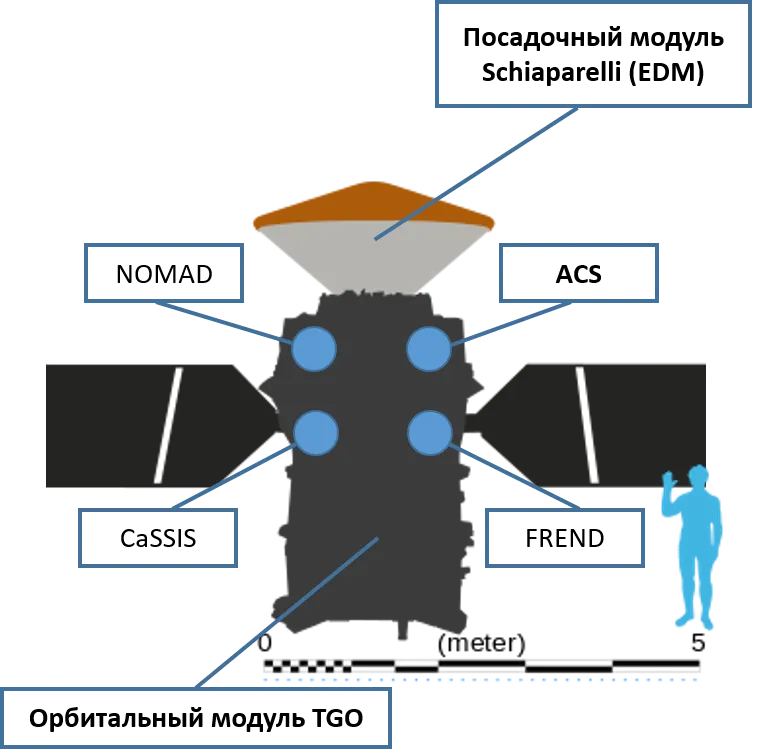
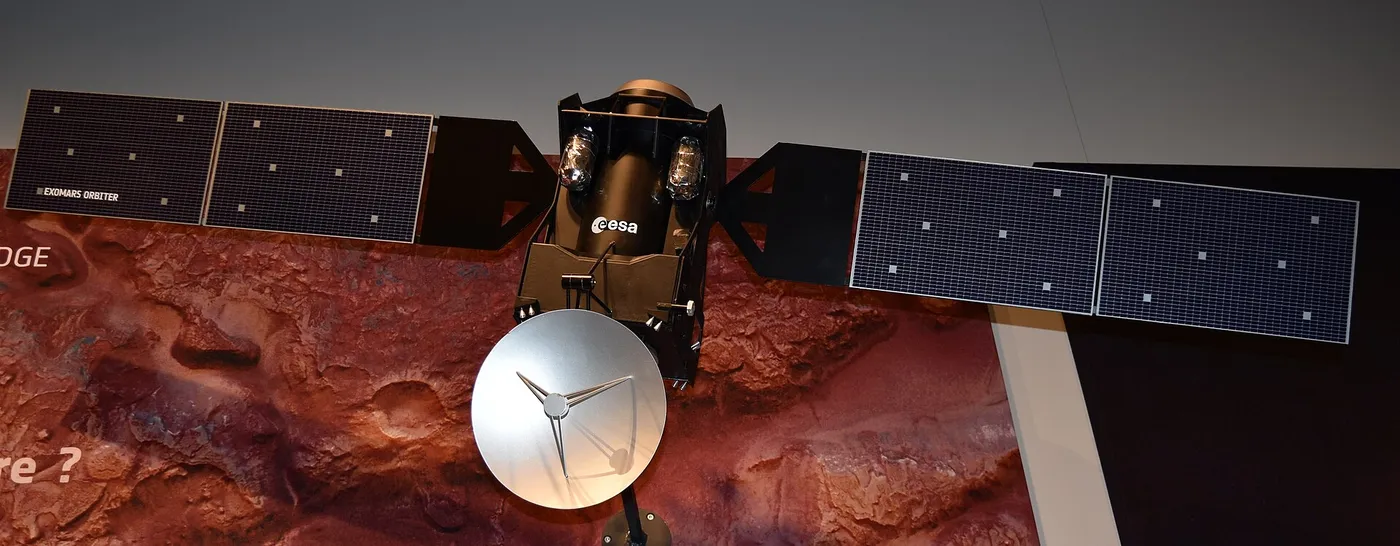

The Trace Gas Orbiter was built to settle an argument about methane. The gas had been reported in the Martian atmosphere by ground telescopes, by Mars Express and by Curiosity, and it should not persist for more than a few centuries — meaning something must be replenishing it, whether geological or, conceivably, biological.
It carried the most sensitive instruments ever sent for the purpose, capable of detecting a few parts per trillion. What it found was essentially nothing. Its upper limits are so low that they are difficult to reconcile with the detections made from the surface at the same time, and the resulting contradiction is one of the sharpest open disputes in planetary science.
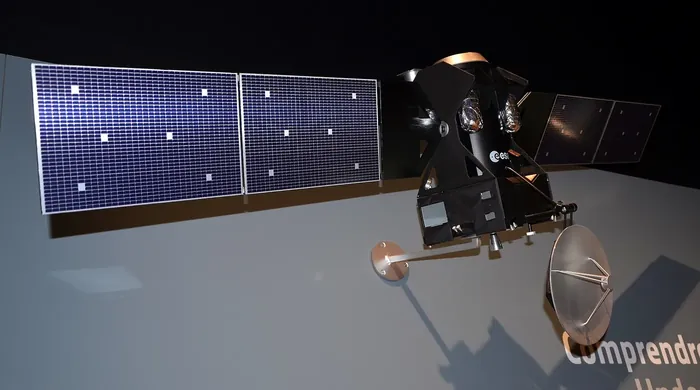
The mission also carried a lander, and lost it. Schiaparelli was descending in October 2016 when its inertial measurement unit saturated during the swinging motion under the parachute; the navigation software accepted the bad reading, concluded the spacecraft was below ground level, jettisoned the parachute and shut off the thrusters at an altitude of roughly 3.7 kilometres. It fell and exploded.
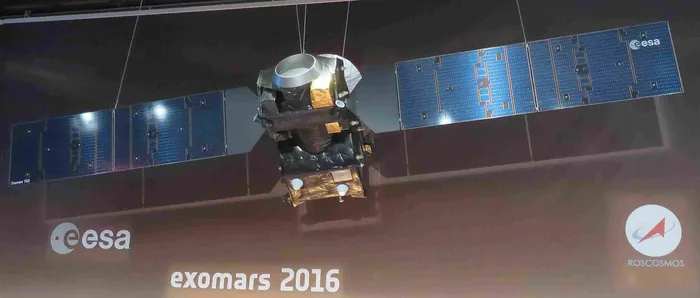
The orbiter succeeded on every other count, mapping subsurface hydrogen — and therefore water ice — at higher resolution than anything before it, and identifying deposits in Valles Marineris that suggest substantial ice much closer to the equator than expected, where a crewed mission could plausibly reach it.
It has also become the main relay for surface missions, including NASA's, which is a quietly remarkable arrangement: a European-Russian orbiter carrying American rover data home. The partnership itself did not survive; Russia's participation in the follow-on rover was terminated in 2022, and that mission has been rebuilt with other partners.