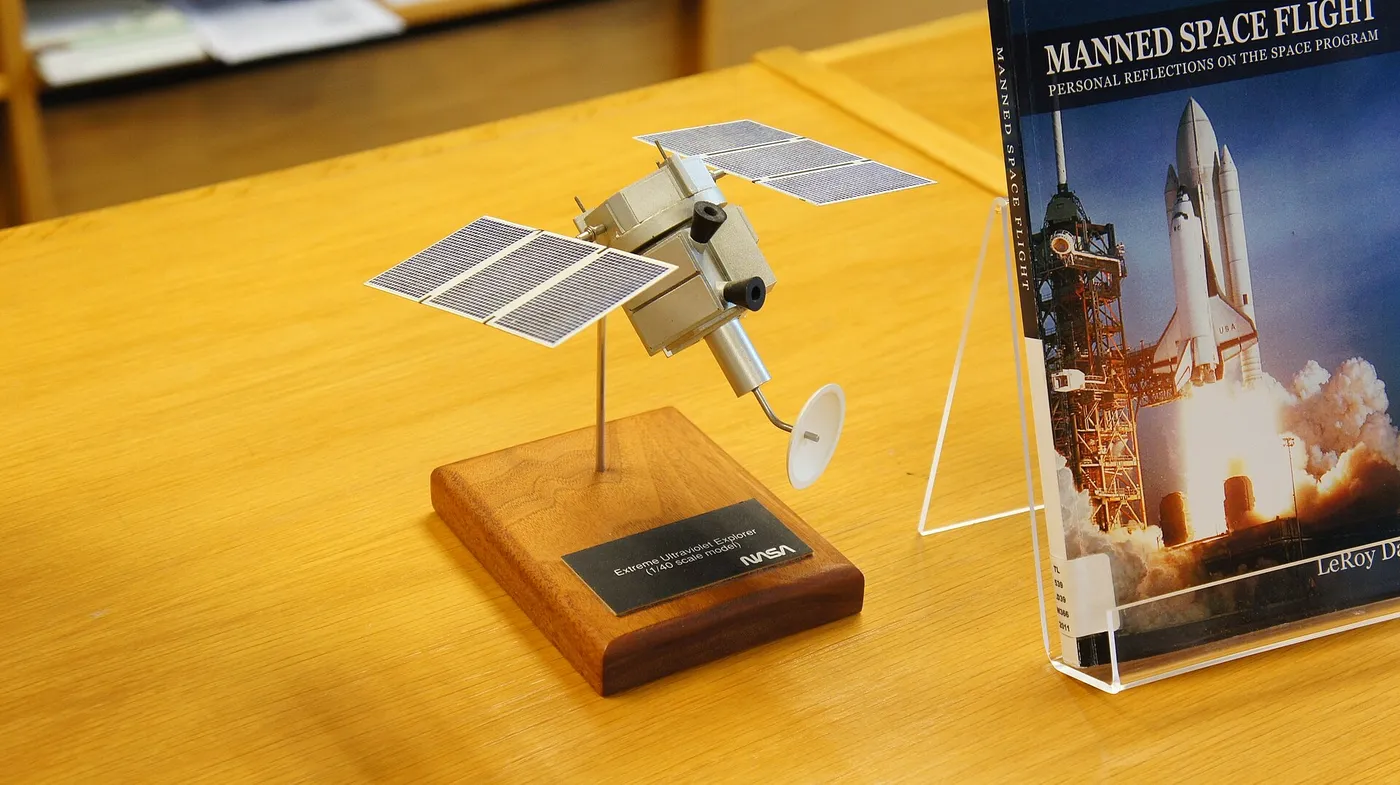
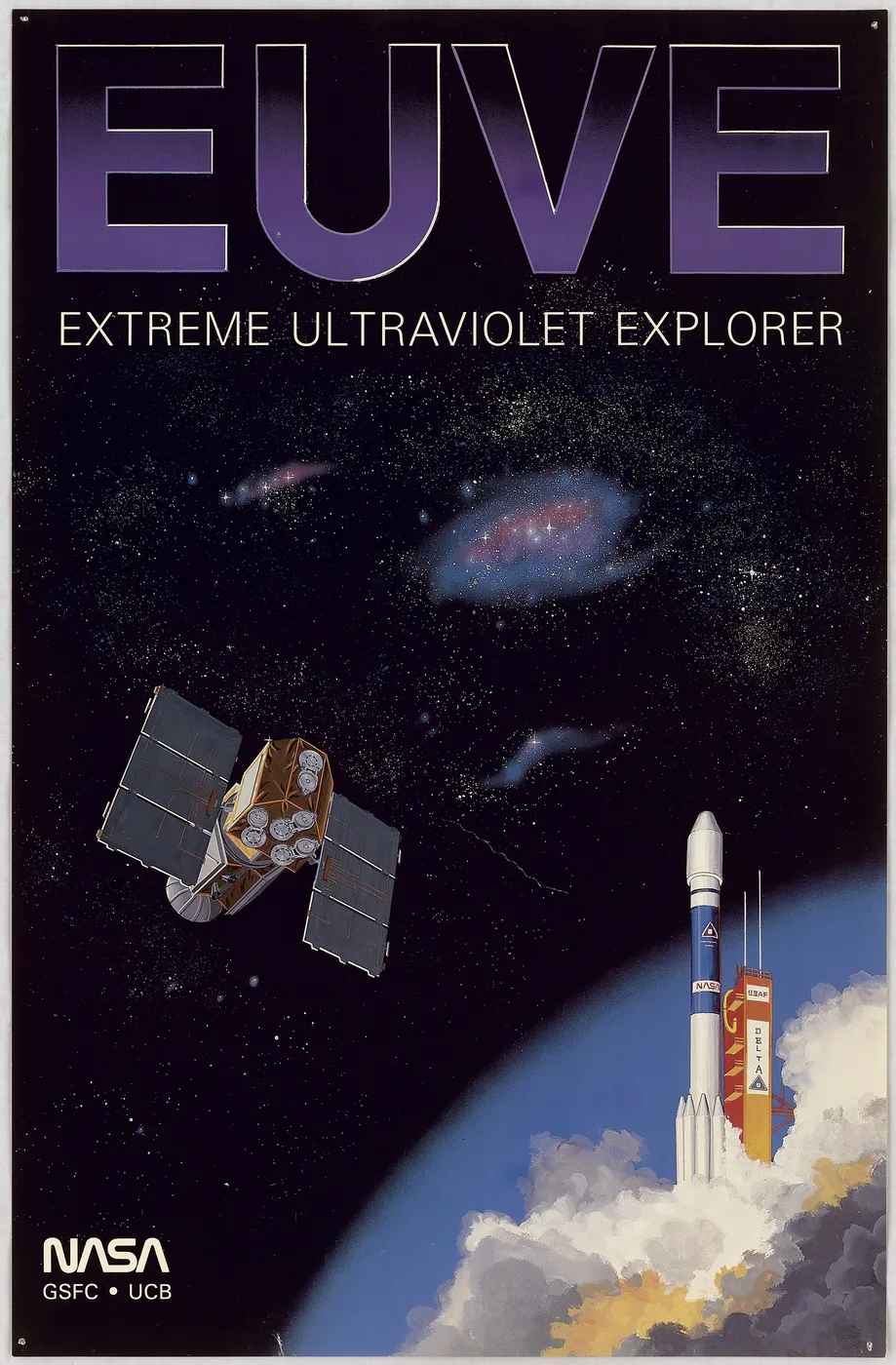

The extreme ultraviolet was the last unexplored window in the electromagnetic spectrum. It sits between the ultraviolet and X-rays, and it had been assumed to be useless for astronomy because interstellar hydrogen absorbs those wavelengths almost completely — the expectation was that nothing would be visible beyond a few dozen light years.
That assumption was wrong, because the local interstellar medium turns out to be unusually thin. The Sun sits inside a low-density bubble, and EUVE could see out through it to distances of hundreds of light years in some directions.
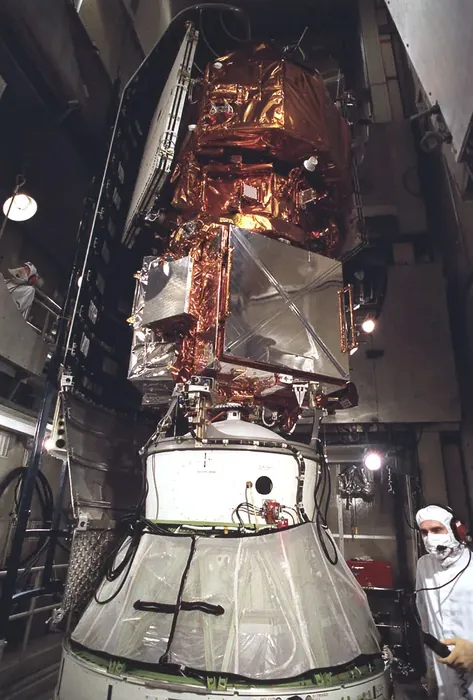
Its all-sky survey catalogued some 800 sources — hot white dwarfs, active stars with coronae far more energetic than the Sun's, and a handful of extragalactic objects seen through gaps in the absorbing gas. An entire waveband went from theoretically inaccessible to routinely observed.
The mission also pioneered remote operations. In its later years it was run from a university rather than a NASA centre, with astronomers controlling it over the internet — an early demonstration of the distributed operations model now common for small missions.
It observed for nine years before being switched off in 2001. Its principal legacy is the mapping of the local interstellar medium: by measuring how far it could see in each direction, it charted the shape of the bubble of hot, thin gas in which the solar system currently sits.