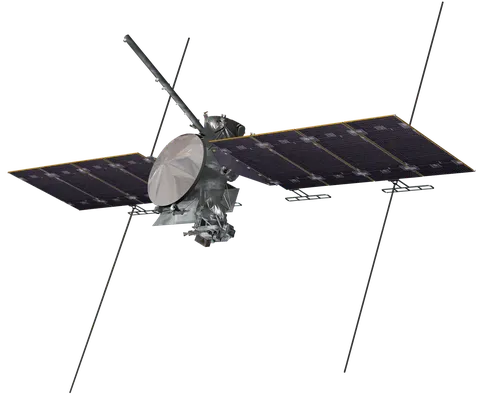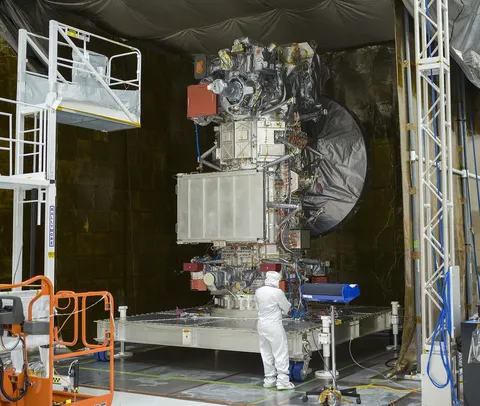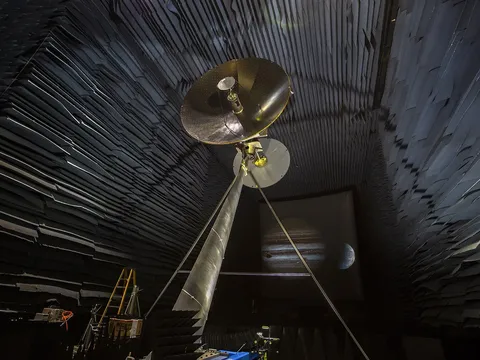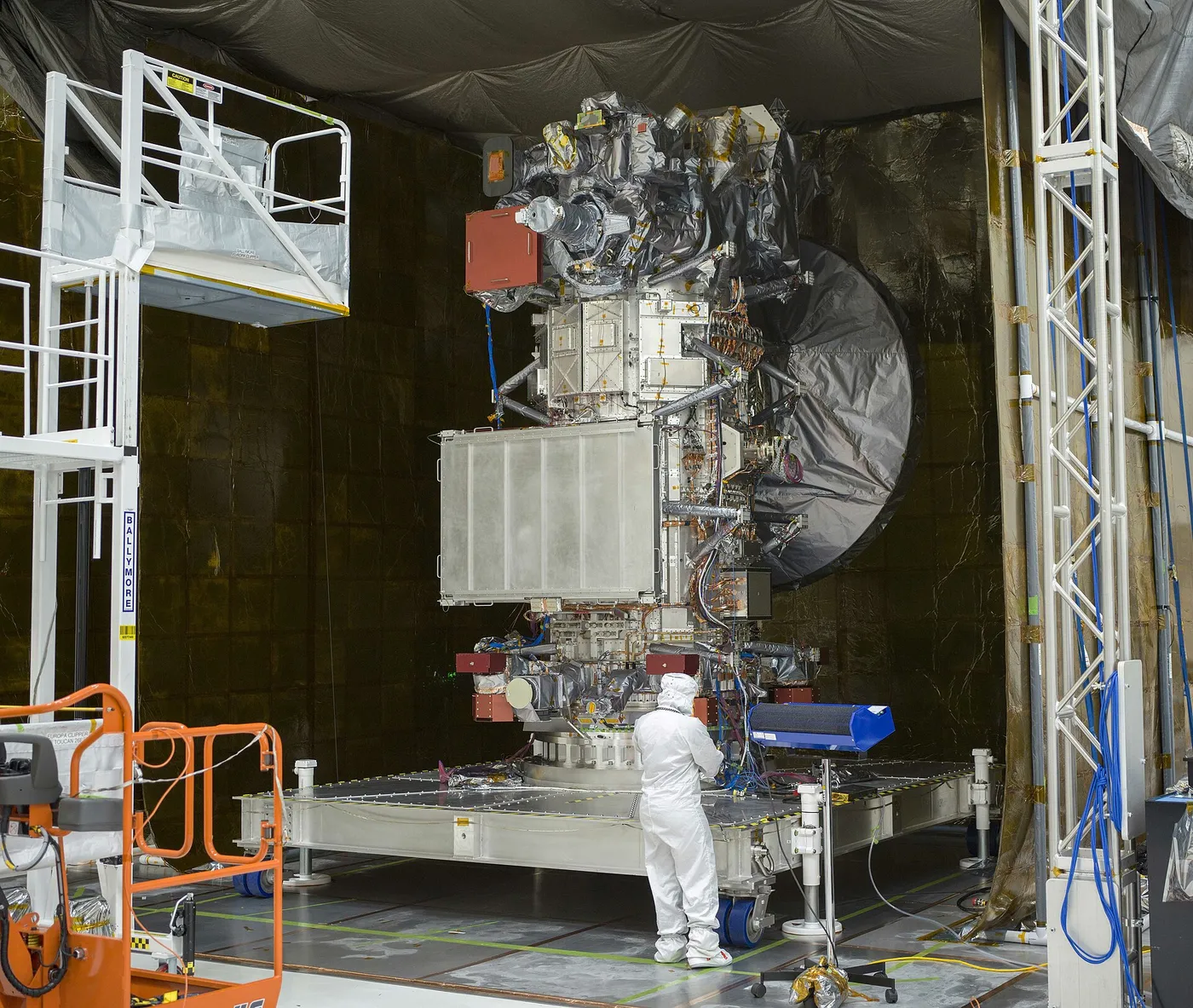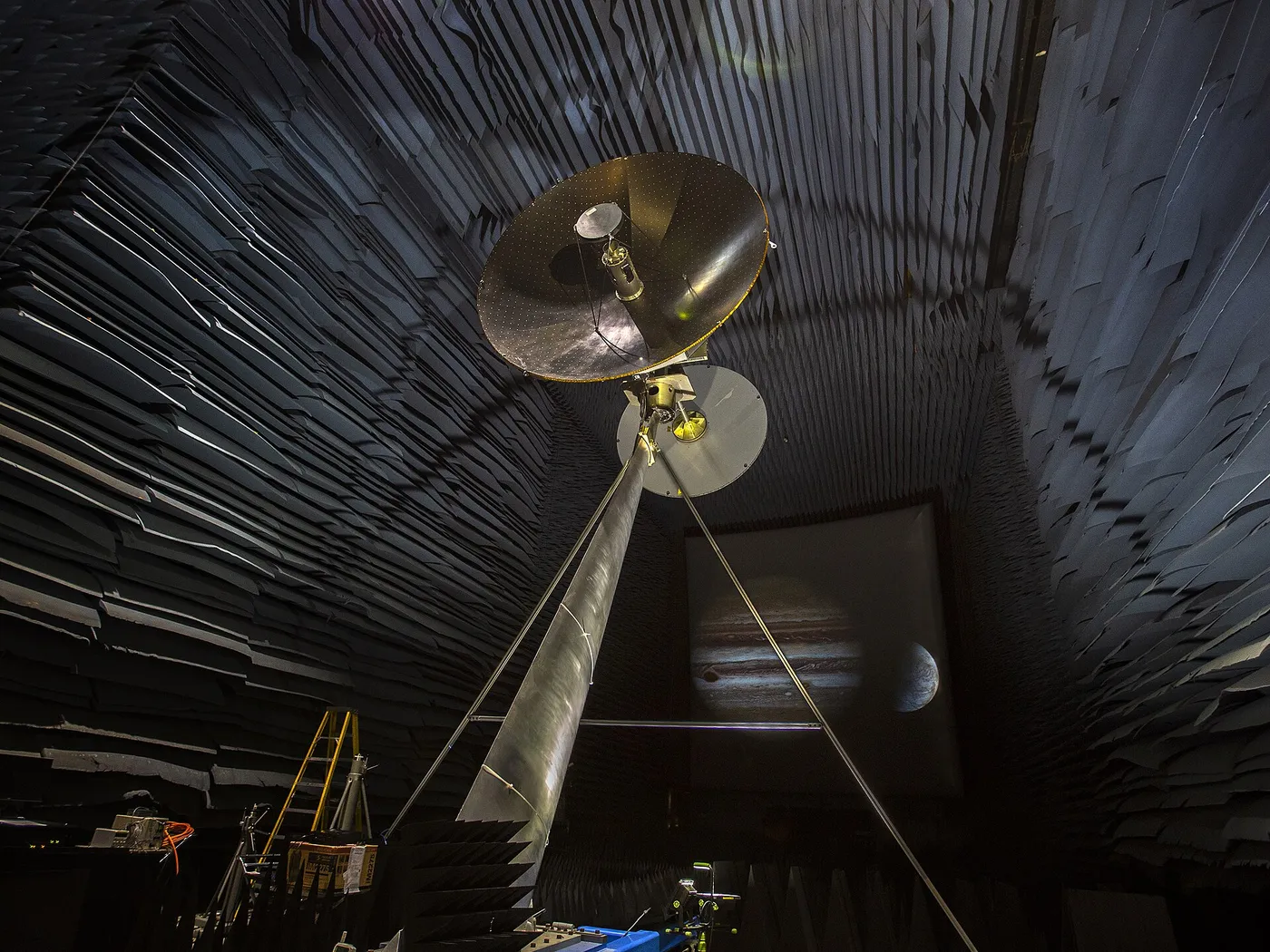
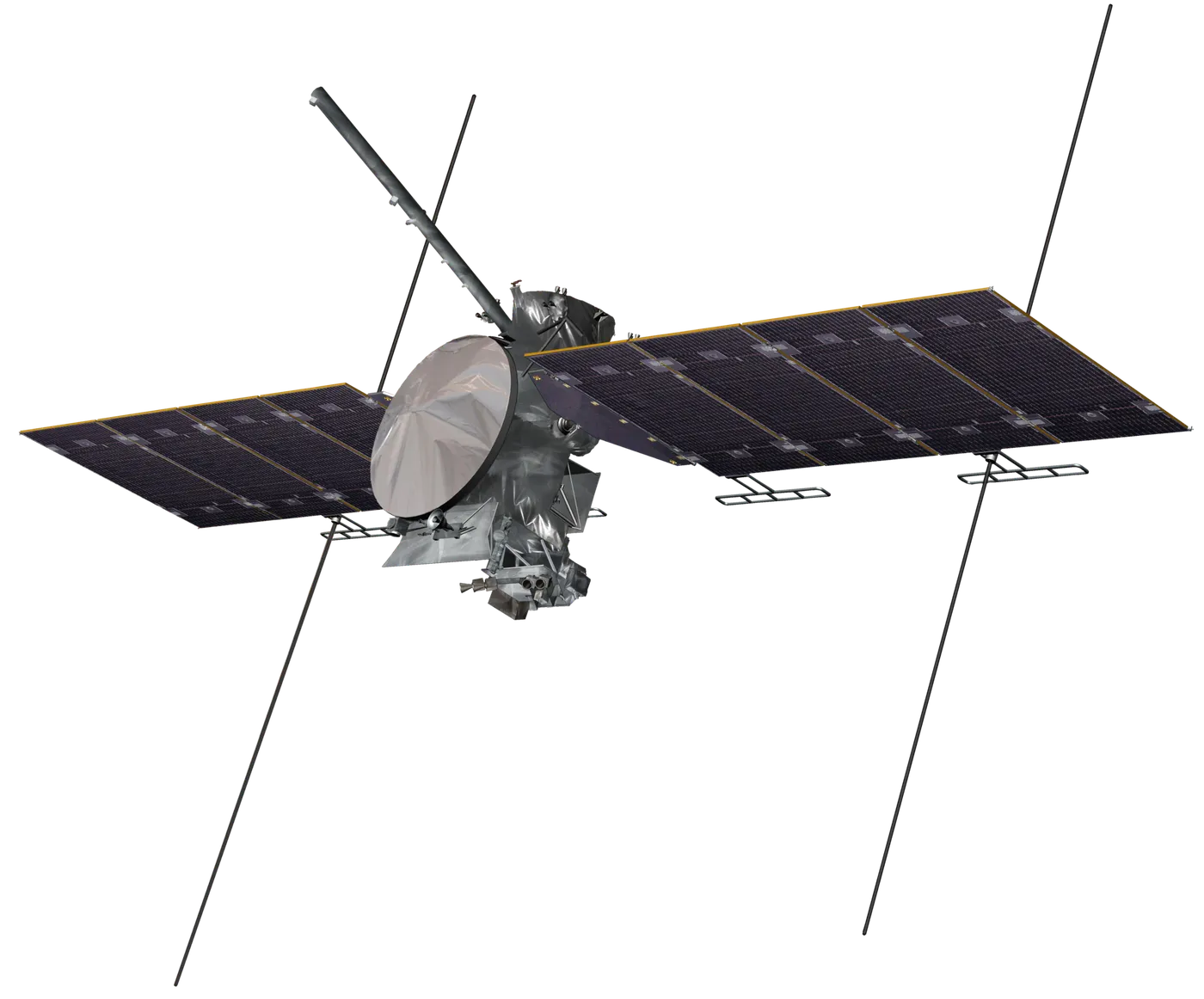

Europa Clipper is the largest planetary spacecraft NASA has ever built, with solar arrays spanning more than thirty metres, and it exists because of a measurement Galileo made almost by accident in the 1990s: a magnetic signature indicating a conducting layer beneath Europa's ice, best explained by a global salty ocean.
That ocean may hold twice the water of all Earth's oceans combined, over a rocky seafloor, warmed by tidal flexing — the three ingredients usually named as requirements for life. The mission's purpose is not to find life but to establish whether the conditions for it exist, which is a deliberately more answerable question.
It will not orbit Europa, because the radiation there would destroy the spacecraft within weeks. Instead it orbits Jupiter and makes around fifty close flybys, dashing in to gather data and retreating to transmit and recover — the same strategy Juno uses, applied to a moon.
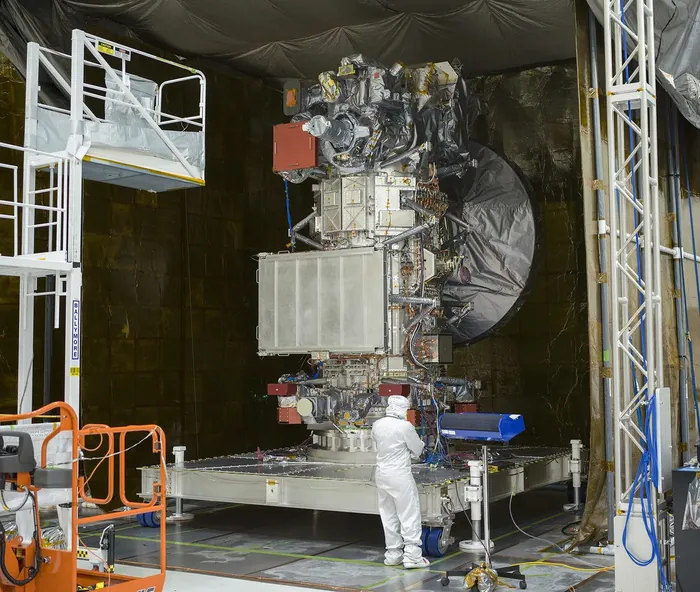
The programme survived a serious scare shortly before launch, when transistors of a type used throughout the spacecraft were found to be less radiation-tolerant than certified. Months of analysis concluded that the mission's flyby profile gave the parts enough recovery time between exposures, and the launch went ahead in October 2024.
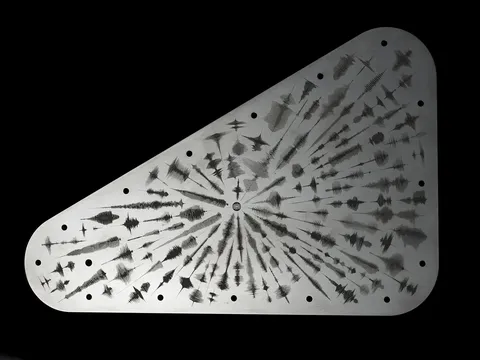
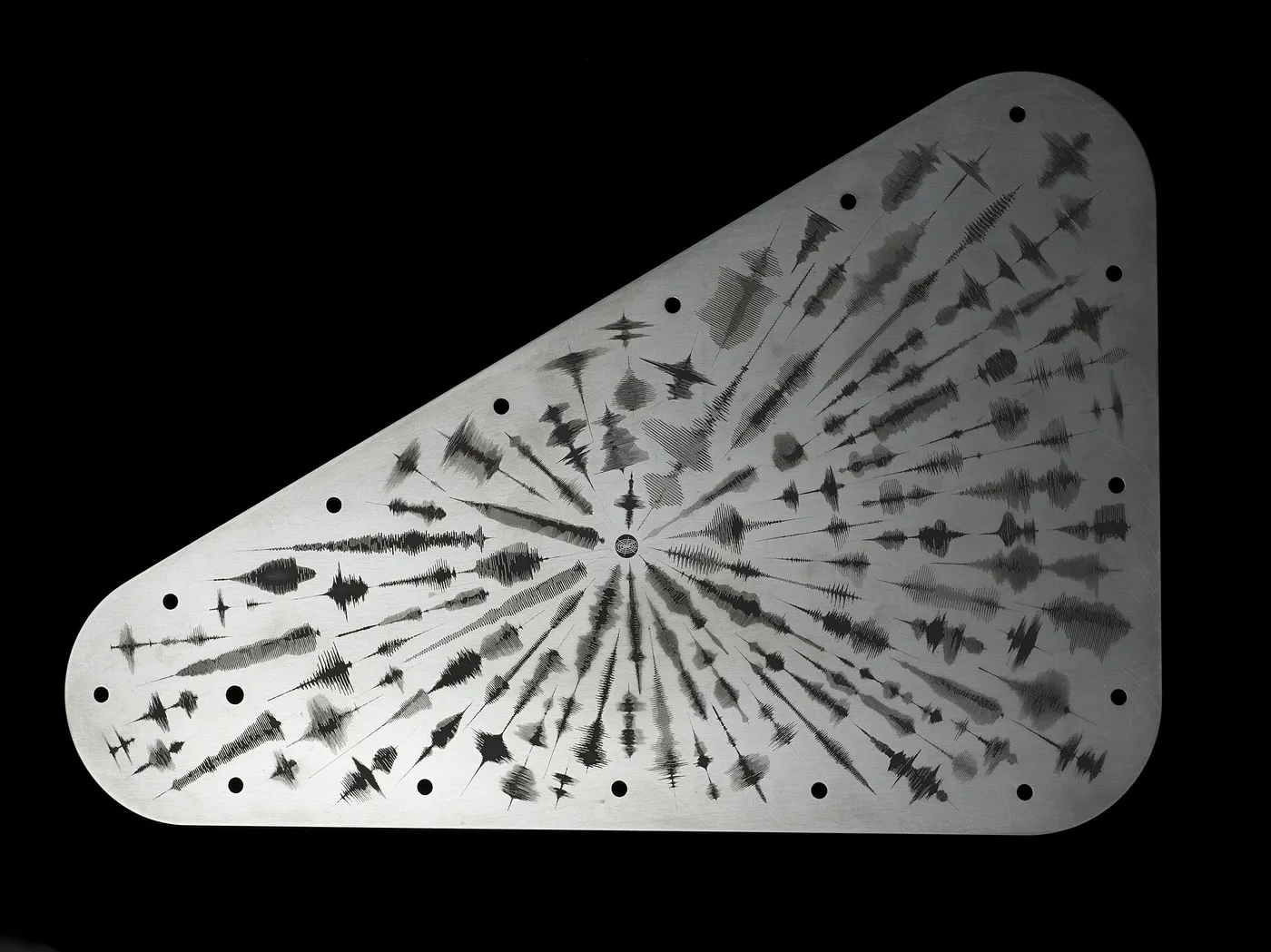
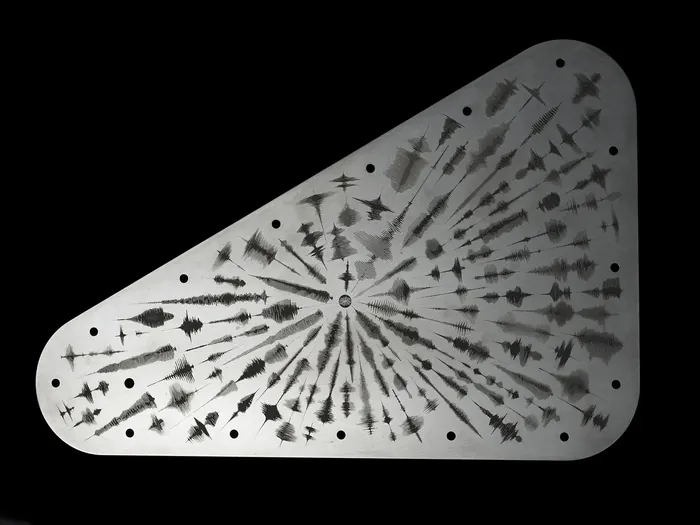
It carries, as such missions increasingly do, a cultural payload: a poem by the American poet laureate Ada Limón engraved on a metal plate, alongside the names of more than two and a half million people etched on a microchip. It arrives in 2030 for a mission running into the mid-2030s.