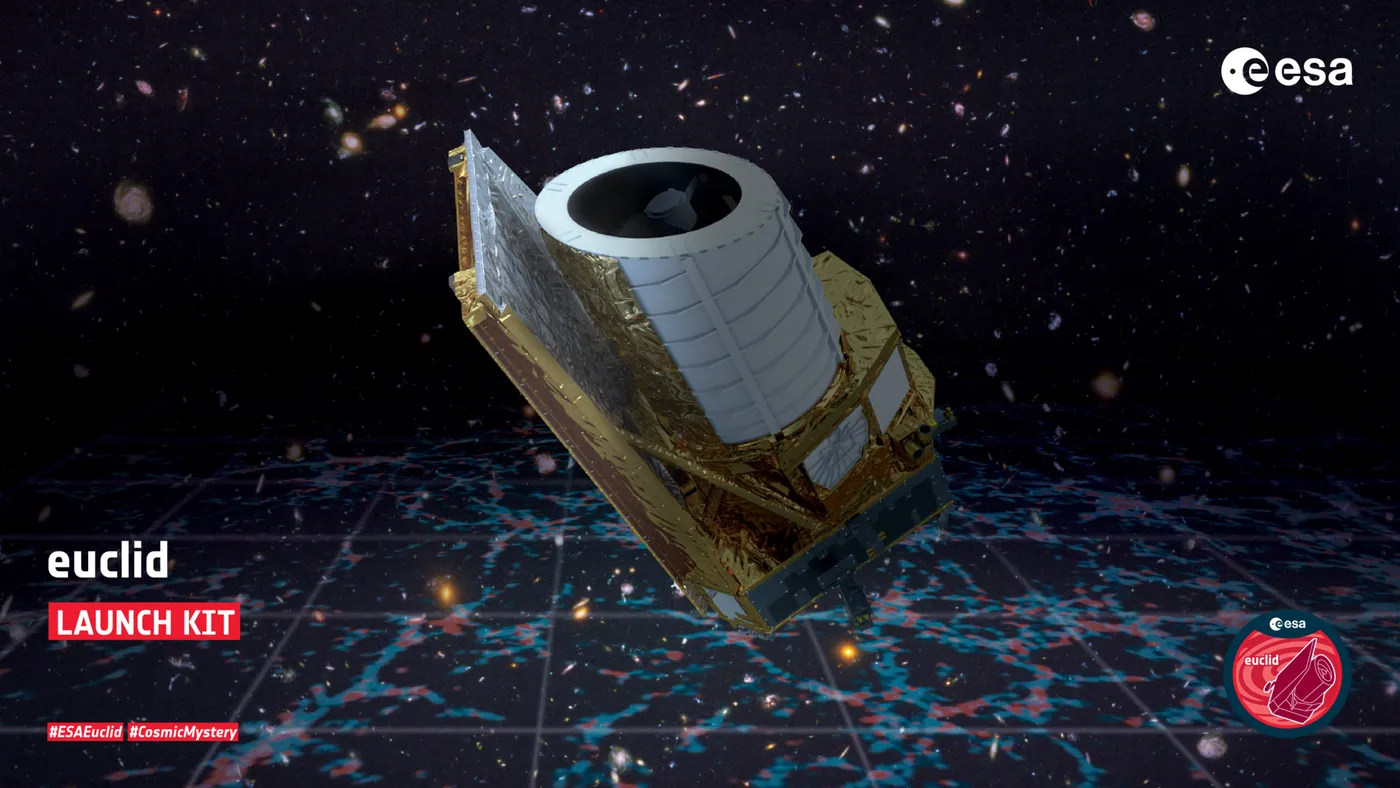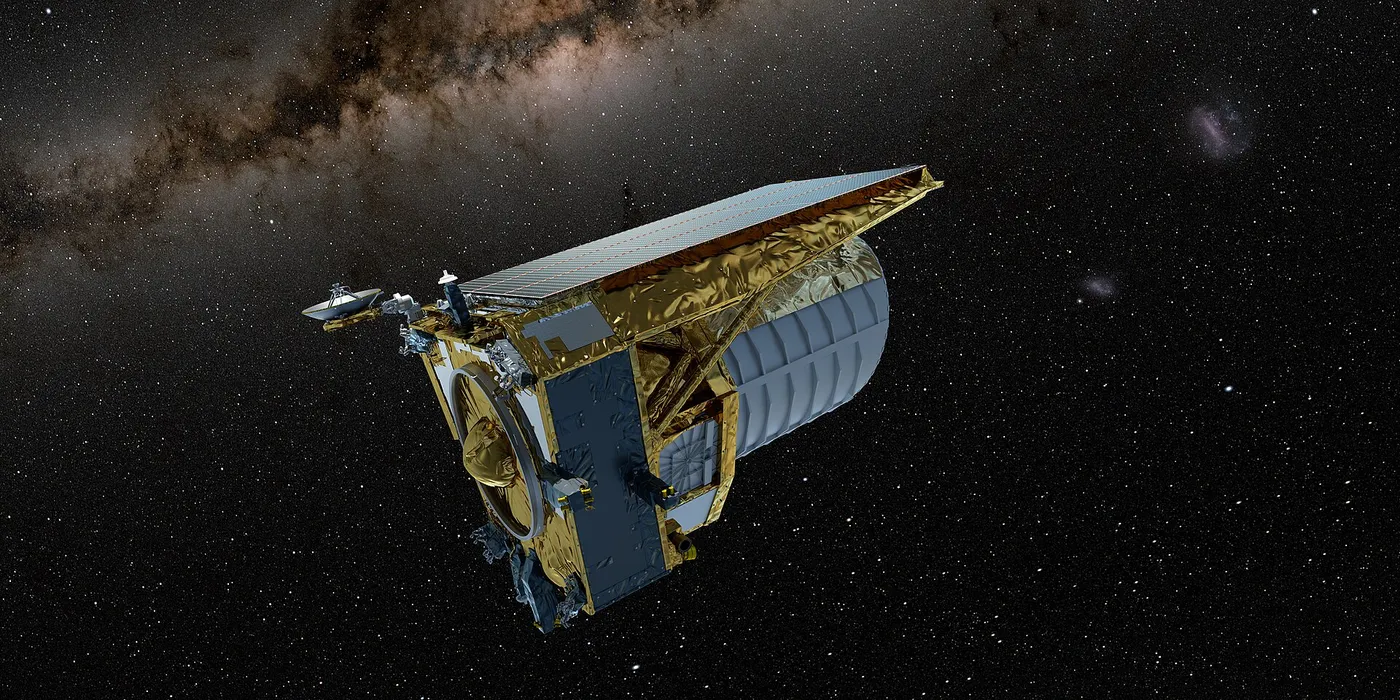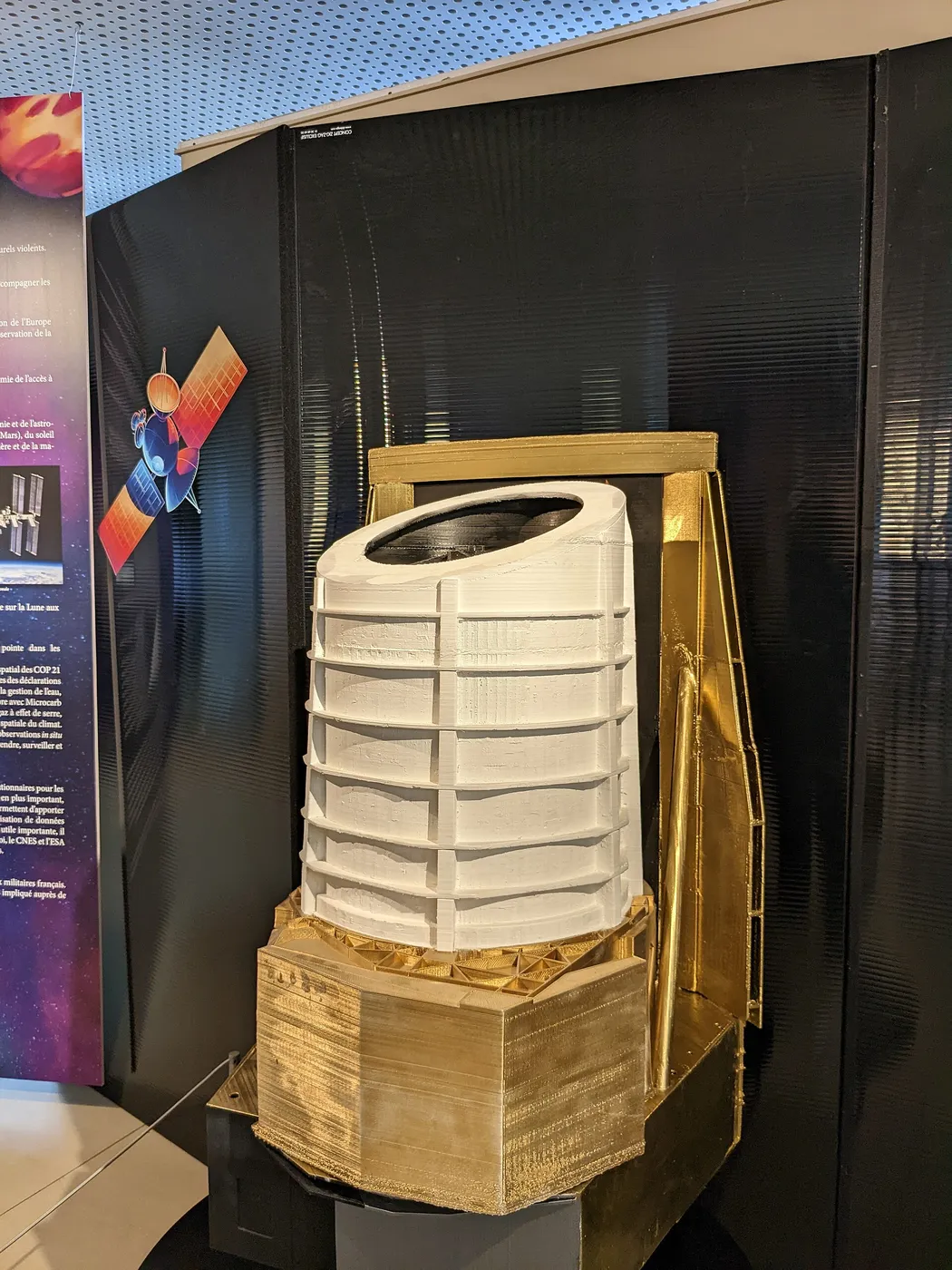
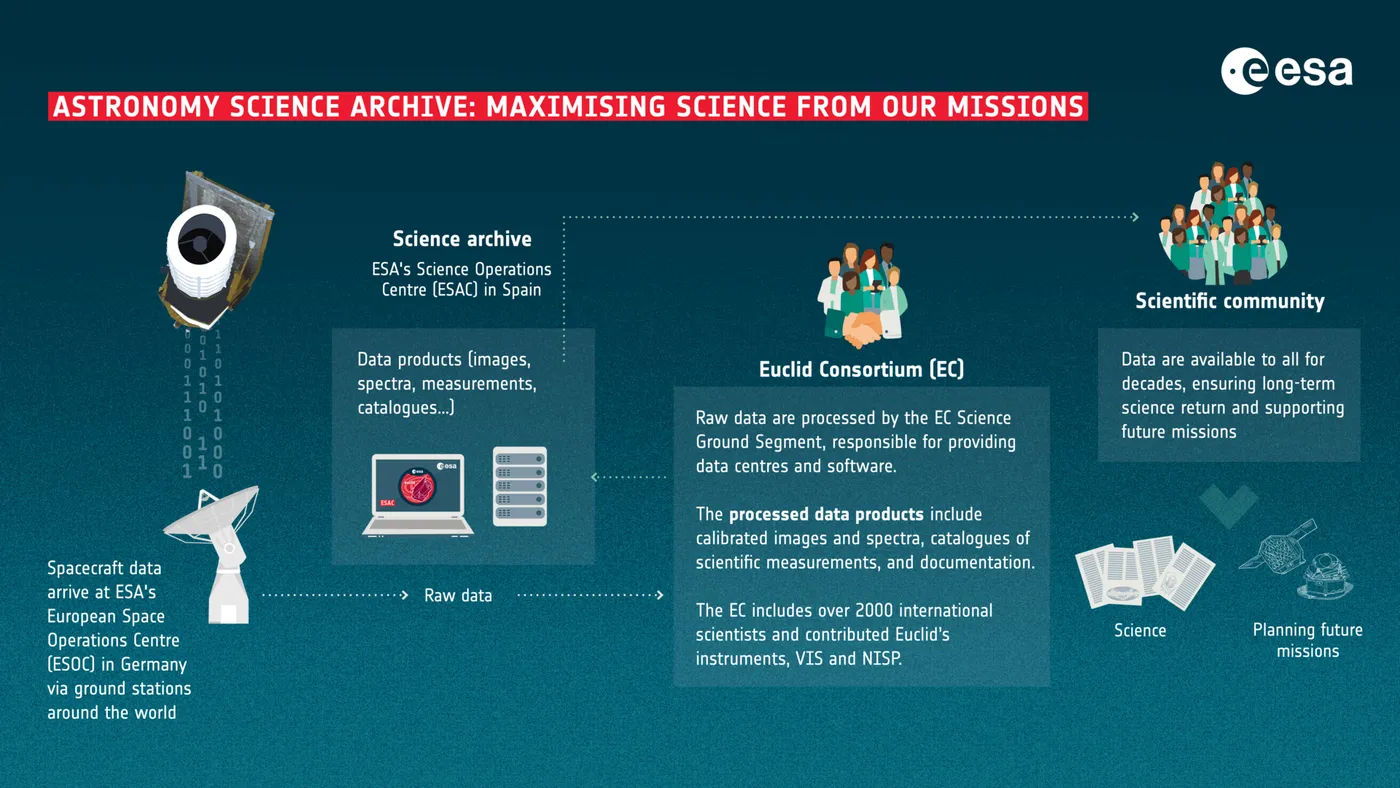

Euclid is trying to work out what dark energy is, or at least to measure it well enough to rule out most of the explanations. It surveys about a third of the sky, imaging billions of galaxies and measuring the distances to tens of millions of them, building a three-dimensional map covering the last ten billion years of cosmic history.
The key technique is weak gravitational lensing. Mass bends light, so the images of distant galaxies are subtly distorted by everything between them and us; the distortion is far too small to see in any single galaxy but emerges statistically across millions, mapping the distribution of dark matter directly.
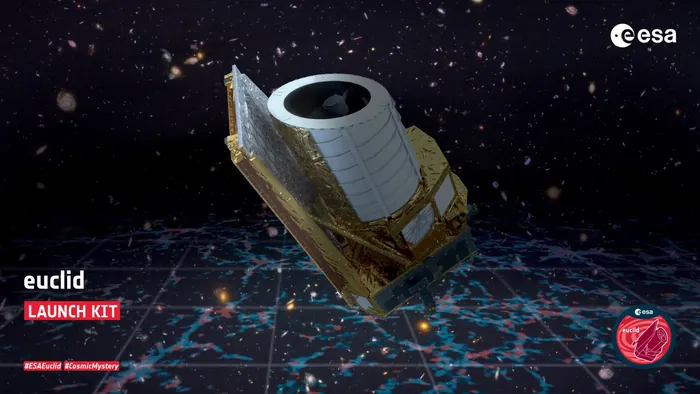
By comparing how that structure has grown over cosmic time with how fast the universe has been expanding, the survey constrains whether dark energy behaves as a constant property of space — Einstein's cosmological constant — or as something that changes, which would require new physics.
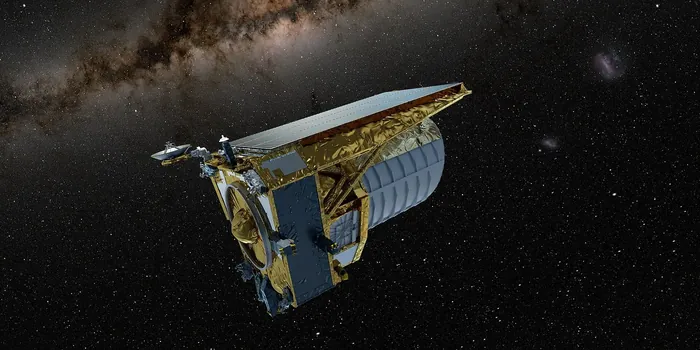
The mission lost its launcher to politics. Designed to fly on a Soyuz from French Guiana, it was left without a ride when European cooperation with Russia ended in 2022, and was moved to a Falcon 9 — an arrangement that would have been unthinkable when the mission was approved and which delayed it by about a year.
It launched in 2023 and released its first survey data in 2025, with the full analysis due towards the end of the decade. Its early images have already demonstrated the combination it was built for: Hubble-like sharpness across a field of view hundreds of times larger.