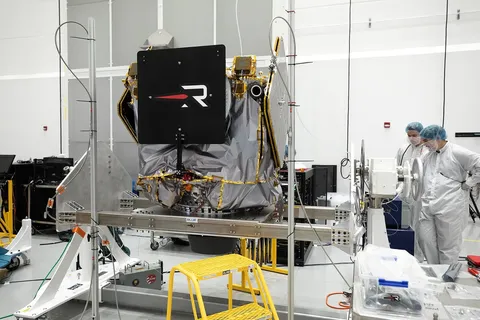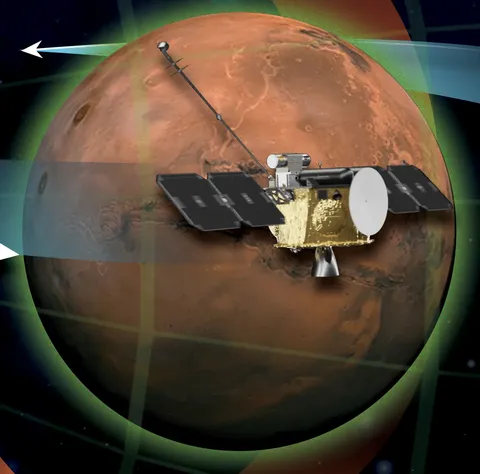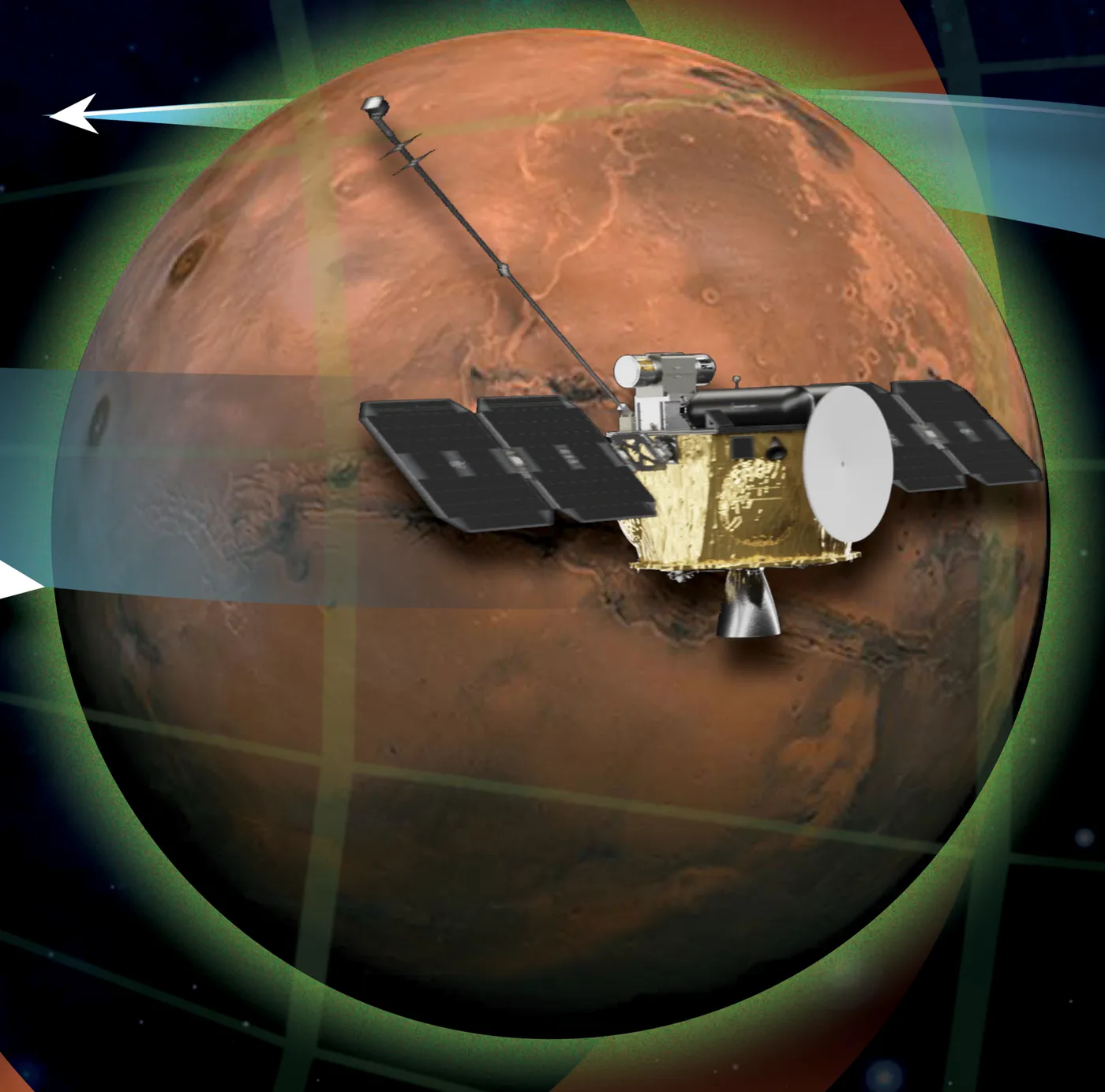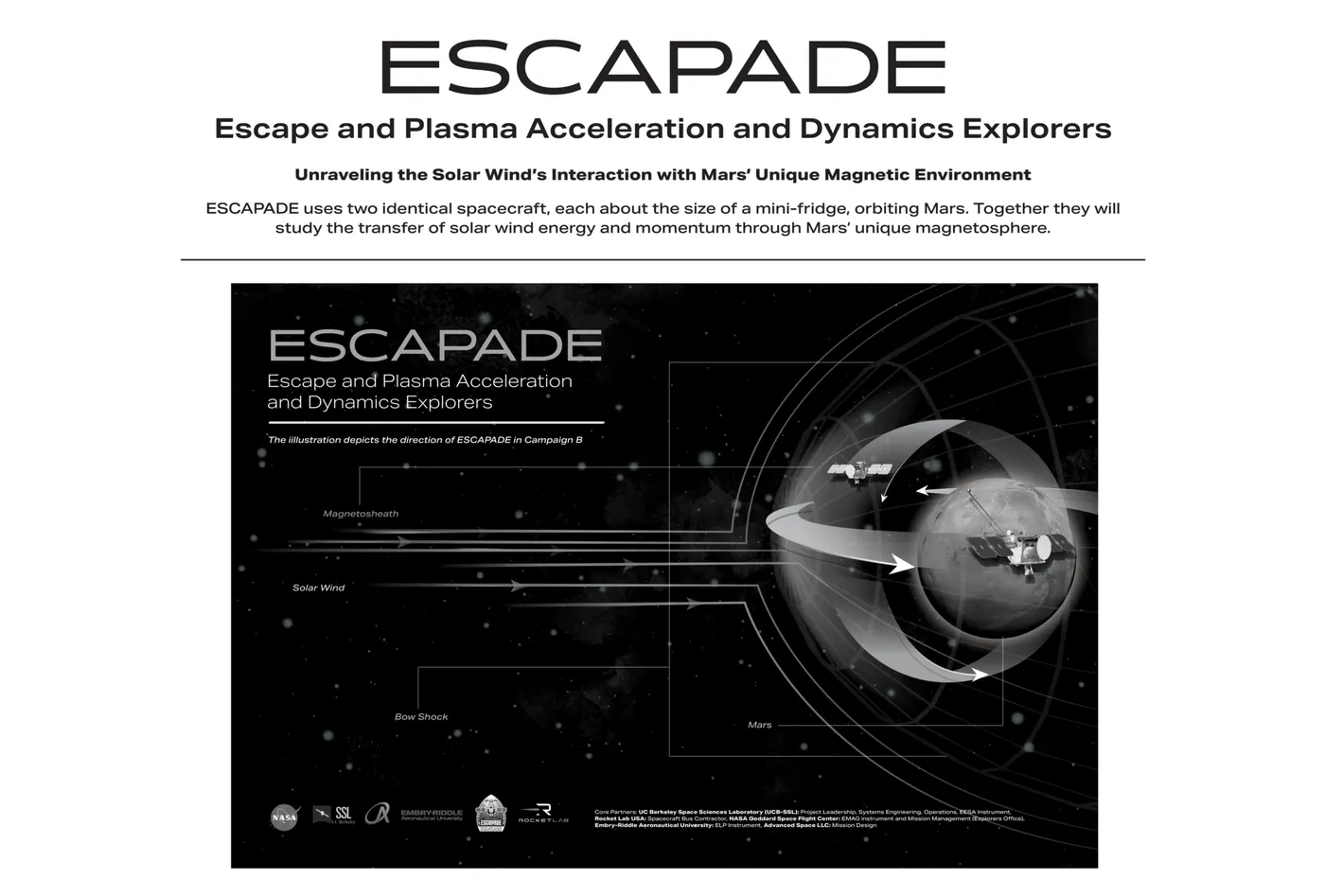
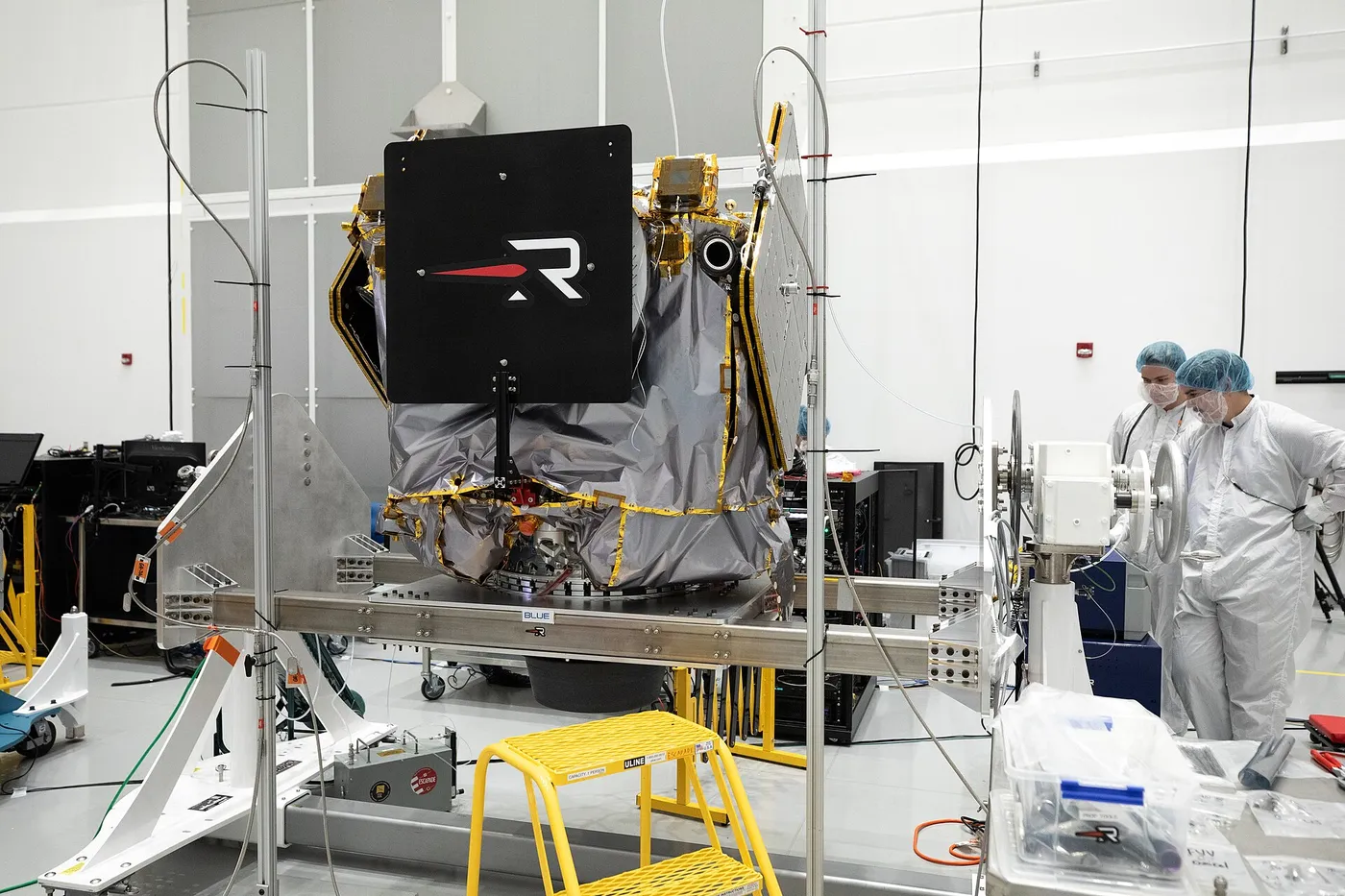

ESCAPADE is two spacecraft rather than one, and that is the entire point. Studying how the solar wind strips away Mars's atmosphere requires measuring conditions in two places at once — upstream in the undisturbed wind and downstream in the planet's magnetic environment — because a single spacecraft cannot tell whether a change it sees is happening in time or in space.
MAVEN established that Mars is losing its atmosphere to space; the twin probes, named Blue and Gold after the colours of the University of California at Berkeley, are meant to work out the mechanism in detail by flying in formation on complementary orbits.

The mission is built to a cost cap of well under $100 million, an order of magnitude below a conventional Mars orbiter, using small spacecraft buses of the kind that have become common in Earth orbit and are only now being trusted with interplanetary work.
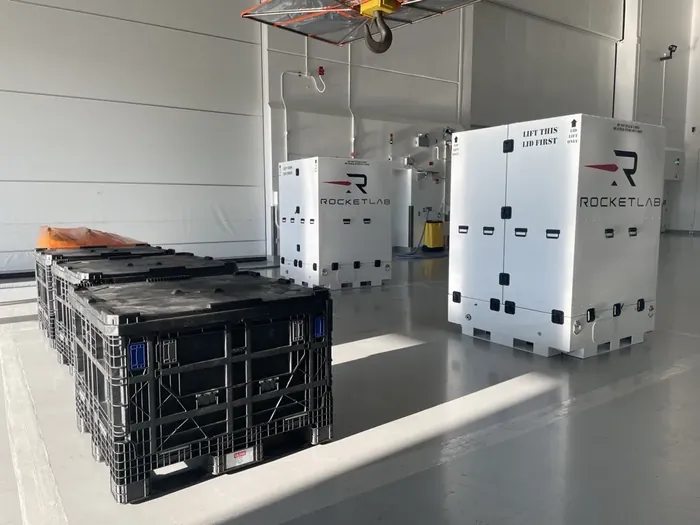
It also served as the first real payload for Blue Origin's New Glenn rocket, launching in November 2025 — an arrangement that carried obvious risk for the science team, since a new heavy-lift vehicle's early flights are exactly where failures cluster. The launch succeeded.
If the mission works it will demonstrate that Mars orbiters no longer need to be flagship-scale investments, which would change how often such missions can be flown. Atmospheric escape is also directly relevant beyond Mars: whether a planet keeps its air is among the central questions in assessing which exoplanets might be habitable.