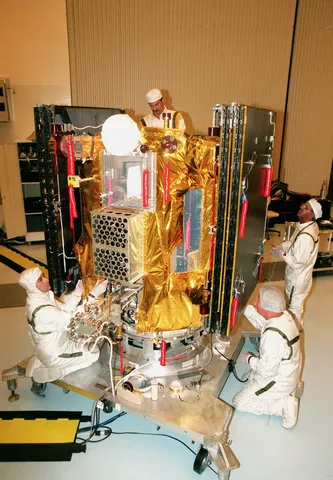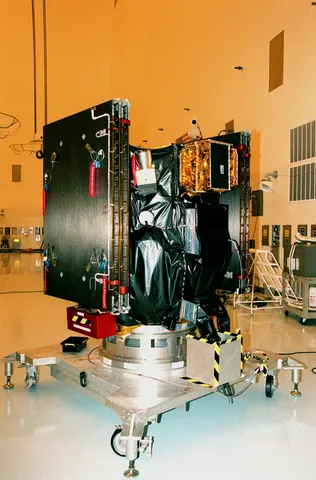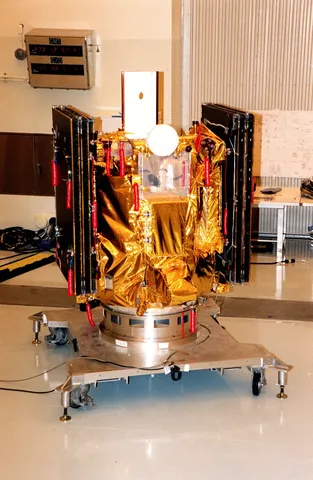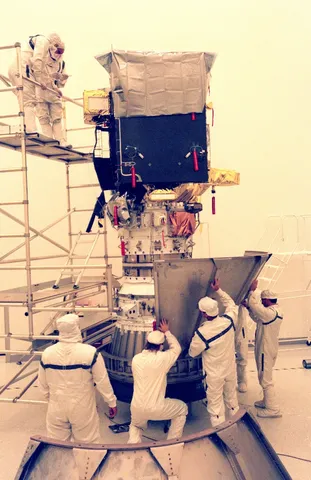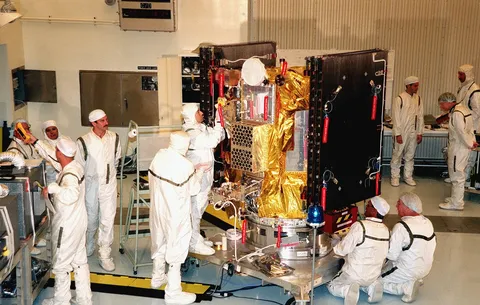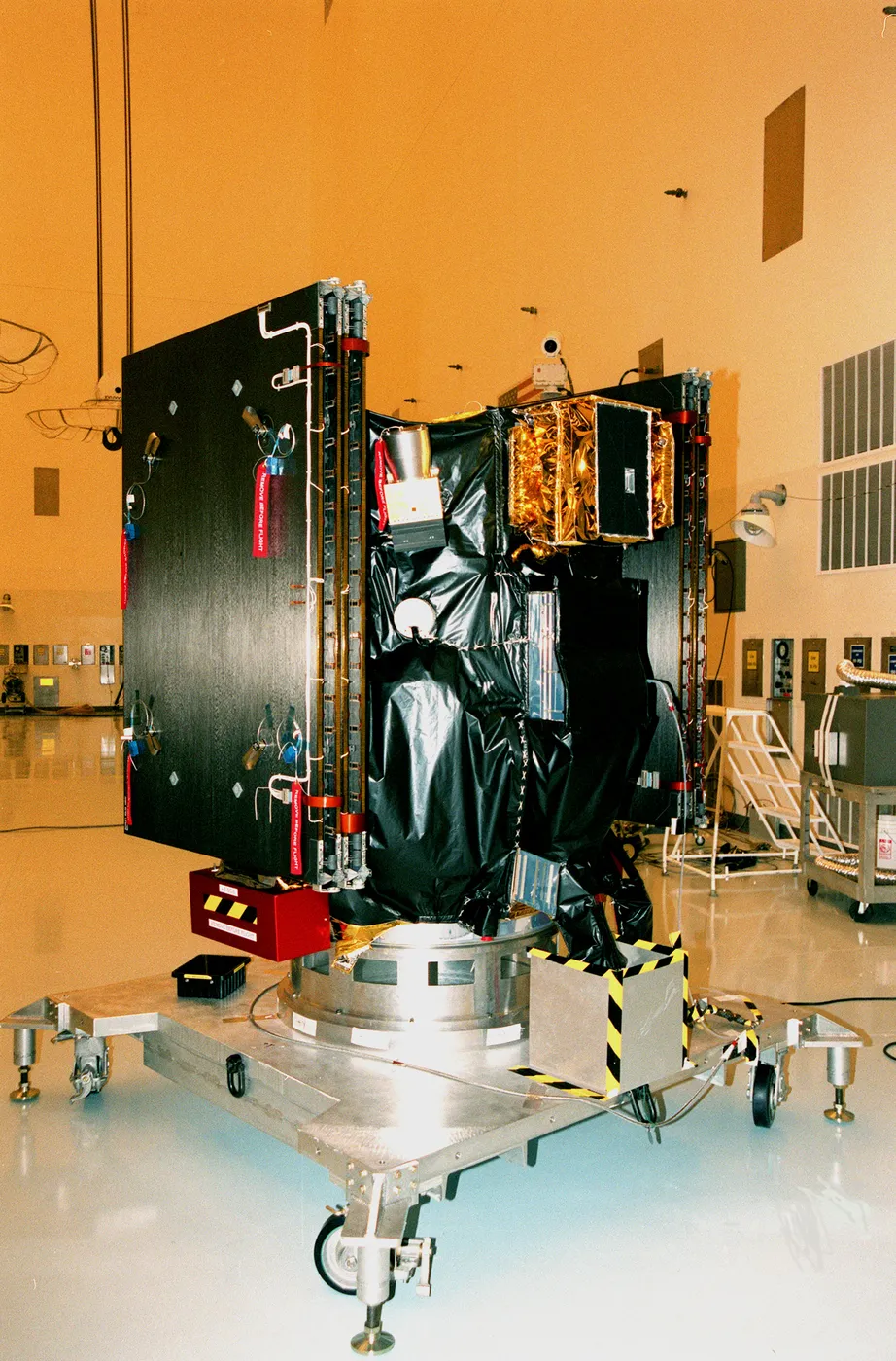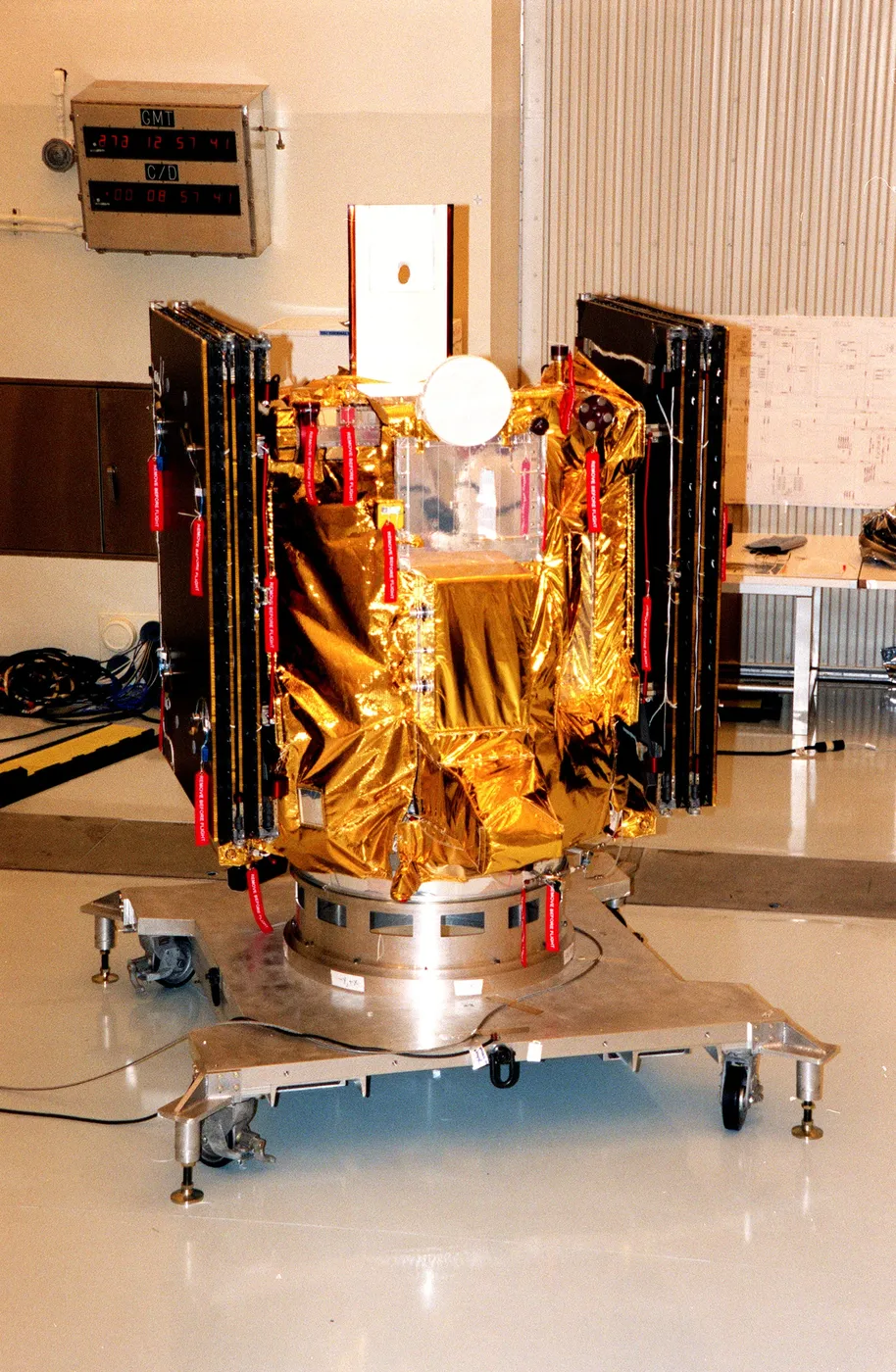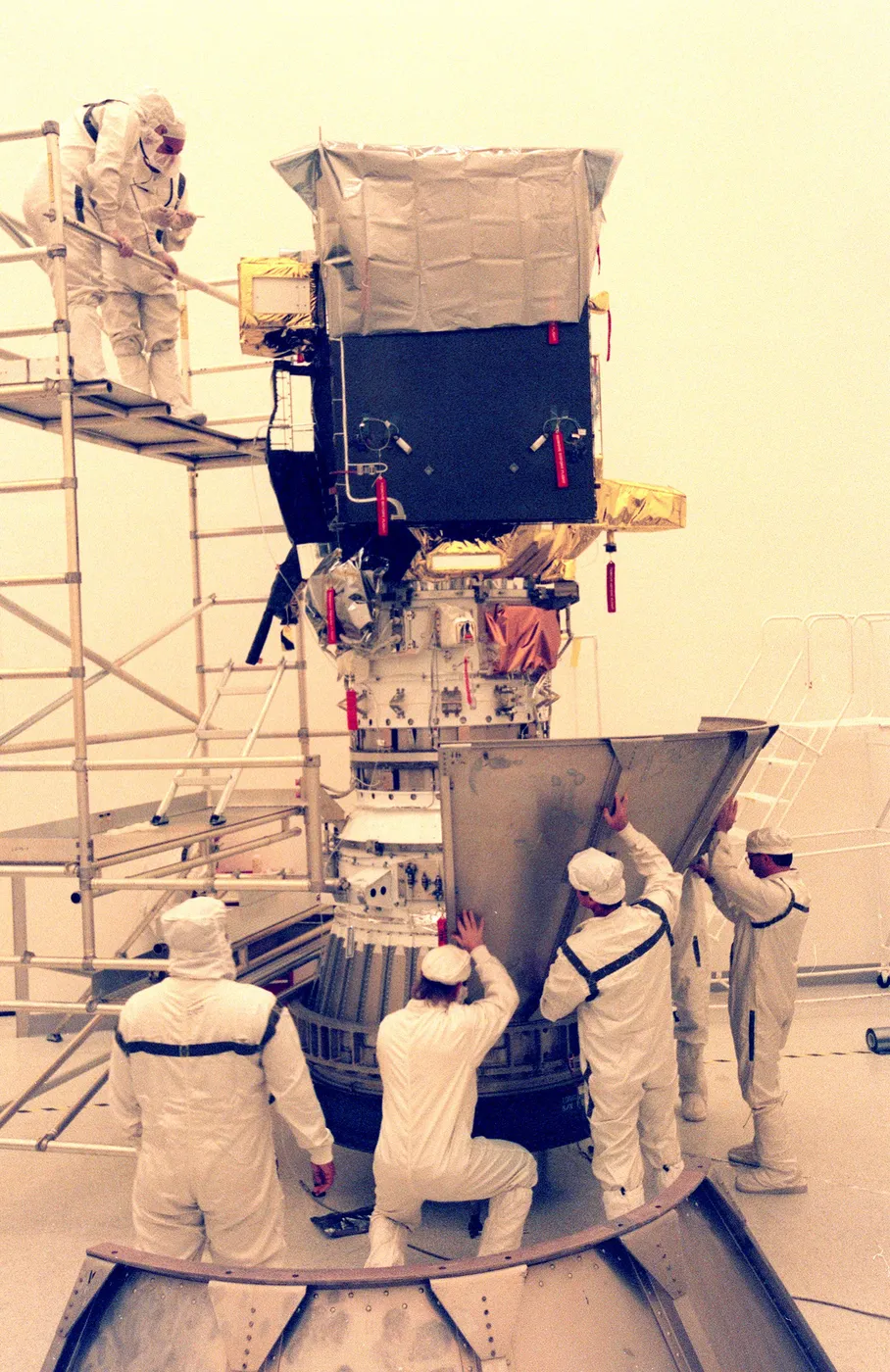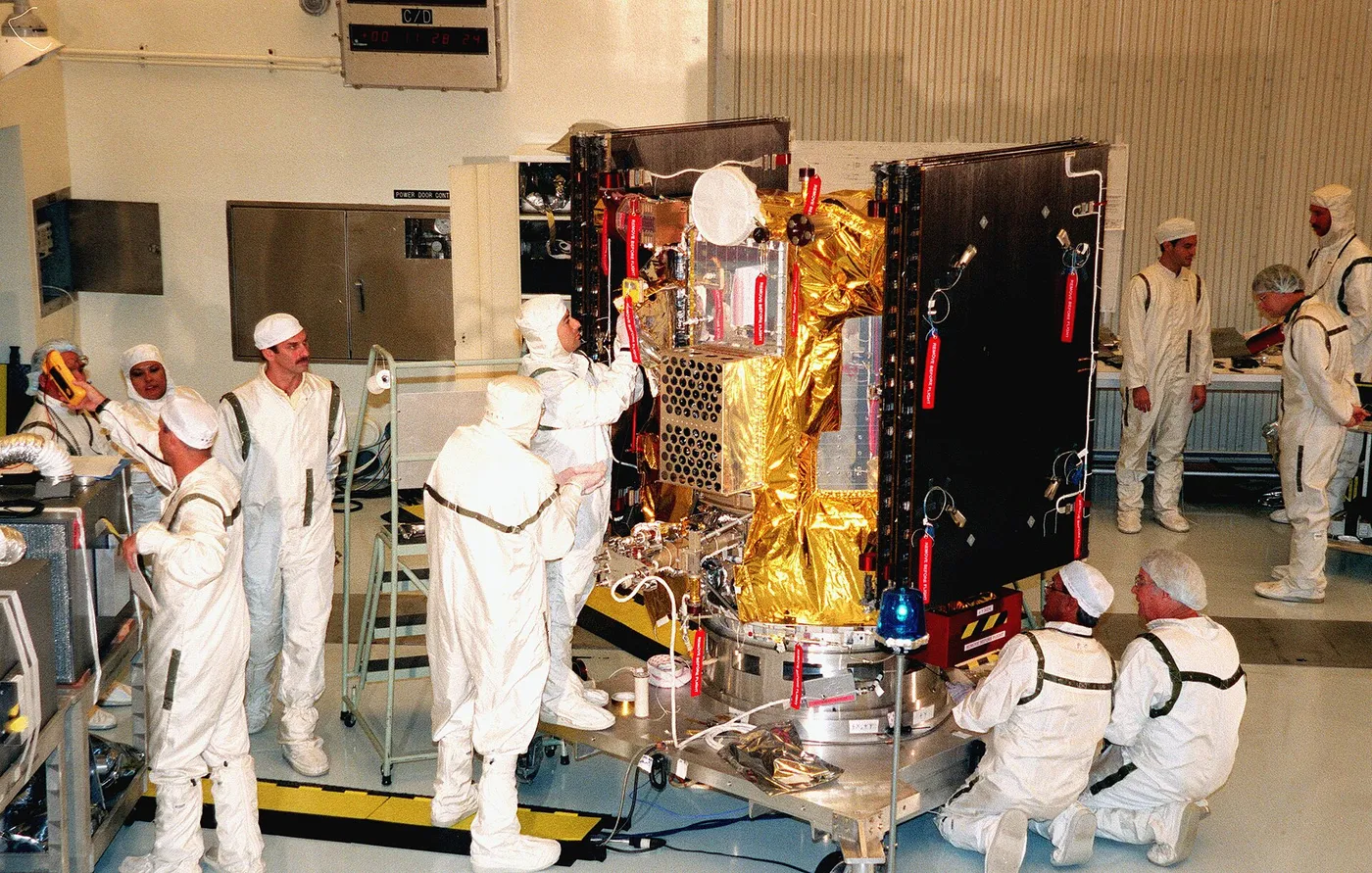
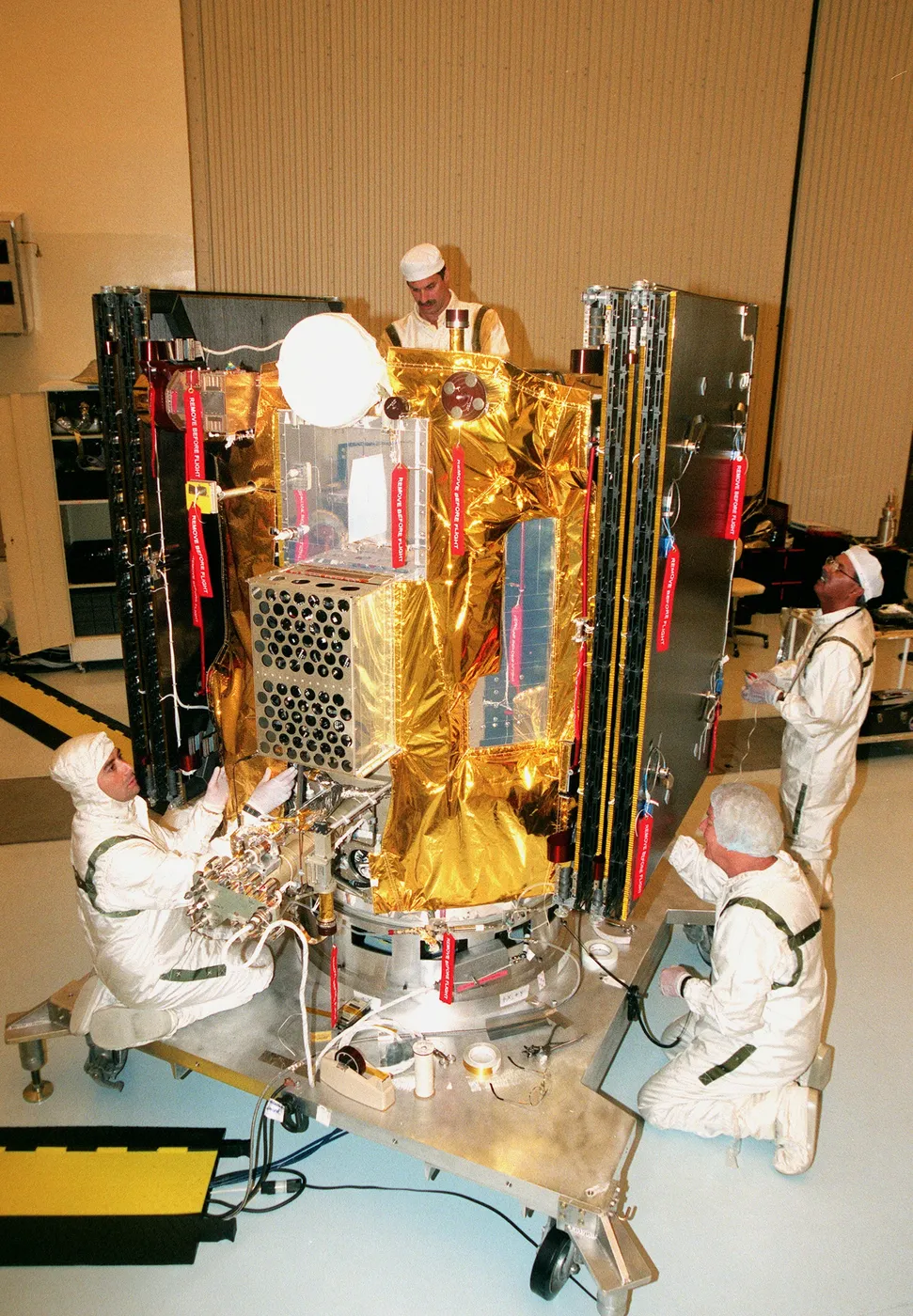

Deep Space 1 existed to try things that were too risky to put on a real mission. It was the first of the New Millennium technology demonstrators, and its job was to fly twelve advanced systems in deep space so that later missions could use them without gambling their science on unproven hardware.
The most consequential was ion propulsion. Instead of burning propellant in a few violent minutes, the engine accelerated xenon ions electrically, producing about as much thrust as the weight of a sheet of paper — but doing so continuously for months, ultimately achieving velocity changes no chemical engine of the same mass could match. Dawn, Hayabusa, BepiColombo and Psyche all descend from this test.
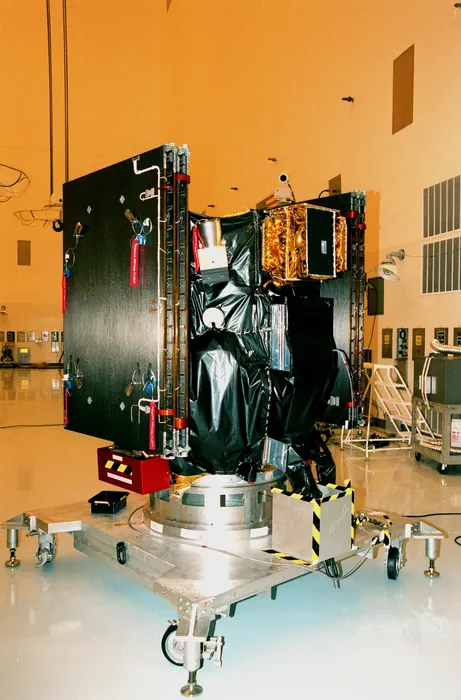
It also flew an autonomous navigation system that let the spacecraft determine its own position by photographing asteroids against the star background and correct its own course — a significant step away from the ground-in-the-loop model in which every manoeuvre is computed on Earth.
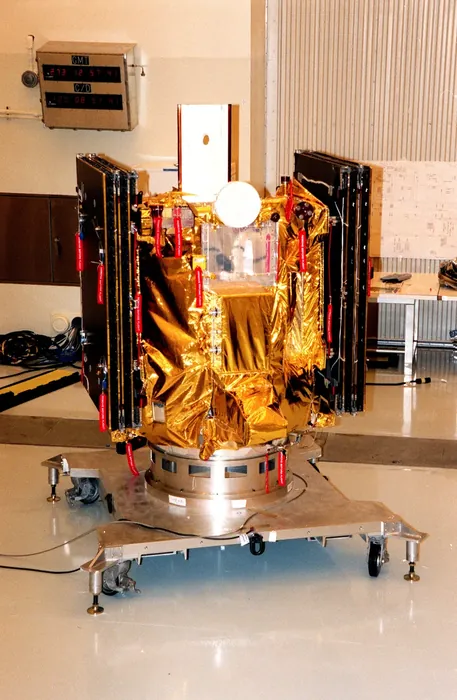
Then its star tracker failed, and without a way to determine its orientation the spacecraft was effectively lost. Over several months engineers wrote and uploaded new software that repurposed the science camera as a star tracker — an instrument never designed for the job, with the wrong field of view and the wrong sensitivity — and recovered full operations.
The salvaged spacecraft went on to fly past comet Borrelly in September 2001 and return the best images of a cometary nucleus obtained to that date, revealing a bowling-pin-shaped body with smooth plains and rugged terrain. A technology demonstrator with no scientific mandate had produced first-rate science after its critical hardware failed.