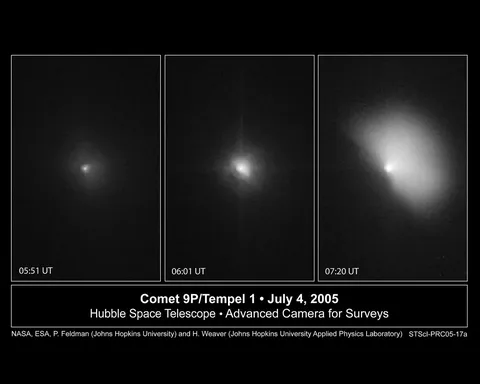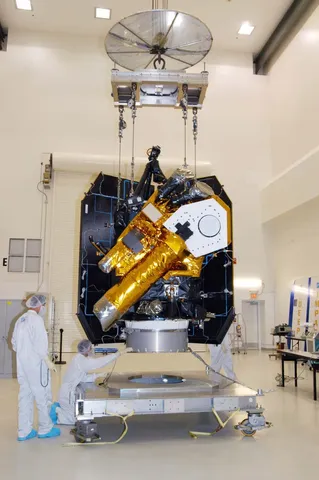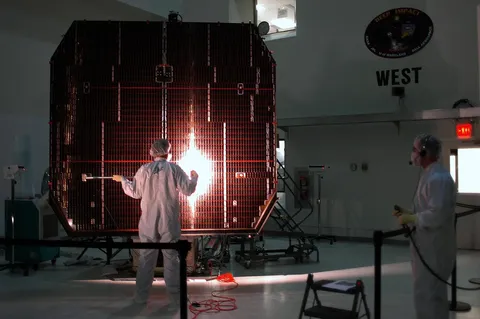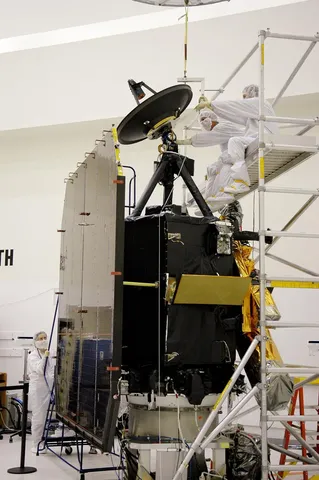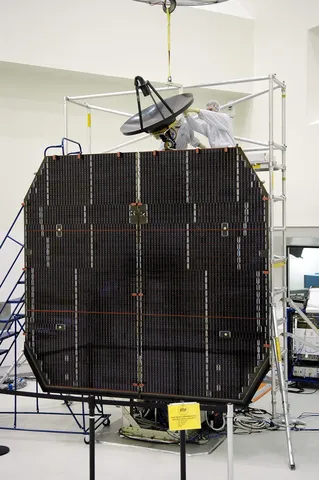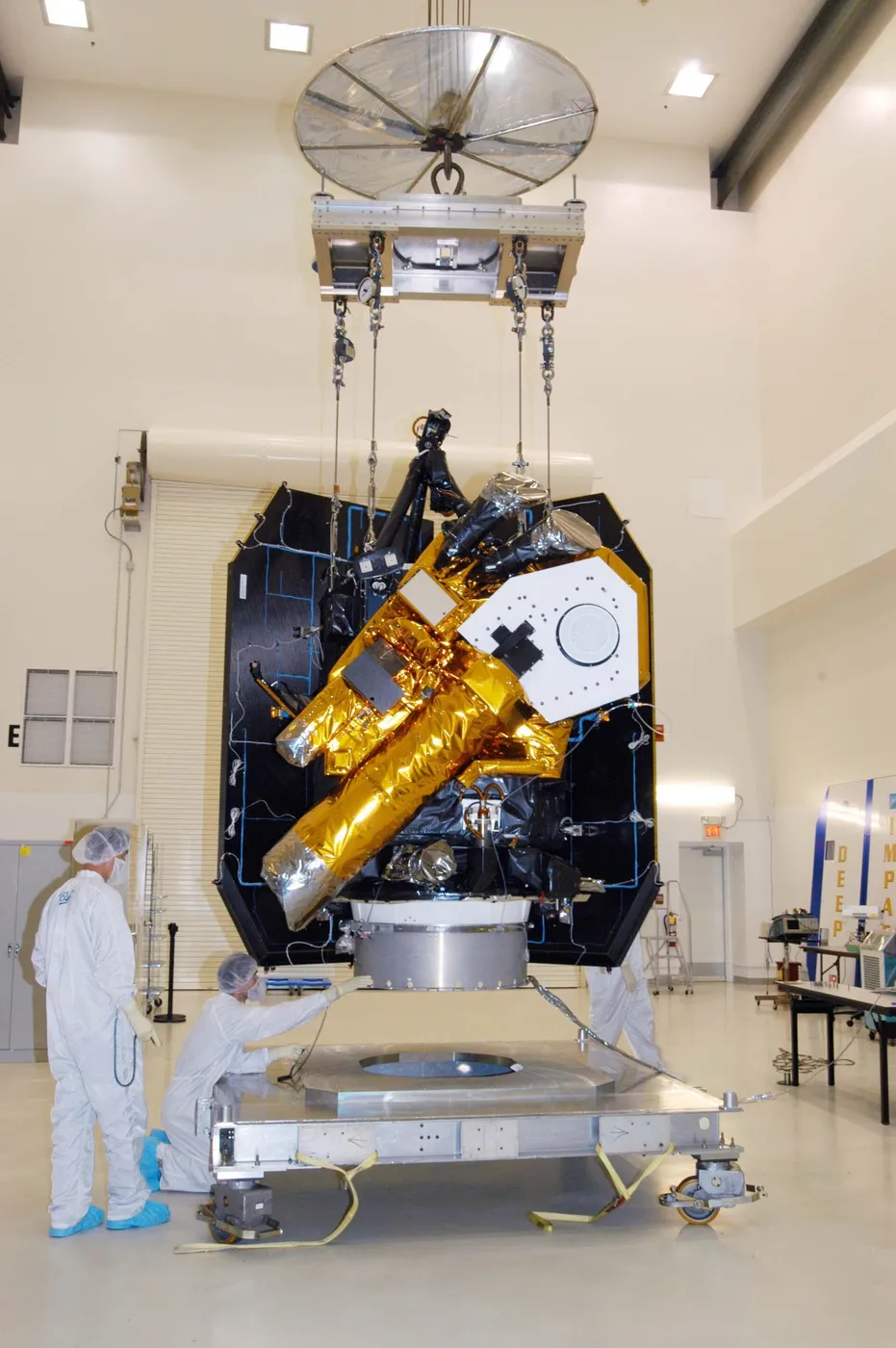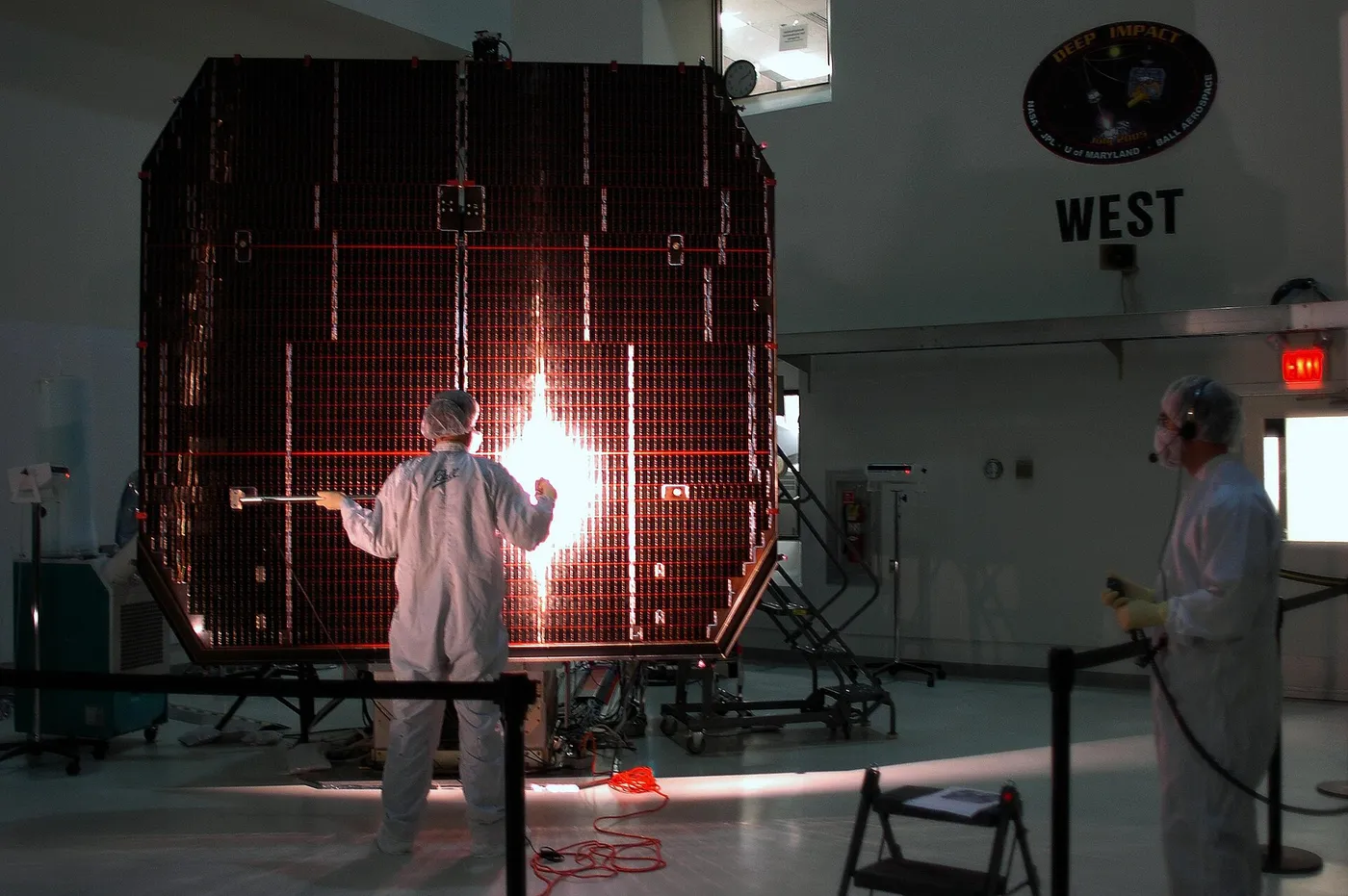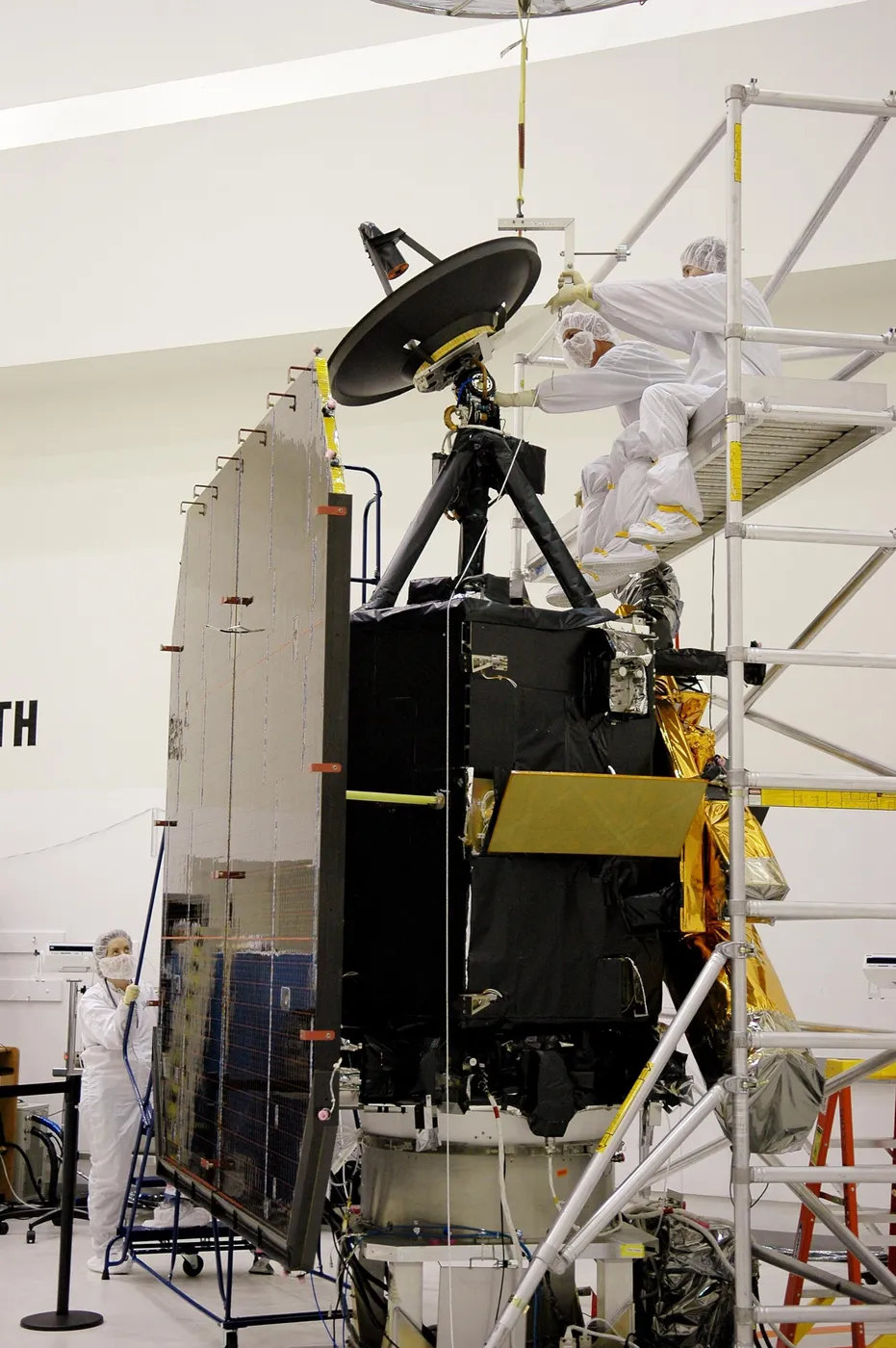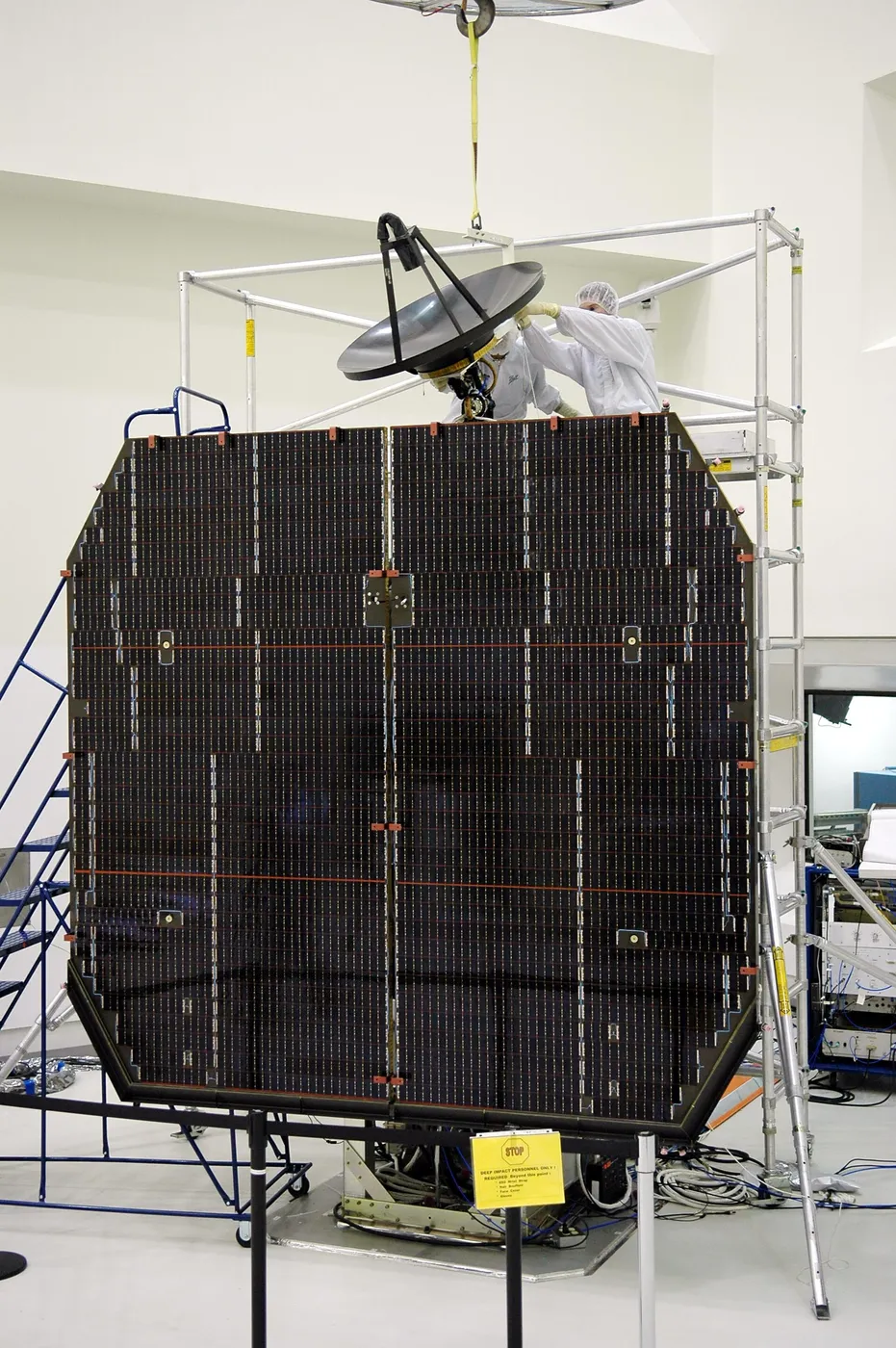
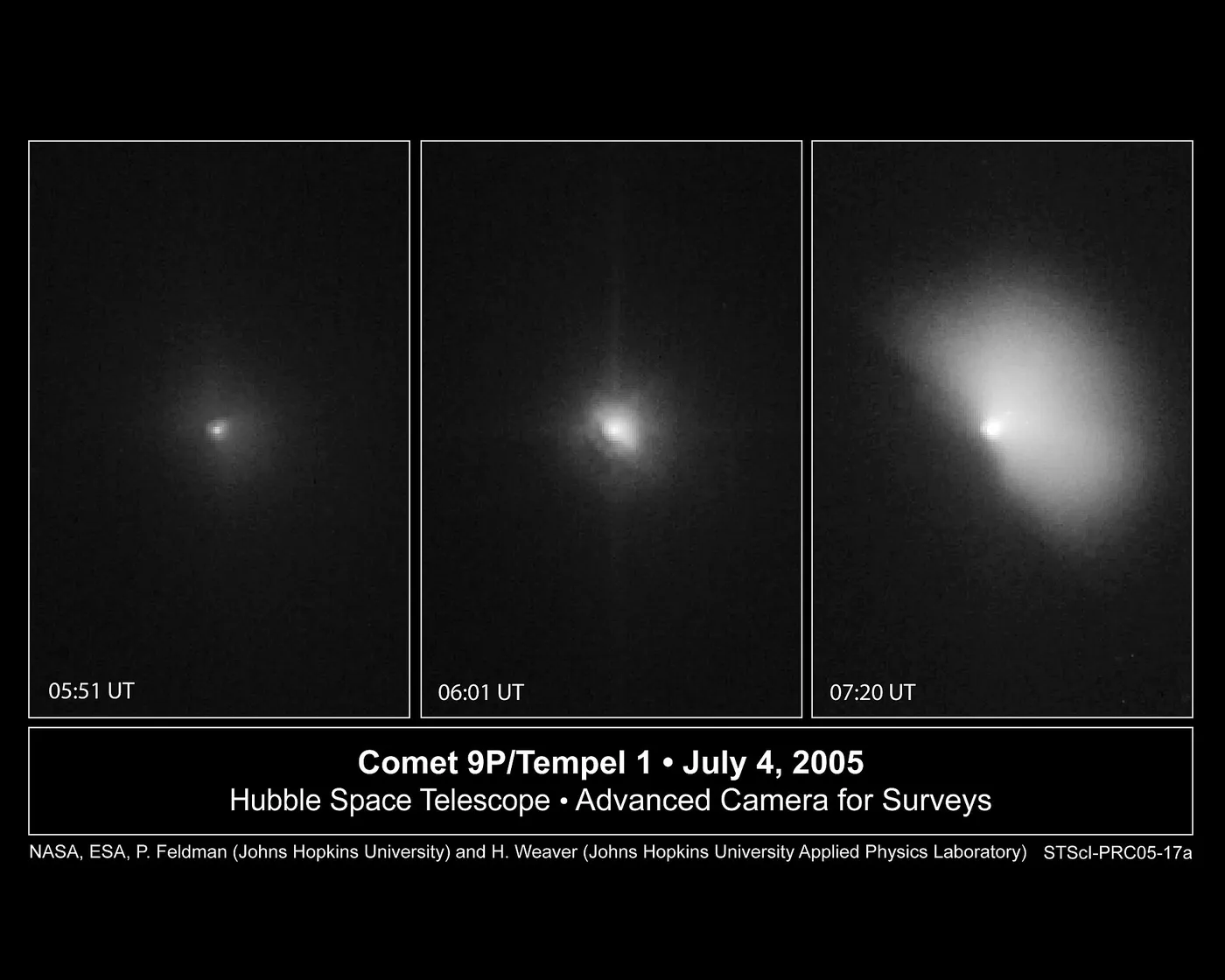

Deep Impact answered a question by hitting something. Comets are covered in a processed crust, and what scientists wanted was the pristine material underneath, so the mission carried a 370-kilogram copper projectile and threw it at comet Tempel 1 on 4 July 2005 while the mothership watched from a safe distance.
The impactor was not merely dropped — it steered itself, using autonomous navigation to correct its course three times in the final two hours and hit a nucleus roughly six kilometres across at some ten kilometres per second, all while photographing its target until 3.7 seconds before the collision.
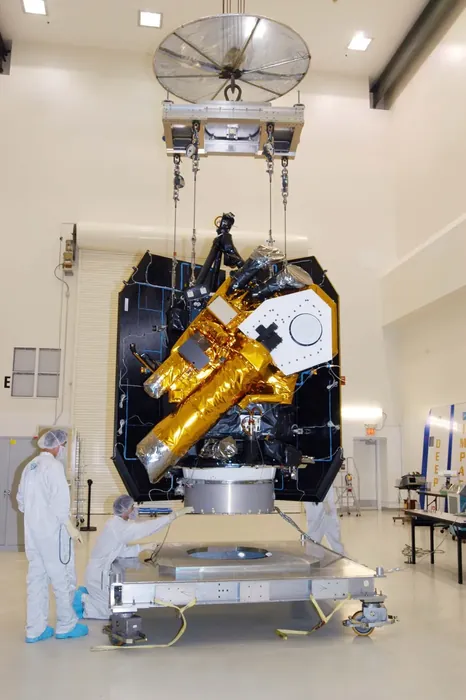
The plume was far brighter and much finer than predicted, a great cloud of talcum-like dust that obscured the very crater the mission had been built to examine. The excavated material told its own story: the comet was extraordinarily porous and weakly bound, closer to a drift of powdery snow than the ice-cemented body most models assumed.
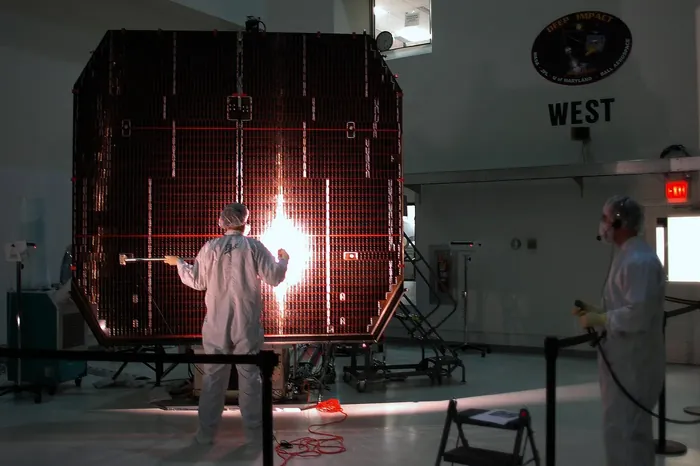
The spacecraft was still healthy, so it was given a second life as EPOXI. In 2010 it flew past comet Hartley 2 and found a small, hyperactive object venting jets of carbon dioxide that carried lumps of water ice into space — a different mechanism from the water-driven activity seen elsewhere. It also stared back at Earth from millions of kilometres away to record what a habitable planet looks like as a single unresolved dot, a calibration exercise for exoplanet astronomy.
In 2013 it stopped responding. The cause is believed to be a time-handling flaw in its software — a counter that overflowed, leaving the spacecraft unable to orient itself or point its solar arrays. A mission that had survived a deliberate collision was defeated by an arithmetic rollover.